

Basant Panchami
religious
When it happens
January
Fifth day of Magh Shukla Paksha (January–February). Region: North and Eastern India.
Gallery



Significance
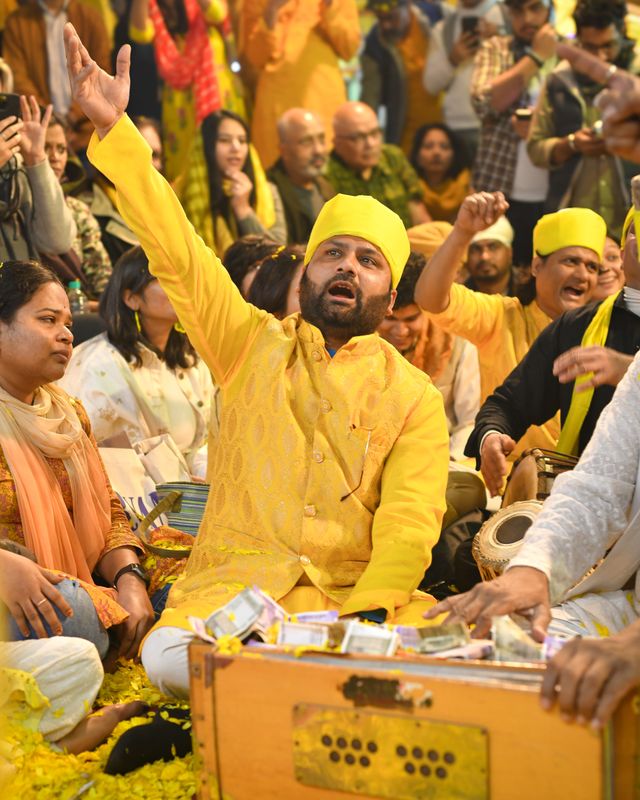
Welcomes the arrival of spring and honours Saraswati, the goddess of knowledge, arts, and learning. Marked by yellow dresses and sweets.
Why it's celebrated
Rooted in Puranic lore where Lord Brahma created the universe but found it silent. He sprinkled water from his Kamandalu, and Goddess Saraswati emerged holding a veena, bringing sound, speech, wisdom, and creativity to creation.
How it's celebrated
Devotees dress in vibrant shades of yellow (Basanti), symbolizing the ripening mustard fields and spiritual energy. Families prepare saffron-infused sweet rice (Meethe Chawal) or Khichdi. School children offer textbooks, musical instruments, and paintbrushes at the goddess's feet.
Key rituals
The central ritual is Akshar Abhyasam or Hatey Khori, where infants are initiated into writing their first alphabet on a slate using chalk. Pandals house beautifully crafted clay idols of the goddess, which undergo Prana Pratishtha (consecration) followed by Pushpanjali (flower offerings) and evening Arati.
Beliefs & spiritual meaning
Yellow is considered highly auspicious, representing the warmth of the sun and the blossoming of life. It is believed that initiating any educational or artistic pursuit on this day guarantees academic success and creative prosperity under the goddess's benign gaze.
History & origins
Mentioned in early Vedic treatises and in classical Sanskrit literature such as Kalidasa's Ritusamhara. It grew from spring celebrations at the ancient royal courts into a community festival of learning, kept in schools and households alike.
What to expect
Stepping out on Basant Panchami, you are enveloped in a sea of radiant yellow. Children and adults alike drift through decorated neighborhoods in traditional basanti sarees and kurtas. The air is filled with the sweet scent of marigolds, the chiming of temple bells, and the soft strains of veena music, while sweet saffron rice is generously shared in a warm celebration of human intellect and spring's awakening.
Frequently asked
What should a visitor wear?+
Wearing yellow clothing is highly recommended as it honors the spirit of the festival and allows you to seamlessly blend into the communal celebrations.
Related festivals
religious
Chaitra Chaudas Mela, Pehowa
The Saraswati Tirtha ghats at Pehowa town, Kurukshetra district, Haryana.

religious
Kottankulangara Chamayavilakku
Sree Kottankulangara Devi Temple, Chavara, Kollam district, Kerala.

religious
Mela Kheer Bhawani
The Ragnya Devi temple at Tulmulla, Ganderbal district, Jammu & Kashmir, about 25 km from Srinagar.
_27.jpg/960px-Celebrations_of_Hanuman_Jayanti_Festival_in_Betul%2C_Madhya_Pradesh%2C_India_(2025)_27.jpg)
religious
Hanuman Jayanti
Celebrated pan-India; particularly popular in Maharashtra, Karnataka, Uttar Pradesh, Andhra Pradesh, and Telangana.

religious
Ganga Dussehra
Observed along the sacred banks of the Ganges, primarily in Haridwar, Rishikesh, Varanasi, Prayagraj, Garhmukteshwar, and Patna.

religious
Jagannath Rath Yatra
Puri, Odisha is the grand epicenter, though celebrated on smaller scales across India.

religious
Bumchu
Tashiding Monastery in Gyalshing district, West Sikkim — a Nyingma monastery founded in 1641.
.jpg/960px-Buddha_Purnima_Procession_-_Darjeeling_(11).jpg)
religious
Buddha Purnima (Vesak)
Bodh Gaya, Sarnath, Kushinagar, Sikkim, Ladakh, and globally across Buddhist nations.