CityDekho

Browse by place

CityRegionDestinationAttractions

Browse by theme

By MoodAll themesFestivals of IndiaFestival calendarAncient India

Popular themes

BeachesHill StationsSpiritual PlacesPilgrimage & YatrasHeritage & FortsWildlifeAdventureFood TrailsSee all themes
Trip Ideas
Travel ItinerariesTravel GuidesEditorials
When to Go
My TripsSavedProfile
HomeExploreSearchSaved

Travel inspiration in your inbox

New destinations, festival guides and hidden gems — plus the occasional alert. No spam, unsubscribe anytime.

or
CityDekho

Discover India — destinations, hidden gems, festivals and pilgrimages, all in one place.

hello@citydekho.com

Explore

  • Destinations
  • States & UTs
  • Things to do
  • Trip Ideas
  • Pilgrimages
  • Ancient India
  • Festivals

Plan your trip

  • Itineraries
  • Travel guides
  • Road trips
  • Food trails
  • Best time to visit
  • Festival calendar
  • Search CityDekho

Categories

  • Hill Stations
  • Beaches
  • Wildlife
  • Spiritual
  • Adventure
  • Heritage
  • Weekend getaways
  • Hidden gems

Stories & support

  • Editorials
  • Feedback & ideas
  • About
  • Contact
By seasonsummermonsoonautumnwinterspring

© 2026 CityDekho. All rights reserved.

AboutContactFeedbackBest time to visit
CityDekho

Browse by place

CityRegionDestinationAttractions

Browse by theme

By MoodAll themesFestivals of IndiaFestival calendarAncient India

Popular themes

BeachesHill StationsSpiritual PlacesPilgrimage & YatrasHeritage & FortsWildlifeAdventureFood TrailsSee all themes
Trip Ideas
Travel ItinerariesTravel GuidesEditorials
When to Go
My TripsSavedProfile
HomeExploreSearchSaved
Home

summer season

Best summer destinations in India

When the plains heat up, India's hill stations and high-altitude valleys come alive. Cool air, pine forests, and snow-capped peaks within a few hours of every major city.

Peak crowds
Leh-Ladakh

Leh & Ladakh

Leh-Ladakh

Leh-Ladakh is a high-altitude desert region cradled by the Himalayan and Karakoram ranges in the union territory of Ladakh. Famed for stark moonscapes, centuries-old Buddhist monasteries, turquoise lakes such as Pangong Tso and dramatic passes like Khardung La, it is one of India's greatest adventure and road-trip destinations, best explored from May to September.

Peak season, all routes open

Moderate crowds
Leh

Leh & Ladakh

Leh

Leh sits at 3,500 metres and the single most important thing about it is that you cannot skip the first two days. Fly in and you arrive from sea level in ninety minutes. Spend the first forty-eight hours doing almost nothing — walk slowly, drink far more water than feels reasonable, no alcohol, no trekking. People who ignore this lose a week to altitude sickness or end up on a flight out. Coming overland from Manali or Srinagar acclimatises you properly, and if you have the days it is the better arrival. Once you are adjusted: Thiksey monastery at dawn for the morning prayers, which visitors are welcome at and which almost nobody attends. Hemis is grander but further. The Indus valley villages between Leh and Nimmu are where you see how people actually live at this altitude. Pangong and Nubra both need inner-line permits, arranged in Leh in a morning, and both are long hard drives. Pangong as a day trip is a mistake — twelve hours in a car for an hour at a lake. The road season is roughly June to September. Outside it the passes close and Leh is reachable only by air.

Sunny clear days and chilly mountain nights.

Busy
Pangong Tso

Leh & Ladakh

Pangong Tso

Pangong Tso is an endorheic lake at an elevation of approximately 4,225 metres on the high-altitude Changtang plateau of eastern Ladakh. Spanning nearly 134 kilometers in length, roughly one-third of this long lake lies within Indian territory, while the remaining stretch extends directly into Tibet. The water bodies are known for their unique ability to change color shades from azure to turquoise and brilliant indigo dynamically throughout the daytime. The lake basin is backdropped by stark, barren mountains that reflect off the crystal-clear water front like a giant mirror. Despite containing saline brackish water, the lake freezes over completely into heavy sheets of solid ice during severe winter months, creating a surreal arctic wilderness.

Pleasant day temperatures with maximum water color depth.

Busy
Nubra Valley — photo

Leh & Ladakh

Nubra Valley

Nubra Valley is a striking tri-armed high-altitude river valley positioned north of Leh, sitting at an average elevation of nearly 3,048 metres. Carved over millennia by the confluence of the Shyok and Nubra rivers, it acts as a dramatic buffer separating the Ladakh mountain chain from the giant peaks of the Karakoram range. The geography presents an incredible landscape transition, shifting rapidly from jagged mountain cliffs and lush village oasis farms to rolling white sand dunes. The core tourism activity is centered around Hunder village, home to a cold desert ecosystem populated by rare double-horned Bactrian camels. The entire valley floor is overlooked by the historic Diskit Monastery, which houses a colossal outdoor statue of Maitreya Buddha facing down the valley.

Pleasant daytime weather and clear highway access.

Moderate crowds
Tso Moriri

Leh & Ladakh

Tso Moriri

Tso Moriri, or Mountain Lake, is an offbeat high-altitude lake tucked away at an astounding elevation of 4,522 metres on the Changtang plateau of southeastern Ladakh. The body of water spans roughly 19 kilometers in length and is entirely fed by glacial meltwater from surrounding snow peaks exceeding 6,000 metres. It is protected under international environmental treaties as part of the Tso Moriri Wetland Conservation Reserve. Unlike Pangong Tso, Tso Moriri is far quieter, less commercialized, and rawer for it. The cobalt-blue waters are flanked by the small nomadic settlement of Korzok, which houses an ancient mud-brick monastery. The surrounding marshy wetlands provide sanctuary to rare and endangered Himalayan migratory birds.

Pleasant daytime hours under open sunny skies.

Busy
Magnetic Hill

Leh & Ladakh

Magnetic Hill

Magnetic Hill is a famous gravity-defying road stretch on the Srinagar-Leh National Highway, roughly 30 kilometers outside the capital town of Leh. Positioned at a height of approximately 3,350 metres above sea level, the location is clearly marked by a prominent yellow informational billboard erected by the local administration. When a stationary vehicle is placed in neutral gear inside the specifically marked rectangular box on the asphalt road, it appears to move uphill on its own accord at speeds reaching up to 20 kilometers per hour. While popular regional folklore attributes this movement to deep magnetic forces embedded inside the rocky mountains, scientific testing confirms it is an extraordinary optical illusion. The specific layout of the surrounding horizon and slopes distorts human perspective, making a slight downhill slope appear like a steep rising hill.

Bright sunny days with dry highway surfaces.

Moderate crowds
Spiti Valley (Kaza)

Himachal Pradesh

Spiti Valley (Kaza)

Spiti is the emptiest place in India that you can still drive to, and the reason to come is the scale of the nothing. This is high-altitude cold desert at 3,800 metres and above — bare rock, no trees, the river a thin green line at the bottom of it. Key monastery above Kaza is the one everyone photographs and deserves to be. Dhankar, built onto a spur of crumbling cliff, is the one that stays with you. Tabo has thousand-year-old wall paintings in a mud-brick complex that looks like nothing from outside. Kibber and Langza are the villages people go to for the fossils and the height; Komic claims to be among the highest with a motorable road. Go for the walking between them rather than to tick them off. Access decides your trip. The Manali side over Kunzum La is open roughly June to October. The Shimla side through Kinnaur is open most of the year and is the safer bet, but it is a long two-day drive. Doing it Shimla-in, Manali-out gives you gradual altitude gain, which is the right way round. Nights are cold in every month. There is no reliable mobile signal and cash machines are unreliable — bring notes.

Bright sunny days and crisp cool nights.

Moderate crowds
Key Monastery photo

Himachal Pradesh

Key Monastery

Key Monastery is a thousand-year-old Tibetan Buddhist monastery belonging to the Gelugpa (Yellow Hat) lineage. At 4,166 metres, it sits on a prominent volcanic cone hill overlooking the wide Spiti River valley floor. Located roughly 14 kilometers from Kaza, it stands as the largest monastery, primary spiritual archive, and leading training school for resident Lamas in Spiti Valley. The unique architectural layout of the monastery has evolved over centuries of restructuring, resulting in a tightly stacked, fortress-like profile known as the Pasada style. The close grouping of white-washed mud-brick rooms, multi-tiered chapels, and narrow defensive corridors gives the complex the appearance of a monolithic castle emerging naturally from the mountain slope.

Bright clear days with refreshing valley winds.

Busy
Hemis Monastery

Leh & Ladakh

Hemis Monastery

Hemis Monastery is a deeply revered Himalayan Buddhist sanctuary belonging to the Drukpa (Dragon) lineage of the Kagyu sect. Tucked away discreetly inside a hidden mountain canyon along the western banks of the Indus River, it lies roughly 45 kilometers south of main Leh town. It stands as the largest, wealthiest, and most institutionally influential monastery complex across Ladakh. The massive architecture presents a beautiful specimen of traditional Tibetan monastic layout, featuring white-washed stone masonry walls, intricately painted timber windows, and expansive open flagstone courtyards. Hemis houses an underground heritage museum containing priceless multi-century collections of gold-plated statues, sacred thangkas, and ancient weapons.

Warm sunny weather with crisp clear canyon skies.

Low crowds
Zanskar Valley

Leh & Ladakh

Zanskar Valley

Zanskar is one of the last genuinely difficult journeys left in India, and that is the whole appeal. The valley is cut off by snow for around seven months of the year. In summer a single road comes in over the Pensi La from Kargil, and it is long, rough and worth every hour of it. Padum is the only real settlement. Phuktal monastery is built into a cliff cave above a river and takes a walk of several hours to reach — there is no road to it, which is why it feels the way it does. In deep winter, when the road closes, the frozen Zanskar river itself becomes the route: the Chadar trek, walked on the ice in temperatures well below freezing. It is a serious undertaking, not a holiday, and it needs a proper operator and real cold-weather experience. It has also become less reliable as winters warm, and trips are cancelled. If you are coming in summer, budget more days than the distance suggests. Landslides close the road, and there is no alternative route. July to early September for the road. Late January and February for the ice.

Cool refreshing daytimes with high mountain visibility.

Busy
Manali photo

Himachal Pradesh

Manali

Manali is really two places, and knowing which one you booked matters more than anything else about the trip. Mall Road Manali is a busy Indian hill-station town — traffic, hotels, shops selling the same shawls. Old Manali, up the hill across the river, is quieter, low-rise and where most people actually want to be. Vashisht, on the other side, has the hot springs and a similar feel. Hadimba temple, in the deodar forest above town, is four hundred years old with a tiered wooden roof and is worth the twenty minutes. Solang and Rohtang are the standard day trips and both are congested in season; Rohtang needs a permit, which is capped daily and must be arranged in advance. The Atal Tunnel changed the geography here. Lahaul, which used to be a full expedition, is now well under an hour away, and going through it for the day gives you a completely different landscape. May and June are the peak and are crowded. October and November are clear, cold and quiet. Do not expect snow in town below about December, whatever the photographs suggest.

Warm comfortable days with bright clear sunny skies.

Busy
Khajjiar

Himachal Pradesh

Khajjiar

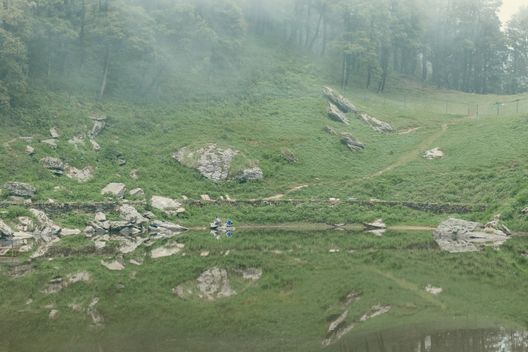
Khajjiar is a high plateau meadow at an elevation of 1,920 metres inside the Kalatop Khajjiar Sanctuary perimeter. Celebrated widely for its striking topological resemblance to Swiss landscapes, it comprises a vast, saucer-shaped emerald glade enveloped by ancient, towering deodar and pine forests. At the heart of this green meadow lies the small, natural Khajjiar Lake, featuring a unique floating island of tangled grass roots. It suits families and anyone wanting an hour of quiet away from the bigger hill stations.

Cool refreshing daytimes with bright emerald green landscapes.

Busy
Dalhousie photo

Himachal Pradesh

Dalhousie

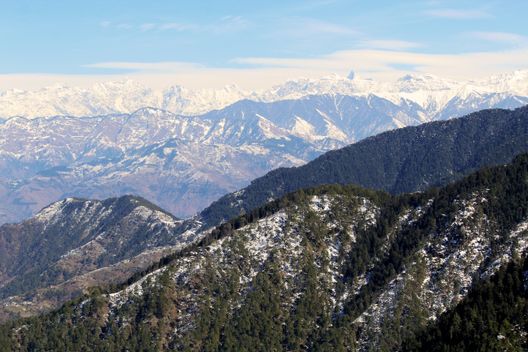
Dalhousie is a peaceful colonial-era hill station built across five distinct hills of the Dhauladhar mountain range, sitting at an altitude of 1,970 metres. Established in the mid-19th century under the British Raj, the town has systematically preserved its old-world charm, characterized by wide pine-fringed walking loops, traditional stone mansions, and vintage Scottish architecture. Tourism in Dalhousie centers around the historic public squares of Gandhi Chowk and Subhash Chowk, linked by wooded walking paths like Garam Sadak. The town is the quiet alternative to the commercial hill stations, with views of the winding Ravi River and the distant snow-covered peaks of the inner Himalayas.

Pleasantly cool daytimes with refreshing pine forest breezes.

Moderate crowds
Tirthan Valley & Great Himalayan NP photo

Himachal Pradesh

Great Himalayan National Park

The Great Himalayan National Park was listed by UNESCO in 2014, and what makes it worth the effort is what it does not have: no road crosses it, nothing is sold inside it, and there is no signal past the boundary. Entry is on a permit, issued at Sai Ropa or Gushaini. Past the gate you walk. The standard trips run two to five days up the Tirthan, Sainj or Jiwa valleys with a local guide and a porter, and the community booking system means the money stays in the villages at the edge. Himalayan brown bear, musk deer and western tragopan all live in here and you will probably see none of them — this is dense forest, not grassland. What you get instead is four days without meeting anyone. The ecozone villages outside the boundary — Gushaini, Ropa, Shangarh — are where you sleep before and after, and each is worth a night either side. Mid-May to the end of June, and mid-September to the end of October. The higher passes hold snow outside that, and the monsoon closes the trails.

Pleasant daytimes with lush green forests and clear rivers.

Busy
Pahalgam photo

Jammu & Kashmir

Pahalgam

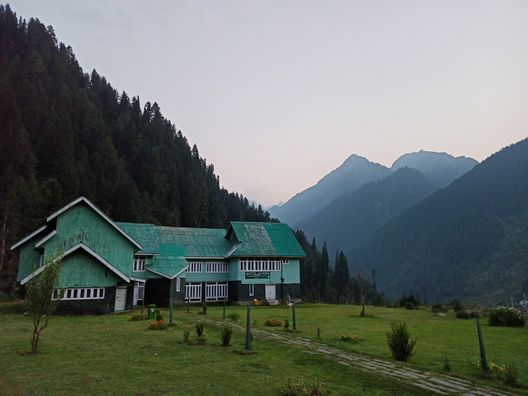
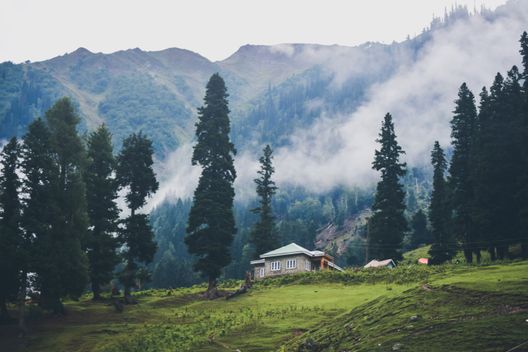
Pahalgam is a valley settlement at 2,130 metres in the Anantnag district of Kashmir. Positioned at the scenic junction of the fast-flowing Lidder River and the Sheshnag stream, it stands surrounded by steep hills carpeted with dense, old-growth pine and cedar forests. It suits anglers, walkers and people who camp. The commercial heart of the valley transitions smoothly into alpine glades like Baisaran, popularly nicknamed 'Mini Switzerland' due to its vast undulating pine-ringed meadows. Pahalgam serves as a paramount transit launchpad for the annual holy pilgrimage of the Amarnath Yatra, with the traditional tracking route commencing directly from Chandanwari village upstream.

Refreshing crisp days with clear blue riverside horizons.

Moderate crowds
Sonamarg photo

Jammu & Kashmir

Sonamarg

Sonamarg is eighty kilometres up from Srinagar and the last town before Zoji La and Ladakh. The road in is shut by snow from roughly December to April, so this is a summer place whether you like it or not. Thajiwas glacier is four kilometres up the side valley, on foot or by pony. It has been retreating for years, so the walk to the ice is longer than older guidebooks suggest, and the pony rates are officially fixed and routinely ignored — settle the price and the route before you mount. It is also the start of two serious walks: the Amarnath yatra from Baltal, and the Kashmir Great Lakes trek, which takes a week and is among the best in the country. Come as a day trip from Srinagar if you only want the meadow. Stay if you are walking.

Cool pleasant daytimes with new snow fields melting along ridges.

Busy
Patnitop

Jammu & Kashmir

Patnitop

Patnitop is a plateau at 2,024 metres above the Chenab on the Jammu–Srinagar highway, and almost everyone who stops there was on the way somewhere else. As a stop it works well. Deodar forest, open meadows and easy walking — this is not a trekking destination and does not pretend to be. The Skyview gondola at Sanasar runs 2.8 kilometres across the gorge and is the one thing here worth a detour on its own. Snow falls for a few weeks in January and February and the place fills up for it. The rest of winter it is cold and empty. March to June and September to November. Avoid the monsoon, when the highway below is prone to landslides and closures.

Pleasantly cool daytimes with refreshing pine-scented breezes.

Low crowds
Doodhpathri

Jammu & Kashmir

Doodhpathri

Doodhpathri is a meadow about forty kilometres out of Srinagar in Budgam district, with almost nothing built on it — no hotels, a handful of stalls. That is the whole appeal, and it also makes this a day trip rather than a stay. The Shaliganga runs through it fast enough over the boulders to churn white, which is where the name comes from: milk meadow. Go on a weekday. At weekends Srinagar families fill it and the single road in becomes the problem. Carry food; what is sold up there is limited. Open roughly April to October, and snowed shut in winter.

Delightfully refreshing daytimes with deep green turf.

Busy
Ooty (Udhagamandalam)

Tamil Nadu

Ooty (Udhagamandalam)

Ooty sits at 2,240 metres and was built by the British as a hot-weather escape, which is still exactly what it is used for — and why April and May are the months to avoid, when the plains empty into it. The Nilgiri Mountain Railway is the best thing in the district. It climbs from Mettupalayam on a rack-and-pinion section, takes about five hours, and is UNESCO-listed. Book ahead in season or take the ordinary carriage, which is fine. Doddabetta, the highest point in the Nilgiris, is ten kilometres out and usually inside cloud by afternoon. The Botanical Garden dates from 1848 and has a fossil trunk around twenty million years old in it. The lake is man-made and rented out by the hour. Tea here is grown for volume rather than for named estates, and the roadside shops sell a great deal of flavoured dust. Buy from an estate if you care about it. September to November, and January to March.

Cool refreshing daytimes with bright clear sunny skies.

Busy
Kasol photo

Himachal Pradesh

Kasol

Kasol is a small riverside village in the Parvati Valley of Himachal Pradesh that has become the unofficial backpacking capital of North India. Set along the gushing Parvati River and ringed by pine-clad slopes, it draws a young, international crowd with its laid-back cafe culture, Israeli food, trekking trailheads and famously relaxed mountain vibe. Kasol functions as the base camp for the wider Parvati Valley circuit, with treks fanning out to Kheerganga, Tosh, Malana and Chalal. The main market is packed with cafes serving shakshuka and falafel, music hostels, gear-rental shops and bonfire-lit guesthouses.

Pleasant cool days, good for valley treks.

Busy
Chandratal Lake photo

Himachal Pradesh

Chandratal Lake

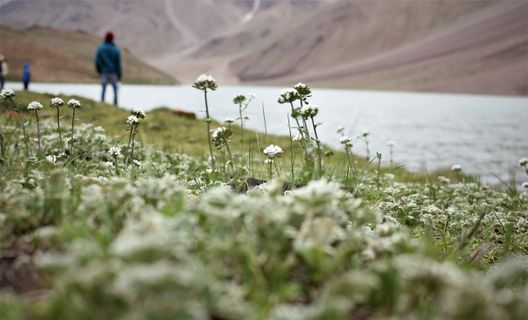
Chandratal Lake, translating to the Lake of the Moon, is a high-altitude glacial gem at an elevation of approximately 4,250 metres in the Lahaul and Spiti district, on the Samudra Tapu plateau overlooking the thundering Chandra River valley, the lake gets its name from its natural crescent contour shape. The body of water spans roughly 2.5 kilometers in circumference and is entirely surrounded by snow-covered mountain ridges. The lake is known for its hyper-clear water, which reflects the surrounding peaks and changing sky like a mirror. The color shifts dynamically from clear turquoise to aquamarine and deep emerald green as the day advances. The entire area is a protected Ramsar wetland eco-zone, preserving a fragile alpine meadow ecosystem.

Pleasant clear daytimes with perfect mirror reflections.

Moderate crowds
Tosh photo

Himachal Pradesh

Tosh

Tosh is a tiny, car-free hamlet at the far end of the Parvati Valley, a steep climb above Barshaini. With sweeping views of snow peaks, terraced fields and waterfalls, it has become a cult favourite among young backpackers looking for an even quieter, more scenic alternative to Kasol. The village is a cluster of guesthouses and cafes built into the hillside, many with balconies that look straight onto the glaciated head of the valley. It doubles as a trailhead for the Kutla and Kheerganga hikes, and its slow pace, cheap stays and dramatic sunsets make it a magnet for digital nomads and long-stay travellers.

Clear warm days with snow on the peaks.

Busy
Old Manali — photo

Himachal Pradesh

Old Manali

Old Manali is the laid-back, bohemian counterpart to Manali town — a riverside cluster of guesthouses, cafes and orchards above the Manalsu stream. While Manali proper is a busy hill-station hub, Old Manali draws backpackers and long-stay travellers with its slower pace, music cafes and mountain-village feel. It works as both a chilled base and an adventure springboard, with the Hampta Pass, Solang Valley and Jogini Falls within easy reach. Cobbled lanes lined with German bakeries, hostels and gear shops make it a favourite first stop for those heading deeper into Himachal or up to Spiti and Leh.

Warm pleasant days, lush orchards.

Moderate crowds
Kalpa (Kinnaur) photo

Himachal Pradesh

Kalpa (Kinnaur)

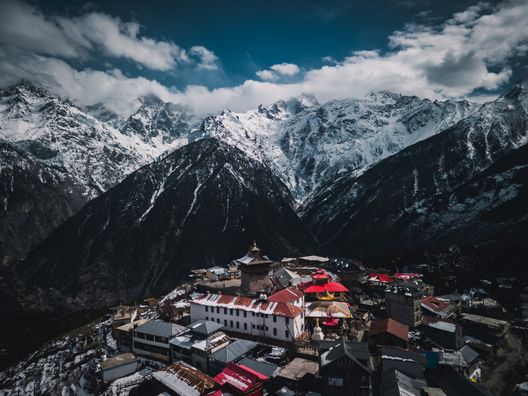
Kalpa is an offbeat mountain village on a high ridge at an elevation of 2,960 metres in the Kinnaur Valley. Positioned directly above the district hub of Reckong Peo, it looks down into the deep, thundering canyon of the Sutlej River. The settlement is known for its unique geographical position, with an uninterrupted view of the sacred Kinner Kailash massif. The architectural landscape of Kalpa features a beautiful indigenous blend of traditional wooden Hindu temples and Tibetan Buddhist monasteries, showcasing the rich syncretic culture of Kinnaur. The village pathways wind through dense pine forests and some of the finest high-altitude organic apple orchards in the country.

Cool pleasant days under open sun rays.

Busy
Srinagar (Dal Lake) photo

Jammu & Kashmir

Srinagar (Dal Lake)

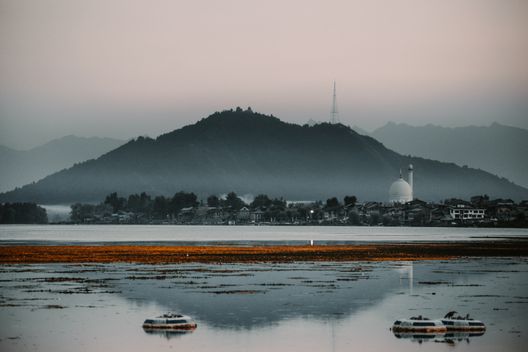
Srinagar is a lake city, and the difference between a good stay and a mediocre one is which part of the lake you sleep on. Take a houseboat, but ask where it is moored. The boats near the Boulevard are convenient and noisy with traffic; the ones further out towards Nagin lake are quieter and give you the mornings the place is famous for. Shikara rides are priced by the hour and by negotiation — agree the route and the price before you get in, or you will be taken to a floating handicraft shop instead. The Mughal gardens — Shalimar, Nishat, Chashme Shahi — are terraced up the eastern hillside and are best in the first hour after opening. The vegetable market on the water at dawn is the real thing, and it means being up before five. Papier-mâché and Kashmiri walnut wood are genuine crafts here and worth buying properly rather than roadside. Check current advisories before you book, and do that close to your travel date rather than months out. April and May for the blossom, and June to August is the season most Indians come. Winter is cold, beautiful and quiet.

Pleasantly warm daytimes with cool mountain breezes.

Moderate crowds
Gulmarg photo

Jammu & Kashmir

Gulmarg

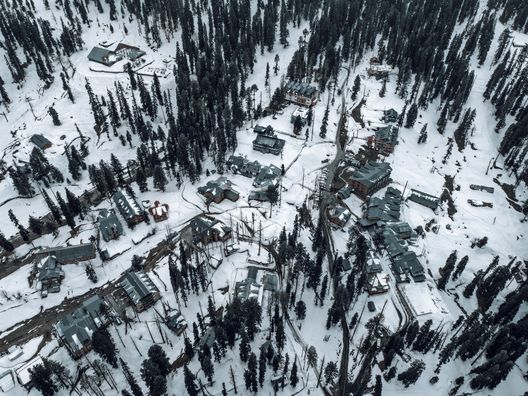
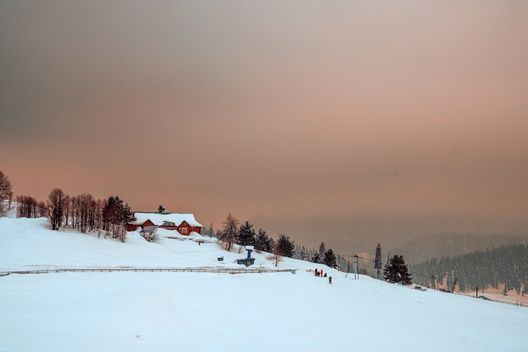
Gulmarg is a bowl of meadow at 2,650 metres in the Pir Panjal, and it does two completely different jobs depending on the month. December to March it is the only serious ski resort in India. The Apharwat face has real off-piste terrain and the snow is dry enough to justify the trip. May to September the snow is gone and it is a meadow full of wildflowers with a golf course on it, one of the highest anywhere. The gondola climbs in two stages. The first, to Kongdoori, almost always runs. The second, up to just under four thousand metres on Apharwat, is frequently closed for wind and its tickets are capped daily — buy both stages early or accept that you may only get the first. If you are skiing off-piste, a guide is not optional. This is avalanche terrain and it has killed people.

Pleasant cool days with a colorful carpet of wild flowers.

Busy
Mount Abu

Rajasthan

Mount Abu

Rajasthan's only hill station, at 1,220 metres on a granite plateau in the Aravallis, and it exists largely because Gujarati and Rajasthani families need somewhere cool in May. Dilwara is the reason to make the climb: five Jain temples, twelfth to sixteenth century, in white marble carved thin enough in the ceilings that light comes through. No cameras inside, and non-Jains are admitted only from midday — plan the day around that, because most people get it wrong and lose a morning. Nakki Lake in the middle of town is pedal boats and crowds. Guru Shikhar, the highest point in the Aravallis, is a short drive and a flight of steps. Sunset Point is exactly as busy as it sounds. November to February is cool and can drop below freezing at night — the only place in Rajasthan where that happens. Busiest in May and June, and over Diwali.

Pleasantly cool daytimes with refreshing mountain breezes.

Moderate crowds
Tirthan Valley photo

Himachal Pradesh

Tirthan Valley

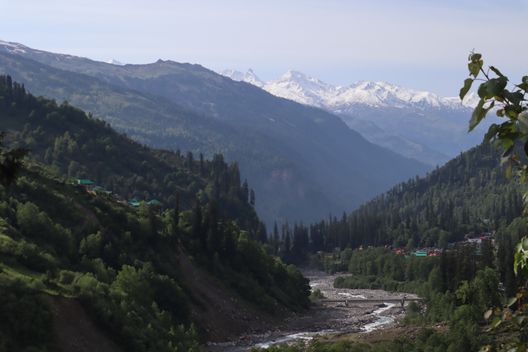
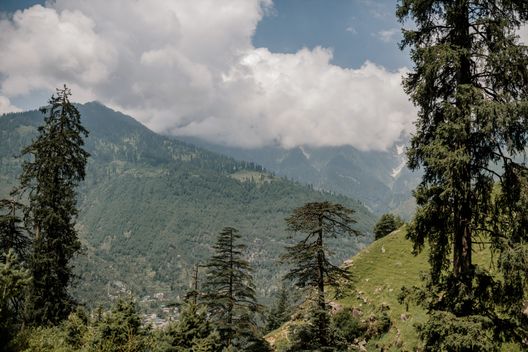
Tirthan Valley is a quiet, offbeat river valley on the edge of the Great Himalayan National Park (a UNESCO World Heritage Site) in Himachal Pradesh. Named after the crystal-clear Tirthan River, it has emerged as a slow-travel and workation favourite for those seeking pine forests, trout streams and riverside homestays far from the tourist crowds. With no big hotels and a strong eco-tourism ethic, the valley centres on activities like trout fishing, river crossing, forest treks and lazy days by the water. It suits people who want to sit by a river for a week rather than tick off viewpoints.

Pleasant warm days by the river.

Festivals during Summer

From our festival calendar. Most Indian festivals move with the lunar calendar, so we name the month rather than a day.

Attukal PongalaMarch

Attukal Pongala

regional

Over 2.5 million women

Explore festival →
Braj MahotsavMarch

Braj Mahotsav

cultural

Explore festival →
Chapchar KutMarch

Chapchar Kut

cultural

Explore festival →
Eid ul-FitrMarch

Eid ul-Fitr

religious

Over 100,000 devotees regularly gather at Delhi's Jama Masjid for the morning congregation.

Explore festival →
GangaurMarch

Gangaur

regional

Explore festival →
Hola MohallaMarch

Hola Mohalla

cultural

Explore festival →
HoliMarch

Holi

religious

Millions of tourists and pilgrims visit the temples of Vrindavan and Mathura during the week-long Braj Holi festivities.

Explore festival →
International Yoga FestivalMarch

International Yoga Festival

cultural

Explore festival →

Other seasons

monsoonautumnwinterspring

Travel inspiration in your inbox

New destinations, festival guides and hidden gems — plus the occasional alert. No spam, unsubscribe anytime.

or
CityDekho

Discover India — destinations, hidden gems, festivals and pilgrimages, all in one place.

hello@citydekho.com

Explore

  • Destinations
  • States & UTs
  • Things to do
  • Trip Ideas
  • Pilgrimages
  • Ancient India
  • Festivals

Plan your trip

  • Itineraries
  • Travel guides
  • Road trips
  • Food trails
  • Best time to visit
  • Festival calendar
  • Search CityDekho

Categories

  • Hill Stations
  • Beaches
  • Wildlife
  • Spiritual
  • Adventure
  • Heritage
  • Weekend getaways
  • Hidden gems

Stories & support

  • Editorials
  • Feedback & ideas
  • About
  • Contact
By seasonsummermonsoonautumnwinterspring

© 2026 CityDekho. All rights reserved.

AboutContactFeedbackBest time to visit