
Dahi Handi
cultural
When it happens
September
Celebrated the day after Krishna Janmashtami in Bhadrapada (August–September). Region: Maharashtra (esp. Mumbai, Thane).
Gallery


Significance
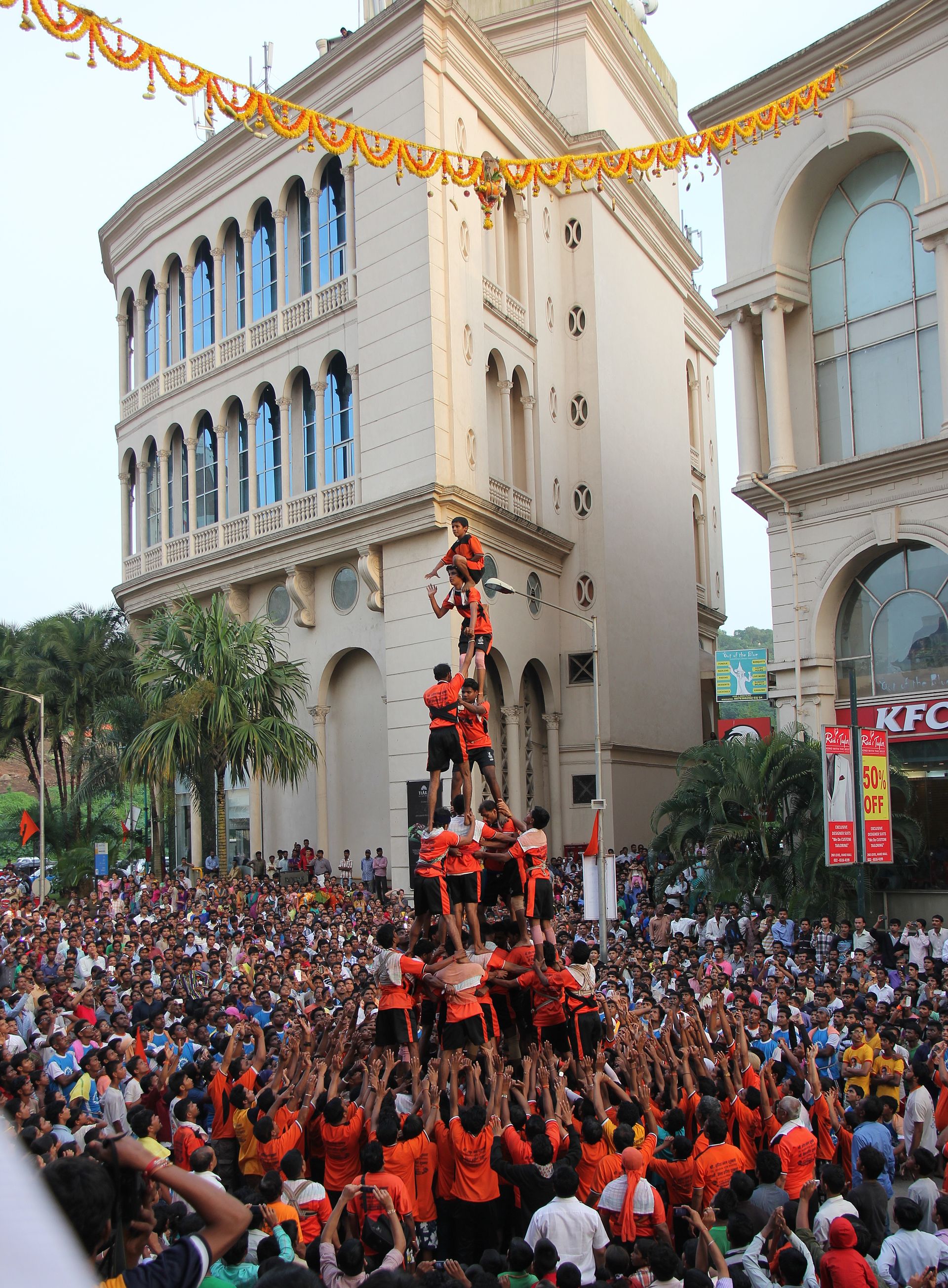
Athletic troupes called Govindas build multi-tiered human pyramids to break clay curd pots suspended high in the air.
Why it's celebrated
The festival reenacts the mischievous childhood exploits of young Lord Krishna in Gokul. Krishna and his cowherd friends formed human pyramids to reach high earthen pots filled with freshly churned butter ('Makhan') and curd hanging from the ceilings of neighbors' homes, who were trying to hide the treats from the clever child.
How it's celebrated
Urban intersections are festooned with massive prize banners. Earthen pots filled with curd, milk, fruits, and cash are suspended from heavy steel cables at staggering heights ranging from 20 to 50 feet. Troupes of young athletes called 'Govindas' travel across the city in trucks, attempting to break as many pots as possible while neighborhood crowds drench them with high-pressure water hoses to disrupt their balance.
Key rituals
The core action involves building the pyramid. Robust, heavy athletes form the massive base layer, while progressively lighter, agile layers climb onto their shoulders. The absolute climax involves a small child—representing Balgopal—who scales to the very top, balances precariously on the highest layer, breaks the clay pot with a small coconut or stick, and drinks the contents to a roar of applause.
Beliefs & spiritual meaning
The broken pot represents the breaking of the hard shell of human ego, allowing the sweet, nourishing essence of inner divinity (the curd/butter) to flow out freely. The festival teaches that goals which seem completely unreachable for an isolated individual can be effortlessly achieved through absolute unity, collective support, and mutual trust.
History & origins
What began as a simple domestic ritual inside Marathi neighbourhoods in the early 20th century transformed over the decades into a massive commercialised public event. Political groups and local commercial brands began offering multi-million rupee cash prizes, turning the neighbourhood custom into a regulated sport with safety harnesses, chest protectors, and formal championships attracting global athletic teams.
What to expect
The energy in Mumbai during Dahi Handi is a visceral, thunderous roar. The air hums to the beat of Nashik dhol drums and chants of 'Govinda Ala Re!'. In the center of a roaring crowd, five layers of human beings lock arms, shivering under the weight of more men climbing over them. A tiny nine-year-old child emerges at the peak, suspended forty feet in the air, drenched in sweat and water. He stands tall, breaks the clay pot with a swift stroke, and a rain of sweet white curd pours down over a mountain of cheering humanity. It is an exhilarating display of raw athletic grit and chaotic devotion.
Frequently asked
Is the festival legally regulated for safety?+
Yes, following directives from the Supreme Court, participants must be at least 14 years old, and organizers are legally mandated to provide insurance, helmets, safety safety cushions, and medical teams on standby at every high-altitude handi location.
Related festivals
cultural
Island Tourism Festival
The ITF Ground on VIP Road, Sri Vijaya Puram (Port Blair), Andaman & Nicobar Islands. The 2025 edition ran at thirteen venues across South, North and Middle Andaman.

cultural
Aranmula Boat Race (Uthrattathi)
Pampa River, near the Sree Parthasarathy Temple, Aranmula, Pathanamthitta district, Kerala.

cultural
Taj Mahotsav
Shilpgram, Taj Mahal na Eastern Gate pase, Agra, Uttar Pradesh.

cultural
Myoko Festival
The Ziro Valley, Lower Subansiri district, Arunachal Pradesh, rotating across ancestral Apatani villages like Hari, Hong, and Haja.

cultural
Aoling Festival
Mon district, Nagaland, across all Konyak Naga tribal settlements and ancestral villages.

cultural
Lui-Ngai-Ni
Celebrated across all Naga-inhabited districts of Manipur, with the main, grand rotating venue hosted in towns like Ukhrul, Senapati, Tamenglong, or Chandel.

cultural
International Kite Festival (Uttarayan)
Ahmedabad (Sabarmati Riverfront), Surat, Vadodara, Jaipur, and across Gujarat

cultural
Nyokum
Papum Pare, Kurung Kumey, Kra Daadi, and East Kameng districts of Arunachal Pradesh, with massive public grounds in Nirjuli and Itanagar.