

Nongkrem Dance Festival
cultural
When it happens
October
Five days in October or November annually. Region: Smit, Khasi Hills, Meghalaya.
Gallery


Significance
An elegant harvest thanksgiving dance of the indigenous Khasi tribe performed by the royal family in heavy gold attire.
Why it's celebrated
In the matrilineal Khasi society, the festival follows the ancestors' tradition of seeking communal prosperity and a good harvest from the presiding goddess Ka Blei Synshar.
How it's celebrated
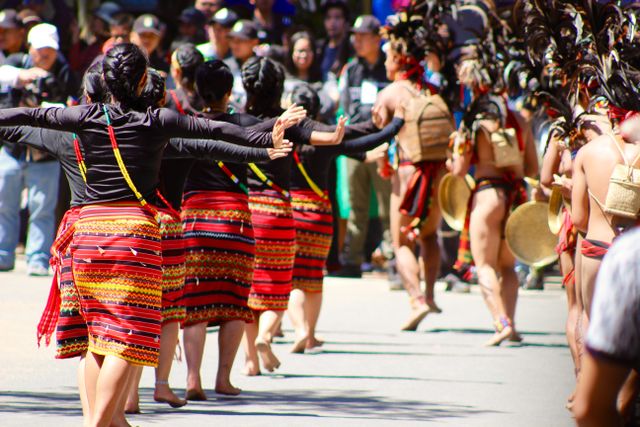
Khasi youths in heirloom gold and coral ornaments and ceremonial dress perform the Shad Nongkrem dance, while the Syiem (chief) and his household conduct the ritual observances.
Key rituals
Goats are offered in the Pomblang ritual to honour the ancestors. In the Ka Shad Kynter that follows, maidens of the royal household dance in the forecourt in traditional finery.
Beliefs & spiritual meaning
The dancing maidens, wearing tall ceremonial crowns, step with extreme gentleness so as not to hurt Mother Earth - the slow, restrained dance is a symbol of communal humility.
History & origins
The festival belongs to Meghalaya's centuries-old Khasi chieftainship. It is still held at Smit village, centred on the great traditional thatched house known as Ka Sad.
What to expect
Five days at Smit, the Khasi seat, in November. Unmarried women in silver and gold crowns dance slowly in the centre holding white cloths, while men circle them carrying a sword in one hand and a whisk in the other. The music is the tangmuri, a reed pipe, and drums. It is cold, and it rains.
Frequently asked
Can tourists take photographs?+
Yes - photography is generally allowed, but cameras are restricted in some areas during the sacrifice ritual, so watch for local guidance.
Related festivals
cultural
Island Tourism Festival
The ITF Ground on VIP Road, Sri Vijaya Puram (Port Blair), Andaman & Nicobar Islands. The 2025 edition ran at thirteen venues across South, North and Middle Andaman.

cultural
Aranmula Boat Race (Uthrattathi)
Pampa River, near the Sree Parthasarathy Temple, Aranmula, Pathanamthitta district, Kerala.

cultural
Taj Mahotsav
Shilpgram, Taj Mahal na Eastern Gate pase, Agra, Uttar Pradesh.

cultural
Myoko Festival
The Ziro Valley, Lower Subansiri district, Arunachal Pradesh, rotating across ancestral Apatani villages like Hari, Hong, and Haja.

cultural
Aoling Festival
Mon district, Nagaland, across all Konyak Naga tribal settlements and ancestral villages.

cultural
Lui-Ngai-Ni
Celebrated across all Naga-inhabited districts of Manipur, with the main, grand rotating venue hosted in towns like Ukhrul, Senapati, Tamenglong, or Chandel.

cultural
International Kite Festival (Uttarayan)
Ahmedabad (Sabarmati Riverfront), Surat, Vadodara, Jaipur, and across Gujarat

cultural
Nyokum
Papum Pare, Kurung Kumey, Kra Daadi, and East Kameng districts of Arunachal Pradesh, with massive public grounds in Nirjuli and Itanagar.