
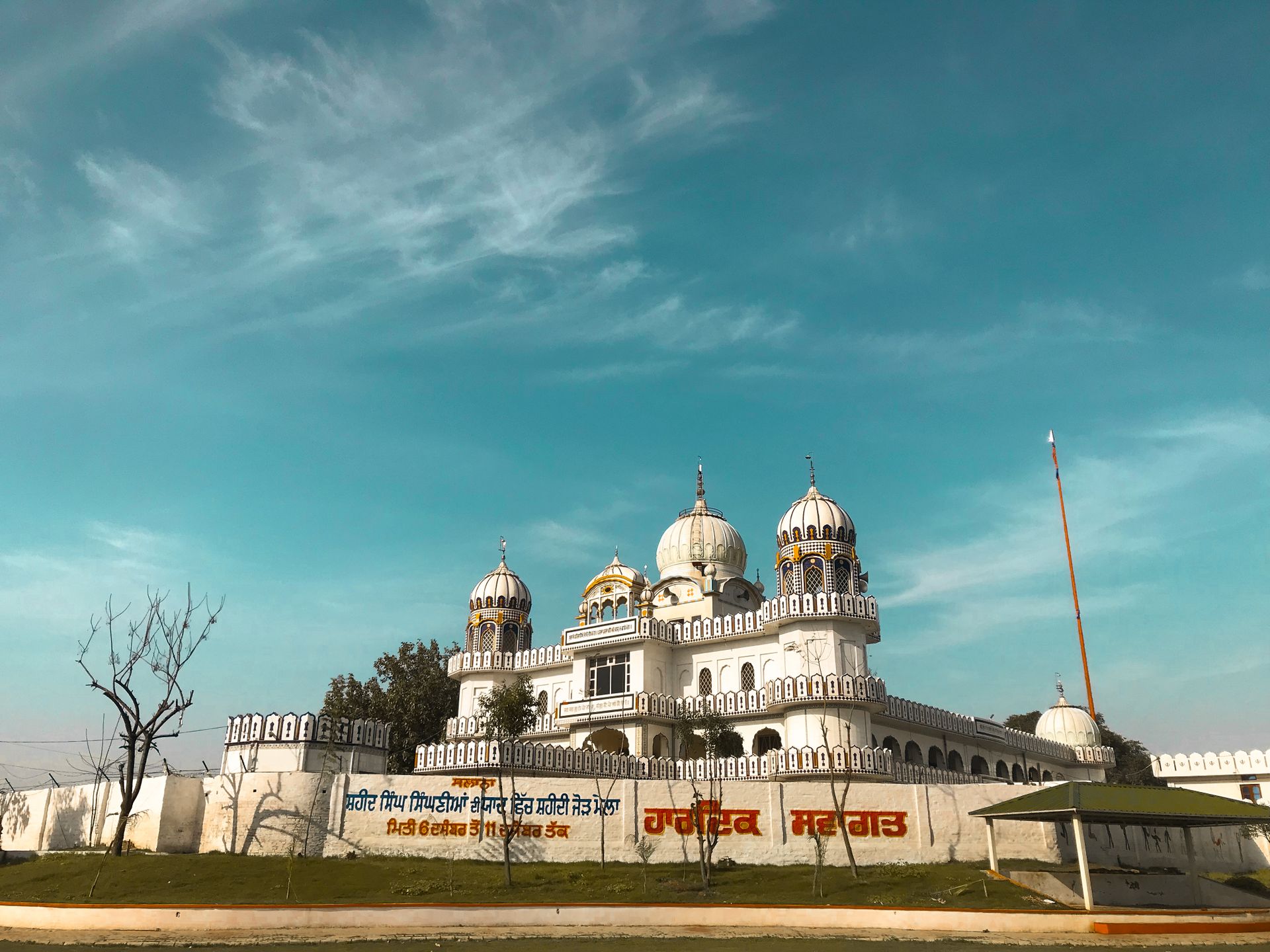
Sikh Takht & Gurdwara Circuit
Across 3 states, IndiaSpiritual Journey
This circuit links the supreme seats and great gurdwaras of Sikhism — from the Golden Temple at Amritsar to the Takhts of Anandpur Sahib, Damdama Sahib and Hazur Sahib at Nanded, and the high-Himalayan shrine of Hemkund Sahib — tracing the spiritual geography of the Sikh faith.
October to March
Hemkund opens May to October.

Flexible
A multi-state circuit.
How hard it is
Easy — all by road and rail, except Hemkund Sahib, which is a hard high-altitude trek
The route


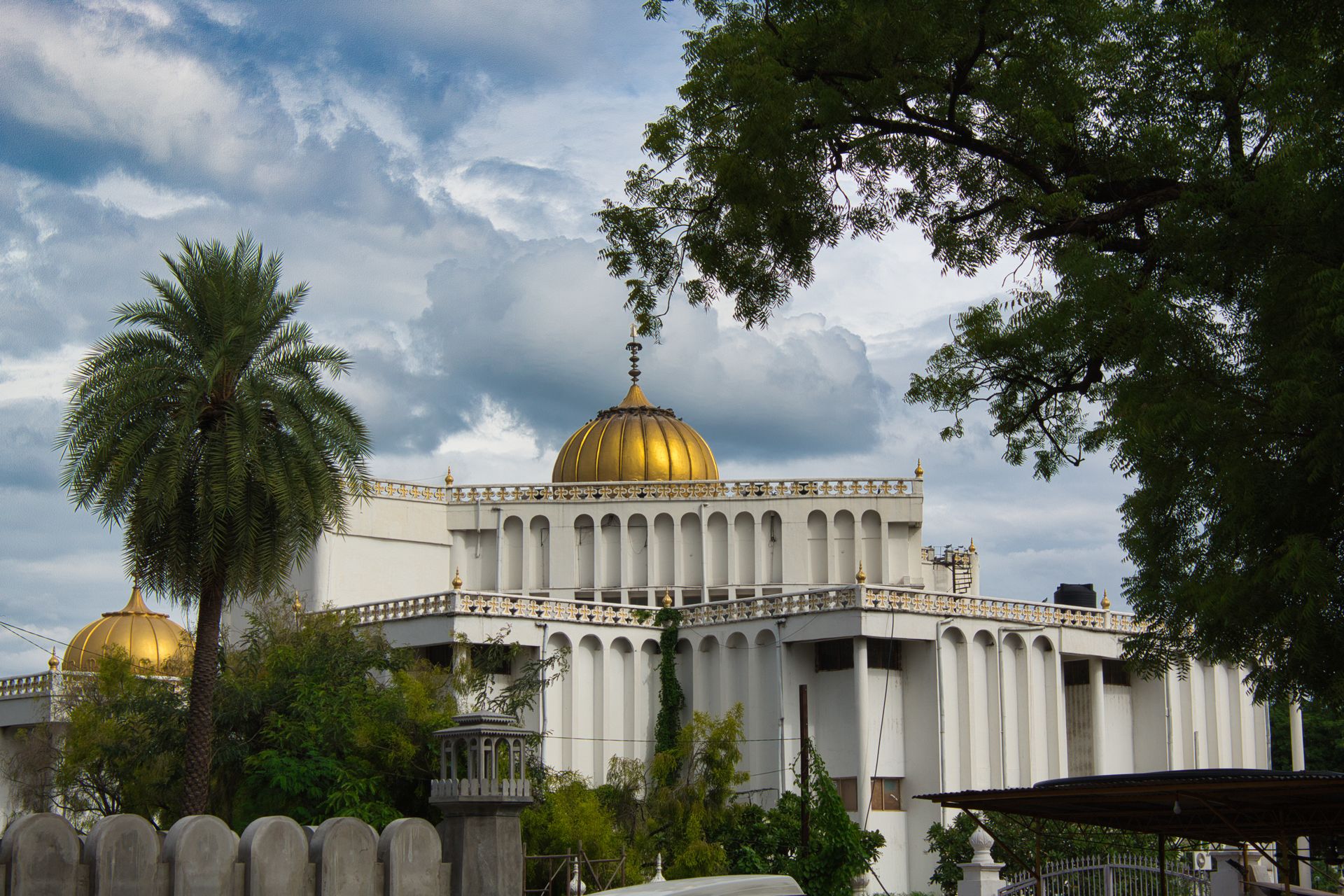

- 1Golden Temple, Amritsar · PunjabSikhism's holiest shrine, the Harmandir Sahib.
- 2Anandpur Sahib · PunjabBirthplace of the Khalsa and a Sikh Takht.
- 3Damdama Sahib · PunjabA Sikh Takht and seat of learning at Talwandi Sabo.
- 4Hazur Sahib, Nanded · MaharashtraThe Takht where Guru Gobind Singh passed away.
- 5Hemkund Sahib · UttarakhandA high-altitude Himalayan gurdwara by a glacial lake.
Sikh Takht & Gurdwara CircuitChecked
Pilgrimage route
This circuit links the supreme seats and great gurdwaras of Sikhism — from the Golden Temple at Amritsar to the Takhts of Anandpur Sahib, Damdama Sahib and Hazur Sahib at Nanded, a…
Best season
October to March
Hemkund opens May to October.
Duration
Flexible
A multi-state circuit.
How hard it is
Easy — all by road and rail, except Hemkund Sahib, which is a hard high-altitude trek
Before you go
If you have never been inside a gurdwara, let me prepare you for the thing that surprises every first-timer.
Nobody asks who you are.
You cover your head, you take off your shoes, you wash your feet, you walk in. No caste, no faith, no fee, no gatekeeper. And at some point in your visit somebody will simply sit you down on the floor in a long row of strangers and give you hot food, cooked and served by volunteers, exactly the same food that everyone else in the row is eating. That is the langar, and it runs at every gurdwara in the world, every day. At the Golden Temple it feeds something in the order of a hundred thousand people daily, more on festivals, and it has never once asked a person''s religion.
I have taken travellers of every background around this circuit, and this is what stays with them. Not the gold. The kitchen.
So come for the architecture if you like — and Amritsar at four in the morning with the marble wet and the Harmandir Sahib floating in the water is one of the sights of Asia. But understand that you are walking into a faith whose central religious act is feeding people, and let it work on you.
Along the way
The shrines and the country you cross to reach them.
_in_Amritsar%2C_India.jpg/960px-Sikh_pilgrim_at_the_Golden_Temple_(Harmandir_Sahib)_in_Amritsar%2C_India.jpg)



The journey
What this journey actually is
This circuit links the supreme seats and great gurdwaras of Sikhism — from the Golden Temple at Amritsar to the Takhts of Anandpur Sahib, Damdama Sahib and Hazur Sahib at Nanded, and the high-Himalayan shrine of Hemkund Sahib — tracing the spiritual geography of the Sikh faith.
Why pilgrims come
Sikhism has five Takhts — literally "thrones" — the seats of temporal and spiritual authority for the faith. Akal Takht at Amritsar, facing the Golden Temple across the causeway, is the first and highest. Keshgarh Sahib at Anandpur Sahib is where Guru Gobind Singh founded the Khalsa in 1699. Damdama Sahib at Talwandi Sabo is where he prepared the final recension of the scripture. Patna Sahib in Bihar marks his birthplace, and Hazur Sahib at Nanded is where he died in 1708 — and where, before dying, he ended the line of human Gurus by investing the scripture itself as the eternal Guru, the Guru Granth Sahib.
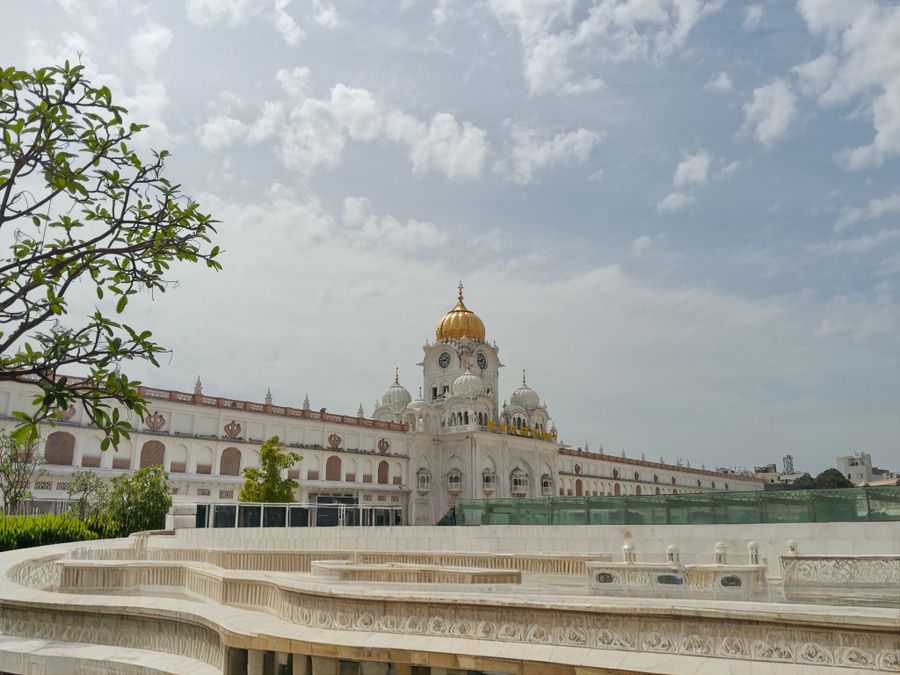
The Harmandir Sahib at Amritsar — the Golden Temple — is not a Takht but is the holiest shrine of the faith. Its four doors, open on all sides, are a deliberate statement that it is open to everyone from every direction. The Guru Granth Sahib is recited there continuously.
Hemkund Sahib is different in kind: a high-altitude gurdwara beside a glacial lake in Uttarakhand, identified from Guru Gobind Singh''s own account of meditating there in a previous life. It is open only in the summer months, and reaching it takes a hard trek — which is precisely why devotees value it.
What unites the circuit is a set of ideas that were radical when they were formulated and remain so: one God accessible without priesthood, the rejection of caste, the insistence on honest work and sharing what you have, and the duty to stand against injustice.
What a day looks like
Gurdwaras run to a daily rhythm that is worth knowing, because it is where the feeling lives.
The day opens with the Prakash — the ceremonial installation of the Guru Granth Sahib, before dawn — and closes with the Sukhasan, when it is carried to its resting place at night. At the Golden Temple both are processions, with a palanquin, and both are extraordinary. The morning one is very early — around four, earlier in summer — and I tell everyone to do it once even if you do nothing else early on the whole trip.
Kirtan — the sung scripture, live, in raag — goes almost continuously through the day at the major gurdwaras, and it is the sound you will carry home. Sit on the floor at the edge of the hall and simply listen. Nobody will hurry you and there is no expectation on you.
Langar runs through the day rather than at fixed mealtimes. Join it. And if you have an hour, volunteer — seva in the kitchen is open to anyone, and rolling rotis or washing steel plates alongside twenty strangers will teach you more about Sikhism than any amount of reading.
Evening at Amritsar is when the parikrama around the sarovar fills, the lights come on, and the temple doubles itself in the water.
Between cities, this is straightforward Indian road and rail travel — Punjab''s highways are among the best in the country. Nanded is the outlier, deep in Maharashtra, and is best treated as a separate flight or train rather than a drive. Hemkund is a different order of thing altogether, and its own commitment.
Getting ready
Getting there, and getting around
Punjab is the easy part. Amritsar has an international airport and is a major railway station; Anandpur Sahib is about three hours away by road, on the way to the hills; Damdama Sahib at Talwandi Sabo is in the south of the state near Bathinda, about four to five hours from Amritsar. Punjab''s highways are excellent and a hired car covers all three comfortably in three or four days. Chandigarh is an alternative entry point, well placed for Anandpur Sahib.
Nanded is a separate journey. Hazur Sahib sits in Marathwada in central Maharashtra, over sixteen hundred kilometres from Amritsar. Do not drive it. Nanded has an airport with limited connections and a good railway station — there is a long-running direct train between Amritsar and Nanded specifically because of this pilgrimage, and taking it is an experience in itself: a whole carriage of pilgrims, two days, and a great deal of tea. Otherwise fly via Hyderabad, Mumbai or Nagpur.
Patna Sahib, the fifth Takht, is in Bihar and is most sensibly combined with a trip to eastern India rather than with the Punjab leg.
Hemkund Sahib is the hard one. From Rishikesh or Haridwar it is a long day''s drive to Govindghat via Joshimath. From Govindghat it is around thirteen kilometres of trekking to Ghangaria — ponies and porters work this stretch, and helicopter services operate in season — and then a further six kilometres of steep climbing to the gurdwara at roughly 4,600 metres. The shrine is open only from about May to October and is shut by snow the rest of the year. The Valley of Flowers National Park branches off from Ghangaria and most trekkers do both.
A natural shape for the trip: Amritsar for three nights, then Anandpur Sahib, then either south to Damdama Sahib or north-east into Uttarakhand for Hemkund if the season is right. Nanded and Patna Sahib as separate legs when you can give them their own days.
Permits and registration
None for the gurdwaras on the plains. Hemkund Sahib sits in Uttarakhand and falls under the same mandatory state Yatra registration as the Char Dham — register yourself and your vehicle on the official Uttarakhand portal before travelling, and carry the QR registration letter.
How to prepare
Decide first whether Hemkund is in or out. It changes the whole trip. Without it, this is a comfortable road-and-rail journey across Punjab and central India that almost anyone can do at almost any age, between October and March. With it, you are adding a Himalayan trek to 4,600 metres that is only possible between roughly May and October and that needs real fitness. Do not quietly assume you will manage both in one trip.
If Hemkund is in: walk daily for six weeks beforehand, with hills or stairs. Register on the Uttarakhand Yatra portal — it is mandatory for Hemkund as it is for the Char Dham. Understand basic altitude sickness: headache that will not lift, breathlessness at rest, unsteadiness, confusion all mean go down. And build spare days in, because the weather closes that valley regularly.
Bring or buy a head covering before you arrive at your first gurdwara. Every gurdwara lends them, but having your own — a simple cotton scarf — makes the whole trip easier, and a large scarf is the most useful thing in your bag anyway.
Plan around a festival if you can, and know what you are choosing. Baisakhi in April at Anandpur Sahib, where the Khalsa was founded, is extraordinary and enormous. Hola Mohalla, just after Holi, brings the Nihang Sikhs and their martial displays to Anandpur Sahib and is one of the great spectacles of northern India. Guru Nanak Jayanti in November lights up Amritsar. All three mean vast crowds and full accommodation; both of those are the price and the point.
Consider staying in the gurdwara accommodation at Amritsar or Nanded at least one night. Sarais attached to the major gurdwaras take pilgrims of any faith, they are simple and clean, and staying inside the complex means you are there for the pre-dawn Prakash without organising anything. It is a very different experience from a hotel down the road.
Give Amritsar three nights, not one. The Golden Temple changes completely between four in the morning, the middle of the day, and ten at night, and you want all three. The city also holds Jallianwala Bagh and the Partition Museum, both of which are heavy and important, and the Wagah border ceremony in the evening.
Do at least one seva. Volunteer an hour in the langar kitchen — chopping, rolling, serving, washing up. You just turn up and join in; someone will show you where. Travellers tell me this afterwards more than anything else on the trip.
Read a little about Guru Gobind Singh before Anandpur Sahib and Nanded. The sites are inseparable from his life, and the story of the Khalsa''s founding and his last years explains why these particular towns matter.
And be aware of the weight of some of this. Amritsar carries the memory of 1919 and of 1984. Fatehgarh Sahib commemorates the execution of two young children. These are places of grief as well as devotion, and you will meet people for whom they are living history.
What to pack
A head covering you like. This is the one item specific to this circuit. A large cotton or silk scarf works for everyone, covers your head in the gurdwara, your shoulders when needed, and doubles as something to sit on. Bring two.
Slip-on shoes. You will take them off and put them on repeatedly — often several times a day. Anything with complicated laces will make you resent your own footwear by day two. Bring socks; marble is cold in the winter mornings and hot at midday.
Modest clothing, shoulders and knees covered. Punjab in winter is cold in the mornings and mild by day. Layers, plus something genuinely warm for the pre-dawn Prakash — you will be sitting still on stone at four in the morning.
A small bag you can keep in front of you. Crowds at the Golden Temple compress on the causeway. Keep valuables close and hands free.
Sunglasses. The Golden Temple''s marble parikrama at midday is blindingly bright.
For Nanded and the Maharashtra leg, lighter clothes — it is much warmer than Punjab.
If Hemkund is in the plan, pack a second time entirely, for a high mountain: thermals, fleece, insulated jacket, waterproof shell and rain cover, broken-in trekking shoes with grip, walking poles, wool socks, warm hat, gloves, high-factor sunscreen, sunglasses, headtorch, water bottle, and your Uttarakhand registration QR. The Hemkund trek is steep and often wet, and the last stretch is above the treeline in thin air.
Medical kit: your own prescriptions in quantity, rehydration salts, painkillers, plasters, and blister care if trekking.
Leave behind: tobacco and alcohol — genuinely, do not bring them into a gurdwara precinct or the sarai. Leather is fine in gurdwaras, unlike many Hindu temples. And leave room in your bag; Amritsar''s markets are very good, and someone will press something on you.
On the ground
How to behave at the shrines
Gurdwara etiquette is simple, universal, and taken seriously. Nobody will be unkind to you about it, but everybody will notice.
Cover your head. Everyone, always, regardless of gender or faith. A scarf, a bandana, a handkerchief — and every gurdwara keeps a basket of head coverings at the entrance for visitors who arrive without one. Baseball caps and hats do not count.
Shoes off, and left at the joda ghar — the shoe stand, which is staffed by volunteers. Socks are usually removed too.
Wash your feet in the shallow water channel at the entrance. This is not decorative; walk through it.
No tobacco, no alcohol, no intoxicants anywhere on the premises, and do not arrive having used them. This is one rule that is genuinely absolute. Tobacco in particular is prohibited to Sikhs entirely.
Do not point your feet at the Guru Granth Sahib. Sit cross-legged on the floor, and if your legs give out, tuck them to the side or sit against a wall — never with soles facing the scripture.
Bow when you enter the main hall — touch your forehead to the floor before the Guru Granth Sahib if you are comfortable doing so, or bow from the waist if you are not. Nobody requires it of a visitor, but the gesture is well received. Then sit; do not walk about.
Walk clockwise around the sanctum and around the sarovar at Amritsar.
At langar, sit in the row, wait to be served, accept what you are given, and finish it — wasting langar food is genuinely poor form. Eat with your right hand. Do not offer money to the volunteers serving you; if you want to contribute, the golak, the offering box, is by the shrine.
Dress modestly — shoulders and knees covered, nothing tight or transparent. Legs covered is the safer choice for everyone.
Photography is permitted in the outer precincts of most gurdwaras, including around the sarovar at Amritsar, but is prohibited inside the main sanctum. Never photograph the langar hall in a way that turns people eating into a spectacle — this is the one thing that genuinely offends, and it happens constantly.
Do not touch the Guru Granth Sahib or any ritual object, and do not step over anyone seated.
Prasad — karah parshad — is offered in cupped hands. Take it with both hands together, and eat it. Do not refuse it and do not discard it.
At the Golden Temple specifically: the parikrama around the sarovar is a walking meditation and the pace is slow; do not push. The queue across the causeway to the inner sanctum can be very long, and it moves in bursts. Bathing in the sarovar is open to all, with separate enclosures.
And you are genuinely welcome. That is not a formality in Sikhism, it is doctrine. If you look lost, ask — someone will take you in hand, probably feed you, and quite possibly walk you round themselves.
If it is your first time
Go to the Golden Temple before dawn, once. Everything I could tell you about this circuit is contained in that hour. Around four in the morning — earlier in summer — the Guru Granth Sahib is carried in procession from the Akal Takht across the causeway to the Harmandir Sahib. The marble is wet, the crowd is thin, the kirtan starts, and the gold sits in black water. Most visitors see the temple at night, lit up, which is beautiful. Very few see it at four, which is something else.
Eat in the langar, and do not skip it because you are not hungry. It is not a meal, it is the argument the religion is making. Sit on the floor in a row of two hundred strangers, take the dal and roti and kheer, finish what you are given, hand your plate back into the machinery of volunteers washing thousands of them. Then go and look at the kitchen — the vats, the roti machine, the mountains of onions being cut by people who came in on their day off.
Do not photograph people eating. I said it in the etiquette notes and I am saying it again because it is the single most common discourtesy visitors commit here. A hall of people accepting free food is not a photo opportunity.
Cover your head everywhere, including outside in the precinct. Visitors often uncover the moment they step out of the hall. The whole complex counts.
Expect the causeway queue to be long and to move strangely. It compresses and surges. Your time inside the sanctum will be brief. The parikrama around the sarovar, which has no queue at all, is where most people actually find the temple.
Do not underestimate the Nanded distance. Every year someone plans Amritsar and Nanded in the same week by road. It is sixteen hundred kilometres. Fly, or take the direct train and treat the train as part of the pilgrimage.
Anandpur Sahib deserves a night, not a stop. The Virasat-e-Khalsa museum there is genuinely one of the best museums in India and takes hours. The town sits below the Shivalik hills and is beautiful at dusk.
Hemkund is not a bonus stop. Six kilometres of steep climbing to 4,600 metres, after thirteen kilometres to Ghangaria the day before. People who tack it on casually turn back. People who plan for it come back saying it was the best day of the trip — a small gurdwara beside a black glacial lake ringed by peaks, with pilgrims singing in the cold.
Learn to say Waheguru ji ka Khalsa, Waheguru ji ki Fateh if you want to greet someone. Or just fold your hands and say Sat Sri Akal. Both will be met warmly.
And accept the hospitality. Someone will offer you tea, a seat, directions, a share of what they have. Punjab does not do half-measures on this. Say yes.