

Ghats & Sacred Rivers
Spiritual & Pilgrimage
River fronts, bathing ghats, confluences and the aarti that happens on them at dusk.
16 places
Badrinath
Tapt Kund
A sulphur hot spring in the temple courtyard, hot enough to need care, where pilgrims bathe before darshan. Separate areas for men and women.
Dakor
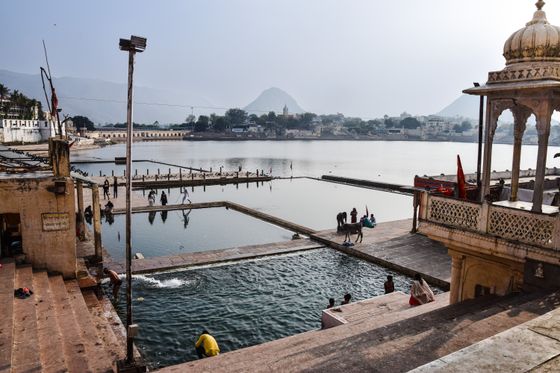
Gomti Lake and Ghats
The tank opposite the temple gates, with wide stone steps for ritual bathing and a shrine to Bodana, the devotee the Dakor story turns on. Boats run in the afternoons, mostly for local families.
Varanasi
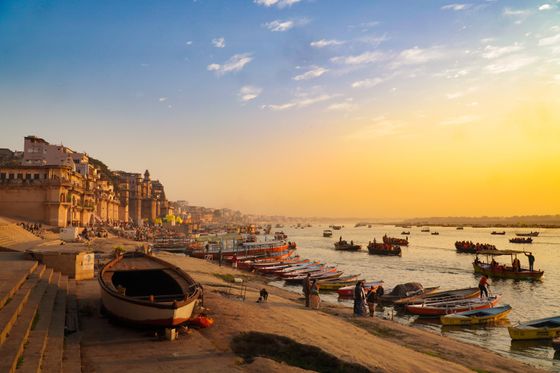
Assi Ghat
The southernmost of the major ghats, and where Subah-e-Banaras happens at dawn — Vedic chanting, the morning aarti and classical raga.
Ujjain (Mahakaleshwar)
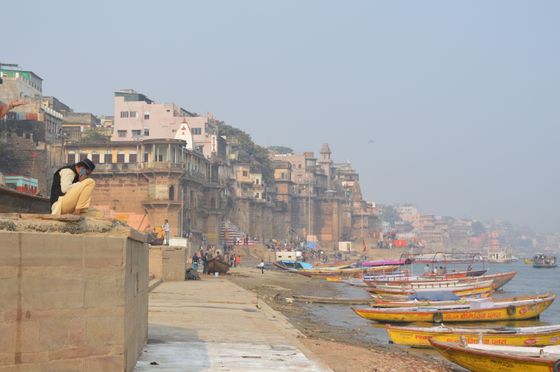
Ram Ghat
The main bathing ghat on the Shipra, central to the Kumbh Mela.
Prayagraj (Allahabad)
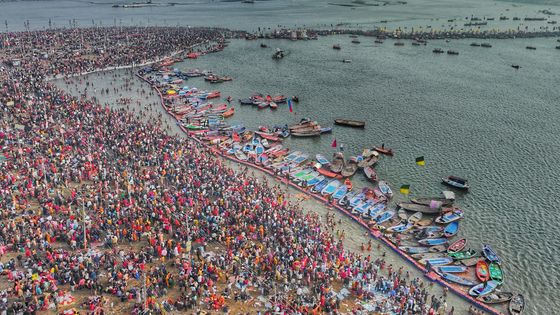
Triveni Sangam
The sacred confluence of the Ganga, Yamuna and Saraswati, reached by boat.
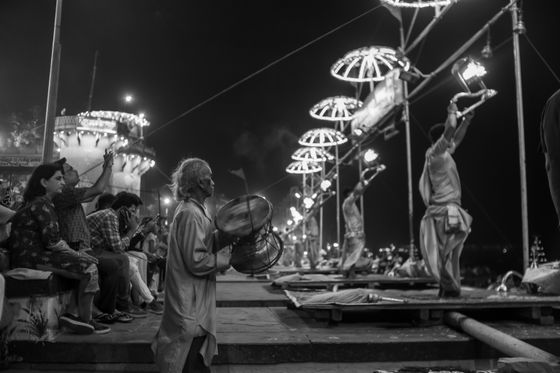
Varanasi
Dashashwamedh Ghat & Ganga Aarti
The main ghat where the grand evening Ganga Aarti is performed daily.
Kamakshi Amman Temple
Pancha Ganga Teertham
The stepped temple tank in the northern courtyard, used for ritual bathing and for float festivals on the water.
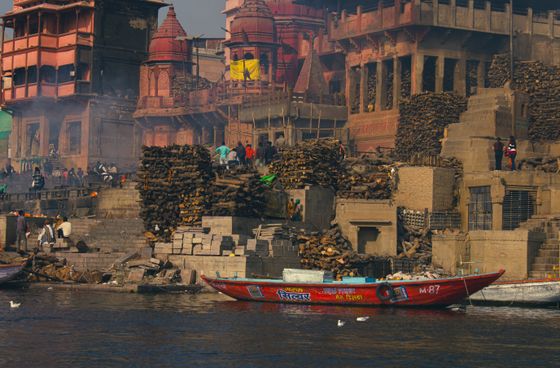
Ayodhya
Sarayu Ghats
Riverfront ghats famous for the evening aarti and the Deepotsav festival.
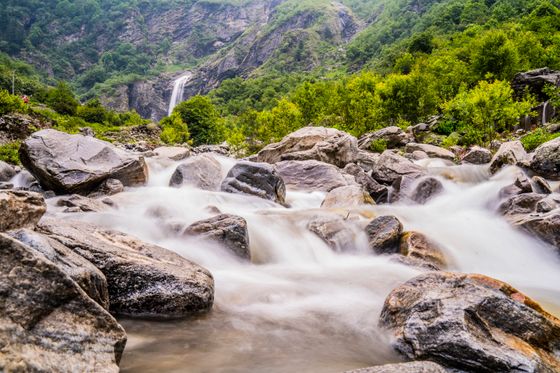
Gangotri
Suraj Kund waterfall
A fall on the Bhagirathi a few hundred metres from the temple, at its loudest just after the temple opens in spring, when the melt is heavy.

Varanasi
Dashashwamedh Ghat
The evening aarti is performed by priests on raised platforms with tiered brass lamps, every day at dusk. It is also the most crowded half hour in Varanasi, and half the audience watches from boats. If you want the ghat rather than the show, come at six in the morning.

Pushkar
Pushkar Lake Ghats
Fifty-two ghats ring the water, each attached to a different community or ruler, and the lake is old enough to appear on coins from the fourth century BC. Hindu tradition calls it tirtha-guru, the teacher of pilgrimage places, and a bath here is held to wash away sin; more than five hundred temples stand around the shore. The crowds peak at Kartik Poornima in October or November, when the Pushkar fair runs. Shoes off on every ghat, and photographing people bathing is not welcome. A priest will press a puja on you the moment you sit down — fix the amount first or say no plainly.
Yamunotri
Surya Kund
A boiling spring beside the temple, hot enough that pilgrims lower rice and potatoes into it in cloth bundles and carry them home as prasad. That is the thing to stand and watch.
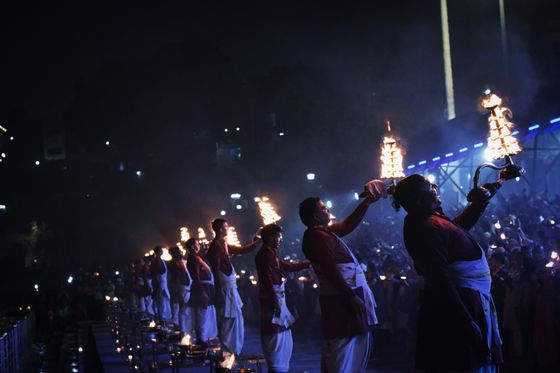
Rishikesh
Triveni Ghat
The main bathing ghat in Rishikesh town, and where the evening aarti happens. Smaller and less performed than Haridwar's, and much easier to sit through.

Devprayag (Panch Prayag)
Devprayag Sangam
The confluence of the Bhagirathi and Alaknanda that forms the Ganga.

Bihar
Kastaharni Ghat
Kastaharni Ghat is the bathing ghat on the Ganges at the eastern edge of Munger, and it carries the double life most working ghats do. It matters to people who come to bathe and pray, and it matters to people who have come to look at the river, and the two do not get in each other's way. Go early, while the light is still low and the steps belong to the bathers. Do not build a day around it. This is half an hour at the water on your way through Munger, and it is better taken that way than saved up for.
%2CArunachal_Pradesh.jpg/960px-Parshuram_math(view_5)%2CArunachal_Pradesh.jpg)
Arunachal Pradesh
Parshuram Kund
Parshuram Kund, on the Lohit river where it leaves the hills, is Arunachal's holiest Hindu site — the pool where, by legend, sage Parshuram washed away the sin of matricide and the axe fell from his hand. Every Makar Sankranti (mid-January), tens of thousands of pilgrims from Assam and beyond descend to the boulder-strewn river for a freezing holy dip, turning the remote gorge into a great mela. The rest of the year it is a quiet, mountain-ringed bend of jade water.


