

Sacred Cities
Spiritual & Pilgrimage
Cities you go to for the city itself — Varanasi, Rishikesh, Haridwar, Madurai, Puri.
303 places
Uttarakhand
Rishikesh
Famed globally as the 'Yoga Capital of the World', this crowded, restless city on the Ganges blends ancient spirituality with high-adrenaline adventure sports. Rishikesh is located in the foothills of the Garhwal Himalayas where the sacred Ganges leaves the mountains to enter the plains. It is a world-renowned destination for spiritual seekers, yoga enthusiasts, and extreme adventure travellers.
Uttarakhand
Haridwar
An ancient holy city where the Ganges emerges into the Indo-Gangetic plains, world-known for its evening Ganga Aarti at Har Ki Pauri. Haridwar, meaning the 'Gateway to Lord Vishnu', is one of the seven holiest places in Hinduism. Located where the Ganges River exits the Himalayan foothills, the city acts as the launching pad for the entire Char Dham pilgrimage circuit.

Uttarakhand
Kedarnath
Kedarnath, set at 3,583 metres against a backdrop of snow peaks and the Mandakini valley, is among the holiest of the twelve Jyotirlingas and a cornerstone of the Char Dham Yatra. The ancient stone temple, reached by a demanding Himalayan trek, is one of India's most revered shrines.

Rajasthan
Ajmer Sharif Dargah
Ajmer Sharif is the most revered Sufi shrine in India — the dargah of Khwaja Moinuddin Chishti, the 12th-century saint who founded the Chishti order. Drawing millions of pilgrims of all faiths, especially during the annual Urs, it is a powerful symbol of India's syncretic spiritual culture.

Punjab
Akal Takht
It is easy to read this as one more building inside the Golden Temple complex. Guru Hargobind established the Akal Takht, the Throne of the Timeless, in 1606 as the place where questions of justice and worldly matters would be settled, and it still works that way: the highest seat of earthly authority for the Khalsa and the official seat of the jathedar, who speaks for Sikhs worldwide. That office is contested between two factions at present, which is worth knowing before you ask anyone about it. Give the building more than a passing glance on your way round the pool.

Delhi
Akshardham (Delhi)
Swaminarayan Akshardham on the Yamuna's east bank is modern India's grandest act of temple-building — a pink sandstone and white marble mandir raised in just five years by volunteers and artisans working from ancient shilpa texts. 234 carved pillars, 20,000 sculpted figures, a colonnade of 148 stone elephants and the gilded murti of Bhagwan Swaminarayan lead out to exhibitions, a boat ride through Indian civilisation, and the evening musical fountain.
.JPG/960px-Alampur_India_(5).JPG)
Telangana
Alampur Navabrahma Temples
The name misleads: nine temples called Nava-Brahma, every one of them dedicated to Shiva. The Badami Chalukyas cut them from rock between the seventh and ninth centuries, all east-facing and square in plan, and if the profiles look familiar it is because they belong to the same family as Pattadakal and Aihole. Hunt the friezes, which include early carved retellings of the Panchatantra fables alongside Shaiva, Vaishnava and Shakta themes. The temples were badly damaged and defaced after the 14th century and the Archaeological Survey has been restoring them since 1980, so expect repair work in the frame.

Telangana
Alampur Papanasi Temples
Twenty-three temples stand here, most of them ruined, and all of them moved, the cluster having been relocated to the southwest of Alampuram village rather than lost. They were completed between the 9th and 11th centuries by the Rashtrakutas and the later Chalukyas, in a square-plan Nagara style, and were destroyed during the invasions of the 14th and 15th centuries. The largest, Papanasisesvara, keeps its plain outer walls and a rangamandapa inside, dedicated to Shiva as the dancer. It is about a kilometre and a half from the Navabrahma group, so do both in one morning.

Leh & Ladakh
Alchi Monastery
Alchi is unlike any other gompa in Ladakh: it sits low by the Indus rather than on a crag, and its temples preserve some of the finest 11th–12th century Buddhist art in the world. The Kashmiri-style murals of the Sumtsek and Dukhang — thousand-Buddha walls, colossal bodhisattvas painted with miniature scenes on their robes — survive from the era of the great translator Rinchen Zangpo. It is a quiet village of apricot orchards, a living museum of a vanished artistic world.
Uttar Pradesh
Alopi Devi (Lalita) Temple
Alopi Devi (Lalita) Temple in Prayagraj (Sangam), Uttar Pradesh is one of the Shakti Peethas, the sacred shrines of the Divine Mother in the Shakta tradition of Hinduism. According to tradition, this is where the fingers of Goddess Sati fell when Lord Vishnu's Sudarshana Chakra divided her body. Here the Goddess is worshipped as Lalita (Madhaveshwari), and her guardian Bhairava (a form of Shiva) as Bhava. Shakti Peethas are among the holiest pilgrimage sites for devotees of the Goddess, drawing pilgrims especially during Navratri and Durga Puja. Each is tied to the legend of Sati, whose body parts fell across the Indian subcontinent and beyond, sanctifying the ground where they landed.

Andhra Pradesh
Amararama (Amaravati)
Amararama at Amaravati is the foremost of the Pancharama Kshetras — five ancient Shiva temples of coastal Andhra said to enshrine pieces of a single sacred lingam. Set on the Krishna River beside the famous Buddhist stupa site of Amaravati, it blends Shaivite pilgrimage with deep archaeological heritage.

Madhya Pradesh
Amarkantak
Amarkantak is where the Narmada is born — a hilltop sanctuary in the Maikal range where India's holiest westward river rises from a small white-tiled kund ringed by temples. The Sone river springs from the same plateau to flow east, making this a rare watershed of sacred geography. Around the Narmada Udgam cluster the ancient Kalachuri-era temples, Kapil Dhara falls where the infant river first leaps, and forests rich with medicinal herbs.
Jammu & Kashmir
Amarnath
Mahamaya is the name the Goddess carries here, and Trisandhyeshwar is the Bhairava who guards her. The cave opens for only a few weeks around Shravan, in July and August, and you will need a registration and a medical certificate before you set out — from Pahalgam it is three or four days in, while Baltal is fourteen kilometres and very steep. Neither way in is a stroll.
Gujarat
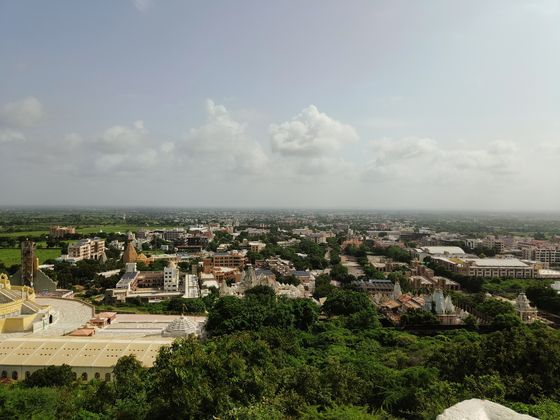
Ambaji Temple (Gabbar Hill)
Ambaji Temple (Gabbar Hill) in Ambaji, Banaskantha, Gujarat is one of the Shakti Peethas, the sacred shrines of the Divine Mother in the Shakta tradition of Hinduism. According to tradition, this is where the heart of Goddess Sati fell when Lord Vishnu's Sudarshana Chakra divided her body. Here the Goddess is worshipped as Amba (Ambika), and her guardian Bhairava (a form of Shiva) as Batuk Bhairava. Shakti Peethas are among the holiest pilgrimage sites for devotees of the Goddess, drawing pilgrims especially during Navratri and Durga Puja. Each is tied to the legend of Sati, whose body parts fell across the Indian subcontinent and beyond, sanctifying the ground where they landed.
Rajasthan
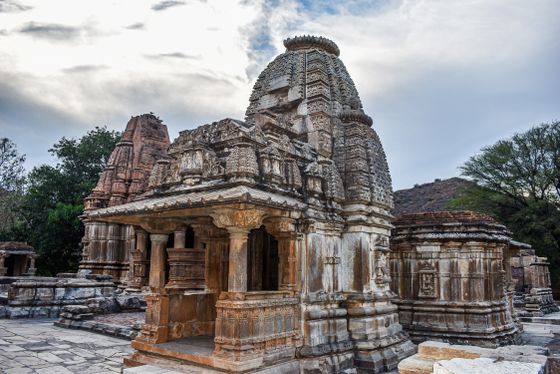
Ambika Shakti Peeth
Ambika Shakti Peeth in Bharatpur, Rajasthan is one of the Shakti Peethas, the sacred shrines of the Divine Mother in the Shakta tradition of Hinduism. According to tradition, this is where the toes of the left foot of Goddess Sati fell when Lord Vishnu's Sudarshana Chakra divided her body. Here the Goddess is worshipped as Ambika, and her guardian Bhairava (a form of Shiva) as Amriteshwar. Shakti Peethas are among the holiest pilgrimage sites for devotees of the Goddess, drawing pilgrims especially during Navratri and Durga Puja. Each is tied to the legend of Sati, whose body parts fell across the Indian subcontinent and beyond, sanctifying the ground where they landed.

Jharkhand
Amreshwar Dham
Locals still call it Angrabari; the name Amreshwar Dham came later, given by the Shankaracharya Swami Swarupananda Saraswati. It is a Shiva complex on the Khunti-Torpa road, 45 km from Ranchi and nine from the district headquarters, with shrines to Ganesha, Rama, Sita and Hanuman alongside the main one. On an ordinary day it makes an easy, unhurried stop on the way south. Through Sawan and on Maha Shivaratri the Shiva crowd fills it, and unhurried is the last word you would use.
Punjab
Amritsar (Golden Temple)
The Golden Temple sits lower than the ground around it, and you walk down steps to reach the water. That is deliberate: nearly every other temple in India makes you climb up to it. It has four doors, one on each side, for the same reason — the building is meant to be entered from any direction, by anyone. Head covered, shoes off, feet through the water channel at the entrance, and nobody will ask you anything else. The langar behind the complex feeds on the order of a hundred thousand people a day, more at weekends, on donated food and volunteer labour. The dish hall takes anyone who turns up to help, and half an hour in it tells you more about the place than any guidebook. The Akal Takht faces the sanctum across the water. It is the seat of temporal authority in Sikhism, and those two buildings looking at each other across a pool is the whole argument of the faith in one view.
Punjab
Anandpur Sahib
Anandpur Sahib — the 'Holy City of Bliss' — matters as much as anywhere in the Sikh faith outside Amritsar. It sits in the foothills of the Shivalik range on a loop of the Sutlej in Punjab, and its skyline is a run of white-stone gurdwaras built like fortresses. The town is a centre of theological study and of Sikh martial tradition. Its heart is Takht Sri Keshgarh Sahib, one of the five Takhts, the supreme seats of temporal authority in Sikhism. Behind it stands the Virasat-e-Khalsa museum, designed by the Israeli architect Moshe Safdie, which lays out 500 years of Sikh history and the region's cultural traditions in careful detail.

West Bengal
Attahas Temple
Attahas, at Labhpur in Birbhum, West Bengal, is one seat on the Shakti Peetha circuit — the one where tradition places Sati's lips, and where the Goddess is worshipped as Phullara with Vishwesh as her Bhairava. What you come to see is a large stone in the shape of a lip, out under a tree rather than inside a built sanctum.
Uttar Pradesh
Ayodhya
Ayodhya is an ancient city on the banks of the sacred Saryu, revered as the birthplace of Lord Rama and one of the seven primary holy cities of Hinduism. Since the consecration of the newly built Sri Ram Janmabhoomi Mandir, the city has been rebuilt around it on a scale that has changed the place entirely. Centuries-old temples now sit alongside new roads and walkways laid for visitors. The Ram Mandir, constructed without a single piece of iron or steel, is approached across wide pedestrian plazas. Climb the high stone steps of Hanuman Garhi, or come down to the Ram Ki Pauri ghats in the evening when the lights are on the water — the devotion is the first thing you notice.
Uttarakhand
Badrinath
A Vishnu temple that anchors both the national Char Dham and the Chota Char Dham circuits. Badrinath is a historic holy town between the Nar and Narayana mountain ranges in the Chamoli district of Uttarakhand. It sits at an altitude of 3,133 metres along the banks of the Alaknanda River.

West Bengal
Bahula Temple
Bahula is usually reached on a drive rather than sought out on its own — one stop on the Bengal Peetha circuit that pilgrims cover in two or three days. The temple itself is small and rural, at Ketugram on the Ajay river in Purba Bardhaman, West Bengal. The Goddess here is worshipped as Bahula and her Bhairava is Bhiruk; tradition assigns this seat the left arm of Sati.

Jharkhand
Baidyanath Dham (Jaya Durga)
Baidyanath Dham (Jaya Durga) in Deoghar, Jharkhand is one of the Shakti Peethas, the sacred shrines of the Divine Mother in the Shakta tradition of Hinduism. According to tradition, this is where the heart of Goddess Sati fell when Lord Vishnu's Sudarshana Chakra divided her body. Here the Goddess is worshipped as Jaya Durga, and her guardian Bhairava (a form of Shiva) as Vaidyanath. It is counted among the eighteen Ashtadasha Maha Shakti Peethas — the most revered of all the seats of the Goddess. Shakti Peethas are among the holiest pilgrimage sites for devotees of the Goddess, drawing pilgrims especially during Navratri and Durga Puja. Each is tied to the legend of Sati, whose body parts fell across the Indian subcontinent and beyond, sanctifying the ground where they landed.

Himachal Pradesh
Bajreshwari Mata Temple (Kangra)
Bajreshwari Mata Temple (Kangra) in Kangra, Himachal Pradesh is one of the Shakti Peethas, the sacred shrines of the Divine Mother in the Shakta tradition of Hinduism. According to tradition, this is where the left breast of Goddess Sati fell when Lord Vishnu's Sudarshana Chakra divided her body. Here the Goddess is worshipped as Jayadurga (Bajreshwari), and her guardian Bhairava (a form of Shiva) as Abhiru (Abhirunatheshwar). Shakti Peethas are among the holiest pilgrimage sites for devotees of the Goddess, drawing pilgrims especially during Navratri and Durga Puja. Each is tied to the legend of Sati, whose body parts fell across the Indian subcontinent and beyond, sanctifying the ground where they landed.
West Bengal
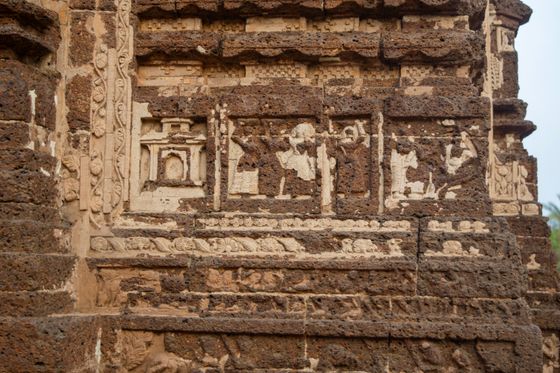
Bakreshwar Temple
In Birbhum, West Bengal, the hot springs at Bakreshwar draw as many people as the temple does. There are several, each at a different temperature, with bathing tanks built around them, and the hottest is too hot to sit in. The temple itself is a Shakti Peetha; the Goddess is worshipped here as Mahishmardini, and her Bhairava as Vakranath. Give the springs as much of your time as you give the darshan.

Chhattisgarh
Bambleshwari Temple
Two temples, and it helps to know which is which before you arrive. Badi Bambleshwari stands on a hilltop of 1,600 feet; Chhotti Bambleshwari sits at ground level about half a kilometre from the main complex, and is the easier of the two if a climb is a question. Lakhs of people come during the Navratris, Kavar around Dusshera and Chaitra around Ram Navami, and the Jyoti Kalash lamps are lit then, which is both the best and the worst time to be here depending on whether you came for the crowd or in spite of it.

West Bengal
Bargabhima Temple
The Bargabhima Temple stands at Tamluk in Purba Medinipur, on the bank of the Roopnarayan, and is counted among the 51 Shaktipeeths, the one known as Vibhash. It is dedicated to the goddess Sati and called Bhimakali Mandir locally. The Tamluk Raj family built it, which is the useful thing to know before you arrive: this was their seat, and the temple is what survives of that. It is an ancient working shrine rather than a monument with a ticket counter, so come early and let the queue of worshippers move past you.

Telangana
Basilica of Our Lady of the Assumption, Secunderabad
Most people still call it St Mary's, and the older name fits the building better than the title it was given in 2008. Completed in 1850, it is the oldest Roman Catholic church in Secunderabad and served as the cathedral of the Archdiocese of Hyderabad until 1886, when it ceased to be one. The convent next door has been there since 1871, when nuns from Turin arrived and opened the school that still runs beside the church. It is on Sarojini Naidu Road, and it is worth the short detour if you are already in Secunderabad rather than a trip of its own.

Puducherry
Basilica of the Sacred Heart of Jesus, Pondicherry
Go for the glass. The rare stained panels inside this minor basilica on Pondicherry's south boulevard depict events from the life of Christ and from the lives of the saints, and they are the reason to step in rather than photograph the front and move on. The building is an oriental reading of Gothic Revival, which is worth taking on its own terms rather than measuring against European churches. In recent years it has become one of the better-known Christian pilgrimage places here, so it is not a quiet building at the times you would expect.
.jpg/960px-Bateshwar_Temples_(15695822503).jpg)
Madhya Pradesh
Bateshwar Hindu temples, Madhya Pradesh
Nearly 200 small sandstone temples fill a 25-acre slope in the Chambal ravines, about 35 kilometres north of Gwalior and 30 east of Morena, dedicated between them to Shiva, Vishnu and Shakti. They went up between the 8th and 10th centuries in post-Gupta and early Gurjara-Pratihara style, and most of what stands today was reassembled from fallen stone by the Archaeological Survey of India in a project started in 2005, helped, improbably, by the dacoit Nirbhay Singh Gujjar and his gang. Each temple is modest; the number of them is the effect. The largest, the Bhuteshvar Temple to Shiva, probably gave the site its name.

Uttar Pradesh
Belha Devi Temple
Bela Pratapgarh takes its name from the goddess inside this temple: Belha Bhavani, the town's patron and a local form of the Devi. The shrine sits on the bank of the Sai river and works as a living centre of Shakti worship rather than a monument to be looked at. The building itself is only about two hundred years old, though the tradition it carries in this part of northern India is a great deal older. Worth half an hour if you are already in Pratapgarh district, and not a reason to make the journey on its own.

West Bengal
Belur Math
Belur Math, headquarters of the Ramakrishna Mission on the Hooghly's west bank, was consecrated by Swami Vivekananda in 1899. Its main temple is a deliberate symphony of faiths — a facade that reads as temple, church and mosque depending on where you stand — enshrining Sri Ramakrishna's relics. The riverside campus of lawns and shrines to Holy Mother Sarada Devi and Vivekananda breathes an orderly, universal calm unlike anywhere else in Kolkata.

Bhabanipur (Aparna) Temple
Aparna is the name the Goddess carries at Bhabanipur, and Vaman is the Bhairava who guards her; the relic tradition assigns here is Sati's left anklet. The temple stands in Bogra district in northern Bangladesh, on the old Karatoya river, and it is kept better and signposted more clearly than several of the other Bangladesh Peethas.
.JPG/960px-Bhadrachalam_temple_View_from_Lord_Narasimha_Temple_in_2015_(cropped).JPG)
Telangana
Bhadrachalam
Bhadrachalam, on the Godavari, is the 'Ayodhya of the South' — the seat of Sita Ramachandraswamy, whose temple was raised in the 17th century by the tahsildar-saint Kancherla Gopanna, remembered as Bhakta Ramadasu for the kirtans he wrote in prison for the temple's sake. The Sri Rama Navami kalyanam (celestial wedding) performed here draws lakhs, with the state itself presenting pearls for the ritual, a tradition running unbroken from the Qutb Shahi kings.

Haryana
Bhadrakali Temple (Kurukshetra)
Bhadrakali Temple (Kurukshetra) in Thanesar, Kurukshetra, Haryana is one of the Shakti Peethas, the sacred shrines of the Divine Mother in the Shakta tradition of Hinduism. According to tradition, this is where the ankle bone of Goddess Sati fell when Lord Vishnu's Sudarshana Chakra divided her body. Here the Goddess is worshipped as Savitri (Bhadrakali), and her guardian Bhairava (a form of Shiva) as Sthanu. Shakti Peethas are among the holiest pilgrimage sites for devotees of the Goddess, drawing pilgrims especially during Navratri and Durga Puja. Each is tied to the legend of Sati, whose body parts fell across the Indian subcontinent and beyond, sanctifying the ground where they landed.

Andhra Pradesh
Bhavanarayana Temple, Sarpavaram
Inscriptions are the reason to slow down here. The earliest is dated 1073 CE, which tells you the temple was already standing by then, and the run of later ones records the repairs and rebuilds that successive rulers paid for. What you are looking at, in other words, is a Vishnu temple assembled over centuries rather than built in one go. The 15th-century Telugu poet Srinatha wrote it into Kasi Khandamu and Bhimeswara Puranam. It is a protected monument about 5 km out of Kakinada, and a short visit unless you can read the stone.
Maharashtra
Bhimashankar
Bhimashankar, deep in the Sahyadri hills of Maharashtra, is one of the twelve Jyotirlingas of Lord Shiva and the source of the Bhima River. Surrounded by a wildlife sanctuary that shelters the rare Indian giant squirrel, it combines a major pilgrimage with lush Western Ghats trekking.

Assam
Bhimeswar Dham
Much of the reason to come is the walk up, past hills, streams and bamboo groves along the road, with a Ganesha temple halfway. At the end of it there is no temple building at all, only a hill stream running continuously over a linga on Dakini hill, beside Deepor Beel. Devotees hold this to be the Bhimashankar Jyotirlinga, where Shiva took form to destroy the demon Bhimasura; the Bhimashankar near Pune claims the same, and the argument is old and unsettled. Go for the setting and the water rather than the certainty.

Chhattisgarh
Bhooteshwarnath
Local belief holds that the Shivlinga is getting bigger, and devotees who come back each year say it was small once. Government officials measure it annually, so the claim at least gets checked. Either way it is already reckoned the second largest natural Shivlinga in the world, after Siddheshwarnath in Ziro, and Chhattisgarh recognises it as an Ardhnarishwara Shivlinga in the manner of the Dwadas Jyotirlingas. The temple stands in the middle of the Gariaband forests near Marouda village. Crowds arrive at Mahashivratri and on Sawan Mondays, carrying Mahanadi water from Rajim.

Chhattisgarh
Bhoramdeo Temple
Bhoramdeo, wrapped in the forested Maikal hills, is called the 'Khajuraho of Chhattisgarh' — an 11th-century Shiva temple of the Nagvanshi kings whose walls carry tier upon tier of sculpted musicians, dancers, deities and frankly amorous couples. The sanctum's dark stone Shiva sits behind a hall of carved pillars, and two earlier brick temples and a sculpture-filled lawn complete the complex beside a lotus pond.

Andhra Pradesh
Bhramaramba (Mallikarjuna) Temple
Bhramaramba (Mallikarjuna) Temple in Srisailam, Andhra Pradesh is one of the Shakti Peethas, the sacred shrines of the Divine Mother in the Shakta tradition of Hinduism. According to tradition, this is where the neck of Goddess Sati fell when Lord Vishnu's Sudarshana Chakra divided her body. Here the Goddess is worshipped as Bhramaramba (Mahalakshmi), and her guardian Bhairava (a form of Shiva) as Mallikarjuna (Sambaranand). It is counted among the eighteen Ashtadasha Maha Shakti Peethas — the most revered of all the seats of the Goddess. Shakti Peethas are among the holiest pilgrimage sites for devotees of the Goddess, drawing pilgrims especially during Navratri and Durga Puja. Each is tied to the legend of Sati, whose body parts fell across the Indian subcontinent and beyond, sanctifying the ground where they landed.

West Bengal
Bhramari Devi (Jalpesh) Temple
A Jora Banyan stands in the Bhramari Devi temple at Jalpaiguri, up in north Bengal, and the shrine is counted among the Shakti Peethas. The Jalpesh temple beside it has its sanctum sunk below ground level, so the monsoon fills it and it is worshipped flooded. Plan the visit with the Dooars rather than with the Kolkata Peethas.

Tripura
Bhubaneswari Temple
Tagore wrote about this one, which is most of why anyone makes the 55 km run out from Agartala to Rajnagar. The temple is believed to date from between 1660 and 1675, and it stands next to the palace Govinda Manikya built, so the two read as a single site rather than two stops. Come knowing that the literary association is doing much of the lifting here; if Tagore means nothing to you this is a modest visit, and you would want to pair it with something else in the south of the state.
Odisha
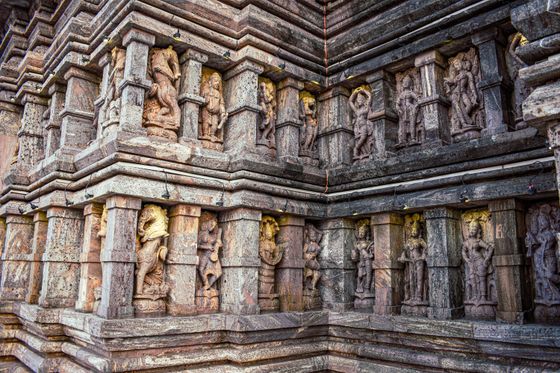
Biraja (Girija) Temple
Biraja (Girija) Temple in Jajpur, Odisha is one of the Shakti Peethas, the sacred shrines of the Divine Mother in the Shakta tradition of Hinduism. According to tradition, this is where the navel of Goddess Sati fell when Lord Vishnu's Sudarshana Chakra divided her body. Here the Goddess is worshipped as Vimala (Biraja), and her guardian Bhairava (a form of Shiva) as Jagannath (Varaha). Shakti Peethas are among the holiest pilgrimage sites for devotees of the Goddess, drawing pilgrims especially during Navratri and Durga Puja. Each is tied to the legend of Sati, whose body parts fell across the Indian subcontinent and beyond, sanctifying the ground where they landed.

Bihar
Bodh Gaya
Bodh Gaya is the most sacred site in Buddhism — the place where Prince Siddhartha attained enlightenment under the Bodhi Tree to become the Buddha. The Mahabodhi Temple, a UNESCO World Heritage Site, and monasteries built by Buddhist nations worldwide make it a global pilgrimage centre.

Bihar
Champapuri
Champapuri is a neighbourhood of Bhagalpur standing on the site of ancient Champa, capital of the Anga Mahajanapada and the main centre of the Anga cultural region. The pull here is Jain. This is claimed as the only place where all five kalyanas of Bhagwan Vasupujya took place: garbha, janma, diksha, kevalagnana and moksha. Adinatha and Parshwanatha are each said to have spent a monsoon here, and Mahavira two of his, the third and the twelfth. An ancient Champanala temple stands on the site, with an idol inside. Come for the weight of the ground rather than for the architecture.
.jpg/960px-Chamundeshwari_Temple%2C_Mysore%2C_Karnataka%2C_India_(2012).jpg)
Karnataka
Chamundeshwari Temple
Chamundeshwari Temple in Mysuru, Karnataka is one of the Shakti Peethas, the sacred shrines of the Divine Mother in the Shakta tradition of Hinduism. According to tradition, this is where the hair of Goddess Sati fell when Lord Vishnu's Sudarshana Chakra divided her body. Here the Goddess is worshipped as Chamundeshwari (Krouncha). Shakti Peethas are among the holiest pilgrimage sites for devotees of the Goddess, drawing pilgrims especially during Navratri and Durga Puja. Each is tied to the legend of Sati, whose body parts fell across the Indian subcontinent and beyond, sanctifying the ground where they landed.

Uttarakhand
Chandi Devi Temple, Haridwar
Chandi Devi stands on Neel Parvat, the eastern summit of the Sivalik hills at the southern edge of the Himalaya, above Haridwar. The building dates to 1929, put up by Suchat Singh during his reign as king of Kashmir, but the murti inside is held to be far older: installed in the eighth century by Adi Shankaracharya. The temple, also called Neel Parvat Teerth, is one of Haridwar's Panch Tirth and one of its three Siddh Peethas, with Mansa Devi and Maya Devi. Taking all three makes more sense than singling out one.

Haryana
Chandi Mandir
Chandigarh took its name from this temple rather than the other way round, which is the fact worth carrying up the highway with you. The shrine is dedicated to Chandi, the goddess of power, and stands on NH-5 between Chandigarh and Kalka, in Panchkula, about 15 km out of the city with the Shivalik hills behind it. Mansa Devi is 10 km away, so do the two in one morning rather than on two separate trips. Start early. This is a temple on a busy national highway, and the quiet belongs to the first hour.
Gujarat
Chandrabhaga (near Somnath)
Chandrabhaga (near Somnath) in Prabhas, Veraval, Gujarat is one of the Shakti Peethas, the sacred shrines of the Divine Mother in the Shakta tradition of Hinduism. According to tradition, this is where the stomach of Goddess Sati fell when Lord Vishnu's Sudarshana Chakra divided her body. Here the Goddess is worshipped as Chandrabhaga, and her guardian Bhairava (a form of Shiva) as Vakratunda. Shakti Peethas are among the holiest pilgrimage sites for devotees of the Goddess, drawing pilgrims especially during Navratri and Durga Puja. Each is tied to the legend of Sati, whose body parts fell across the Indian subcontinent and beyond, sanctifying the ground where they landed.

Goa
Chapel of Our Lady of the Mount
Getting up here takes some doing. The chapel sits on a hill above the Mandovi and is not easily reached, which is exactly why it is the quietest thing in Old Goa. Afonso de Albuquerque ordered it built straight after the Portuguese conquest of 1510 and it was finished in 1519, making it one of the oldest churches in the city. Laterite stone, Baroque with Mannerist leanings. It stood in ruins until 2001, when Fundação Oriente funded and planned the restoration with the state government. Every November the courtyard fills for the Monte Music Festival, the one time you will not have it to yourself.
Chattal Bhawani (Chandranath)
Chattal Bhawani (Chandranath) in Sitakunda, Chittagong, Bangladesh is one of the Shakti Peethas, the sacred shrines of the Divine Mother in the Shakta tradition of Hinduism. According to tradition, this is where the right arm of Goddess Sati fell when Lord Vishnu's Sudarshana Chakra divided her body. Here the Goddess is worshipped as Bhawani, and her guardian Bhairava (a form of Shiva) as Chandrashekhar. Shakti Peethas are among the holiest pilgrimage sites for devotees of the Goddess, drawing pilgrims especially during Navratri and Durga Puja. Each is tied to the legend of Sati, whose body parts fell across the Indian subcontinent and beyond, sanctifying the ground where they landed.

Tripura
Chaturdasha Temple
The dome is the reason to come: it copies the roofline of a Tripuri village hut, then carries a stupa-like structure on top, which is about as clear a picture of the state's mixed religious history as any single building gives you. Krishna Manikya built it in 1760, the year Agartala became the capital, in honour of the fourteen deities known together as the Chaturdasha Devata. Devotees come for the kharchi festival. The temple and the surrounding capital complex have been under refurbishment since May 2023, so check what is open before you plan a day around it.

Telangana
Chaya Someswara Temple
A single shadow lies on the lingam all day, whatever the sun is doing, and the architect put it there deliberately — the pillars of the ardhamandapa and the gaps around the central shrine were set to cast it. Chaya is Telugu for shadow, hence the name. Behind the trick is a serious three-shrine temple of the mid-11th century, built by the Kunduru Chodas, its sanctums to Shiva, Vishnu and Surya sharing one hall of carved pillars retelling the Mahabharata and the Ramayana. It was in ruins in the mid-20th century and is only partly restored now. Crowded at Maha Shivaratri; Pachala Someshwara is next door.

Jharkhand
Chhinnamasta Temple, Rajrappa
Rajrappa's shrine to Chhinnamasta pulls devotees from every part of Jharkhand, and across the borders from Bihar and West Bengal too, which tells you most of what to expect on a weekend. The draw for anyone not here to pray is the Tantric style of the architecture, which reads quite unlike the temples most visitors already know. Ten smaller temples stand around the main one, to Surya, Hanuman and Shiva among others. It is in Ramgarh district. Go on a weekday morning and you get the place at a pace where you can actually look at it.
Tamil Nadu
Chidambaram (Nataraja Temple)
Chidambaram is an ancient pilgrimage town near the coastal plains of Cuddalore district in Tamil Nadu, and the reason to come is the Thillai Nataraja Temple. It covers several acres and is dedicated to Lord Shiva in his distinctive cosmic dance posture — Nataraja, the Lord of Dance. Four massive gopuram gateways, every inch of them covered in sculpture, mark the entrances; inside are a grand sacred tank and the Kanaka Sabha, the central inner sanctum, roofed in pure gold plate fixed down with exactly 72,000 copper nails. The temple is run by the Dikshitars, a closed hereditary community of married priests.
Himachal Pradesh
Chinnamastika Temple (Chintpurni)
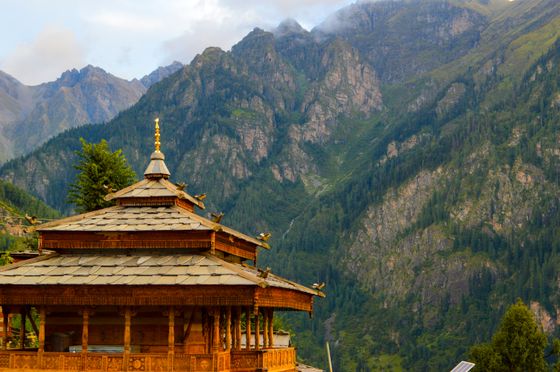
Chinnamastika Temple (Chintpurni) in Chintpurni, Himachal Pradesh is one of the Shakti Peethas, the sacred shrines of the Divine Mother in the Shakta tradition of Hinduism. According to tradition, this is where the feet of Goddess Sati fell when Lord Vishnu's Sudarshana Chakra divided her body. Here the Goddess is worshipped as Chhinnamastika, and her guardian Bhairava (a form of Shiva) as Rudra Mahadeva. Shakti Peethas are among the holiest pilgrimage sites for devotees of the Goddess, drawing pilgrims especially during Navratri and Durga Puja. Each is tied to the legend of Sati, whose body parts fell across the Indian subcontinent and beyond, sanctifying the ground where they landed.

Gujarat
Chotila Hill
Chotila Hill rises abruptly from the flat plains of the Surendranagar district in Saurashtra, a near-symmetrical cone standing about 350 metres high. It is best known as the seat of the goddess Chamunda Mata, whose hilltop shrine draws a steady stream of pilgrims who climb the long covered stairway of more than 600 stone steps to the summit.

Kerala
Chottanikkara Temple
Chottanikkara Bhagavathy, on Kochi's green edge, is one of Kerala's most powerful goddess temples — the Devi worshipped as Saraswati at dawn, Lakshmi at noon and Durga at dusk. The temple is famed across the South for healing afflictions of the mind; at the lower Kizhukkavu shrine, the guardian Bhadrakali's ancient paala tree bristles with nails driven in as spirits are exorcised at the wrenching Guruthi Pooja each night.

Assam
Dah Parvatiya
One carved doorframe is the reason to come. A 1924 excavation at this village just west of Tezpur turned up a sixth-century stone door frame covered in carving; the rest is a stone-paved outline of a sanctum and mandapa, from the Ahom-period brick temple raised over the older foundations. It is an ASI-protected site, so expect a guarded patch of ground rather than a monument you walk through. Ten minutes of looking closely at that frame beats an hour of wandering the plan.

Gujarat
Dakor
Dakor is a temple town in the Kheda district of central Gujarat, built around the Ranchhodraiji Temple and the stone-stepped Gomti Lake. Its Krishna deity is one of the region's most revered; local legend says the image came from Dwarka out of love for a devotee named Bodana. The town is busiest on full-moon days, when large crowds gather for prayers.
Dakshayani (Manasa) Temple
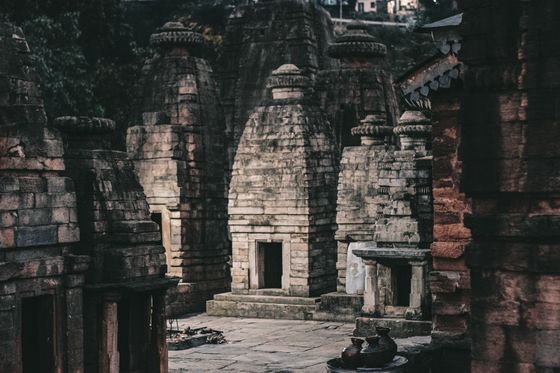
Dakshayani (Manasa) Temple in Lake Manasarovar, Mount Kailash, China (Tibet) is one of the Shakti Peethas, the sacred shrines of the Divine Mother in the Shakta tradition of Hinduism. According to tradition, this is where the right hand of Goddess Sati fell when Lord Vishnu's Sudarshana Chakra divided her body. Here the Goddess is worshipped as Dakshayani, and her guardian Bhairava (a form of Shiva) as Amar. Shakti Peethas are among the holiest pilgrimage sites for devotees of the Goddess, drawing pilgrims especially during Navratri and Durga Puja. Each is tied to the legend of Sati, whose body parts fell across the Indian subcontinent and beyond, sanctifying the ground where they landed.
.jpg/960px-Dakshineswar_Kali_Temple%2C_Dakshineswar%2C_West_Bengal%2C_India_(2007).jpg)
West Bengal
Dakshineswar Kali Temple
Dakshineswar, on the Hooghly north of Kolkata, is the great navaratna (nine-spired) temple of Bhavatarini Kali built by Rani Rashmoni in 1855 — and the temple where Sri Ramakrishna served as priest, had his God-intoxicated visions, and drew the world to Kali's feet. His room in the courtyard's corner is preserved as he left it; twelve Shiva temples line the riverfront, and ferries cross to Belur Math on the far bank.

Punjab
Damdama Sahib (Talwandi Sabo)
Takht Sri Damdama Sahib at Talwandi Sabo is one of the five Takhts of Sikhism, the place where Guru Gobind Singh prepared the definitive recension of the Guru Granth Sahib. Known as the 'Guru's Kashi' (seat of learning), it is a major centre during Baisakhi.

Chhattisgarh
Danteshwari Temple
Danteshwari Temple in Dantewada (Bastar), Chhattisgarh is one of the Shakti Peethas, the sacred shrines of the Divine Mother in the Shakta tradition of Hinduism. According to tradition, this is where the tooth of Goddess Sati fell when Lord Vishnu's Sudarshana Chakra divided her body. Here the Goddess is worshipped as Danteshwari, and her guardian Bhairava (a form of Shiva) as Kapalabhairava. Shakti Peethas are among the holiest pilgrimage sites for devotees of the Goddess, drawing pilgrims especially during Navratri and Durga Puja. Each is tied to the legend of Sati, whose body parts fell across the Indian subcontinent and beyond, sanctifying the ground where they landed.
Jharkhand
Deoghar (Baidyanath Dham)
Deoghar, the 'abode of the gods', is home to the Baidyanath Jyotirlinga, one of the twelve sacred Jyotirlingas of Shiva. During the monsoon month of Shravan, millions of saffron-clad kanwariyas walk over 100 km carrying Ganga water from Sultanganj to offer at the temple — one of India's largest pilgrim movements.

Odisha
Deulajhari
An old centre of Shaivism in Deulajhari village, in the Athmallik sub-division of Angul district. The draw is water: 24 hot springs surround the Shiva Shree Siddeswar Baba temple, though temple records say there were once 84. The site runs to about 24 acres, most of it indigenous pandanus forest, kiabana, which is the reason to walk between the springs slowly rather than counting them off. Go for the forest as much as the temple.

Telangana
Deval Masjid
Two buildings occupy the same set of walls. Bodhan's hundred-pillared hall was raised as the Indranarayana Swamy temple in the Kakatiya era, then converted into a mosque in the 14th century under Muhammad bin Tughluq, and it has been read both ways ever since; locals still call it Vanda Stambhala Gudi, the hundred-pillared temple. The pillars are the whole reason to come, and the hall is what survives best. Find it in the Udmeer Gally area. It is a state-protected monument and a quiet one, which is unusual for a building carrying this much argument.

Punjab
Devi Talab Mandir (Tripuramalini)
In Jalandhar the temple is built around its own water tank, the devi talab it is named for, which sits in the middle of the complex with a model of the Amarnath cave beside it. The Goddess here is worshipped as Tripuramalini and her Bhairava as Bhishana. Look for the carved wooden door. Every December the adjoining grounds are given over to the Harballabh classical music festival, one of the oldest music gatherings in India.
Uttarakhand
Devprayag (Panch Prayag)
Devprayag is the most sacred of the Panch Prayag — the five holy confluences of Uttarakhand — where the Alaknanda and Bhagirathi rivers merge to form the Ganga itself. A small temple town clinging to the hillsides above the turquoise waters, it marks the very birth of the holy river.

Karnataka
Dharmasthala
Dharmasthala is Karnataka's temple of harmony: a Shiva shrine (Manjunatha) whose priests are Vaishnava Brahmins and whose hereditary guardians, the Heggade family, are Jain — dispensing dharma, justice and food to all comers for over 800 years. Its annadana feeds tens of thousands daily in one of India's great free kitchens, while the 12-metre Bahubali monolith and a vintage-car museum stand nearby on the Netravati's banks.

Chhattisgarh
Dhumnath Temple
The village has grown right into this one: houses lean against the hall and ante-chamber, and the eastern wall of the sanctum now doubles as somebody's courtyard wall. What survives is a Bhumija temple from the Kalachuri period, with a curvilinear Nagara shikhara that has lost its crowning amalaka. The exterior reliefs are the reason to make the detour: Brahma, Chamunda and Mahishasuramardini on the right wall, Shiva-Parvati, Ganesha and Kartikeya on the left, and frankly erotic panels drawn from the Kama Sutra alongside them. The doorway sits about five feet up, three steps to reach it, then six steps down into a shrine below ground level.

Rajasthan
Dilwara Temples (Mount Abu)
The Dilwara Temples at Mount Abu are a group of five exquisite Jain temples built between the 11th and 13th centuries, known for marble carving cut so thin that the ceilings pass light — ceilings, pillars and panels worked into lace-like detail considered unsurpassed in India.

Nagaland
Dimapur Jain Temple
Built in 1947 on Jain Temple Road, this is Dimapur's Jain temple, with Mahavira as its moolnayak, the primary deity the whole building is arranged around. The SD Jain Samaj Dimapur looks after it. It is a working neighbourhood temple rather than a monument, so keep the visit brief and quiet, and ask before photographing anything inside.

Leh & Ladakh
Diskit Monastery
Diskit is the oldest and largest monastery of the Nubra valley, founded in the 14th century and stacked on a rocky spur above the Shyok river. Its prayer halls hold fierce guardian deities and centuries-old murals, but the landmark is newer: the 32-metre Jampa (Maitreya) Buddha on the hill facing Pakistan, consecrated by the Dalai Lama in 2010, gazing out over the cold-desert dunes of Hunder.

Chhattisgarh
Dongargarh (Bamleshwari Temple)
At Dongargarh the goddess Bamleshwari watches from a 1,600-step hilltop — the Badi (elder) Bamleshwari — while her sister shrine, Chhoti Bamleshwari, stands in the town below. The temple is Chhattisgarh's busiest pilgrimage, its twin Navratri fairs drawing lakhs of devotees who climb through the night as the hill glows with lamps. A ropeway now glides over the boulders for those who skip the stairs.

Sikkim
Dubdi Monastery
Dubdi means the retreat, and the three kilometres up out of Yuksom, about an hour on foot, earn the name before you arrive. Established in 1701 and professed to be the oldest monastery in Sikkim, it is also called the Hermit's Cell after Lhatsun Namkha Jigme, one of the three lamas who met at Norbugang and crowned Phuntsog Namgyal the first Chogyal in 1642. It is a small Nyingma house on a hilltop, and the walk is half of what you came for. Take it as the first leg of the circuit that runs on through Norbugang, Pemayangtse, the Rabdentse ruins and Tashiding.
.jpg/960px-Many_of_the_locals_we_had_spoken_to_were_delighted_that_the_Govt_has_sanctioned_funds_for_renovation_of_this_temple_(38049489065).jpg)
Punjab
Durgiana Temple
Amritsar's other temple on a tank, and the likeness to the Golden Temple is close enough to catch people out: a similar silhouette, a different faith. Durga presides here, with Lakshmi and Vishnu also worshipped. The 1921 date usually quoted is a rebuild rather than a founding, since the district gazetteer of 1893 already describes the Durgiana Sarovar and the shrine beside it. A short visit does it, and it is quieter than the place it resembles.

Gujarat
Dwarka
Dwarka is an ancient holy city on the westernmost tip of the Saurashtra peninsula, revered as the legendary ocean kingdom of Lord Krishna and a core part of the Chardham pilgrimage circuit. Millions of travellers, Indian and foreign, arrive year-round in a stream that never really stops — for the historic temples, and now for the new infrastructure built around them.

Sikkim
Enchey Monastery
The name means Solitary Monastery, which stopped being accurate a long time ago. The 1909 Nyingma building went up above what was then a small hamlet, and Gangtok has grown around it since. The site was chosen by Lama Drupthob Karpo, a tantric adept credited with flight, who is said to have flown here from Maenam Hill in South Sikkim and put up a small gompa on the spot. Sikkimese belief holds that the protecting deities Khangchendzonga and Yabdean live here and grant what devotees ask for, which is why this place matters in Gangtok households and not only to visitors.
_at_Fatehgarh_Sahib_Gurdwara%2C_Punjab%2C_India.jpg/960px-Sarovar_(sacred_pool)_at_Fatehgarh_Sahib_Gurdwara%2C_Punjab%2C_India.jpg)
Punjab
Fatehgarh Sahib
Gurdwara Fatehgarh Sahib rises in white marble over the site of Sikhism's most heart-rending sacrifice — where in 1704 the two youngest sons of Guru Gobind Singh, aged just seven and nine, were bricked alive by the Sirhind governor for refusing to abandon their faith. The underground Bhora Sahib preserves the wall's site; nearby stand Mata Gujri's tower prison and the shrine of Todar Mal, who bought the cremation ground with gold coins laid edge to edge.
Gandaki Chandi (Muktinath)
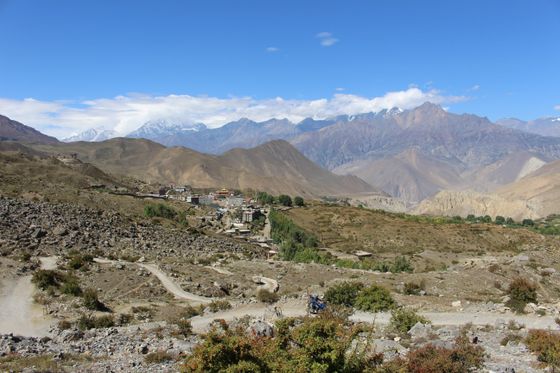
Gandaki Chandi (Muktinath) in Muktinath, Nepal is one of the Shakti Peethas, the sacred shrines of the Divine Mother in the Shakta tradition of Hinduism. According to tradition, this is where the head (cheek) of Goddess Sati fell when Lord Vishnu's Sudarshana Chakra divided her body. Here the Goddess is worshipped as Gandaki Chandi, and her guardian Bhairava (a form of Shiva) as Chakrapani. Shakti Peethas are among the holiest pilgrimage sites for devotees of the Goddess, drawing pilgrims especially during Navratri and Durga Puja. Each is tied to the legend of Sati, whose body parts fell across the Indian subcontinent and beyond, sanctifying the ground where they landed.

Gujarat
Gandhinagar
Gandhinagar is Gujarat's planned capital, laid out on the west bank of the Sabarmati by the architects H.K. Mewada and Prakash M. Apte in an orderly grid of 30 sectors. It is recognised internationally as one of India's greenest administrative capitals. Government is the city's main business, but plenty of visitors come for other reasons: the large exhibition halls, the tree cover and nature parks, and the very big temples.

Uttarakhand
Gangotri
The revered birthplace of the holy River Ganga and the second shrine in the Chota Char Dham circuit. Gangotri is at an elevation of 3,048 metres in the Uttarkashi district of Uttarakhand. The white granite temple sits on the banks of the Bhagirathi River. While the actual geographical source of the Ganges is Gaumukh at the base of the Gangotri Glacier (an 18 km trek from the town), Gangotri town is the accessible spiritual epicentre for millions of devotees.

Uttarakhand
Garjiya Devi
One rock in the middle of the Kosi, with the shrine sitting sixty feet above the riverbed on top of it: that is Garjiya Devi, 14 km north of Ramnagar on the outskirts of Corbett. Inside stands a ninth-century Lakshmi-Narayan in black granite. People from the villages around come to worship daily, and many bathe in the river below. At Kartik Purnima, the full moon that falls in November or December, thousands arrive and the rock is hung with bulbs and diyas. Fold it into a Corbett trip rather than driving out for it alone.

Gujarat
Girnar (Jain Temples)
Girnar, a sacred volcanic massif near Junagadh, is a major pilgrimage for both Jains and Hindus. The arduous climb of roughly 10,000 steps passes a walled cluster of medieval Jain temples partway up, before continuing to Hindu shrines at the higher summits — a full day's climb, and one of the hardest pilgrimages in Gujarat.

Arunachal Pradesh
Golden Pagoda, Namsai
Nothing here is old. The pagoda opened in 2010, Burmese in style, spread over a 20-hectare complex on land given by the state and known in Tai-Khamti as Kongmu Kham. Age is not the point; scale is, and it holds up. The World Tripitaka Foundation is developing the site as India's first international Tripitaka centre, so expect it to keep growing. Tinsukia in Assam, 68 km away, is the nearest railway station, which makes this a sensible stop when you are crossing between the two states rather than a journey in itself.

Bihar
Great Buddha (Bodh Gaya)
Sixty-one feet of sandstone and red granite, seated in meditation on a lotus in the open air at the end of Temple Street, with the Buddha's ten principal disciples ranged five to a side. The foundation stone went down in 1982, twelve thousand stonemasons worked on it for seven years, and the Dalai Lama consecrated it in 1989. A hollow spiral staircase runs from the ground up to the chest, its walls shelved with 16,300 small bronze Buddhas. It is modern and it means to impress, which after the Mahabodhi complex can feel like a lot. Go anyway, and go inside.
.jpg/960px-Guhyeshwari_Temple_Pashupatinath_Kathmandu_Nepal_Rajesh_Dhungana_(1).jpg)
Guhyeshwari Temple
Guhyeshwari sits beside Pashupatinath in Kathmandu, and most people see the two on one visit rather than making a separate trip for it. Nepal asks no visa of Indian citizens, so this and Muktinath are the two Shakti Peethas outside India that take the least arranging. The Goddess here is worshipped as Mahamaya, also called Mahashira, and Kapali is the Bhairava who guards her.

Odisha
Gupteswar Cave
A limestone cave shrine to Shiva, about 55 km from Jeypore in Koraput district. The entrance is modest for what it leads to, roughly 3 metres wide and 2 metres high, and there are 200 steps to climb before you reach the lingam, which believers hold is still growing. Tradition credits Rama with finding the cave and Maharajah Veer Vikram Dev with finding it again. In Shravan, pilgrims walk here barefoot with decorated bamboo palanquins called kanwadiya and bathe in the maha kund first. If you want the shrine quiet, avoid that month; if you want to understand why people come, that is exactly when to go.

Kerala
Guruvayur (Sri Krishna Temple)
Guruvayur is a temple town in Kerala centred on the revered Sri Krishna (Guruvayurappan) Temple, often called the Dwarka of the South. The deity is worshipped as the young Krishna, and the shrine is one of the busiest Vaishnava pilgrimage centres in India, famed for its strict rituals, temple elephants and devotional music.

Maharashtra
Haji Ali Dargah (Mumbai)
The Haji Ali Dargah is one of Mumbai's most recognisable landmarks — a white-domed Indo-Islamic shrine and mosque set on a tiny islet in the Arabian Sea, reached by a causeway that submerges at high tide. The tomb of the saint Pir Haji Ali Shah Bukhari draws pilgrims of all faiths.

Assam
Hajo
Hajo is an ancient pilgrimage town near Guwahati in Assam, revered across three faiths. The hilltop Hayagriva Madhava temple draws Hindus and some Buddhists who believe the Buddha attained nirvana here, while the nearby Poa Mecca is an important Muslim shrine, making Hajo a rare centre of shared devotion.

West Bengal
Hangseshwari Temple
Thirteen ratnas rise from the roof, each built as a lotus bud, and the plan inside is said to follow human anatomy — the whole building is a tantric diagram, Satchakrabhed, worked in brick. Raja Nrisinhadeb Roy Mahasay laid the foundation in December 1799 and died before it was done, the second storey up in 1802; his second wife, Rani Sankari, finished the rest in 1814. The deity is Hangseswari, a form of Kali. Two more temples are within reach — Ananta Basudeba in the same complex, and the Swanbhaba Kali of 1788 — so allow more than a quick stop. Bansberia around it is an industrial town.

Sikkim
Hanuman Tok
Soldiers look after this temple, and it shows. A bureaucrat named Appaji Pant built the shrine over a stone in the upper reaches of Gangtok in 1950; the Indian Army later acquired the land around it and inherited the temple along with the ground, and has maintained it since. The result is tidier and more orderly than most hill temples, and the height above town is the other half of the appeal. It is a short visit, so put it together with something else up that road.

Madhya Pradesh
Harsiddhi (Avanti) Temple
Harsiddhi (Avanti) Temple in Ujjain, Madhya Pradesh is one of the Shakti Peethas, the sacred shrines of the Divine Mother in the Shakta tradition of Hinduism. According to tradition, this is where the upper lip / elbow of Goddess Sati fell when Lord Vishnu's Sudarshana Chakra divided her body. Here the Goddess is worshipped as Mahakali (Avanti), and her guardian Bhairava (a form of Shiva) as Lambakarna. Shakti Peethas are among the holiest pilgrimage sites for devotees of the Goddess, drawing pilgrims especially during Navratri and Durga Puja. Each is tied to the legend of Sati, whose body parts fell across the Indian subcontinent and beyond, sanctifying the ground where they landed.

Assam
Hayagriva Madhava Temple
The lamps in the sanctum are never allowed to go out; oil feeds into the big earthen bowls through a tube run from a tin, a plain arrangement holding up an old promise. The temple sits on Manikut hill at Hajo, around 30 km west of Guwahati. Look low before you look up. A continuous row of carved elephants runs along the base of the walls, closer to Ellora's stone-cut work than to anything nearby, and above them are the ten incarnations of Vishnu, devotees in procession and episodes from the Ramayana and Mahabharata. Doul, Bihu and Janmastami are the crowded days.

Jammu & Kashmir
Hazratbal Shrine (Srinagar)
The Hazratbal Shrine, set on the western shore of Srinagar's Dal Lake, is Kashmir's holiest Muslim shrine, revered for housing a relic believed to be a hair of Prophet Muhammad. Its gleaming white marble dome against the lake and mountains makes it both a sacred site and a scenic landmark.
Uttarakhand
Hemkund Sahib
One of the highest and most revered Sikh shrines in the world, next to a glacial lake surrounded by seven mountain peaks. Gurdwara Sri Hemkund Sahib is a renowned pilgrimage centre located at an astounding altitude of 4,572 metres (15,000 feet) in the Chamoli district of Uttarakhand. It is sacred to both the Sikh community and Hindu devotees.

Hinglaj Mata Temple
Hinglaj Mata Temple in Hingol (Balochistan), Pakistan is one of the Shakti Peethas, the sacred shrines of the Divine Mother in the Shakta tradition of Hinduism. According to tradition, this is where the brahmarandhra (crown of the head) of Goddess Sati fell when Lord Vishnu's Sudarshana Chakra divided her body. Here the Goddess is worshipped as Hinglaj (Kottari), and her guardian Bhairava (a form of Shiva) as Bhimalochana. Shakti Peethas are among the holiest pilgrimage sites for devotees of the Goddess, drawing pilgrims especially during Navratri and Durga Puja. Each is tied to the legend of Sati, whose body parts fell across the Indian subcontinent and beyond, sanctifying the ground where they landed.

Puducherry
Immaculate Conception Cathedral, Pondicherry
The local name gives away more than the official one. People call it Samba Kovil, which is what Tamil speakers made of Saint Paul's Kovil, kovil being the word for a temple and applied here to a church. Officially this is the mother church of the Roman Catholic archdiocese of Pondicherry and Cuddalore, which makes it the seat of the archbishop rather than a museum piece. It is a working cathedral before it is a sight, so keep the visit short and make it when nothing is on.

Karnataka
ISKCON Temple
ISKCON Sri Radha Krishna Temple in Rajajinagar is one of the largest ISKCON temples in the world, a striking blend of modern glass-and-steel architecture with traditional gopuram-topped shrines. Opened in 1997 on Hare Krishna Hill, it is a major centre for Krishna devotion, cultural programmes and prasadam distribution in Bengaluru.

Jharkhand
Jagannath Temple, Ranchi
You can walk up the staircase or drive the motorable path; either way this 17th-century temple stands on a hillock about 10 km out of central Ranchi. It is built in the Kalinga style and looks like the Jagannath temple at Puri shrunk down, which is the honest description of it: the interest lies in the resemblance rather than the scale. The one time it fills is the Rath Yatra in Aashaadha, when the chariot festival and the fair pull thousands of tribal and non-tribal devotees from the city and the villages around.

Punjab
Jallianwala Bagh
Seven acres, close enough to the Golden Temple to walk, where a crowd gathered on Baisakhi Day, 13 April 1919, and was fired on. The garden is kept as a memorial to those killed and wounded, with a museum, a gallery and several memorial structures on the site. Renovation is scheduled between 2025 and 2027, so parts may be closed or altered when you arrive and it is worth checking first. Pair it with the Partition Museum if you can take both in one day, and leave yourself time to sit.

Delhi
Jama Masjid (Delhi)
The Jama Masjid of Delhi, built by Shah Jahan in 1656, is one of the largest mosques in India. Its vast red-sandstone-and-marble courtyard holds tens of thousands of worshippers, and its southern minaret looks out over the rooftops of Old Delhi.
Gujarat
Jamnagar
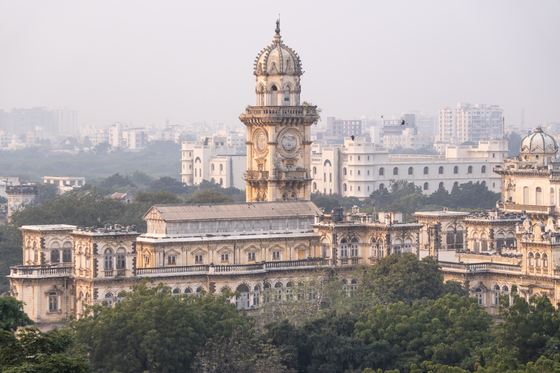
Jamnagar, once the princely capital of Nawanagar under the Jadeja rulers, sits on the southern Gulf of Kutch. Known as the 'Jewel of Kathiawar' and, for its many temples, as 'Chhoti Kashi', it pairs royal-era architecture — lake palaces, colonial squares and a solar observatory — with a large modern industrial belt. Nearby lie coral reefs and coastal wetlands rich in birdlife.

Jayanti (Jaintiapur)
Jaintiapur is in Bangladesh's Sylhet division, an hour or so from the Dawki crossing. It was the plains capital of the Jaintia kingdom, whose hill capital at Nartiang is now in Meghalaya — one kingdom with a border through it, so reaching this Peetha from India means leaving India. The Goddess here is worshipped as Jayanti and her guardian Bhairava as Kramadishwar.
Meghalaya
Jayanti (Nartiang Durga) Temple
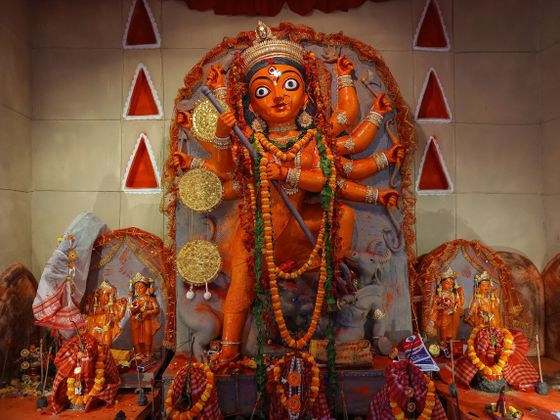
Jayanti (Nartiang Durga) Temple in Nartiang, Jaintia Hills, Meghalaya is one of the Shakti Peethas, the sacred shrines of the Divine Mother in the Shakta tradition of Hinduism. According to tradition, this is where the left thigh of Goddess Sati fell when Lord Vishnu's Sudarshana Chakra divided her body. Here the Goddess is worshipped as Jayanti (Nartiang Durga), and her guardian Bhairava (a form of Shiva) as Kramadishwar. Shakti Peethas are among the holiest pilgrimage sites for devotees of the Goddess, drawing pilgrims especially during Navratri and Durga Puja. Each is tied to the legend of Sati, whose body parts fell across the Indian subcontinent and beyond, sanctifying the ground where they landed.
.jpg/960px-Narendra_Modi_worshiping_at_Jeshoreshwari_Kali_Temple%2C_Shyamnagar%2C_Satkhira%2C_2021-03-27_(PID-0029729).jpg)
Jeshoreshwari Kali Temple
The Goddess here is Jeshoreshwari, and the temple that carries her name stands at Ishwaripur in Satkhira — in Bangladesh, near the Bangladeshi side of the Sundarbans. Indians get a straightforward visa, and because several Peethas sit within a few days of each other on that side of the border, this one is worth planning into a single trip rather than a crossing made for it alone.

Bihar
Jivakarama vihara
Jivaka, royal physician to king Bimbisara, owned a mango orchard below Gijjhakuta hill outside Rajgir, and gave it to the Buddha's sangha along with the monastery he built on it. The Buddha was treated here after Devadatta injured him. What survives is the ground plan: long parallel halls where monks ate and slept together, no private cells and no stupa, which is what makes it look unlike every later vihara. Archaeology puts it at roughly 530 to 400 BCE. It is a short stop unless building plans genuinely interest you.

Telangana
Jogulamba Temple
Jogulamba Temple in Alampur, Telangana is one of the Shakti Peethas, the sacred shrines of the Divine Mother in the Shakta tradition of Hinduism. According to tradition, this is where the upper teeth of Goddess Sati fell when Lord Vishnu's Sudarshana Chakra divided her body. Here the Goddess is worshipped as Jogulamba (Yogini), and her guardian Bhairava (a form of Shiva) as Bala Brahmeshwar. It is counted among the eighteen Ashtadasha Maha Shakti Peethas — the most revered of all the seats of the Goddess. Shakti Peethas are among the holiest pilgrimage sites for devotees of the Goddess, drawing pilgrims especially during Navratri and Durga Puja. Each is tied to the legend of Sati, whose body parts fell across the Indian subcontinent and beyond, sanctifying the ground where they landed.
Gujarat
Junagadh
Resting right at the base of the sacred, volcanic Girnar hills, Junagadh is an ancient city whose name means 'Old Fort'. It features a diverse mix of ancient Buddhist rock edicts, medieval fort structures, and flamboyant 19th-century royal mausoleums, capturing a unique historical footprint within Saurashtra.

Himachal Pradesh
Jwalamukhi (Jwala Ji) Temple
Jwalamukhi (Jwala Ji) Temple in Jwalamukhi, Kangra, Himachal Pradesh is one of the Shakti Peethas, the sacred shrines of the Divine Mother in the Shakta tradition of Hinduism. According to tradition, this is where the tongue of Goddess Sati fell when Lord Vishnu's Sudarshana Chakra divided her body. Here the Goddess is worshipped as Siddhida (Ambika/Jwalamukhi), and her guardian Bhairava (a form of Shiva) as Unmatta Bhairava. It is counted among the eighteen Ashtadasha Maha Shakti Peethas — the most revered of all the seats of the Goddess. Shakti Peethas are among the holiest pilgrimage sites for devotees of the Goddess, drawing pilgrims especially during Navratri and Durga Puja. Each is tied to the legend of Sati, whose body parts fell across the Indian subcontinent and beyond, sanctifying the ground where they landed.

West Bengal
Kalighat Kali Temple
Kalighat Kali Temple in Kolkata, West Bengal is one of the Shakti Peethas, the sacred shrines of the Divine Mother in the Shakta tradition of Hinduism. According to tradition, this is where the toes of the right foot of Goddess Sati fell when Lord Vishnu's Sudarshana Chakra divided her body. Here the Goddess is worshipped as Kalika, and her guardian Bhairava (a form of Shiva) as Nakuleshwar. It is counted among the eighteen Ashtadasha Maha Shakti Peethas — the most revered of all the seats of the Goddess. Shakti Peethas are among the holiest pilgrimage sites for devotees of the Goddess, drawing pilgrims especially during Navratri and Durga Puja. Each is tied to the legend of Sati, whose body parts fell across the Indian subcontinent and beyond, sanctifying the ground where they landed.

Assam
Kamakhya Temple
Kamakhya Temple in Guwahati, Assam is one of the Shakti Peethas, the sacred shrines of the Divine Mother in the Shakta tradition of Hinduism. According to tradition, this is where the yoni (womb) of Goddess Sati fell when Lord Vishnu's Sudarshana Chakra divided her body. Here the Goddess is worshipped as Kamakhya, and her guardian Bhairava (a form of Shiva) as Umananda. It is counted among the eighteen Ashtadasha Maha Shakti Peethas — the most revered of all the seats of the Goddess. Shakti Peethas are among the holiest pilgrimage sites for devotees of the Goddess, drawing pilgrims especially during Navratri and Durga Puja. Each is tied to the legend of Sati, whose body parts fell across the Indian subcontinent and beyond, sanctifying the ground where they landed.

Tamil Nadu
Kamakshi Amman Temple
Kamakshi Amman Temple in Kanchipuram, Tamil Nadu is one of the Shakti Peethas, the sacred shrines of the Divine Mother in the Shakta tradition of Hinduism. According to tradition, this is where the navel / back of Goddess Sati fell when Lord Vishnu's Sudarshana Chakra divided her body. Here the Goddess is worshipped as Devagarbha (Kamakshi), and her guardian Bhairava (a form of Shiva) as Ruru. It is counted among the eighteen Ashtadasha Maha Shakti Peethas — the most revered of all the seats of the Goddess. Shakti Peethas are among the holiest pilgrimage sites for devotees of the Goddess, drawing pilgrims especially during Navratri and Durga Puja. Each is tied to the legend of Sati, whose body parts fell across the Indian subcontinent and beyond, sanctifying the ground where they landed.
.jpg/960px-Kameeswarar_temple_(9).jpg)
Puducherry
Kameeswarar temple
Villianur's temple answers to three names — Thirukameeswarar, Kokilamba-Kameeswarar, or simply the Villianur temple — and covers two acres behind concentric rectangular walls. Shiva is worshipped here as Kameeswarar in the form of a lingam, with Kokilamba Amman and Ranganathar holding the other two prominent shrines. The Cholas are believed to have built the original, and later dynasties kept adding to it. Rituals run six times a day between six in the morning and half past eight at night, so there is no wrong hour to arrive. The crowds come for Brahmotsavam in the Tamil month of Aadi, July into August.
Tamil Nadu
Kanchipuram
Kanchipuram, the 'City of a Thousand Temples', is one of Hinduism's seven sacred Sapta Puri cities and a great centre of Dravidian temple architecture. Famed for the Kamakshi Amman, Ekambareswarar and Kailasanathar temples — and for its exquisite hand-woven Kanchipuram silk sarees.
.jpg/960px-Kankalitala_(28_May_2023).jpg)
West Bengal
Kankalitala Temple
Kankalitala Temple in Bolpur, Birbhum, West Bengal is one of the Shakti Peethas, the sacred shrines of the Divine Mother in the Shakta tradition of Hinduism. According to tradition, this is where the pelvis (waist) of Goddess Sati fell when Lord Vishnu's Sudarshana Chakra divided her body. Here the Goddess is worshipped as Devgarbha, and her guardian Bhairava (a form of Shiva) as Ruru. Shakti Peethas are among the holiest pilgrimage sites for devotees of the Goddess, drawing pilgrims especially during Navratri and Durga Puja. Each is tied to the legend of Sati, whose body parts fell across the Indian subcontinent and beyond, sanctifying the ground where they landed.

Haryana
Kapal Mochan
A bathing tank 17 km north-east of Yamunanagar and Jagadhari, on the Bilaspur road, held sacred by Hindus and Sikhs alike and also known as Gopal Mochan and Somsar Mochan. The legend is specific: killing a Brahmin is counted the gravest of sins, and a bath here is said to wash it off. That has kept the place in use long enough for it to rank with the 48 kos parikrama of Kurukshetra and Dhosi Hill among the oldest Vedic sites in Haryana. Nearby Bilaspur, a worn-down form of Vyas Puri, is where Ved Vyasa is held to have written the Mahabharata, on the bank of the Sarasvati near Adi Badri. Take all three in one run out of Yamunanagar.

Puducherry
Karaikal Ammaiyar Temple
Unusually, the temple is not for a god but for a devotee: Punithavathi, the Shaivite saint and Nayanmar remembered as Karaikal Ammaiyar, the revered mother of Karaikal. That dedication is the whole reason to go, and it is worth knowing before you walk in or the place will seem like any other. It stands in the middle of the city on Bharathiar Street, which the French called the Rue de Porear, so it folds easily into anything else you are doing in Karaikal.

Rajasthan
Karni Mata Temple
Karni Mata Temple, also called Madh, is the one known well beyond Rajasthan as the Temple of Rats, and the name is meant literally. It stands in Deshnoke, a small town 30 km south of Bikaner. Twenty thousand or more rats, the kaba, live throughout the complex and are cared for as kin, with bowls of milk set out for them around the temple. Anyone who kills one, even by accident, must replace it with a rat made of gold. The temple's story is that Karni Mata's stepson Lakshman drowned in Kapil Sarovar at Kolayat, and that she went to Yamraj, the god of death, to ask for him back. In the story, Yamraj gave way, and since then her Charan lineage have been reborn as kaba in her temple rather than going to him. A few white rats are held to be Karni Mata and her family. Seeing one counts as a blessing. She is worshipped as an incarnation of Hinglaj or Durga, and the Rajputs and Charans of northwestern India hold her as their tutelary deity; at Navratri her pilgrims come mainly from Rajasthan and Gujarat. You go in through a marble front and solid silver doors whose panels tell her legends. The sanctum itself you see from outside: its floor is worked in crisscross patterns, and a 75 cm image of the goddess holds a trident and wears a mukut and garlands. Images of her sisters flank it. The temple is open from 4 a.m. to 10 p.m. every day, with no entry fee.

Haryana
Kartikeya Temple, Pehowa
One of the oldest Kartikeya temples in North India, in the township of Pehowa. The deity is worshipped the length of the country under a long list of names — Murugan, Skanda, Shanmukha the six-faced, Kumara the child — and the Kushanas and the Yaudheyas both struck coins bearing his image, as the Ikshvakus and the Guptas honoured him. What you arrive at is a living shrine rather than a monument to photograph, so expect worship rather than sightseeing, and dress for it.

Tripura
Kasbeswari Kali Mata
You are standing more or less on the international line here. Dhanya Manikya put this Kali temple on a hillock in the late 15th century at Kasba, about 27 km from Agartala, with the Kamalasagar lake spread out below it and the Bangladesh border immediately alongside. The hillock does most of the work — the reason to climb is what you see over the water. Carry identification, given how close the frontier runs, and leave time for the lake itself rather than treating it as a backdrop to the shrine.

Bihar
Kastaharni Ghat
Kastaharni Ghat is the bathing ghat on the Ganges at the eastern edge of Munger, and it carries the double life most working ghats do. It matters to people who come to bathe and pray, and it matters to people who have come to look at the river, and the two do not get in each other's way. Go early, while the light is still low and the steps belong to the bathers. Do not build a day around it. This is half an hour at the water on your way through Munger, and it is better taken that way than saved up for.
Uttar Pradesh
Katyayani (Uma Shakti) Temple
Katyayani (Uma Shakti) Temple in Vrindavan, Uttar Pradesh is one of the Shakti Peethas, the sacred shrines of the Divine Mother in the Shakta tradition of Hinduism. According to tradition, this is where the ringlets of hair of Goddess Sati fell when Lord Vishnu's Sudarshana Chakra divided her body. Here the Goddess is worshipped as Uma (Katyayani), and her guardian Bhairava (a form of Shiva) as Bhuteshwar. Shakti Peethas are among the holiest pilgrimage sites for devotees of the Goddess, drawing pilgrims especially during Navratri and Durga Puja. Each is tied to the legend of Sati, whose body parts fell across the Indian subcontinent and beyond, sanctifying the ground where they landed.

Assam
Ketakeshwar Dewal
A few metres separate the linga from the base it once stood on, and the story goes that an earthquake tore it loose and dropped it where it now lies. It is reputed to be among the largest Shivalingas in the world, which is the reason most people make the detour into Ketakibari. A shelter has since been built over the site, so it is drier and more organised than the bamboo grove with a footpath it used to be, better for prayer and less atmospheric for photographs. Fifteen minutes is enough unless you are here to worship.

Rajasthan
Khatu Shyam Temple
Khatu is a small town in Sikar district, 80 km by road from Jaipur, and what is worshipped in its temple is a head, an idol in stone. In the legend behind it, Barbareek, a grandson of Bhima, gave his head to Krishna before the Kurukshetra war and was promised worship as Shyam in the Kaliyug. The head, the story goes, was found when a cow's udders spilled milk over the spot at Khatu where it lay buried, and villagers dug it out at the place said to be the Shyam Kund, a holy pond near the temple. The temple is white marble. Its prayer hall, the Jagmohan, has walls painted with scenes from the myths, and the sanctum's shutters are sheathed in silver. Five aartis mark the day, the first before 6 am and the last at 9 pm or later. Check the lunar calendar as well as the month. The Falgun (Lakkhi) Mela, in February or March, builds to Shukla Ekadashi, and in 2026 cameras on the approach path counted 4.10 lakh people by the evening of its third day. Come for the mela if the crowd is what you want. Beyond it, the temple marks each lunar month's Shukla Ekadashi, Dwadashi and Amavasya as special days, and days held sacred to Shyam are when pilgrims come from far beyond Rajasthan. For a shorter queue, pick a day that is none of these, and do not expect an empty temple even then.

Jammu & Kashmir
Kheer Bhawani (Tulmulla)
In a spring-fed pool at Tulmulla, shaded by great chinars, sits the marble shrine of Ragnya Devi — Kheer Bhawani, named for the rice-pudding offered to her. She is the beloved guardian goddess of the Kashmiri Pandits, and her spring is famous for changing colour, read for generations as an omen for the Valley. The annual mela on Jyeshtha Ashtami brings Pandit families home from across India in Kashmir's most poignant homecoming.

Sikkim
Kirateshwar Mahadev Temple
A Shiva temple at Legship in Gyalshing district, standing along the banks of the River Rangeet. Several episodes of the Mahabharata are attached to the spot, and that is what makes it a pilgrimage site rather than another village shrine. The Kirati people call it Kirateshwar Mahadev Thaan; most others simply say Shiv Mandir. The river does as much work here as the building, so do not rush it: walk down to the water, then come back up to the shrine. Go early if you want it quiet.

West Bengal
Kiriteswari Temple
Kiriteswari Temple in Murshidabad, West Bengal is one of the Shakti Peethas, the sacred shrines of the Divine Mother in the Shakta tradition of Hinduism. According to tradition, this is where the crown (kirita) of Goddess Sati fell when Lord Vishnu's Sudarshana Chakra divided her body. Here the Goddess is worshipped as Vimala (Kiriteswari), and her guardian Bhairava (a form of Shiva) as Sanvart. Shakti Peethas are among the holiest pilgrimage sites for devotees of the Goddess, drawing pilgrims especially during Navratri and Durga Puja. Each is tied to the legend of Sati, whose body parts fell across the Indian subcontinent and beyond, sanctifying the ground where they landed.

Andhra Pradesh
Kodandarama Temple, Vontimitta
Twenty-five kilometres out of Kadapa, near Rajampet, stands one of the finest surviving pieces of Vijayanagara building in Rayalaseema: a 16th-century Rama temple with carved mandapas, monumental gopurams and stone sculpture worked across the complex. It is protected as a monument of national importance and serves as the state's official venue for the Sita Rama Kalyanam at Sri Rama Navami, which is the one time to expect real crowds. Tens of thousands of pilgrims pass through in a year, but on an ordinary morning there is room to stand and look properly. Best folded into a Tirupati trip.

Nagaland
Kohima Ao Baptist Church
In Midland Ward, this is the main church building of the Ao Nagas living in Kohima, affiliated with the Ao Baptist Arogo Mungdang. It was one of the first Ao churches established outside the Ao region, which is the reason it matters to the people who fill it. Little else is documented. Look in if you are already in Midland; it does not justify a trip across town.

Andhra Pradesh
Kotipalli
Chandra lost his glow, the story goes, and was told to install a Shiva Linga here alongside Rajarajeswari to win it back — which is why the lingam in the inner sanctum is called Chaya Someswara. The temple and its pond, the Soma Pushkarini, were built by the Eastern Chalukya kings of Vengi, who ruled this stretch from the seventh century to the twelfth. It sits on the Gautami-Godavari branch of the river, fifteen kilometres from Amalapuram, and is quiet on an ordinary day; Maha Sivaratri and the Ksheerabdi Dwadasi Teppotsavam are when the village fills. The Siddhi Janardana shrine stands just beside the main one.
Himachal Pradesh
Kullu
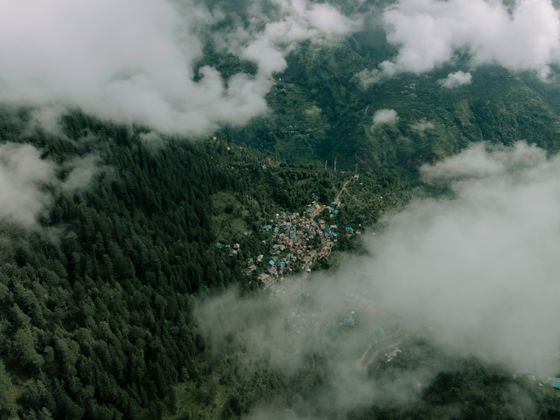
Kullu is the valley Manali sits at the top of, and the town itself is an administrative centre with a bus stand rather than a resort. Most people are through it in an hour. Two things are worth stopping for. Bijli Mahadev, on the ridge above, is an hour's climb from the road: a tall wooden staff there is said to draw lightning, and the lingam beneath it is broken by the strike and reset with butter. And the weaving — Kullu shawls carry a GI tag, and the co-operative showrooms on the highway sell at fixed prices, which the roadside stalls do not. The one time Kullu itself is the destination is Dussehra in October. It starts on the day the rest of India's ends, runs about a week, and brings the village deities down into the maidan on palanquins. Rafting on the Beas runs from Pirdi, roughly March to June and again once the monsoon has passed.

Tamil Nadu
Kumari Amman Temple
Kumari Amman Temple in Kanyakumari, Tamil Nadu is one of the Shakti Peethas, the sacred shrines of the Divine Mother in the Shakta tradition of Hinduism. According to tradition, this is where the back of Goddess Sati fell when Lord Vishnu's Sudarshana Chakra divided her body. Here the Goddess is worshipped as Sarvani (Kanyakumari), and her guardian Bhairava (a form of Shiva) as Nimish. Shakti Peethas are among the holiest pilgrimage sites for devotees of the Goddess, drawing pilgrims especially during Navratri and Durga Puja. Each is tied to the legend of Sati, whose body parts fell across the Indian subcontinent and beyond, sanctifying the ground where they landed.

Haryana
Kurukshetra (Brahma Sarovar)
Kurukshetra is the battlefield of the Mahabharata and the ground where the Bhagavad Gita was spoken. Its heart is the vast Brahma Sarovar, one of India's largest sacred tanks, ringed by ghats and shrines where lakhs bathe during solar eclipses. Nearby lie Jyotisar, the banyan under which Krishna is said to have counselled Arjuna, the Sannihit Sarovar, and the modern Sri Krishna and panorama museums that retell the epic.

Uttar Pradesh
Kushinagar
Kushinagar is the sacred site where the Buddha attained Mahaparinirvana (final liberation) and was cremated. The reclining Buddha statue in the Mahaparinirvana Temple and the Ramabhar Stupa marking his cremation make it the poignant final stop of his life's journey.
%EA%AF%92%EA%AF%A4_%EA%AF%91%EA%AF%8B%EA%AF%A5%EA%AF%A1_%EA%AF%85%EA%AF%A3%EA%AF%A1%EA%AF%86%EA%AF%A8%EA%AF%9E_%EA%AF%8A%EA%AF%AA%EA%AF%95_%EA%AF%83%EA%AF%A5%EA%AF%8F%EA%AF%80%EA%AF%A9%EA%AF%97%EA%AF%92%EA%AF%A4_%EA%AF%80%EA%AF%A5%EA%AF%9E%EA%AF%84_%EA%AF%83%EA%AF%83%EA%AF%A4.jpg/960px-%EA%AF%85%EA%AF%A3%EA%AF%A1%EA%AF%83%EA%AF%A5%EA%AF%8F%EA%AF%86%EA%AF%A4%EA%AF%A1_%EA%AF%86%EA%AF%A4%EA%AF%A1%EA%AF%92%EA%AF%A4_%EA%AF%82%EA%AF%A5%EA%AF%8F%EA%AF%85%EA%AF%A4%EA%AF%A1%EA%AF%8A%EA%AF%A7_%EA%AF%81%EA%AF%85%EA%AF%A5%EA%AF%83%EA%AF%8D%EA%AF%A4_%EA%AF%82%EA%AF%A5%EA%AF%8F%EA%AF%81%EA%AF%AA_(%EA%AF%81%EA%AF%85%EA%AF%A5%EA%AF%83%EA%AF%8D%EA%AF%A4_%EA%AF%80%EA%AF%A4%EA%AF%8C%EA%AF%A3%EA%AF%A1)%EA%AF%92%EA%AF%A4_%EA%AF%91%EA%AF%8B%EA%AF%A5%EA%AF%A1_%EA%AF%85%EA%AF%A3%EA%AF%A1%EA%AF%86%EA%AF%A8%EA%AF%9E_%EA%AF%8A%EA%AF%AA%EA%AF%95_%EA%AF%83%EA%AF%A5%EA%AF%8F%EA%AF%80%EA%AF%A9%EA%AF%97%EA%AF%92%EA%AF%A4_%EA%AF%80%EA%AF%A5%EA%AF%9E%EA%AF%84_%EA%AF%83%EA%AF%83%EA%AF%A4.jpg)
Manipur
Lainingthou Sanamahi Kiyong
The shrine on Nongmaiching mountain, east of Imphal, is where Sanamahism gathers: a temple to Lainingthou Sanamahi and the central body of the Sanamahi Lainingkol, the university of Sanamahi culture. Pilgrims come from well beyond the state, Meitei families settled across the Northeast and Kabui and Zeliangrong people from Assam, Tripura, Myanmar and Bangladesh. If Imphal's Vaishnava temples are all you have seen, this is the traditional Meitei religion instead, and a centre of it rather than a curiosity. Worth the trip out of the city rather than a stop squeezed into an afternoon.
Lake Mansarovar
Lake Mansarovar, at 4,590 metres one of the highest freshwater lakes in the world, lies at the foot of Mount Kailash on the Tibetan plateau. Its turquoise water is deeply sacred to Hindus, Buddhists and Jains, and pilgrims bathe in and circumambulate the lake as part of the Kailash yatra.
.JPG/960px-Templetripura_(22).JPG)
Tripura
Lakshmi Narayan Temple, Agartala
A temple to the divine couple Lakshmi Narayana, standing in the Ujjayanta Palace grounds in Agartala and founded by Birendra Kishore Manikya during his reign between 1909 and 1923. It is not a trip in itself — it is one of the things you come across once you are inside the palace grounds, and it earns the few minutes it takes. Treat the grounds as the outing and this as one part of them.

Andhra Pradesh
Lepakshi
Lepakshi, in Andhra Pradesh's Sri Sathya Sai district, is known for the 16th-century Veerabhadra Temple, a masterpiece of Vijayanagara architecture. It is famed for its intricately carved pillars, vivid ceiling frescoes, a giant monolithic Nandi bull nearby and the mysterious hanging pillar that barely touches the ground.

Odisha
Lingaraja Temple
Of all the old stone in Bhubaneswar, this is the piece still fully in use: Lingaraja is active in worship where most of the city's temples are not, and that changes what a visit feels like. It is the largest temple here, its central tower 180 ft, and the clearest statement of Kalinga building anywhere in the city, with four parts, vimana, jagamohana, natamandira and bhoga-mandapa, stepped in height. The compound wall encloses 108 further shrines. Look for the images of Vishnu inside a Shiva temple, a trace of the Ganga rulers who added to what the Somavamsi kings began.

Odisha
Lokanatha Siva Temple
For years this one had no visible door: earth had piled against every side up to the bandhana, which is how it got the name Amuha deula, the temple with no entrance. Debala Mitra dug out the north wall in 1972 and found the way in. The sanctum was empty, and the dedication to Shiva rests on local tradition and the carving on the outer walls. It is an 11th-century miniature of Lingaraja, which stands across the road. It is also abandoned and crumbling, still buried on the other three sides. Ten minutes, if you are already at Lingaraja.

Jharkhand
Maa Dewri Temple
Sixty kilometres out of Ranchi, on the right of the Tata road as you near Tamar, a two-acre compound holds a 700-year-old image of a sixteen-armed village goddess. The old stonework was interlocked without chalk or any binding material, and the earlier name, Dewri Diri, meant simply the sacred stone of Diuri village. What makes it unusual is who conducts the worship: tribal Pahans for six days, a Brahmin Panda for one. Bamboo poles carry yellow and red threads, tied for a wish and untied when it is granted.

Madhya Pradesh
Maa Sharda Mandir (Maihar)
Maa Sharda Mandir (Maihar) in Maihar, Madhya Pradesh is one of the Shakti Peethas, the sacred shrines of the Divine Mother in the Shakta tradition of Hinduism. According to tradition, this is where the necklace of Goddess Sati fell when Lord Vishnu's Sudarshana Chakra divided her body. Here the Goddess is worshipped as Sharada (Shivani), and her guardian Bhairava (a form of Shiva) as Chanda Bhairava. Shakti Peethas are among the holiest pilgrimage sites for devotees of the Goddess, drawing pilgrims especially during Navratri and Durga Puja. Each is tied to the legend of Sati, whose body parts fell across the Indian subcontinent and beyond, sanctifying the ground where they landed.
Tamil Nadu
Madurai (Meenakshi Amman Temple)
The Meenakshi Amman Temple stands at the heart of Madurai, an ancient city on the banks of the Vaigai River, and it is the great Dravidian temple complex of South India. It is dedicated to the Goddess Meenakshi, a powerful form of Parvati, and her consort Sundareswarar, a form of Shiva. Massive high stone walls enclose it, and 14 towering gopurams rise above them, each one carpeted with thousands of brightly painted stone sculptures of deities, demons and celestial beings. Inside are the grand columned assembly halls, the legendary Hall of a Thousand Pillars among them, and the sacred golden lotus pond, where millions of devotees perform their rituals each year.

Assam
Mahabhairav Temple
A hillock at the northern edge of Tezpur carries this Shiva temple, and the building you will see is concrete: the old stone one, credited to king Bana, went in a renovation, so come for the site and its life rather than the architecture. Two things stay with people. The prasad is laddu laced with bhang, milk and spices, and pigeons are released here as a way of freeing ancestors' spirits. Maha Shivaratri draws devotees from far and wide; if queueing is not your idea of a temple visit, come on any other day.

Bihar
Mahabodhi Temple
Buddhists have been coming to this spot for over two thousand years. It marks where the Buddha is said to have reached enlightenment, and it remains the most revered pilgrimage site in the Buddhist world; the tree here is held to descend from the original Bodhi Tree. Most of what stands is 6th-century CE work, brick under stucco, heavily restored since the 19th century. The carved stone railing is replica and the finest early sculpture has moved to the museum beside the temple, so do that too. The Vajrasana inside dates to the 3rd century BCE.

Chhattisgarh
Mahadev Temple, Deobaloda
Most of the year this is a quiet Kalachuri-period Shiva temple in a village, protected as a monument by the Archaeological Survey of India. Mahashivratri is the exception: devotees from the villages around converge on it, and a small fair sets up alongside. Pick your day according to what you came for. If it is the stonework, come on any other day and you will have room to look at it properly. If you would rather see the temple doing the job it was built for, that is the one day it is full.

Odisha
Mahakala-Mahakali Temple
You look down into this one. There is no superstructure and no roof, only stone walls open to the sky, with the lingam set four metres below the present ground level. A second, smaller lingam beside it is called Mahakali to the central Mahakala, and local tradition makes the two of them the parents of Lingaraja, whose eastern compound wall is right there. Eleventh century, on the road running towards Hatasahi. A two-minute stop, and a strange one, but worth making if you are walking Old Town properly.
.jpg/960px-Pavagadh%2C_donkeys_(9840099266).jpg)
Gujarat
Mahakali Temple (Pavagadh)
Mahakali Temple (Pavagadh) in Pavagadh, Panchmahal, Gujarat is one of the Shakti Peethas, the sacred shrines of the Divine Mother in the Shakta tradition of Hinduism. According to tradition, this is where the right toe of Goddess Sati fell when Lord Vishnu's Sudarshana Chakra divided her body. Here the Goddess is worshipped as Mahakali, and her guardian Bhairava (a form of Shiva) as Batuk Bhairava. Shakti Peethas are among the holiest pilgrimage sites for devotees of the Goddess, drawing pilgrims especially during Navratri and Durga Puja. Each is tied to the legend of Sati, whose body parts fell across the Indian subcontinent and beyond, sanctifying the ground where they landed.
Maharashtra
Mahalakshmi (Ambabai) Temple
Mahalakshmi (Ambabai) Temple in Kolhapur, Maharashtra is one of the Shakti Peethas, the sacred shrines of the Divine Mother in the Shakta tradition of Hinduism. According to tradition, this is where the eyes of Goddess Sati fell when Lord Vishnu's Sudarshana Chakra divided her body. Here the Goddess is worshipped as Mahalakshmi, and her guardian Bhairava (a form of Shiva) as Krodhish. It is counted among the eighteen Ashtadasha Maha Shakti Peethas — the most revered of all the seats of the Goddess. Shakti Peethas are among the holiest pilgrimage sites for devotees of the Goddess, drawing pilgrims especially during Navratri and Durga Puja. Each is tied to the legend of Sati, whose body parts fell across the Indian subcontinent and beyond, sanctifying the ground where they landed.
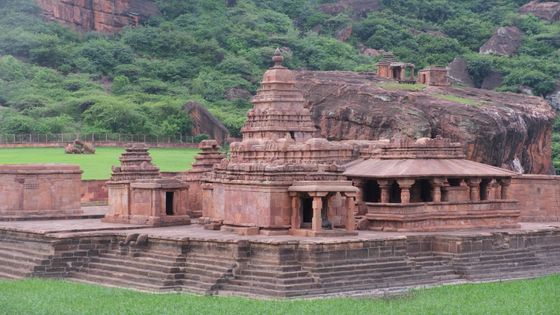
Mahalakshmi (Sri Shail) Temple
Mahalakshmi (Sri Shail) Temple in Gotatikar, Sylhet, Bangladesh is one of the Shakti Peethas, the sacred shrines of the Divine Mother in the Shakta tradition of Hinduism. According to tradition, this is where the neck of Goddess Sati fell when Lord Vishnu's Sudarshana Chakra divided her body. Here the Goddess is worshipped as Mahalakshmi, and her guardian Bhairava (a form of Shiva) as Sambaranand. Shakti Peethas are among the holiest pilgrimage sites for devotees of the Goddess, drawing pilgrims especially during Navratri and Durga Puja. Each is tied to the legend of Sati, whose body parts fell across the Indian subcontinent and beyond, sanctifying the ground where they landed.

Assam
Mahamaya Dham
Go in knowing what happens here. Lower Assam's biggest Shakta shrine after Kamakhya keeps a four-century tradition of animal sacrifice, and at Durga Puja hundreds of buffaloes, goats, pigeons and ducks are killed; there is a growing campaign against it, and if that is not something you want to witness, choose another week. The goddess was worshipped first by local Kachari, Koch and Nath families and by the zamindar of Parvatjowar before Hindus across the region took her up. A few kilometres away the Snaanghat temple sits on the bank of the Tipkai, where she is said to have bathed. Bogribari is about 30 km east of Dhubri.

Chhattisgarh
Mahamaya Temple, Raipur
Purani Basti is the old quarter of Raipur, and the Mahamaya temple stands inside it, counted among the thirty-six Shaktipeeths, or thirty-six forts, of Chhattisgarh. Maratha rulers renovated it across the 17th and 18th centuries, so what you are looking at is a layered building rather than one clean period. This is a city temple in a dense old neighbourhood: park once and walk the rest, and expect the streets around it to be as much of the visit as the shrine itself.

Telangana
Makkah Masjid, Hyderabad
Bricks made from soil carried out of Mecca sit in the central arch. Muhammad Qutb Shah commissioned them, and they gave the mosque its name. Aurangzeb completed the building in 1694, and it still does the everyday work of the Old City's main mosque, holding ten thousand at prayer. It stands close to Charminar, Chowmahalla Palace and Laad Bazaar, so it slots into an old-city morning without any effort. Dress and behave as you would in any working mosque; this is not a monument that has stopped being used.

Kerala
Malayattoor
Malayattoor, a hilltop church near Kochi dedicated to St. Thomas the Apostle, draws one of the largest Christian pilgrimages in India and the only one in Asia declared an International Shrine by the Vatican. Pilgrims climb the forested hill, especially during the Lenten season, to reach the shrine said to be linked to St. Thomas.

Arunachal Pradesh
Malinithan
What survives here is stonework, not a working temple: the ruins of an early medieval shrine on the northern bank of the Brahmaputra, generally credited to the Chutia kings of the 13th and 14th centuries. The carving is the reason to come. Art historians read the iconography as belonging to a cultural period running from about the 10th to the 14th century, and the scale of the stone architecture as evidence of a prosperous kingdom here before the Ahoms. The narrow Akashiganga stream runs past the site. Adi people nearby knew it as the shrine of Matri Malanti.

Goa
Mallikarjuna Temple, Goa
One of the oldest shrines in Goa stands in Sristhal village, 7 km northeast of Chaudi in Canacona taluka, in a valley closed in on all sides by mountains. A plaque near the dome dates the building to the middle of the 16th century; it was refurbished in 1778. The idol is one of the cylindrical wooden forms local people call Nirakar, formless, wearing a metallic mask and a trishula, and about fourteen Mallikarjun shrines across Goa share that shape. Some sixty deities are kept here. The annual jatra is the draw, and it is unlike most temple festivals in Goa.

Jharkhand
Maluti temples
Thirty-six of the original 108 have already gone; 72 terracotta temples still stand in this village near Shikaripara, on the eastern side of the Chota Nagpur Plateau. Kings of the Baj Basanta dynasty raised them between the 17th and 19th centuries in what was their capital, out of devotion to Mowlakshi, the family deity, though Shiva, Durga, Kali and Vishnu hold shrines here too. The Global Heritage Fund counts the site among the world's twelve most endangered and has proposed conservation work. That is the whole argument for going sooner rather than later.

Chhattisgarh
Mama Bhanja Temple
The name is a family relationship: mama is a mother's brother, bhanja is his nephew, and the story goes that the two of them were handed the job of building this and finished it in a single day. Make of that what you will. What stands at Barsur is a Shiva temple now maintained by the Archaeological Survey of India, and it is worth the stop if Barsur is already on your route rather than a journey made for its own sake.

Puducherry
Manakula Vinayagar Temple
This Ganesha temple predates the French, and it very nearly did not survive them. Under Dupleix there were attempts to pull it down, abandoned in the face of protest from the Hindu population and the risk of British and Maratha attack. That it is still standing is the story. It is a working pilgrimage site as much as a sight, and popular enough with visitors as well as devotees that the morning is the sane time to go; arrive at the wrong hour and you will be shuffling through in a queue rather than looking at anything.

Bihar
Mandar Hill
Mandar Parvat rises about 700 ft over Bounsi in Banka district, roughly 45 km south of Bhagalpur on the state highway that carries on to Dumka. It is a small mountain by any measure, and that is the point: the climb is a morning, not an expedition. Jains and Hindus both hold it sacred, which is rarer than it sounds for a single rock. A carnival is put on every year at Mahavir Jayanti and again at Makar Sankranti. Go on one of those two days if you want the crowd and the noise. Go on any other day and it is just the hill, the steps and you.

Bihar
Mangala Gauri Temple
Mangala Gauri Temple in Gaya, Bihar is one of the Shakti Peethas, the sacred shrines of the Divine Mother in the Shakta tradition of Hinduism. According to tradition, this is where the breast of Goddess Sati fell when Lord Vishnu's Sudarshana Chakra divided her body. Here the Goddess is worshipped as Sarvamangala (Mangala Gauri), and her guardian Bhairava (a form of Shiva) as Sarvananda. It is counted among the eighteen Ashtadasha Maha Shakti Peethas — the most revered of all the seats of the Goddess. Shakti Peethas are among the holiest pilgrimage sites for devotees of the Goddess, drawing pilgrims especially during Navratri and Durga Puja. Each is tied to the legend of Sati, whose body parts fell across the Indian subcontinent and beyond, sanctifying the ground where they landed.

Goa
Mangeshi Temple
Shri Manguesh at Priol is the largest and most famous temple in Goa, home of Mangesh — a form of Shiva worshipped by generations of Goud Saraswat Brahmins, including the family of Lata Mangeshkar, who took their name from the deity. Its white seven-storey lamp tower is a Goan icon, rising from a compound of tiled courtyards, a temple tank and agrashalas, the whole ensemble in that unmistakable Goan temple style born of exile from the coastal talukas.

Rajasthan
Manibandh (Gayatri Temple)
Manibandh (Gayatri Temple) in Pushkar, Rajasthan is one of the Shakti Peethas, the sacred shrines of the Divine Mother in the Shakta tradition of Hinduism. According to tradition, this is where the wrists of Goddess Sati fell when Lord Vishnu's Sudarshana Chakra divided her body. Here the Goddess is worshipped as Gayatri, and her guardian Bhairava (a form of Shiva) as Sarvananda. Shakti Peethas are among the holiest pilgrimage sites for devotees of the Goddess, drawing pilgrims especially during Navratri and Durga Puja. Each is tied to the legend of Sati, whose body parts fell across the Indian subcontinent and beyond, sanctifying the ground where they landed.

Andhra Pradesh
Manikyamba (Bhimeswara) Temple
Manikyamba (Bhimeswara) Temple in Draksharamam, Kakinada, Andhra Pradesh is one of the Shakti Peethas, the sacred shrines of the Divine Mother in the Shakta tradition of Hinduism. According to tradition, this is where the left cheek of Goddess Sati fell when Lord Vishnu's Sudarshana Chakra divided her body. Here the Goddess is worshipped as Manikyamba, and her guardian Bhairava (a form of Shiva) as Bhimeshwar. It is counted among the eighteen Ashtadasha Maha Shakti Peethas — the most revered of all the seats of the Goddess. Shakti Peethas are among the holiest pilgrimage sites for devotees of the Goddess, drawing pilgrims especially during Navratri and Durga Puja. Each is tied to the legend of Sati, whose body parts fell across the Indian subcontinent and beyond, sanctifying the ground where they landed.

Uttarakhand
Mansa Devi Temple, Haridwar
A hilltop shrine above Haridwar, on the Bilwa Parvat spur of the Sivalik Hills, and one of the five Panch Tirth a pilgrim in the city is meant to cover. The tree inside is what people remember: you tie a thread to a branch when you ask the goddess for something, and come back to untie it once the wish is granted, so the branches carry both halves of other people's bargains. Mansa means wish. Coconuts, fruit, garlands and incense go to the shrine. Go early if you want to hear yourself think.

Nagaland
Mary Help of Christians Cathedral, Kohima
Look at the facade first: it is built to resemble a Naga house, and the cathedral sits into its hill rather than on top of it, so it reads as part of Kohima rather than an import. There is a carved wooden crucifix sixteen feet high, one of Asia's largest crosses. The three-crore cost was met mostly by Japanese donors who wanted a memorial to the soldiers who died in the Battle of Kohima; the inscriptions outside say so plainly, and the cathedral later hosted reconciliation meetings between Japanese and British veterans. Construction began in 1986 and the church was consecrated in January 1991. Read the inscriptions.

Meghalaya
Mary Help of Christians Cathedral, Shillong
Shillong's Catholic cathedral is a working church before it is a sight, and that is the reason to go. It is the seat of the Metropolitan Archbishop and the principal place of worship for over 342,000 Catholics across an archdiocese of 49 parishes covering East Khasi Hills and Ri-Bhoi. The building has stood more than 85 years. Time your visit around a service if you want to understand what it means to the city; come on a quiet weekday afternoon if you would rather have the interior largely to yourself.
.jpg/960px-Prem_Mandir_Vrindavan%2C_Mathura%2C_Uttar_Pradesh%2C_India_(2014).jpg)
Uttar Pradesh
Mathura & Vrindavan
Mathura, the birthplace of Lord Krishna, and neighbouring Vrindavan, where he spent his childhood, form the heart of the Braj pilgrimage region — a land of thousands of temples, devotional music and the most exuberant Holi celebrations in India.
_1.jpg/960px-Pigeons_on_a_Minaret_of_Mecca_Masjid_(September_2019)_1.jpg)
Telangana
Mecca Masjid (Hyderabad)
The Mecca Masjid in Hyderabad is one of the oldest and largest mosques in India, begun in the 16th century by the Qutb Shahi rulers. Named for bricks said to be brought from Mecca, its vast prayer hall sits beside the Charminar at the heart of the old city.

Rajasthan
Mehandipur Balaji Temple
Mehandipur Balaji is a Hanuman temple in Dausa district, built between two Aravalli hills, and it is not a place to visit for its architecture. Mehandipur itself is small and, to one visiting writer, otherwise nondescript. What brings people is ritual healing and exorcism: they come, the trust that runs the temple says, to pray for relief from mental and physical suffering and from spirit affliction. Balaji, the child form of Hanuman, is worshipped here with Bhairav and Pretraj Sarkar. A paper published in 1981 described the vermilion Balaji on the ground floor, Bhairav as a stone slab with a carved eye in a small annexe, and Pretraj upstairs. What happens around them can be hard to watch. The paper described some patients going into a trance called peshi after the first offerings, some of them striking the walls and iron bars or laying heavy stones on their bodies. Its authors examined 100 patients, a sample of the sick rather than of every pilgrim, and 76 had a neurotic or psychotic diagnosis; about a quarter improved. The same visiting writer, in a 2018 piece for The Diplomat, found exorcisms in a dark hall next to the main temple, and people kept chained behind it, which he called inhuman. Do not assume that has stopped. The trust is plain about its own part: its priests give the sick no help, and devout darshan is enough.

Gujarat
Mehsana
Mehsana is a busy city in northern Gujarat, known for the Dudhsagar dairy — one of India's largest cooperative dairies — and for its oil and gas fields. For travellers it is most useful as a base for the Solanki-era Sun Temple at Modhera and the Bahucharaji Shakti Peeth temple nearby.

Bihar
Mitheshwarnath Shiva Temple
A family temple, in the literal sense: Mitthu Mistri Thakur established it at Chunabhatti in Darbhanga district in March 1949, it carries his name, and his sons and their descendants have maintained it ever since he died in 1982. On an ordinary day a small number of local people come and that is all. The numbers rise for Maha Shivaratri, Shraavana, Naga Panchami and Kartik Purnima. This is not somewhere to travel for. If you are in Darbhanga on one of those days it is a real, used thing rather than a monument, which has its own value.

Punjab
Moorish Mosque, Kapurthala
The last ruler of Kapurthala gave his capital a mosque modelled on the Grand Mosque of Marrakesh, finished in 1930, with Indo-Islamic detail worked into a Moorish Revival shell. Kapurthala was known then as the Mini Paris of Punjab, which tells you what Maharajah Jagatjit Singh was aiming at. The Punjab archaeology department protects it now. If you are passing through this part of the state, this is the thing to stop for.

Mount Kailash
Mount Kailash, a 6,638-metre peak in the remote Tibetan plateau, is among the most sacred mountains on earth — revered by Hindus as the abode of Lord Shiva, by Buddhists, Jains and the Bon faith alike. Pilgrims undertake the arduous 52-km kora (circumambulation) around its base; the peak itself is never climbed.

Punjab
Mukteshwar Mahadev Temple
A man-made cave complex on the Shahpur Kandi Dam road out of Pathankot, with a Shiva shrine at its heart and representations of Ganesha, Brahma, Vishnu, Hanuman and Parvati around it. Local belief puts the Pandavas here for a night of their exile and dates some of the caves to the Mahabharata; take that as devotion rather than archaeology. It is held to be among the most sacred places near Pathankot, and it is small. Fold it into the drive out to the dam rather than making a separate trip of it.

Bihar
Mundeshwari Temple
You will be told this is the oldest functioning Hindu temple in the world, dated to 108 CE by the ASI and the state religious trust board. Architectural historians disagree, putting the surviving stonework no earlier than the 6th or 7th century and the octagonal shrine itself possibly as late as the 16th or 17th, assembled from older pieces. Either way it has been in continuous use, which is the rarer claim. It stands at 185 m on the Kaimur plateau above the Son, so there is a climb involved. Shiva and Durga are both worshipped here.

Goa
Nagueshi
Most Hindu temples in this part of Goa were moved out of the Velhas Conquistas to get clear of the Portuguese. Nagueshi was not, and still stands on its original ground in Bandode village, about 800 metres off Farmagudi on the Farmagudi-Kavlem-Ponda road and roughly 4 km from the Ponda bus stand, though it has been renovated many times over. The thing to find is the tali, a water tank ringed by palms and built so that from one particular spot on its edge you catch the reflection of the Nagesh idol and the lamps in the inner sanctum. The temple has banned foreign visitors, citing dress and conduct.

Himachal Pradesh
Naina Devi Temple
Naina Devi Temple in Bilaspur, Himachal Pradesh is one of the Shakti Peethas, the sacred shrines of the Divine Mother in the Shakta tradition of Hinduism. According to tradition, this is where the eyes of Goddess Sati fell when Lord Vishnu's Sudarshana Chakra divided her body. Here the Goddess is worshipped as Mahishamardini, and her guardian Bhairava (a form of Shiva) as Krodhish. Shakti Peethas are among the holiest pilgrimage sites for devotees of the Goddess, drawing pilgrims especially during Navratri and Durga Puja. Each is tied to the legend of Sati, whose body parts fell across the Indian subcontinent and beyond, sanctifying the ground where they landed.
West Bengal
Nalhateshwari Temple
Nalhateshwari Temple in Nalhati, Birbhum, West Bengal is one of the Shakti Peethas, the sacred shrines of the Divine Mother in the Shakta tradition of Hinduism. According to tradition, this is where the throat (nala) of Goddess Sati fell when Lord Vishnu's Sudarshana Chakra divided her body. Here the Goddess is worshipped as Kalika (Nalateshwari), and her guardian Bhairava (a form of Shiva) as Yogesh. Shakti Peethas are among the holiest pilgrimage sites for devotees of the Goddess, drawing pilgrims especially during Navratri and Durga Puja. Each is tied to the legend of Sati, whose body parts fell across the Indian subcontinent and beyond, sanctifying the ground where they landed.
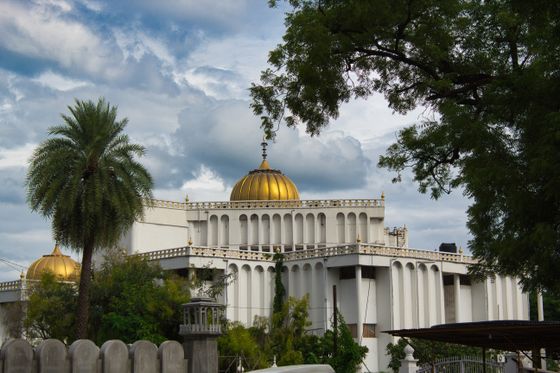
Maharashtra
Nanded (Hazur Sahib)
Takht Sri Hazur Sahib at Nanded is one of the five Takhts (seats of temporal authority) of Sikhism, marking the place where Guru Gobind Singh, the tenth Guru, passed away and declared the Guru Granth Sahib the eternal Guru. Its golden-domed gurdwara on the Godavari draws Sikh pilgrims from across the world.

Tamil Nadu
Narayani Temple (Suchindram)
Narayani Temple (Suchindram) in Suchindram, Tamil Nadu is one of the Shakti Peethas, the sacred shrines of the Divine Mother in the Shakta tradition of Hinduism. According to tradition, this is where the upper teeth of Goddess Sati fell when Lord Vishnu's Sudarshana Chakra divided her body. Here the Goddess is worshipped as Narayani, and her guardian Bhairava (a form of Shiva) as Sanhar. Shakti Peethas are among the holiest pilgrimage sites for devotees of the Goddess, drawing pilgrims especially during Navratri and Durga Puja. Each is tied to the legend of Sati, whose body parts fell across the Indian subcontinent and beyond, sanctifying the ground where they landed.
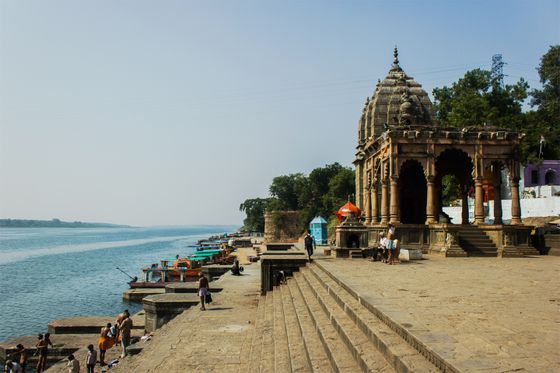
Madhya Pradesh
Narmada (Shondesh) Temple
Narmada (Shondesh) Temple in Amarkantak, Madhya Pradesh is one of the Shakti Peethas, the sacred shrines of the Divine Mother in the Shakta tradition of Hinduism. According to tradition, this is where the right buttock of Goddess Sati fell when Lord Vishnu's Sudarshana Chakra divided her body. Here the Goddess is worshipped as Narmada (Shondesh), and her guardian Bhairava (a form of Shiva) as Bhadrasena. Shakti Peethas are among the holiest pilgrimage sites for devotees of the Goddess, drawing pilgrims especially during Navratri and Durga Puja. Each is tied to the legend of Sati, whose body parts fell across the Indian subcontinent and beyond, sanctifying the ground where they landed.

Rajasthan
Nathdwara (Shrinathji)
Nathdwara, on the banks of the Banas river in Rajasthan, is the principal Pushtimarg pilgrimage town in India, home to the revered Shrinathji Temple. The deity, a form of Krishna as a seven-year-old lifting Mount Govardhan, was brought here from the Mathura region in the 17th century, and the town is also famed for its pichwai devotional paintings.

Delhi
Nizamuddin Dargah (Delhi)
The Hazrat Nizamuddin Dargah is the shrine of the great Sufi saint Nizamuddin Auliya, one of Delhi's most atmospheric spiritual sites. Famous for its Thursday-evening qawwali sessions in a centuries-old tradition, the dargah complex also holds the tomb of the poet Amir Khusrau.

Goa
Old Goa Churches (Velha Goa)
The churches and convents of Old Goa, a UNESCO World Heritage Site, form the greatest ensemble of Christian heritage in India. The Basilica of Bom Jesus enshrines the relics of St. Francis Xavier, drawing Catholic pilgrims worldwide, while the Se Cathedral is one of Asia's largest churches.

Madhya Pradesh
Omkareshwar
Omkareshwar is one of the twelve jyotirlingas, set on an island in the Narmada shaped — pilgrims will show you — like the sacred syllable Om. The Omkareshwar temple's tiered shikhara rises above the ghats on Mandhata island, reached by boat or the arched footbridges, and a parikrama path circles the island past shrines, sadhus and river views. On the far bank stands Mamleshwar, its partner jyotirlinga shrine, completing the darshan.

Puducherry
Our Lady of Angels Church, Karaikal
Nothing in Karaikal stands taller. The tower went up in 1891 and reaches 133 feet, which makes this the easiest building in town to navigate by, and it faces the Bay of Bengal. The French built the present Neo-Gothic structure in 1822, after the British destroyed the 1739 original, and it is the oldest church in Karaikal. It remains a working Roman Catholic parish with hourly prayer and daily services. The date to plan around is 15 August, when the ten-day Thetheravu Matha festival begins and the festive image of Mary is drawn through the surrounding streets on a chariot.

Puducherry
Our Lady of Angels Church, Puducherry
Mass here is said in French, Tamil and English, the only church in Pondicherry city where all three are on the schedule. Napoleon III had it built in 1855 to a Greco-Roman design by Louis Guerre, and it stands on Dumas Street in White Town facing the Bay of Bengal, which is why locals call it Dumas Church. It is the fourth oldest church in Puducherry, and a working Roman Catholic parish with hourly prayer and daily services, so it is rarely empty and rarely loud. Go in rather than photograph it from the street; the interior is the point.

Puducherry
Our Lady of Lourdes Shrine, Villianur
Not many parish churches carry a papal decree. Pope Leo XIII ordered the coronation of the Marian statue at Villianur in February 1886 and declared the site an official Marian shrine, and the Archbishop of Pondicherry, Francois-Jean-Marie Laouenan, performed the rite that May. The statue, dedicated to the Blessed Virgin Mary under the title of Our Lady of Lourdes, is what people come for. Unless Marian devotion is what brought you out here, it is a short stop rather than a reason to make the trip.

Kerala
Padmanabhaswamy Temple (Thiruvananthapuram)
Sree Padmanabhaswamy Temple in Thiruvananthapuram is a Vaishnava shrine where Lord Vishnu reclines on the serpent Anantha in the Anantha-shayanam posture. Blending Kerala and Dravidian styles with a towering seven-tier gopuram, it became world-famous when vast treasures were documented in its vaults, ranking it among the wealthiest temples on earth.

Jharkhand
Pahari Mandir
A Shiva linga sits at the top of this Ranchi hill, 350 feet above the ground, but it is not the only reason people climb. The British held the hill before independence and hanged freedom fighters on it; the old name Tiriburu gave way to Hanging Gallows. After 1947 a freedom fighter from Ranchi, K. C. Das, raised the tricolour here for the men who had died, and it still goes up on Independence Day and Republic Day beside the religious flags. Come on an ordinary morning, because Sawan and Shivaratri bring enormous crowds.

Manipur
Pakhangba Temple, Kangla
Coming in through the Kangla Sanathong, the fort's western gate, look left rather than straight ahead: beside the Nungseng Eekon stands the temple of Pakhangba, a god of Sanamahism, the traditional Meitei religion. Most visitors walk past it on the way to the citadel. It is small and it will not take long, but it is the piece that puts Kangla inside the Meitei religion rather than beside it, and the rest of the fort reads differently once you have seen it.

Tamil Nadu
Palani Murugan Temple
Palani's Dhandayuthapani Swamy — Murugan as the renunciate boy with staff and loincloth — watches from his hill shrine over one of Tamil Nadu's greatest pilgrimages. This is where the child god, losing the contest for the fruit of wisdom, stormed off declaring 'You yourself are the fruit' (Pazham Nee), and where the idol, by tradition, was shaped by siddha Bogar from nine poisonous minerals. Pilgrims climb the 690 steps, ride the winch trains, or carry kavadis in their lakhs at Thaipusam.

Gujarat
Palitana (Shatrunjaya)
Palitana, in Gujarat's Saurashtra, is one of Jainism's most sacred sites — the Shatrunjaya hill is crowned by an astonishing cluster of over 800 intricately carved marble temples. Pilgrims climb roughly 3,800 steps to reach the summit, where the temple-city gleams in white marble. No one, not even priests, may stay overnight on the sacred hill.

Bihar
Panchvadan Sthan
One object justifies the detour: a Panchamukhi Shivling, five-faced, a form found in very few other temples. It is granite, and the temple committee describes it as invaluable. The setting is a village, Kusedhi in Pinjri panchayat, Barbigha block of Sheikhpura district, seven kilometres from the block office, and the congregation is local. Nothing here is laid on for visitors, but the temple is open to the public and devotees do come from outside. Ask in the village if you cannot find it.

Maharashtra
Pandharpur
Pandharpur on the Chandrabhaga (Bhima) river is the spiritual heart of Maharashtra — home of Vitthal, the brick-standing form of Krishna, and his consort Rakhumai. For 800 years the Varkari saints, from Dnyaneshwar to Tukaram, have sung their way here; every Ashadhi Ekadashi, palkhis bearing the saints' padukas converge on foot from across the state in the wari, a river of dindis a million strong chanting 'Vitthal Vitthal' to the doors of the dark, smiling god.

Odisha
Paradaresvara Siva Temple
What stands in the cella is a circular yonipitha and nothing else; the lingam is long gone, and people still worship at it, which tells you something about how these Old Town shrines survive. The sanctum floor measures about three square metres. Thirteenth century, Ganga period as far as the architecture lets anyone say, east-facing, inside the Gosagaresvar precinct on Ratha road. Vaital temple is 200 metres off and Lingaraja a kilometre east. See it on a walk between those two rather than as a stop in its own right.
%2CArunachal_Pradesh.jpg/960px-Parshuram_math(view_5)%2CArunachal_Pradesh.jpg)
Arunachal Pradesh
Parshuram Kund
Parshuram Kund, on the Lohit river where it leaves the hills, is Arunachal's holiest Hindu site — the pool where, by legend, sage Parshuram washed away the sin of matricide and the axe fell from his hand. Every Makar Sankranti (mid-January), tens of thousands of pilgrims from Assam and beyond descend to the boulder-strewn river for a freezing holy dip, turning the remote gorge into a great mela. The rest of the year it is a quiet, mountain-ringed bend of jade water.

Odisha
Parsurameswara Temple
Small, low, and about 40 ft to the top of its spire, this is nonetheless the best-preserved early temple in Odisha, which is why anyone serious about Kalinga architecture starts here rather than at Lingaraja. Built around 650 CE, it was the first to add a jagamohana in front of the sanctum; everything earlier was sanctum alone. It is also the first in Bhubaneswar to carry the Saptamatrikas, and there are Shakta figures all over a temple dedicated to Shiva. ASI keeps it and charges a ticket. Parashurashtami, its main festival, falls in June or July.

Madhya Pradesh
Pashupatinath Temple, Mandsaur
The linga here has eight faces, and that is the reason to make the detour. The temple stands on the Shivna River at Mandsaur, near the Rajasthan border in Malwa, about 200 kilometres from Indore. Its sculpture is dated by inscriptions to the 5th or 6th century, but the site was already drawing pilgrims in the 2nd century CE, when it was called Dashapura and Kalidasa wrote about its women. Ten inscriptions found in the area, nine of them Sanskrit poems mostly dated between 404 and 487 CE, are why scholars use this place to date sites as distant as the Elephanta Caves.

Jharkhand
Pathrol Kali Temple, Madhupur
Raja Digvijay Singh built this Kali shrine six or seven centuries ago, and it is still among the oldest temples around Madhupur, roughly 7 km from the town. Nine smaller temples stand close to the main one. Worship runs every day of the week and includes animal sacrifice, which is worth knowing before you bring children or a squeamish friend. The annual fair falls in Kartik, October or November, and draws thousands: good if you want the stalls and the noise, bad if you came for a quiet hour.

Bihar
Patna
Patna, the ancient city of Pataliputra, was the capital of the mighty Maurya and Gupta empires and is one of the world's oldest continuously inhabited cities. Today it is a key gateway to Bihar's Buddhist circuit and a major Sikh pilgrimage site as the birthplace of Guru Gobind Singh.
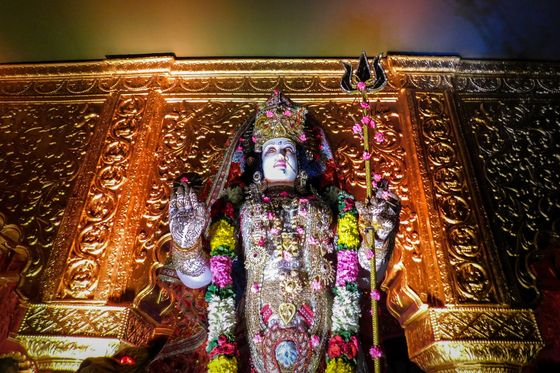
Bihar
Patneshwari (Maa Patan Devi)
Patneshwari (Maa Patan Devi) in Patna, Bihar is one of the Shakti Peethas, the sacred shrines of the Divine Mother in the Shakta tradition of Hinduism. According to tradition, this is where the right thigh of Goddess Sati fell when Lord Vishnu's Sudarshana Chakra divided her body. Here the Goddess is worshipped as Sarvanandakari (Patneshwari), and her guardian Bhairava (a form of Shiva) as Vyapaksha. Shakti Peethas are among the holiest pilgrimage sites for devotees of the Goddess, drawing pilgrims especially during Navratri and Durga Puja. Each is tied to the legend of Sati, whose body parts fell across the Indian subcontinent and beyond, sanctifying the ground where they landed.

Sikkim
Pemayangtse Monastery
Only the monks here are entitled to be called ta-tshang, monks of pure lineage: celibate, without physical abnormality, and still drawn from among Sikkim's Bhutias. That rule has held since Lama Lhatsun Chempo founded the place in 1647, and it makes this a house with conditions rather than a photo stop. Pemayangtse means Perfect Sublime Lotus, and the monastery still governs every other Nyingma house in Sikkim; its head lama once anointed the Chogyals with holy water. Six kilometres from Gyalshing, and part of the pilgrim circuit that begins with Dubdi at Yuksom. Come early and behave as you would in someone's home.

Sikkim
Phodong Monastery
The murals are the reason to stop, an old collection held in a building that is itself a reconstruction of an early eighteenth-century monastery, which in turn replaced something older. Phodong is one of three the ninth Karmapa founded in Sikkim at the king's invitation, alongside Rumtek and Ralang, and Sidkeong Tulku Namgyal rebuilt it. Around 260 monks live here, so it is a working monastery rather than a monument. Go in quietly. It sits twenty-eight kilometres from Gangtok, so pair it with something else rather than driving out for it alone.
Gujarat
Porbandar
Porbandar is a coastal town on the Saurashtra shore of the Arabian Sea, remembered in tradition as the birthplace of Sudama, Krishna's childhood friend, and in modern history as the birthplace of Mahatma Gandhi. Its old quarter has distinctive limestone architecture, and the coastal wetlands nearby draw large numbers of migratory birds.
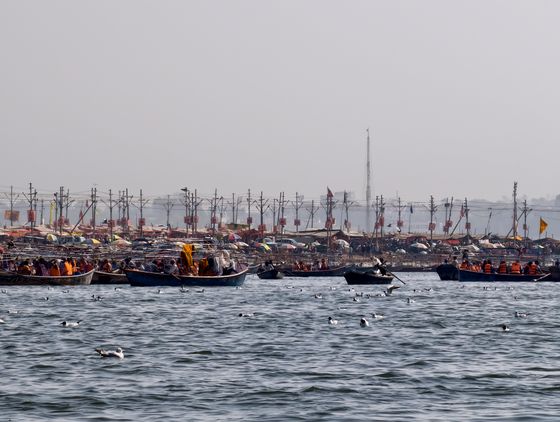
Uttar Pradesh
Prayagraj (Allahabad)
Prayagraj, formerly Allahabad, sits at the Triveni Sangam — the sacred confluence of the Ganga, Yamuna and the mythical Saraswati. It hosts the world's largest gathering, the Kumbh/Magh Mela, and blends pilgrimage with colonial and freedom-struggle heritage.

Odisha
Puri (Jagannath Temple & Beach)
Puri is an ancient holy city on the Bay of Bengal coast in Odisha, and one of the four Char Dham pilgrimage towns. Everything here turns on the 12th-century Shree Jagannath Temple, whose deities — Lord Jagannath, Balabhadra and Goddess Subhadra — are carved in wood rather than stone, a form found nowhere else. The city runs from the crowded Grand Road, thick with pilgrims, down to the wide sand of Puri Beach. The temple's ancient rituals set the rhythm of the place, and in mid-summer the whole city gives itself over to the historic Rath Yatra chariot festival, which draws crowds from around the world.

Andhra Pradesh
Puruhutika (Kukkuteswara) Temple
Puruhutika (Kukkuteswara) Temple in Pithapuram, Andhra Pradesh is one of the Shakti Peethas, the sacred shrines of the Divine Mother in the Shakta tradition of Hinduism. According to tradition, this is where the back / hip of Goddess Sati fell when Lord Vishnu's Sudarshana Chakra divided her body. Here the Goddess is worshipped as Puruhutika, and her guardian Bhairava (a form of Shiva) as Durvaseshwar. It is counted among the eighteen Ashtadasha Maha Shakti Peethas — the most revered of all the seats of the Goddess. Shakti Peethas are among the holiest pilgrimage sites for devotees of the Goddess, drawing pilgrims especially during Navratri and Durga Puja. Each is tied to the legend of Sati, whose body parts fell across the Indian subcontinent and beyond, sanctifying the ground where they landed.

Odisha
Purvesvara Siva Temple
Named for where it sits: 300 metres east of Lingaraja, which makes it Purvesvara, one of four shrines marking the compass points around the big temple. It is 13th century, still in use, looked after by a local association, and the rituals continue with Sivaratri, Sankranti and Rudraviseka. What is left is modest. The superstructure is gone, so the vimana cannot be read; the jagamohana survives in pidha order. The lingam in the sanctum is broken, sitting in its circular yonipitha just over a metre below today's ground level. Worth the short walk from Lingaraja, not a trip of its own.

Rajasthan
Pushkar
Pushkar wraps around its lake — a natural one, and sacred — in the rugged Aravalli hills near Ajmer. It is one of the oldest living cities in India and one of the most important places in Hindu worship, largely because of the Jagatpita Brahma Mandir, a 14th-century temple to Brahma the Creator and one of very few anywhere. Fifty-two stone ghats step down into the clear water, and pilgrims bathe from them to a more or less constant sound of chanting. In late autumn the quiet goes: the desert fields outside town fill for the Pushkar Camel Fair, which draws visitors from around the world.

Bihar
Rajgir
Rajgir, set in a valley ringed by hills, was an ancient capital and a major site in both Buddhism and Jainism. The Buddha meditated and taught here; today its hot springs, the Vishwa Shanti Stupa reached by ropeway, and Griddhakuta hill draw pilgrims and travellers.

Chhattisgarh
Rajiv Lochan Temple
Pilgrims on the route towards Jagannatha Dham break their journey at Rajim in their thousands every year, which tells you this is not a quiet ruin but a working 8th-century temple with a crowd. The plan is straightforward: mandapa, ante-chamber, sanctum under a shikhara, standing in a courtyard with a subsidiary shrine at each of the four corners. The four-armed Vishnu inside is the deity, but give your time to the doorways, pillars and pilasters, which carry dense carving of gods, goddesses and attendant figures. Start early if you want to look at the stonework rather than queue behind it.
Rajrappa_Mandir.jpg/960px-Damodar_River_(estern_side)Rajrappa_Mandir.jpg)
Jharkhand
Rajrappa (Chhinnamastika Temple)
At Rajrappa the Damodar and Bhairavi rivers meet below a red-washed shrine of Chhinnamastika — the self-decapitated Tantric goddess who feeds her attendants from her own severed head, an image of fearless self-sacrifice. One of India's most important Tantric peeths, the temple hums with drummers, sacrifices and river-bathing pilgrims, while the waterfall confluence below gives the place a wild, elemental setting.

Uttar Pradesh
Ram Mandir
Ayodhya's newest temple complex stands on the ground where the Babri Masjid stood until a Hindu nationalist mob demolished it in 1992, and which many Hindus hold to be Ram Janmabhoomi, the birthplace of Rama. The Supreme Court awarded the disputed site for a temple in 2019 and gave Muslims land at Dhannipur, nearby in Ayodhya. Ground was broken in August 2020 and the temple was consecrated in January 2024. It is very new and it draws crowds. Come early, and read the history before you arrive rather than after.

Bihar
Ramchaura Mandir
In Hajipur, at Rambhadra near Helabazar, the object of worship is a pair of footprints: local tradition holds that Rama stopped here on his way to Janakpur and left them behind. This is a working neighbourhood shrine rather than a monument, and it looks like one. Rama Navami is the day it comes alive, with a small fair held on the eve. Whatever was excavated at Ramchaura has gone to the Patna Museum, so there is nothing archaeological left to see on site. Worth a stop if Hajipur is already on your route, not a trip in itself.

Tamil Nadu
Rameshwaram (Ramanathaswamy Temple)
Rameshwaram sits at the very tip of a slender island connected to the Tamil Nadu mainland by the Pamban Bridge, looking out across the Palk Strait toward Sri Lanka. At its heart is the Ramanathaswamy Temple, famous for the longest corridor of any temple in India — a nearly 1,200-metre passage of sculpted pillars that seems to stretch to the horizon. As one of the twelve Jyotirlingas and one of the four Char Dham, it draws pilgrims from every corner of the country, many of whom arrive after Varanasi, believing a visit to Rameshwaram completes the pilgrimage circuit.

Rajasthan
Ranakpur Jain Temple
The Ranakpur Jain Temple, set in a quiet Aravalli valley, is a 15th-century marble masterpiece dedicated to Adinath, the first Tirthankara. Famed for its forest of 1,444 individually carved marble pillars — no two alike — it stands with Dilwara as the finest marble carving in Rajasthan.

Jharkhand
Rankini Temple, Jadugora
The image here is a stone, held to be the goddess Rankini herself rather than a carving of her. It stands in Rohinibera village near Jadugora, just off the Hata-Jadugora highway, and its original purpose is easy to feel: people crossing the dense forest stopped to ask for protection before going on. The visit is a short one. Worth planning around only if you are already driving this road out of Jamshedpur.

Odisha
Ratnagiri, Odisha
Ratnagiri means hill of jewels, and what survives is a ruin: once the major Buddhist monastery in Odisha, worked on from the 5th century to the 13th, abandoned by perhaps the 16th and lost until the ASI dug it out in the 1960s. Monastery 1 is the reason to make the trip, with a carved doorway, an open courtyard with cells and verandah around it, and a colossal Buddha in the shrine at its centre. Around Stupa 1 stand several hundred smaller stupas. Much of the sculpture went to museums elsewhere; a site museum keeps the rest.

Maharashtra
Renuka Devi Temple (Mahur)
Renuka Devi Temple (Mahur) in Mahur, Nanded, Maharashtra is one of the Shakti Peethas, the sacred shrines of the Divine Mother in the Shakta tradition of Hinduism. According to tradition, this is where the right hand of Goddess Sati fell when Lord Vishnu's Sudarshana Chakra divided her body. Here the Goddess is worshipped as Renuka (Mahishmardini). Shakti Peethas are among the holiest pilgrimage sites for devotees of the Goddess, drawing pilgrims especially during Navratri and Durga Puja. Each is tied to the legend of Sati, whose body parts fell across the Indian subcontinent and beyond, sanctifying the ground where they landed.

Sikkim
Rumtek Monastery
Rumtek is the largest monastery in Sikkim and the seat-in-exile of the Karmapa, head of the Karma Kagyu (Black Hat) lineage. Rebuilt in the 1960s by the 16th Karmapa as a faithful copy of Tibet's Tsurphu monastery, it holds the Golden Stupa with his relics, a monastic college, and treasures of the lineage. Ritual dances, deep-horn ensembles and the view back across the valley to Gangtok make it the centrepiece of any Sikkim circuit.

Kerala
Sabarimala
Sabarimala, set deep in the Western Ghats forests of Kerala, is one of the largest pilgrimage sites in the world, dedicated to Lord Ayyappa. Devotees observe a 41-day vratham and trek through the hills to reach the hilltop shrine, especially during the Makaravilakku season.
.jpg/960px-Samlei_Gudi_(Samaleswari_Temple).jpg)
Odisha
Samleswari Temple
Sambalpur's presiding goddess sits on the bank of the Mahanadi, and the reach of her following is the point: after Jagannath, Samaleswari is the only deity in Odisha worshipped across a region this wide, all of western Odisha and into parts of Jharkhand and Chhattisgarh. Locals call her Samalei Maa. The temple is of the Sandhara order, a square sanctum ringed by a pillared gallery you walk for pradakshina, and it is two separate structures rather than one. The whole building was plastered; the surface has gone mouldy with age. Come for the worship, not the stonework.

Sikkim
Sanga Choeling Monastery
Seventeenth-century, and among the oldest monasteries around Pelling, but the climb is what you will remember: four kilometres of steep track through thick forest to a ridge top, with no way to shorten it. Lama Lhatsun Chempo founded it, and the name means the island of the Guhyamantra teachings, which is to say Vajrayana. Pilgrims take it as part of the circuit running through Pemayangtse, seven kilometres off, along with the Rabdentse ruins, Khecheopalri Lake, Norbugang Chorten, Dubdi Monastery, Yuksom and Tashiding. Start early. The track is unkind in the middle of the day.

Telangana
Sanghi Temple
Thirty-five kilometres out of Hyderabad, on top of Paramanand Giri hill at Sanghi Nagar, with a Raja Gopuram tall enough to pick out from several kilometres away. It is described as a replica of the Tirumala temple, which tells you what to expect: the shape and the scale of a great pilgrimage temple, on a hill you can reach in a morning from the city. It draws a steady flow of devotees and is run by the Sanghi family. Go early on a weekday and give it an hour, then carry on rather than making the trip only for this.

Odisha
Sankarananda Matha
On the southern embankment of Bindusagar sits a monastery in poor shape, one shrine still in worship and the rest of the building dilapidated, held between shared ownership and the state Endowments Department, which is usually how a place ends up like this. It is a branch of the Sankarananda Matha at Puri, founded by Sankara Sivananda Saraswati and still headed by a mahanta. Do not make a journey for it. If you are walking the tank between Lingaraja and the Old Town lanes, it is a doorway worth glancing into.

Uttarakhand
Sapta Badri
Badrinath is the one everyone means. It heads a group of seven Vishnu temples in the Alaknanda valley, with Adi Badri, Bhavishya Badri, Yogadhyan Badri, Vriddha Badri, Ardha Badri and Dhyan Badri making up the rest; a shorter five-temple circuit, Panch Badri, drops two of those. The name comes from badri van, the berry forest the old bridle path to Badrinath once ran through. Badrinath itself stands at 3,133 m, has road and air links, and opens between April or May and October or November, the exact day fixed on Vasant Panchami. The other six take real effort.

Maharashtra
Saptashrungi Temple
Saptashrungi Temple in Nashik (Vani), Maharashtra is one of the Shakti Peethas, the sacred shrines of the Divine Mother in the Shakta tradition of Hinduism. According to tradition, this is where the chin of Goddess Sati fell when Lord Vishnu's Sudarshana Chakra divided her body. Here the Goddess is worshipped as Bhadrakali (Saptashrungi), and her guardian Bhairava (a form of Shiva) as Vikritaksha. Shakti Peethas are among the holiest pilgrimage sites for devotees of the Goddess, drawing pilgrims especially during Navratri and Durga Puja. Each is tied to the legend of Sati, whose body parts fell across the Indian subcontinent and beyond, sanctifying the ground where they landed.
.jpg/960px-Archaeological_site_of_Sarnath%2C_Varanasi%2C_Uttar_Pradesh%2C_India_(2015).jpg)
Uttar Pradesh
Sarnath
Sarnath, near Varanasi, is where the Buddha delivered his first sermon after enlightenment, setting in motion the wheel of dharma. The towering Dhamek Stupa, ancient monastery ruins and an excellent archaeological museum make it a cornerstone of the Buddhist circuit.

Madhya Pradesh
Sasbahu Temple, Gwalior
Two temples share one raised platform inside Gwalior Fort, and the nicknames mislead: Saas and Bahu, mother-in-law and daughter-in-law, but the inscription Alexander Cunningham read says King Mahipala of the Kachchhapaghata dynasty built the larger between 1090 and 1093 for his Vaishnava wife, and the smaller for his Shiva-worshipping daughter-in-law. Invasions and the wars that followed took the tower and the sanctum. What is left is the entrance porch and the mandapa, on a jagati platform 100 feet by 63, and carvings damaged enough that you have to stand close. Come for the stonework rather than the shrine.

Gujarat
Shamlaji
Shamlaji is a temple town in the Aravalli foothills of north-eastern Gujarat, on the banks of the Meshwo River near the Rajasthan border. It centres on the 11th-century Shamlaji Temple, a Vaishnavite shrine to Vishnu, and draws both tribal and other Hindu pilgrims — especially during its large annual fair.
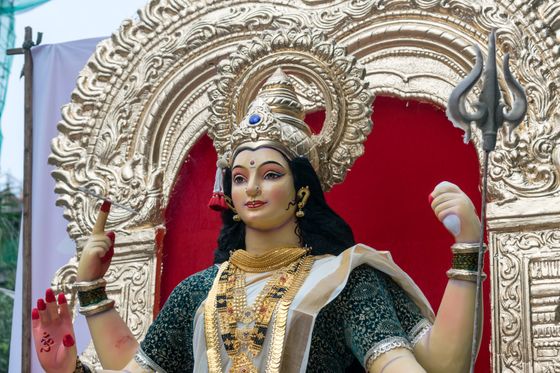
Shankari Devi (Koneswaram)
Shankari Devi (Koneswaram) in Trincomalee, Sri Lanka is one of the Shakti Peethas, the sacred shrines of the Divine Mother in the Shakta tradition of Hinduism. According to tradition, this is where the groin (anklets) of Goddess Sati fell when Lord Vishnu's Sudarshana Chakra divided her body. Here the Goddess is worshipped as Shankari (Indrakshi), and her guardian Bhairava (a form of Shiva) as Trikoneshwar. It is counted among the eighteen Ashtadasha Maha Shakti Peethas — the most revered of all the seats of the Goddess. Shakti Peethas are among the holiest pilgrimage sites for devotees of the Goddess, drawing pilgrims especially during Navratri and Durga Puja. Each is tied to the legend of Sati, whose body parts fell across the Indian subcontinent and beyond, sanctifying the ground where they landed.
.jpg/960px-Temple_view_(100035736).jpg)
Goa
Shantadurga Temple
Shantadurga, at the foot of the Ponda hills, is the most visited of Goa's Hindu temples — dedicated to the goddess who mediated peace between Shiva and Vishnu, worshipped here in her calm (shanta) form. The temple's Indo-Portuguese architecture is unique to Goa: a pyramidal roof, a white six-storey deepastambha (lamp tower), Roman-arched windows and chandeliered halls, all in deep maroon and cream, rebuilt in the 1730s under Maratha patronage after the original shrine fled the Inquisition.

Leh & Ladakh
Shanti Stupa
The white dome above Chanspa is newer than it looks. A Japanese monk, Gyomyo Nakamura, built it in 1991, and the 14th Dalai Lama enshrined relics of the Buddha in its base. The hilltop puts the surrounding landscape below you, which is why people climb it whatever their feelings about stupas. Go at either end of the day, when the light is doing something. And give yourself a day or two in Leh first: the climb is short, but you are doing it at Ladakhi altitude.

Gujarat
Shatrunjaya Hill
Shatrunjaya Hill rises above the Shatrunjaya River near Palitana town in Bhavnagar district, and no other mountain in the world carries anything like what stands on top of it: a fortified complex of more than 860 carved marble temples, built over the course of a millennium. The Jain community holds the whole hill to be sacred ground, and no vehicle goes past the base — pilgrims and travellers climb roughly 3,500 stone steps to reach the temples at the summit.

Leh & Ladakh
Shey Monastery
Shey was the summer capital of Ladakh, and the site still reads that way: the 10th-century palace of Lhachen Palgyigon stands ruined on the hillock, with the later palace and monastery, raised in 1655 on Deldan Namgyal's instructions in memory of his father Sengge Namgyal, sitting below it. The reason to walk up is indoors — a seated Shakyamuni Buddha in copper, gilded with gold, the second largest statue of its kind in Ladakh. It stands on the Leh–Manali road 15 km south of Leh, so fold it into a day already going that way rather than driving out for it alone.

Jharkhand
Shikharji (Parasnath)
Shikharji, atop Parasnath Hill — Jharkhand's highest peak — is the holiest pilgrimage site in Jainism, where twenty of the twenty-four Tirthankaras are believed to have attained moksha. Devout pilgrims undertake a demanding ~27-km barefoot trek across the forested ridge, visiting shrines (tonks) marking each liberation.

Maharashtra
Shirdi
Shirdi is one of India's most visited pilgrimage towns, the home of the revered saint Sai Baba, who preached love, tolerance and the unity of all faiths. The Samadhi Mandir enshrining his tomb draws tens of millions of devotees of every religion each year.
Shivaharkaray (Karavipur)
Shivaharkaray (Karavipur) in Karachi (Parkai), Pakistan is one of the Shakti Peethas, the sacred shrines of the Divine Mother in the Shakta tradition of Hinduism. According to tradition, this is where the third eye (both eyes) of Goddess Sati fell when Lord Vishnu's Sudarshana Chakra divided her body. Here the Goddess is worshipped as Mahishmardini, and her guardian Bhairava (a form of Shiva) as Krodhish. Shakti Peethas are among the holiest pilgrimage sites for devotees of the Goddess, drawing pilgrims especially during Navratri and Durga Puja. Each is tied to the legend of Sati, whose body parts fell across the Indian subcontinent and beyond, sanctifying the ground where they landed.

Karnataka
Shravanabelagola
Shravanabelagola is among the most important Jain pilgrimage centres, dominated by the colossal 17-metre monolithic statue of Lord Bahubali (Gomateshwara) atop Vindhyagiri hill — one of the world's tallest free-standing statues. Every twelve years it is the site of the Mahamastakabhisheka, when the statue is anointed from a scaffold built over its head.

Manipur
Shree Govindajee Temple
Imphal's largest Vaishnava temple went up in 1846 under Maharaja Nara Singh and was rebuilt thirty years later by Maharaja Chandrakriti, so what stands is the 1876 building rather than the first one. It is dedicated to Radha and Krishna in the Meitei Hindu tradition. Worth arriving when worship is on rather than at an empty hour: a courtyard on its own tells you very little about a temple of this size, and the district has nothing else on the same scale.

Punjab
Shri Kali Devi Temple, Patiala
The Maharaja of Patiala brought two six-foot statues, Maa Kali and the Paawan Jyot, from Bengal in 1936 and built this temple to house them, opposite the Baradari Gardens. It is the kul devi shrine of a great many families, which is why it is busy in a way that has nothing to do with tourism. Through the nine days of the Navratras it fills up. If you want the place calm, come at any other time, then walk across to the gardens.

Maharashtra
Siddhivinayak Temple (Mumbai)
Shree Siddhivinayak is Mumbai's most beloved Ganesha temple, built in 1801 and today one of the richest and most-visited shrines in India. Its inner sanctum enshrines a black-stone idol of Lord Ganesha whose trunk curves to the right, a rare and especially auspicious form that draws millions of devotees, film stars and cricketers alike.

Telangana
Sita Ramachandraswamy Temple, Bhadrachalam
Rama here is four-armed, the Vaikuntha form Vishnu took to answer Bhadra's prayers, with Sita and Lakshmana part of the same central icon. The temple stands on the banks of the Godavari in east Telangana and is revered as Dakshina Ayodhya, the southern Ayodhya. Its story belongs as much to Kancherla Gopanna, the revenue officer who spent twelve years in jail accused of building it with the Sultan's money; the bhakti songs he composed in that cell are still sung in the temple he was punished for. Come for that, and for the river.

Telangana
Sitaram Bagh temple
A banker built this one. Seth Puranmal Ganeriwala, who handled money for the Nizams, put up the temple at Mallepally when Mallepally was still a village outside the city, and walled twenty-five acres of it behind twenty feet of masonry. That wall did unexpected work in the late 1940s, when people reportedly sheltered behind it from the Razakars. Six wells were sunk in the grounds and five survive. The Nizams paid for the upkeep, one granting revenue from two Berar villages, another funding a rebuild, which says more about how Hyderabad actually worked than any plaque does.

Assam
Sivasagar Sivadol
Three temples and a museum stand along one edge of the Borpukhuri tank in the middle of Sivasagar, and the Sivadol is the one that dominates: 104 feet tall, 195 feet around at the base, topped by an eight-foot golden dome. Queen Ambika had them built in 1734, while the tank itself took from 1731 to 1738 to dig. Because the tank sits right in town, walking its bank is as much of the visit as the temples, and worth doing when the light is low.

Mizoram
Solomon's Temple, Aizawl
One of the largest churches in Mizoram, standing in Aizawl and built by Kohhran Thianghlim, The Holy Church, the group Dr L.B. Sailo founded in 1984. It is non-denominational. The scale is the reason to go; there is not a great deal else the building will tell you on its own, so give it half an hour on your way somewhere else in the city rather than a morning.

Gujarat
Somnath
Somnath is an ancient coastal temple town, and its temple is revered as the very first of the twelve sacred Jyotirlinga shrines of Lord Shiva. It has been destroyed and carefully rebuilt several times over the centuries, and each time it has gone back up on the same ground — on the shore, with the waves of the Arabian Sea breaking below it.

Jharkhand
Sri Sri Kalika Maharani Temple
A Kali temple at Chira Chas in Bokaro, built by an estate developer on half an acre, and locally important enough that the small township beside it, Kalika Vihar, took its name. There is no long history here and nothing old to look at. If you live in Bokaro this is your neighbourhood temple and that is a real thing to be. If you are travelling through Jharkhand, there is no reason to route yourself past it.
.jpg/960px-Sri_Ranganathaswamy_Temple%2C_Galigopuram%2C_Nellore_(11).jpg)
Andhra Pradesh
Sri Talpagiri Ranganadha Swamy Temple, Nellore
Before you reach the main entrance there is a tower to get past: the Gaaligopuram, the wind tower, some seventy feet of it with ten feet of gold-plated kalashams sitting on top. Yeragudipati Venkatachalam panthulu put it up, and it is what everyone photographs. The temple behind it is one of the oldest in Nellore, believed to date to the 12th century, standing on the bank of the Penna River and dedicated to Ranganatha, the resting form of Vishnu. The Brahmotsavam falls in March or April depending on the calendar, which is when it is busiest and when it is most worth seeing.

Andaman & Nicobar Islands
Sri Vetrimalai Murugan Temple
The Murugan temple in Port Blair is the principal Hindu pilgrimage site for the islands, and in a territory this scattered that matters far more than the size of the building. Festivals through the year draw people here rather than anywhere else, so pick your day deliberately: an ordinary one if you want it quiet, a festival day if you want to see it working. Either way it is a stop, not a morning.

Andhra Pradesh
Srikalahasti
Srikalahasti, near Tirupati, is one of the Pancha Bhoota Sthalams of Lord Shiva, representing the element of wind (Vayu). Its ancient Dravidian temple is famed for the Rahu-Ketu rituals and a lamp that flickers in a windless inner sanctum.
.jpg/960px-Sringeri_Sharada_Peeta_(4479042861).jpg)
Karnataka
Sringeri Sharada Peetham
Sringeri, folded into the Western Ghats on the Tunga river, is the first and foremost of the four peethams founded by Adi Shankaracharya in the 8th century — chosen, says tradition, when he saw a cobra shading a frog in labour from the sun. The Vidyashankara temple's zodiac-pillared hall and the golden Sharadamba shrine anchor a living centre of Vedic learning, while thousands of fish swarm the ghats where pilgrims feed them as the goddess's own.
Tamil Nadu
Srirangam (Ranganathaswamy Temple)
Srirangam is a temple town on an island between the Kaveri and Kollidam rivers near Tiruchirappalli. It is built around the Sri Ranganathaswamy Temple, one of the largest functioning Hindu temple complexes in the world, laid out as seven concentric walled enclosures (prakarams). The complex has 21 carved gopuram gateways, crowned by the towering Rajagopuram — among the tallest temple towers in Asia. At its centre, the inner sanctum holds the reclining form of Lord Ranganatha, a form of Vishnu, resting on the serpent Adisesha.

Andhra Pradesh
Srisailam (Mallikarjuna Jyotirlinga)
Srisailam, set amid the forested Nallamala Hills above the Krishna River, is home to the Bhramaramba Mallikarjuna Temple, a rare site that is at once one of the twelve Jyotirlingas of Shiva (as Mallikarjuna) and one of the Shakti Peethas (as Bhramaramba Devi). This dual sanctity makes it one of southern India's most powerful pilgrimage destinations.

Puducherry
St. Andrew's Church, Puducherry
The story worth carrying in is the opening feast. When Kanakaraya Mudali, the longest-serving dubash of the French East India Company, built this church in 1745, he fed all castes and religions together, the first such meal recorded in South India. The British are believed to have destroyed the building in 1761, and what stands in Reddiarpalayam was rebuilt in 1830. It was also the first church in South India to carry inscriptions in Tamil. It is still a working Roman Catholic parish with hourly prayer and daily services, so keep a visit short and stay out of the congregation's way.

Manipur
St. Joseph's Cathedral, Imphal
Mantripukhri, on the outskirts of Imphal, holds the Catholic cathedral for the whole archdiocese, the archbishop's own church, finished in 1999. Its design is described as Anglo-Manipuri fusion, which is the interesting part: a cathedral plan carrying local form rather than a copy of something European. It is recent, so come for that and not for age. Go if church architecture interests you, or if you are already out on that side of the city. It is not worth crossing town for.

Punjab
St. Mary's Cathedral, Jalandhar
What stands in Jalandhar Cantonment today is new. The church built here in 1847 and dedicated to St Patrick was pulled down in 1987, and the present cathedral, raised on a foundation stone blessed by Pope John Paul II, was inaugurated on Diwali in 1989. It is the seat of the Jalandhar diocese, and became the mother church of Punjab after Partition separated the region from the Diocese of Lahore. Worth a look if you are already in the cantonment; not worth a detour across the city.

West Bengal
St. Paul's Cathedral, Kolkata
Calcutta's European population had outgrown its churches by the 1800s, and this was the answer: cornerstone laid in 1839, finished in 1847, and reckoned the first Anglican cathedral in Asia as well as the largest church in the city. The style is Indo-Gothic, Gothic adjusted for the Indian climate, and what you see is a revised design — the earthquakes of 1897 and 1934 forced a rebuild. The memorials repay a slow circuit; John Paxton Norman, an acting Chief Justice assassinated on the Town Hall steps in 1871, is buried here. A library sits over the western porch.

Daman & Diu
St. Paul's Church, Diu
Of the three churches the Portuguese built on Diu Island, this is the one to choose if you are only going to see one — it is generally reckoned among the best baroque buildings in India, and the façade is the argument. It is also still a working church rather than a monument, so a visit lands somewhere between sightseeing and turning up at someone's service; go quietly. The full name is a paragraph in itself: the College of the Holy Spirit and Church of Our Lady of the Conception or Saint Paul.

Sugandha (Shikarpur)
Sugandha (Shikarpur) in Shikarpur, Gournadi, Barisal, Bangladesh is one of the Shakti Peethas, the sacred shrines of the Divine Mother in the Shakta tradition of Hinduism. According to tradition, this is where the nose of Goddess Sati fell when Lord Vishnu's Sudarshana Chakra divided her body. Here the Goddess is worshipped as Sugandha, and her guardian Bhairava (a form of Shiva) as Trayambaka. Shakti Peethas are among the holiest pilgrimage sites for devotees of the Goddess, drawing pilgrims especially during Navratri and Durga Puja. Each is tied to the legend of Sati, whose body parts fell across the Indian subcontinent and beyond, sanctifying the ground where they landed.
.jpg/960px-Centre_Point_Zunheboto_(cropped).jpg)
Nagaland
Sümi Baptist Church, Zünheboto
Zünheboto's Sümi Baptist Church holds over 8,500 people and counts among the largest church buildings in Asia, which is not a sentence you expect to write about a Nagaland town. It is affiliated with the Nagaland Baptist Church Council. On an ordinary weekday there is little to do beyond stand inside and take in the sheer volume of the place, five minutes, honestly. Worth stopping for if Zünheboto is already on your route; not worth the drive on its own.

Uttarakhand
Surkanda Devi
Surkanda Devi is a hilltop shrine near Dhanaulti in Tehri Garhwal, at roughly 2,756 metres, and the height does the work: the Himalayan ranges lie open in a long panorama from the temple. It counts as one of the Shakta pithas, the places where parts of Sati's body are held to have fallen, and here it was the head, sir, which is where the name comes from. That makes it a working pilgrimage rather than only a viewpoint, and the two crowds arrive for different reasons. Come early in the day if the ranges are what you are here for.

Jharkhand
Surya Temple, Ranchi
Built in the shape of a chariot with eighteen wheels and seven horses, this hilltop temple on the Ranchi-Tata road near Bundu is modern rather than ancient. The foundation stone went down in 1991 and the deity was installed in 1994, paid for by a Ranchi trust. Knowing that helps: come for the carving and the hill, not for age. Shiva, Parvati and Ganesha have shrines here too, and there is a pond where devotees bathe at Chhath. A dharamshala on site takes pilgrims who stay the night.

Odisha
Tara Tarini Temple
Tara Tarini Temple in Purushottampur, Ganjam, Odisha is one of the Shakti Peethas, the sacred shrines of the Divine Mother in the Shakta tradition of Hinduism. According to tradition, this is where the breasts of Goddess Sati fell when Lord Vishnu's Sudarshana Chakra divided her body. Here the Goddess is worshipped as Tara Tarini. Shakti Peethas are among the holiest pilgrimage sites for devotees of the Goddess, drawing pilgrims especially during Navratri and Durga Puja. Each is tied to the legend of Sati, whose body parts fell across the Indian subcontinent and beyond, sanctifying the ground where they landed.

West Bengal
Taraknath temple
Know the dress code before you set out: men and boys of all ages must remove shirts and vests and go in bare above the waist. The temple was built in 1729, an atchala in the Bengal manner with a natmandir in front, and shrines to Kali and Lakshmi Narayan close by. Shiva is worshipped here as Tarakanatha, counted among the 64 jyotirlingas, and many pilgrims take a dip in Dudhpukur, the tank on the north side, which is believed to grant what is asked of it. Tarakeswar is a working pilgrimage town; expect crowds, not calm.

West Bengal
Tarapith Temple
Tarapith Temple in Rampurhat, Birbhum, West Bengal is one of the Shakti Peethas, the sacred shrines of the Divine Mother in the Shakta tradition of Hinduism. According to tradition, this is where the third eye of Goddess Sati fell when Lord Vishnu's Sudarshana Chakra divided her body. Here the Goddess is worshipped as Tara (Chandi), and her guardian Bhairava (a form of Shiva) as Chandrachuda. Shakti Peethas are among the holiest pilgrimage sites for devotees of the Goddess, drawing pilgrims especially during Navratri and Durga Puja. Each is tied to the legend of Sati, whose body parts fell across the Indian subcontinent and beyond, sanctifying the ground where they landed.

Sikkim
Tashiding Monastery
Sikkimese Buddhists call this the heart of Denzong and hold it to be the holiest monastery in the state, a Nyingma gompa on a hilltop between the Rathong chu and the Rangeet. Guru Padmasambhava is said to have consecrated the land with water from a sacred vase, later concealed here as hidden treasure. That is what the Bumchu festival turns on, held on the fourteenth and fifteenth of the first month of the Tibetan lunar calendar, usually February or March, and believed to predict the year ahead for Sikkim. Non-Buddhists are welcome at it. Come then, or come for the quiet.

Arunachal Pradesh
Tawang Monastery
India's largest Buddhist monastery holds the slope above the Tawang Chu valley, close to both the Chinese and Bhutanese borders. It is three storeys high, ringed by a compound wall 282 metres long, with 65 residential buildings inside, which makes it closer to a walled town than a single hall and worth walking properly rather than photographing from the gate. Merak Lama Lodre Gyatso founded it in 1680-81 at the wish of the fifth Dalai Lama; it follows the Gelug school and kept a long association with Drepung in Lhasa. The library holds old Kangyur and Tengyur scriptures.

Sikkim
Tendong Gumpa
Six kilometres on foot from the hamlet of Damthang gets you here, and the walk through reserve forest is half the reason to come. At 8,530 feet you reach a monastery with nobody living in it: the seclusion means no resident monks or nuns, so expect an empty building rather than a working gompa. Gomchen Pema Chewang Tamang founded it after training in Tibet, and later helped found the Namgyal Institute of Tibetology; the Maharaja and Maharani of Sikkim gave substantial help in building it. A small cave nearby held another lama in retreat for six months. Sikkim Tourism's tower, about fifty feet, stands on the peak.

Sikkim
Thakurbari Temple, Gangtok
A Buddhist king gave the land for this one, the Chogyal of Sikkim in 1935, which tells you something about how Gangtok has worked. It is among the oldest Hindu temples in the state, sitting in the heart of town rather than on a hill above it, and it holds shrines to almost all the major deities, so people come for whichever one they need. That makes it busy and sociable rather than contemplative, and it has become the gathering point for Gangtok's Hindu community. Worth ten minutes while you are in town; not worth a trip up from elsewhere.
%2C_flanked_with_holy_%26_sacred_flags%2C_where_Khuman_Khamba_%26_Moirang_Thoibi_danced%2C_in_Ancient_Moirang_kingdom_in_Ancient_Kangleipak_civilization_(early_Manipur).jpg/960px-Thangching_Temple_(or_Thangjing_Temple)%2C_flanked_with_holy_%26_sacred_flags%2C_where_Khuman_Khamba_%26_Moirang_Thoibi_danced%2C_in_Ancient_Moirang_kingdom_in_Ancient_Kangleipak_civilization_(early_Manipur).jpg)
Manipur
Thangjing Temple, Moirang
The royal attires of the twelfth-century Moirang kings are kept and displayed here, which is reason enough to go even if the theology passes you by. This is the main seat of Thangching, a deity of Sanamahism, and one of the Imphal valley's most important ritual centres. The legend of Khamba and Thoibi belongs to this ground: the Khamba Thoibi Jagoi is held to have been danced for the first time in front of the deity's image, during the Lei Langba ritual. Loktak Lake is right there, so pair the two rather than making a separate trip.

Leh & Ladakh
Thiksey Monastery
Thiksey Gompa cascades down a hillock above the Indus like a miniature Potala Palace — twelve storeys of whitewashed cells, red-ochre temples and golden finials. The seat of the Gelug (Yellow Hat) order in central Ladakh, it houses a 15-metre Maitreya (Future Buddha) seated in a two-storey hall, along with murals, thangkas and a library of Kangyur volumes. The morning prayers, announced by conch and drum from the rooftop, are among Ladakh's most moving experiences.

Puducherry
Tirunallar Dharbaranyeswarar Temple
Most people arrive for Shani. The dedication is to Shiva as Dharbaranyeswarar, but the temple is better known as Tirunallar Saniswaran, and the Shani shrine is what most visitors have come for; Sanipeyarchi, its biggest occasion, comes round only every two and a half years. The masonry is Chola work of the 9th century, widened later under the Vijayanagar rulers: two acres, granite walls, a five-tiered gopuram at the gate. Praneswari Amman and Somaskanda hold the other prominent shrines. Six rituals a day, the first at six in the morning and the last at nine at night. Mahasivarathri falls in Chittirai, March into April.

Andhra Pradesh
Tirupati (Tirumala)
Tirupati, in the Chittoor district of Andhra Pradesh, is one of the great pilgrimage destinations of India: the Sri Venkateswara Temple stands above it on the Tirumala Hills, seven ridges said to be the hoods of the cosmic serpent Adisesha. The Tirumala Tirupati Devasthanams trust runs the place with remarkable precision, and it has to — tens of millions of devotees come every year. From the tiered darshan waiting halls to the handing out of the GI-tagged Tirupati Laddu prasad, the hilltop shrine takes more pilgrims, and more money, than almost any other on earth.

Puducherry
Tiruttelicheri Parvatheeswarar Temple
The village changed its name, which is worth knowing before you ask anyone for directions: Tiruttelicheri is Koilpatthu now, out on the periphery of Karaikal. Shiva is the presiding deity here, worshipped as Parvatheeswarar, with his consort Parvathi Ammai. This is a local temple rather than a set piece, and it is not the reason anyone comes to Karaikal. Go if you are already out that way and want to see a working temple with nobody else looking at it.

Tamil Nadu
Tiruvannamalai (Arunachaleswarar)
At Tiruvannamalai, Shiva is the mountain itself — Arunachala, the hill of fire, with the vast Arunachaleswarar temple at its foot spreading over ten hectares beneath four colossal gopurams. Pilgrims walk the 14-km girivalam barefoot around the hill every full moon, and on Karthigai Deepam a giant cauldron of ghee is lit on the summit, visible for miles. The ashram of Ramana Maharshi, the sage of self-enquiry who never left the mountain, draws seekers from every continent.

Maharashtra
Trimbakeshwar (Jyotirlinga)
Trimbakeshwar, near Nashik in Maharashtra, enshrines one of the twelve sacred Jyotirlingas of Shiva and marks the source of the Godavari, India's second-longest river. Its distinctive lingam bears three faces representing Brahma, Vishnu and Shiva, and the town is a key site for the Nashik Kumbh Mela.
Tripura
Tripura Sundari Temple (Matabari)
Tripura Sundari Temple (Matabari) in Udaipur, Tripura is one of the Shakti Peethas, the sacred shrines of the Divine Mother in the Shakta tradition of Hinduism. According to tradition, this is where the right foot of Goddess Sati fell when Lord Vishnu's Sudarshana Chakra divided her body. Here the Goddess is worshipped as Tripura Sundari, and her guardian Bhairava (a form of Shiva) as Tripuresh. Shakti Peethas are among the holiest pilgrimage sites for devotees of the Goddess, drawing pilgrims especially during Navratri and Durga Puja. Each is tied to the legend of Sati, whose body parts fell across the Indian subcontinent and beyond, sanctifying the ground where they landed.
Maharashtra
Tulja Bhavani Temple
Tulja Bhavani Temple in Tuljapur, Osmanabad, Maharashtra is one of the Shakti Peethas, the sacred shrines of the Divine Mother in the Shakta tradition of Hinduism. It is revered as a sacred Shakti Peetha, a seat of the Mother Goddess. Here the Goddess is worshipped as Tulja Bhavani, and her guardian Bhairava (a form of Shiva) as Bhairava. Shakti Peethas are among the holiest pilgrimage sites for devotees of the Goddess, drawing pilgrims especially during Navratri and Durga Puja. Each is tied to the legend of Sati, whose body parts fell across the Indian subcontinent and beyond, sanctifying the ground where they landed.

Karnataka
Udupi Sri Krishna Matha
Udupi's Krishna Matha, founded by the Dvaita philosopher Madhvacharya in the 13th century, is one of South India's busiest temple towns. Krishna is famously seen not face-on but through the silver-plated Kanakana Kindi — the window through which the low-caste devotee Kanakadasa was granted darshan when the image, by legend, turned to face him. Eight surrounding mathas rotate charge in the biennial Paryaya pageant, and the temple's kitchens seeded the world's beloved Udupi cuisine.

Assam
Ugratara Devalaya
There is no idol in the sanctum. What devotees come for is a small pit filled with water, which is taken to be the goddess herself, and it catches most first-time visitors off guard. The shrine sits by the Jor Pukhury tanks in the Latasil locality of central Guwahati, with a Shivalaya alongside and a pond behind both. A stone inscription dates the present building to 1725, under the Ahom king Siva Singha, though a land grant a decade earlier already names Ugratara beside Kamakhya, so something stood here well before. Quick to see; pair it with Kamakhya rather than making a trip of its own.
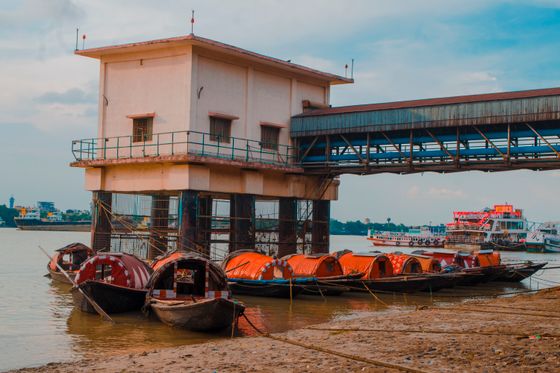
West Bengal
Ujani (Mangalchandi)
Ujani (Mangalchandi) in Purba Bardhaman, West Bengal is one of the Shakti Peethas, the sacred shrines of the Divine Mother in the Shakta tradition of Hinduism. According to tradition, this is where the right wrist of Goddess Sati fell when Lord Vishnu's Sudarshana Chakra divided her body. Here the Goddess is worshipped as Mangal Chandika, and her guardian Bhairava (a form of Shiva) as Kapilambar. Shakti Peethas are among the holiest pilgrimage sites for devotees of the Goddess, drawing pilgrims especially during Navratri and Durga Puja. Each is tied to the legend of Sati, whose body parts fell across the Indian subcontinent and beyond, sanctifying the ground where they landed.
Madhya Pradesh
Ujjain (Mahakaleshwar)
Ujjain, one of Hinduism's seven sacred Sapta Puri cities, is home to the Mahakaleshwar Jyotirlinga, famed for its unique Bhasma Aarti performed with sacred ash at dawn. An ancient city on the Shipra River, it is also one of the four sites of the Kumbh (Simhastha) Mela.

Jammu & Kashmir
Vaishno Devi (Katra)
The shrine of Mata Vaishno Devi stands at 1,585 metres in the Trikuta Mountains of Jammu. Katra is the base town, and from there millions of pilgrims walk 12 km uphill on a well-built mountain path to reach the cave temple, the Bhawan. Inside the natural rock cave there is no idol. The goddess is worshipped as three natural rock Pindis — Maha Kali, Maha Lakshmi and Maha Saraswati, the creating, sustaining and transforming aspects of Shakti. The Shri Mata Vaishno Devi Shrine Board (SMVDSB) runs the whole operation around the clock, with automated crowd-tracking lanes and shelters along the route.

Gujarat
Valsad
Valsad, once known as Bulsar, sits at the southern tip of Gujarat on the Arabian Sea. It is known for its mango orchards — the source of much of the region's Alphonso (Hafoos) crop — and mixes an industrial economy with easygoing coastal and temple tourism. With black-sand beaches and the union territory of Daman close by, it is a popular weekend break for visitors from Gujarat and Maharashtra.
.jpg/960px-Varadharajaperumal_temple%2C_Puducherry_(1).jpg)
Puducherry
Varadharaja Perumal Temple, Puducherry
A five-tiered rajagopuram marks the entrance, and the granite wall behind it encloses every shrine. The Cholas built the original in the 11th century and the Pandyas expanded it in the 12th, which is why the architecture reads as a storehouse of both. Vishnu is worshipped here as Varadaraja and Lakshmi as Perundevi Thayar, in Vaishnavite and Shaktite traditions together, and the Archaeological Survey of India maintains the temple as a religious monument in the heritage town. Time a visit for Chithrai, April into May, if you want it at full volume: the ten-day Brahmostavam and the 25-day festival for Rama and Sita's marriage both fall then.
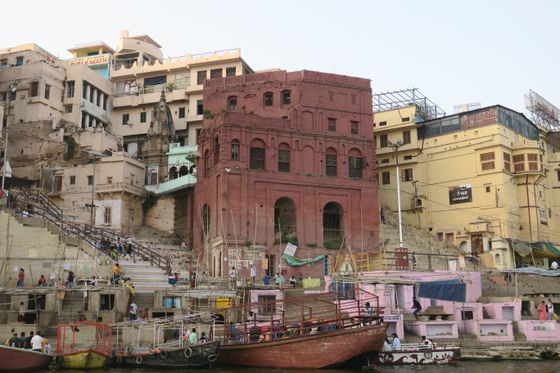
Uttar Pradesh
Varanasi
Varanasi is the oldest continuously lived-in city on earth and it will either be the best three days of your trip or the worst, with very little in between. Take a boat at dawn, not at sunset. At first light the ghats are working — people bathing, washing, praying, exercising — and the boat is quiet. The evening Ganga Aarti at Dashashwamedh is a genuine spectacle but you will watch it shoulder to shoulder with several hundred phones. At Manikarnika, bodies burn around the clock and have done for centuries. You can stand and watch; it is not hidden and nobody will stop you. Do not photograph it, and do not pay the men who offer to take you closer for a donation to the wood. Both requests are as old as the ghat. The galis behind the river are the actual city. They are too narrow for cars, you will get lost, and getting lost is the point — but keep the river to one side in your head so you can always walk back to it. Sarnath, where the Buddha gave his first sermon, is forty minutes away and a complete change of pace. Go on the day Varanasi has worn you out.
.jpg/960px-Vedapureeswarar_temple%2C_Pondicherry_(7).jpg)
Puducherry
Vedapureeswarar Temple, Pondicherry
What stands here is a second act. French troops and local people destroyed the temple during riots between Hindus and Christians in 1748, and forty years later a Divan named Kandappa Mudaliar expanded it again on public subscription. Shiva is worshipped as Vedapurishvarar and Parvati as Tripurasundari, behind a granite wall that encloses all the shrines, under a five-tiered rajagopuram in the Dravidian manner. It is a short stop rather than a morning's worth of one, and you go for the history of what happened to the building rather than for its scale.

Andhra Pradesh
Veerabhadra Temple, Lepakshi
Look up. The paintings are the reason to come, bright and closely detailed frescoes of Rama and Krishna drawn from the Ramayana, the Mahabharata and the Puranas, and unusually well preserved for 16th-century work. Carving covers nearly every exposed surface of this Vijayanagara temple to Virabhadra, the fierce form of Shiva, which means you will be here longer than you planned. Do not stop at the building itself. The Nandi lies about 200 metres away, cut from a single block of stone and reckoned one of the largest of its kind anywhere, and walking out to it is the better half of the visit.

Tamil Nadu
Velankanni
Velankanni, the 'Lourdes of the East', is the largest Christian pilgrimage centre in India — home to the Basilica of Our Lady of Good Health on the Bay of Bengal coast. Drawing millions of devotees of all faiths, especially during its September feast, it is a powerful symbol of coastal Tamil Christian devotion.
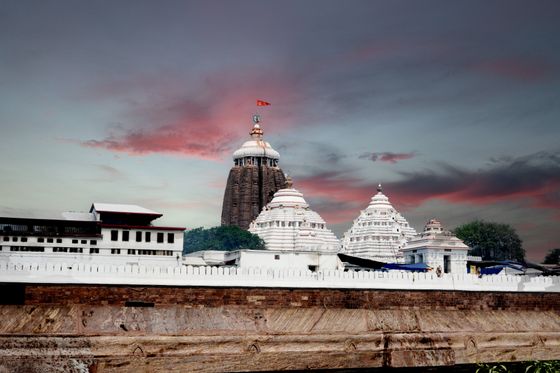
Odisha
Vimala Temple (Jagannath, Puri)
Vimala Temple (Jagannath, Puri) in Puri, Odisha is one of the Shakti Peethas, the sacred shrines of the Divine Mother in the Shakta tradition of Hinduism. According to tradition, this is where the feet of Goddess Sati fell when Lord Vishnu's Sudarshana Chakra divided her body. Here the Goddess is worshipped as Vimala, and her guardian Bhairava (a form of Shiva) as Jagannath. Shakti Peethas are among the holiest pilgrimage sites for devotees of the Goddess, drawing pilgrims especially during Navratri and Durga Puja. Each is tied to the legend of Sati, whose body parts fell across the Indian subcontinent and beyond, sanctifying the ground where they landed.

Uttar Pradesh
Vindhyavasini Temple
Vindhyavasini Temple in Mirzapur (Vindhyachal), Uttar Pradesh is one of the Shakti Peethas, the sacred shrines of the Divine Mother in the Shakta tradition of Hinduism. It is revered as a sacred Shakti Peetha, a seat of the Mother Goddess. Here the Goddess is worshipped as Vindhyavasini. Shakti Peethas are among the holiest pilgrimage sites for devotees of the Goddess, drawing pilgrims especially during Navratri and Durga Puja. Each is tied to the legend of Sati, whose body parts fell across the Indian subcontinent and beyond, sanctifying the ground where they landed.

Uttar Pradesh
Vishalakshi Temple
Vishalakshi Temple in Varanasi, Uttar Pradesh is one of the Shakti Peethas, the sacred shrines of the Divine Mother in the Shakta tradition of Hinduism. According to tradition, this is where the earring of Goddess Sati fell when Lord Vishnu's Sudarshana Chakra divided her body. Here the Goddess is worshipped as Vishalakshi (Manikarni), and her guardian Bhairava (a form of Shiva) as Kala Bhairava. It is counted among the eighteen Ashtadasha Maha Shakti Peethas — the most revered of all the seats of the Goddess. Shakti Peethas are among the holiest pilgrimage sites for devotees of the Goddess, drawing pilgrims especially during Navratri and Durga Puja. Each is tied to the legend of Sati, whose body parts fell across the Indian subcontinent and beyond, sanctifying the ground where they landed.

Bihar
Vishnupad Temple
Gaya's Shraddha rites turn on this temple, which means most people around you are performing last rites for their dead rather than sightseeing. Behave accordingly. At the centre is a 40-centimetre footprint cut into a block of basalt, the Dharmasila, held to be Vishnu's, left when he pinned the demon Gayasura underground. A fifty-kilo gold flag sits on top, the gift of one devotee. The Gayawal Brahmins are the traditional priests here; Madhvacharya, Chaitanya Mahaprabhu and Vallabhacharya all came. The Phalgu runs alongside.

Telangana
Yadadri (Yadagirigutta)
Yadadri's hilltop cave shrine of Lakshmi Narasimha — the fierce man-lion form of Vishnu — has been transformed into Telangana's grandest temple: the hill re-clad entirely in carved black granite by hundreds of sthapathis in a decade-long rebuild, its vimana gilded with quintals of gold. Inside, the self-manifested Narasimha images sit in a low rock cleft where devotees have prayed for centuries, many coming for the deity's famed healing grace.
Uttarakhand
Yamunotri
The sacred source of the Yamuna River and the first stop of the Chota Char Dham pilgrimage circuit in Uttarakhand. Yamunotri is at an altitude of approximately 3,293 metres in the Garhwal Himalayas. It is revered as the seat of Goddess Yamuna. The actual source of the river is the Champasar Glacier located further up on the Kalind Mountain, which is inaccessible, making the temple the primary place of veneration. Pilgrims undertake a 6 km trek from Janki Chatti to reach the temple. The journey features thermal springs, the most famous being Surya Kund, where pilgrims cook rice and potatoes as prasad. Before entering the temple, devotees offer prayers at Divya Shila, a sacred rock pillar.

Delhi
Yogmaya Temple, Delhi
The building is not old; the worship is. Whatever stood here, and its first architecture is put at 300-200 BCE, was rebuilt again and again by the people living around it after the Mamluks destroyed it: Hemu raised it from ruins, a rectangular Islamic-style hall went up under Aurangzeb, and the temple you walk into dates from an early nineteenth-century restoration. Local priests claim it as the only pre-sultanate temple in Delhi still in use. Come on an ordinary day rather than during Navratri, when the congregation is large, and walk out to the Anangtal Baoli beside it, closed in by trees.


