

Experience
The lake in the middle of town, with boats on it and a path around the edge. Half an hour, and it is what everyone does on arriving.
4 places to see, with what each one is and how long it takes.
Experience
The lake in the middle of town, with boats on it and a path around the edge. Half an hour, and it is what everyone does on arriving.

Attraction · 45 min
A single-room state museum of Dang tribal material — instruments, masks, wedding dress, farming tools. It takes twenty minutes and is better than it has any need to be. Small enough for half an hour, and it shuts for a break in the middle of the day.

Viewpoint · 1 hr
About thirty metres, on the Ambika near Waghai, and worth the detour only during and just after the monsoon. By February it is a wet rock face.
Viewpoint
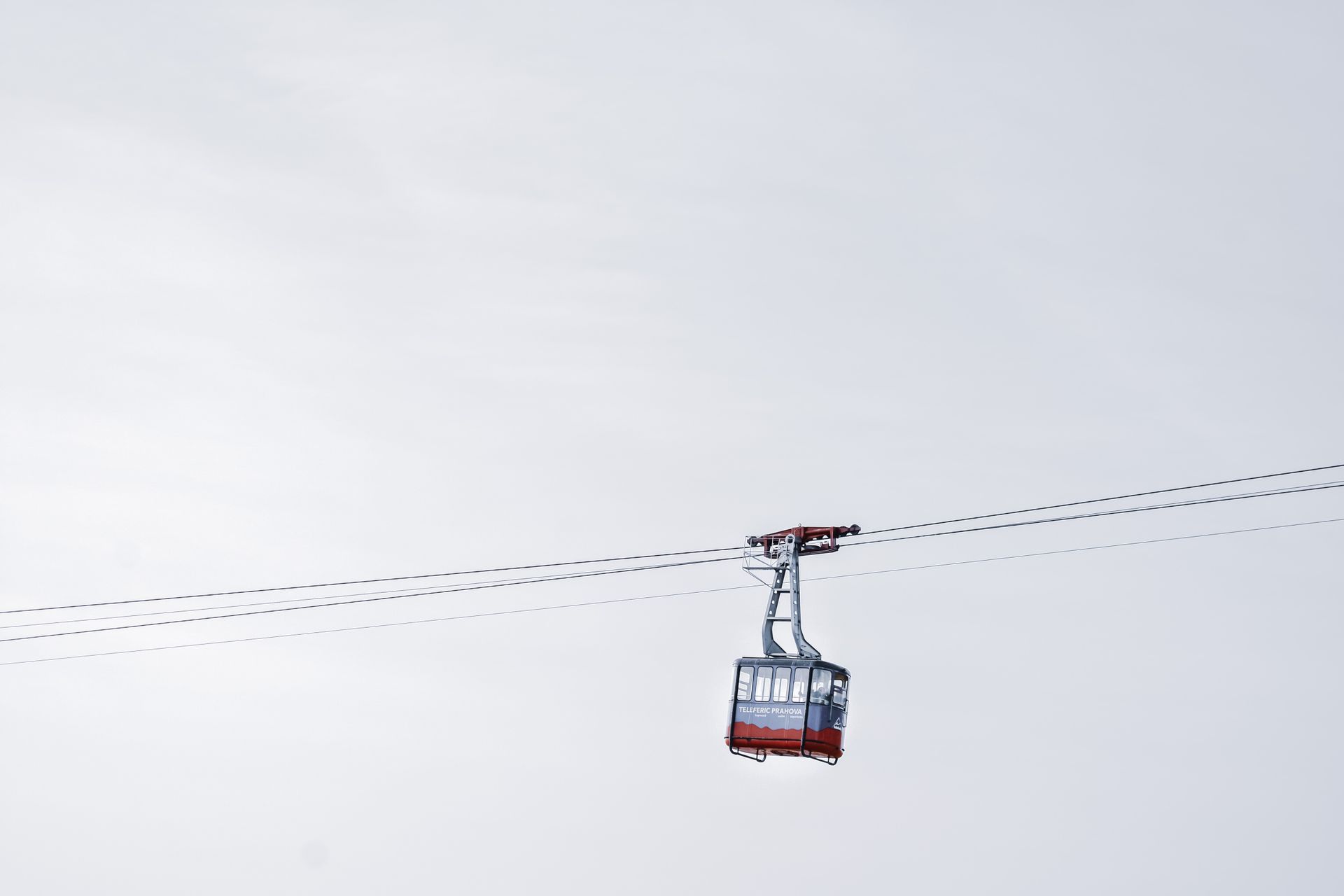
A cable car from the town up to the sunset point, which saves a climb and is the only reason most people get up there. Short queues on weekdays, long ones at dusk on Sundays.
Not in Saputara — these are in other towns across the state.

Attraction · 1.5 hrs
A Mahakali shrine on the summit of Pavagadh, about forty-six kilometres from Vadodara and one of the most visited hill shrines in Gujarat. The records point to a Jain origin — the temple belonged to the Svetambara Achalgaccha sect, and the Mahakali image was installed in the twelfth century. The hill and the ruined city below it form the Champaner-Pavagadh Archaeological Park, which UNESCO listed in 2004 as the only complete pre-Mughal Islamic city in India. A ropeway covers most of the climb; the last stretch is steps, and it is shoulder to shoulder at weekends.

Attraction
A range of hills above Palitana carrying 865 Jain temples — not one temple with outbuildings but a city of them, built up along the ridge over centuries. Jain tradition holds the site was sanctified when Rishabha, the first Tirthankara, preached from the summit, and that Pundarik Swami, his grandson and chief Ganadhara, attained moksha here. It is among the holiest places in Jainism. Getting up means roughly 3,500 steps and there is no ropeway; pilgrims start before dawn, and nobody stays on the hill overnight, priests included.
Experience
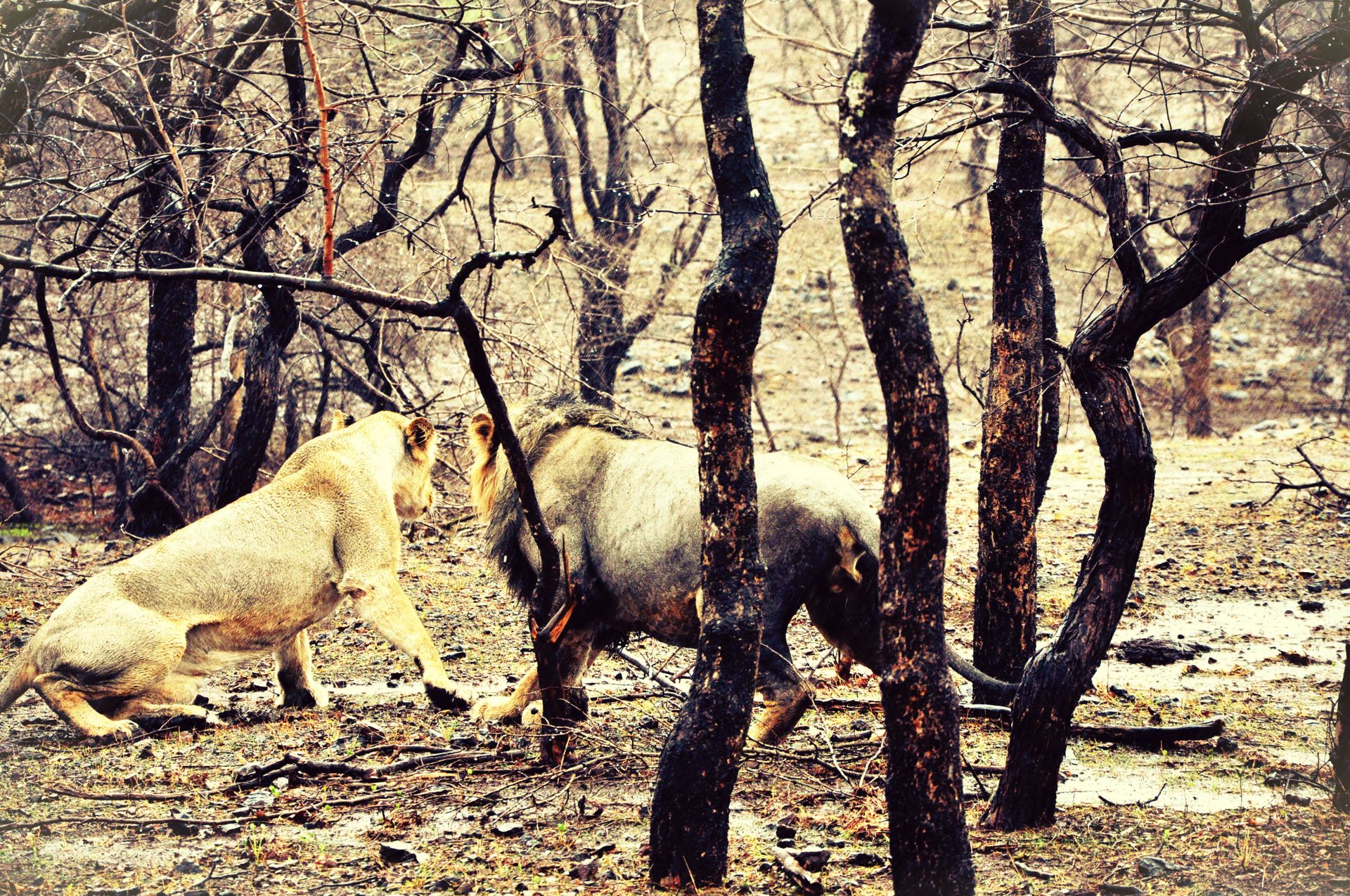
The only place in the world with wild Asiatic lions. The park was declared in 1965 out of the Nawab of Junagadh's private shooting grounds — 1,410 square kilometres in all, of which 259 are fully protected national park and the rest sanctuary, in the Khathiar-Gir dry deciduous forest. The 2015 census counted 523 lions, up from 411 in 2010 and 359 in 2005, and the range now spreads well beyond the park into Amreli and Bhavnagar. Safaris run in fixed zones on permits released in limited numbers and booked ahead; the park closes through the monsoon.

Attraction
Gandhi's home on the west bank of the Sabarmati, about six kilometres from the town hall, and the place he set out from on 12 March 1930 to walk to Dandi and break the salt law. He lived here and at Sevagram in Wardha for twelve years between travelling and prison, with Kasturba and followers including Vinoba Bhave; the Gita was recited daily as part of the day's routine. It is a national monument now — low buildings, a courtyard, his room kept as it was. Best in the morning, before the school groups.

Attraction · 3 hrs
At 182 metres, the tallest statue in the world — Sardar Vallabhbhai Patel, independence leader and independent India's first deputy prime minister and home minister, standing above the Narmada facing the Sardar Sarovar dam, about a hundred kilometres south-east of Vadodara. Announced by Narendra Modi as Gujarat's chief minister in 2010, built by Larsen and Toubro from October 2013 at a cost of ₹27 billion, designed by the sculptor Ram V. Sutar, and inaugurated on 31 October 2018, which would have been Patel's 143rd birthday.

Attraction · 2 hrs
The Jagat Mandir — a Krishna temple where he is worshipped as Dwarkadhish, lord of Dwarka, and one of the four Char Dham sites of the Hindu pilgrimage circuit. Five storeys carried on seventy-two pillars, with a spire visible across the town and a flag that is changed by hand several times a day. Archaeology puts the earliest temple on this spot at around 200 BCE; what stands now is largely a fifteenth- and sixteenth-century rebuilding. There are two gates, one to enter by and one to leave by, and a queue at both right through the morning.

Attraction · 2 hrs
Fifteen acres at Dandi marking where the Salt March ended on 5 April 1930 and Gandhi broke the British salt monopoly by boiling seawater. It cost about ₹89 crore and opened in 2019: a path lined with statues of the marchers who walked the full distance from Sabarmati, and salt pans worked by solar evaporation, so the act itself is repeated rather than described. It is a memorial rather than a museum, and it lands better if you have been to Sabarmati Ashram first — that is where the walk started.
.jpg/1920px-Shamlaji_Temple2_(cropped).jpg)
Attraction · 1.5 hrs
A Vishnu temple in Aravalli district and one of the busier pilgrimage centres in north Gujarat. The present building is fifteenth or sixteenth century, though it may have been begun in the eleventh in the Chaulukya style; the Vishnu image in the sanctuary is older still, probably seventh or eighth century, and the small temple facing it holds a sixth-century Shiva. The oldest intact structure on the site is the ninth-century Harishchandrani Chauri, with its gateway, off to one side and usually walked past. The fair at Kartik Poornima is when the town fills.
.jpg/1920px-Somanath_mandir_(cropped).jpg)
Attraction · 2 hrs
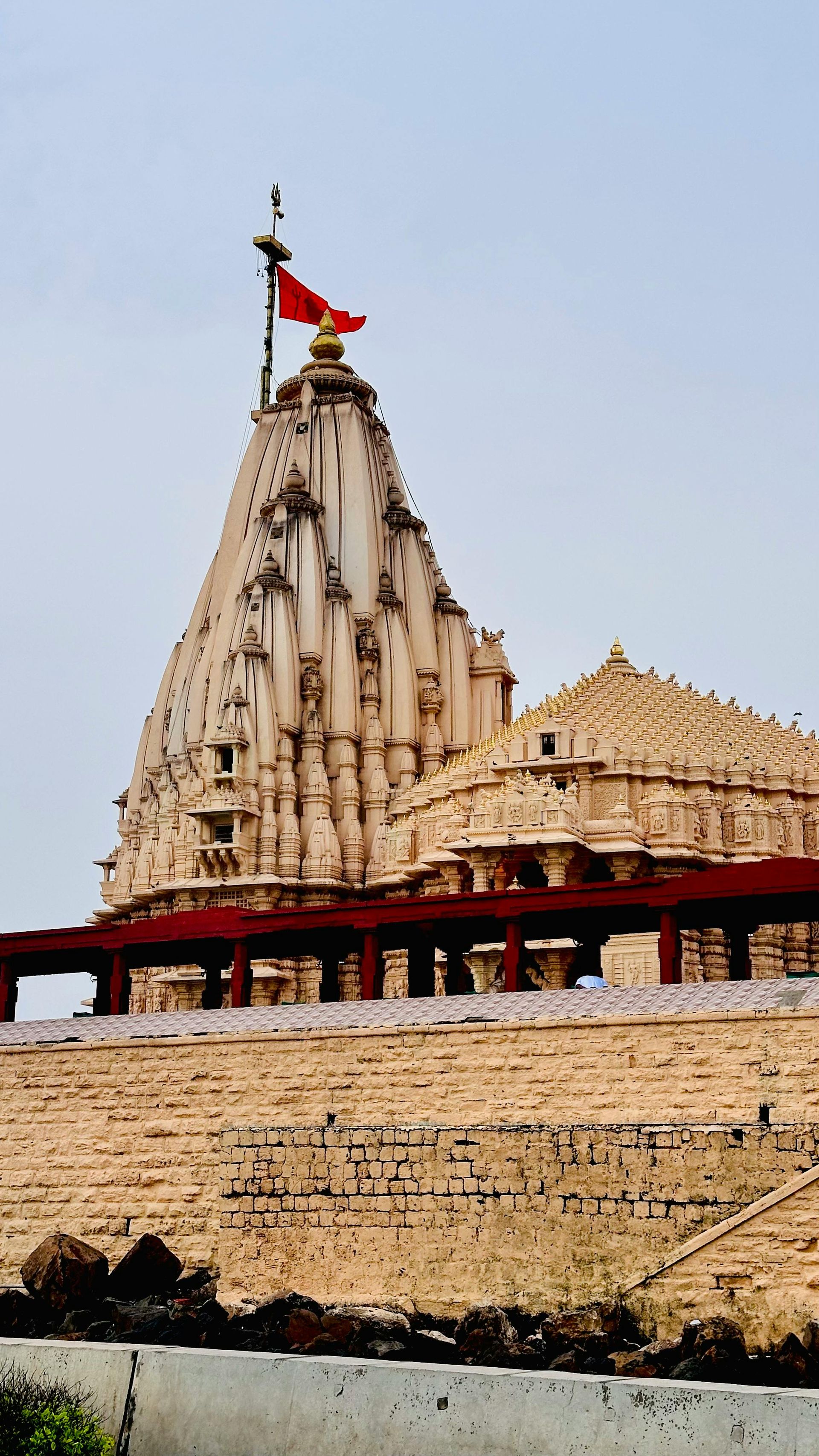
The first of the twelve jyotirlingas of Shiva, at Prabhas Patan near Veraval on the Saurashtra coast, and one of the most contested sites in Indian history. The Mahabharata and the Bhagavata Purana both name a tirtha here long before archaeology can confirm a building; the earliest datable temple falls somewhere between the first centuries CE and the ninth. It was destroyed and rebuilt repeatedly, beginning with Mahmud of Ghazni's raid in January 1026. The ruins standing at independence were cleared and the present temple built in the Maru-Gurjara style. The sea starts immediately behind it.

Attraction · 1 hr
Italian Gothic in red sandstone, finished in 1879 and badly shaken by the 2001 earthquake — parts are still unrepaired. The clock tower can be climbed for the view over Bhuj.

Attraction · 2 hrs
Commissioned in 1878 by Sayajirao Gaekwad III and finished in 1890 to designs by the British architects Charles Mant and Robert Chisholm, named for Sayajirao's first wife Lakshmibai. The grounds run to more than five hundred acres, which makes it the largest private residence in the world, and it is still the home of the Gaekwad family. The style is Indo-Saracenic: Indo-Islamic massing with Renaissance detail. It cost six million rupees, and had indoor lifts and its own telephone exchange when it opened. Part of it is open to visitors; the rest is a house.

Attraction
A cluster of Jain temples partway up Girnar, the ancient hill above Junagadh, and one of the great Svetambara pilgrimages — a Mahatirth. Tradition holds that Neminath, the twenty-second Tirthankara, attained omniscience here and later nirvana at the highest peak, along with five hundred and thirty-three other enlightened sages; the Kalpa Sutra and the Uttaradhyayana Sutra both describe it. The temples sit several thousand steps above the base. The climb is the point and it is a real one — start before dawn, or take the ropeway up and walk down.

Attraction · 1.5 hrs
A stepwell on the bank of the Saraswati at Patan, built in the eleventh century and attributed to Udayamati, queen of the Chaulukya king Bhima I. It silted over and was effectively lost until the 1940s, then excavated and restored by the Archaeological Survey of India in the 1980s — which is why the carving is as sharp as it is. Seven levels of stairs descend to the water, each lined with sculptural panels of Hindu deities: it was built as an inverted temple, a shrine you go down into rather than up. UNESCO listed it in 2014, and it is on the ₹100 note.

Attraction · 1 hr
Kalo Dungar, the black hill, is the highest point in Kutch at 462 metres — ninety-seven kilometres from Bhuj and twenty-five from Khavda, close enough to the Pakistan border that the army holds the actual summit and only military personnel go up. The Dattatreya temple below it is about four hundred years old. What most visitors stop for on the way is the magnetic hill, where a vehicle left in neutral appears to roll upwards; it is an optical illusion produced by the lie of the horizon. From the ridge you look straight out over the white of the Rann.

Experience · 3.5 hrs
The regulated core of the forest, covered on guided jeep routes: Asiatic lions, leopards, sambar and spotted deer.

Attraction · 1.5 hrs
Built around 1161 under the Solanki king Kumarpal and roughly a hundred and forty feet high, in local sandstone. The Ajitnath inside is cut from one block, a little over five metres. Taranga is a quiet hill and this is close to the only thing on it.
Attraction
The five-storey temple of Krishna as king, with its famous flag changed five times a day.