
Attraction
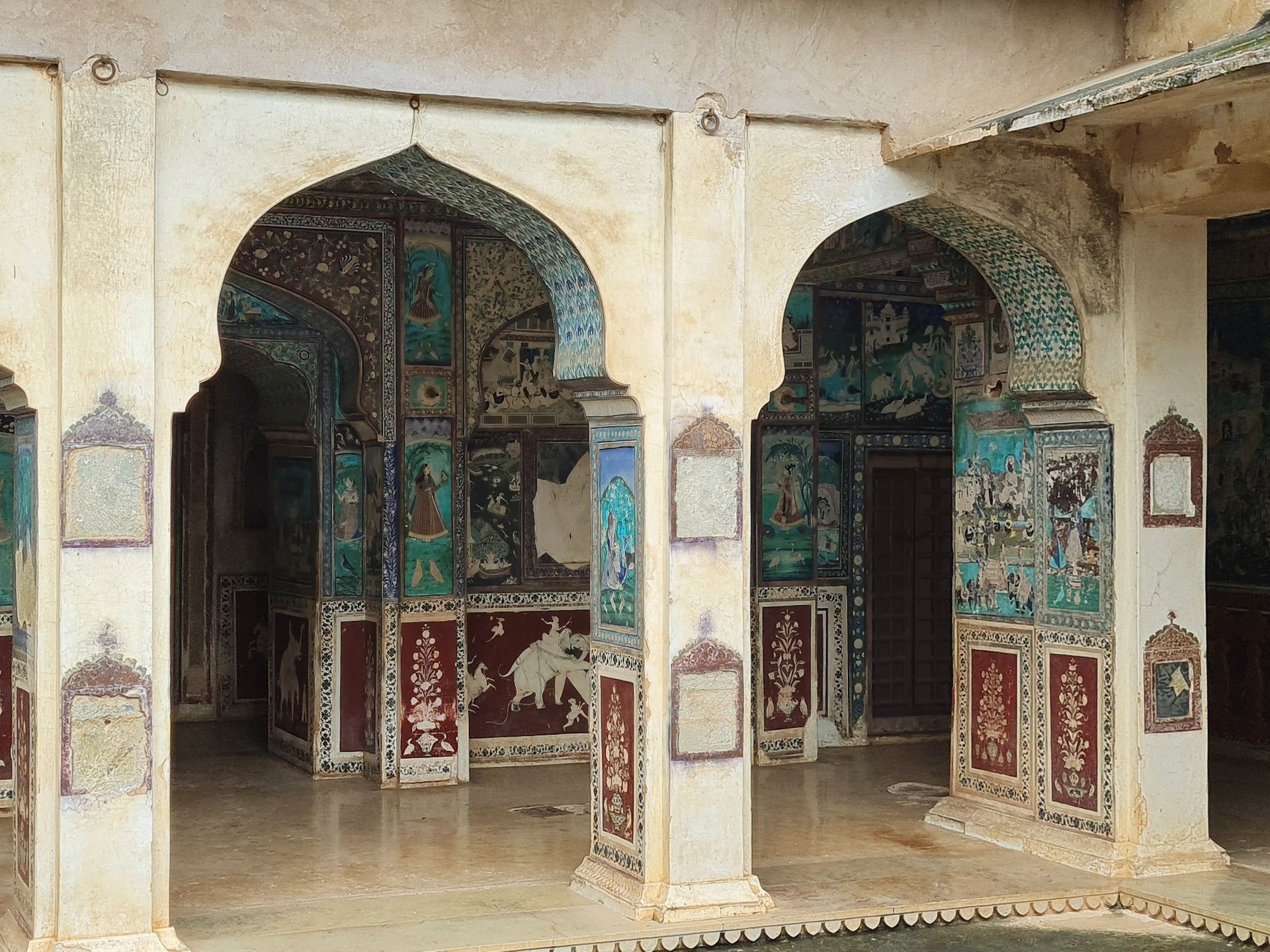
The Chitrashala is an open courtyard gallery of Bundi-school murals, mostly Krishna scenes, in blue and green. It has its own entrance and is often unattended. The palace above is largely unrestored and overgrown.
2 places to see, with what each one is and how long it takes.
Attraction
The Chitrashala is an open courtyard gallery of Bundi-school murals, mostly Krishna scenes, in blue and green. It has its own entrance and is often unattended. The palace above is largely unrestored and overgrown.

Attraction
Built in 1699 by Rani Nathavati Solanki, queen of Rao Raja Anirudh Singh, and about forty-six metres deep — a multi-storey stepwell with a place of worship on each level, carved brackets running down the sides, and a narrow four-pillared entrance under a high arched gate, with stone elephants facing each other in the corners. Bundi has dozens of stepwells and most are locked, dry or full of rubbish; this is the one kept open and maintained. Go in the morning, while the sun still reaches down the shaft — by afternoon the carving is in shadow and stops reading.
Not in Bundi — these are in other towns across the state.

Attraction
Nine storeys and about thirty-seven metres, raised by Rana Kumbha of Mewar in 1448 to mark his defeat of Mahmud Khilji's Malwa army at Sarangpur. It is dedicated to Vishnu and carved over almost every surface, inside and out, with figures from the Hindu pantheon — James Tod, the first British chronicler of Rajputana, rated it above the Qutb Minar. It stands inside Chittor Fort, itself UNESCO-listed with the other hill forts of Rajasthan. The stair inside is narrow and unlit in places: worth climbing for the view over the plateau, but not if you dislike enclosed spaces.

Attraction
Begun in 1592 on the hill above Maota lake, in pale sandstone and marble, and the Sheesh Mahal is what the queue is for. The fort stands over the town of Amer, eleven kilometres from Jaipur, and Maota is not scenery — it was the palace's water supply. Ramparts, a sequence of gates and cobbled ramps carry you up through the courtyards, with the mirror hall off the third. Walk up rather than taking an elephant: the animals here have drawn repeated welfare complaints, and the climb takes about ten minutes. First hour or last hour is when the sandstone turns orange and the courtyards empty.
Attraction
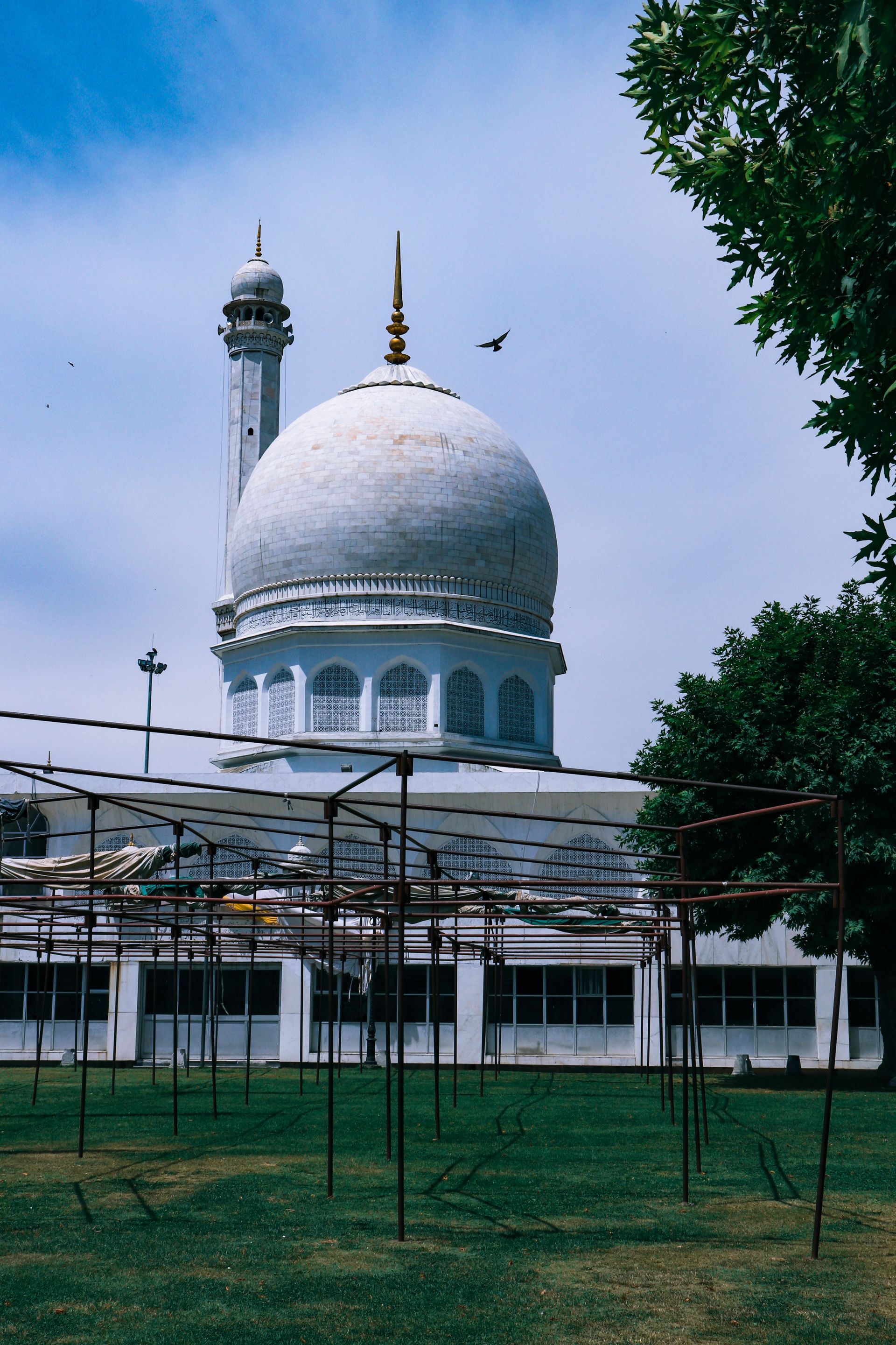
The tomb of the Sufi saint who brought the Chishti order to India in the twelfth century, and the most visited Muslim shrine in the subcontinent — up to twenty thousand people on an ordinary day, and hundreds of thousands during the urs that marks his death anniversary. The complex is more than the tomb: several graves, a mosque, and the enormous cooking cauldrons that are still used. Heads covered, shoes off, and expect to be offered a chadar and a guide at the gate — agree a price or decline plainly. Early morning and late evening are calmer than the middle of the day.

Attraction
Built in 1156 by Rawal Jaisal at a crossroads of trade routes that fed into the old silk roads, and the second-oldest fort in Rajasthan. It is one of the very few living forts left anywhere: around a quarter of the old city still lives inside the walls, alongside shops, guesthouses and the Jain temples in the middle, which are the best thing in it. The yellow sandstone reads tawny at midday and honey at sunset, which is where the golden fort name comes from. Seepage from the plumbing of all those households is undermining the foundations, which is why staying inside is discouraged.

Attraction
A tenth-century Chauhan fort standing inside the tiger reserve, founded under Sapaldaksha and added to by the kings who followed him, UNESCO-listed since 2013 with the other hill forts of Rajasthan. It sits high enough to give the clearest view there is over the park below. Entry is free and separate from the safari, because the Ganesh temple inside is a working shrine receiving pilgrims — which makes this the one part of Ranthambore you can walk into without a permit or a jeep booking. It is a real climb, with langurs along the path who are entirely used to people carrying food.

Attraction
The largest palace complex in Rajasthan, built over nearly four hundred years by successive Mewar rulers. Udai Singh II began it in 1553, when he moved his capital from Chittor to the new city of Udaipur, and every ruler after him added to it — which is why it reads as a run of connected palaces rather than one building. It stands on a ridge on the east bank of Lake Pichola, so the courtyards look down onto the water and across to the island palaces. Glass and mirror work, mosaic courtyards and the Mewar collection are inside; boats to Jag Mandir leave from below it.

Attraction
Five Svetambara Jain temples about two and a half kilometres outside Mount Abu, built between the eleventh and sixteenth centuries in the Solanki style. The oldest, Vimal Vasahi, dates to 1031; later additions were funded by Vastupala, a minister of the Vaghelas. What everyone comes for is the marble — pure white, cut so fine across the domes and ceilings that it looks poured rather than carved, with no two pillars alike. They count among the five great pilgrimage sites of the Svetambara sect and are still run by a religious trust, so they are working temples with temple rules, not monuments.
Attraction
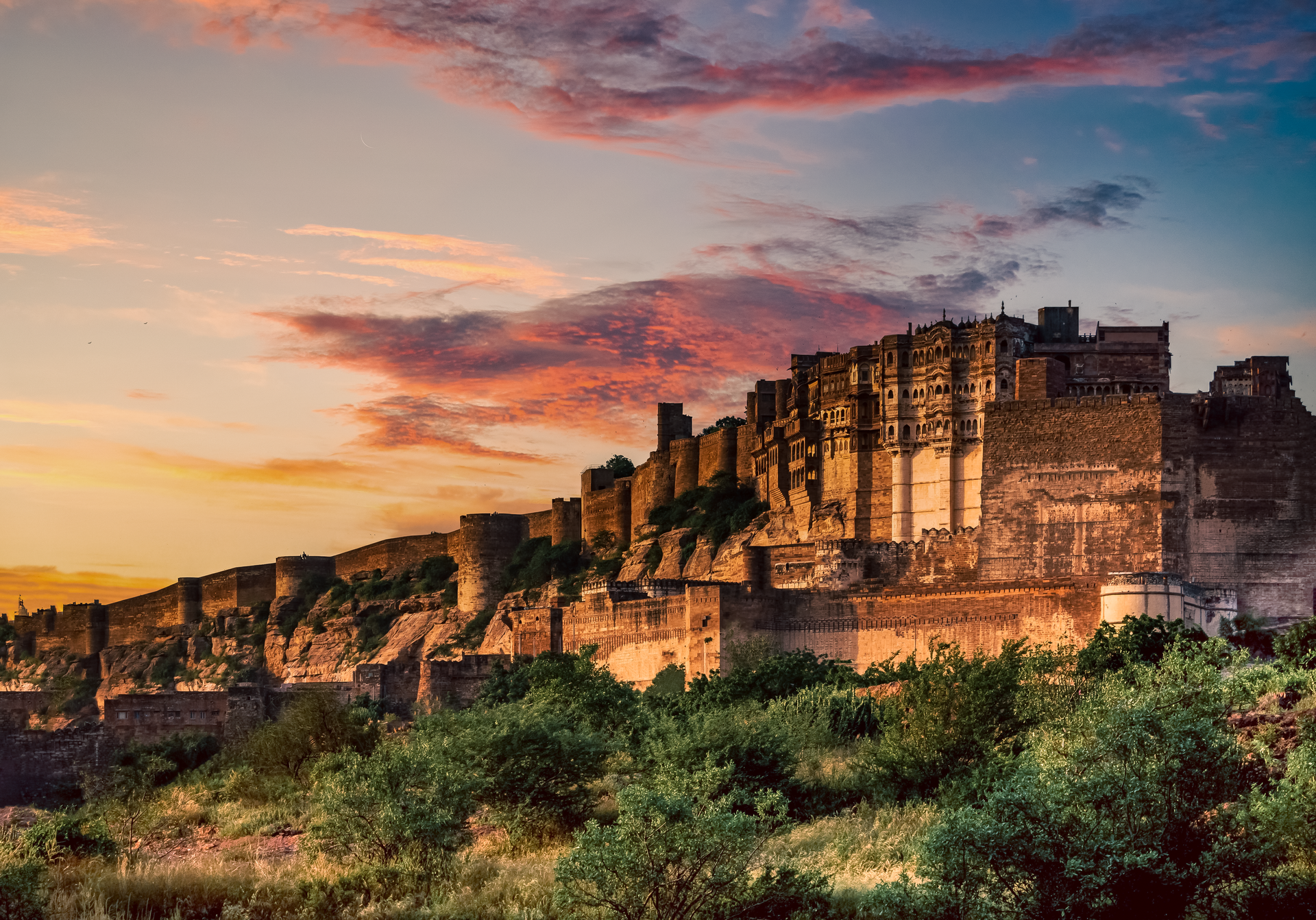
Founded around 1459 by Rao Jodha of the Rathore clan, though most of what stands is seventeenth-century work by his successors — a hundred and twenty metres above the city, spread across twelve hundred acres. Seven gates lead in: Jai Pol was built by Man Singh to mark victories over Jaipur and Bikaner in 1806, Fattehpol commemorates Ajit Singh's victory over the Mughals. Inside are palace courtyards, the Chamunda Mataji temple and a museum of the Jodhpur royal collection. Kipling called it a palace built by titans; what it actually gives you is the clearest view there is of the blue houses below.

Attraction
Chaturmukha Dharana Vihara, the four-faced temple — begun in the fifteenth century by Dharna Shah, a local Jain merchant, and dedicated to Adinath, the first Tirthankara of the present cycle. It is one of the largest Jain temples in India and the principal Svetambara pilgrimage site in this part of Rajasthan. The count everyone quotes is 1,444 marble pillars, and the claim that no two are carved alike holds up better than most such claims. Four entrances face four directions onto four images of Adinath. A working temple: leather off at the gate, and hours for visitors are set by the trust.

Experience
Jeep safaris through the scrub-thorn and dry deciduous forest of Sariska, a reserve of about 1,203 square kilometres in Alwar district with an 881 square kilometre core. It was Alwar's royal hunting ground before it was anything else — a sanctuary from 1958, a Project Tiger reserve from 1978. Sariska is also the reserve that lost every one of its tigers to poaching by 2004 and was restocked from Ranthambore afterwards, so the population is small and a sighting is genuinely uncertain. Come for the Aravalli landscape and the ruined temples inside the park, and treat a tiger as a bonus.
Attraction
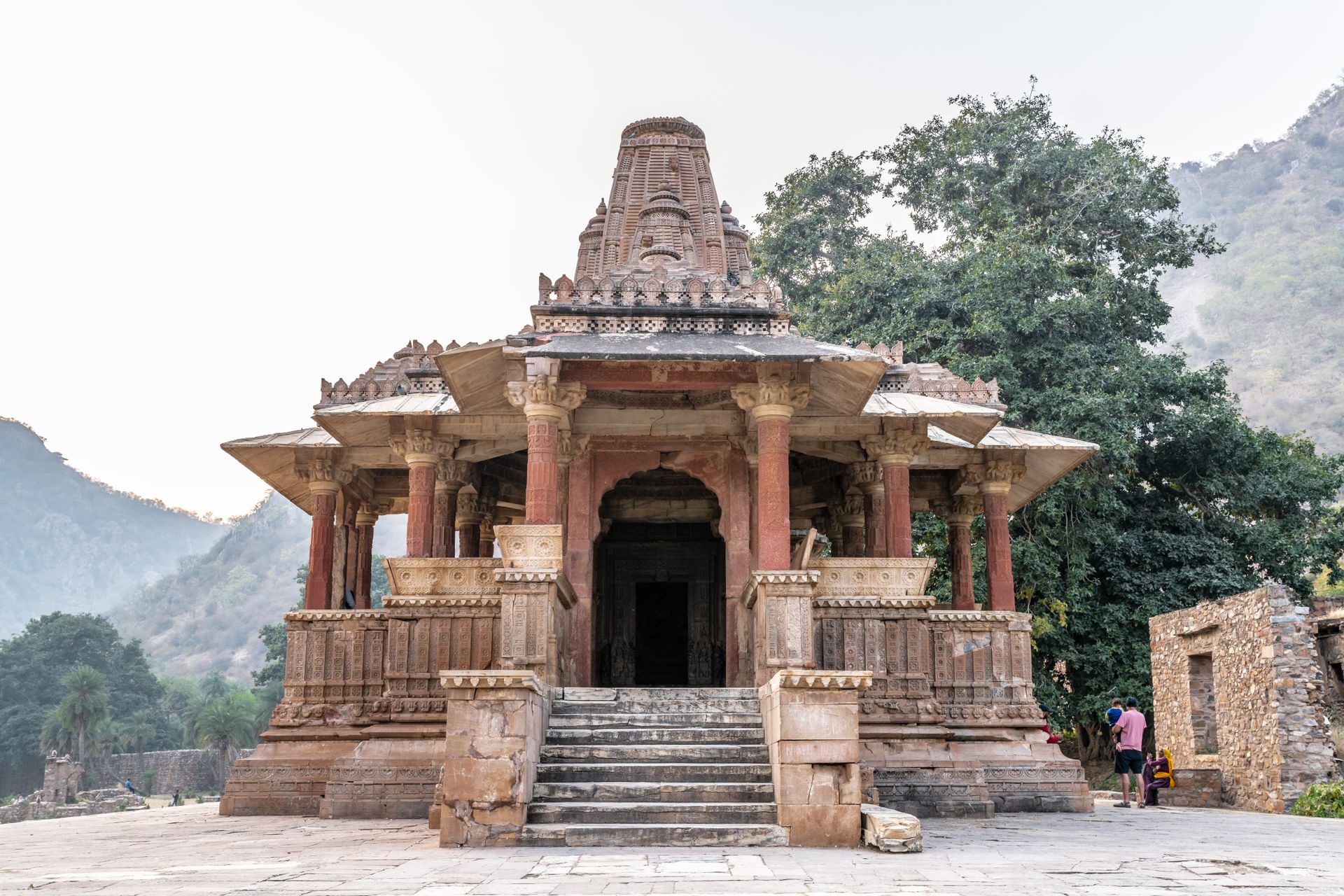
One of very few temples anywhere dedicated to Brahma, and by some distance the most important of them. The structure dates to the fourteenth century with later partial rebuilding, in marble and stone slabs, with a red shikhara and a hamsa — the goose that carries Brahma — as its motif. The sanctum holds a four-headed image of Brahma with Gayatri beside him, and the temple is governed by a Sanyasi ascetic priesthood. It stands a few minutes from Pushkar Lake, to which its legend is tied. Shoes come off well before the steps, and cameras are not welcome in the sanctum.

Attraction
Begun in 1589 and never taken, which is why the painted and gold-leaf interiors survive as well as they do. The walls and moat went up between 1589 and 1594 under Karan Chand, prime minister to Rai Singh of Bikaner. It was called Chintamani until the early twentieth century, when the ruling family moved out to Lalgarh Palace and this became simply the old fort. Unusually for Rajasthan it stands on flat ground rather than a hill, so the city grew around it instead of below it. The museum holds a First World War biplane, which is not what anyone expects in a desert fort.

Attraction
The oldest of the Dilwara temples, built in 1031 by Vimal Shah — a Jain minister to the Solanki king Bhima I — and dedicated to Adinath, the first Tirthankara. It is the earliest of a group that grew between the eleventh and sixteenth centuries, and the one that set the pattern: pure white marble worked into concentric rings of dancers, musicians and elephants across the central dome, and pillars carved individually rather than repeated. These are active Svetambara pilgrimage temples managed by a religious trust, not monuments, so visiting hours and dress are set by the temple rather than by the tourism department.
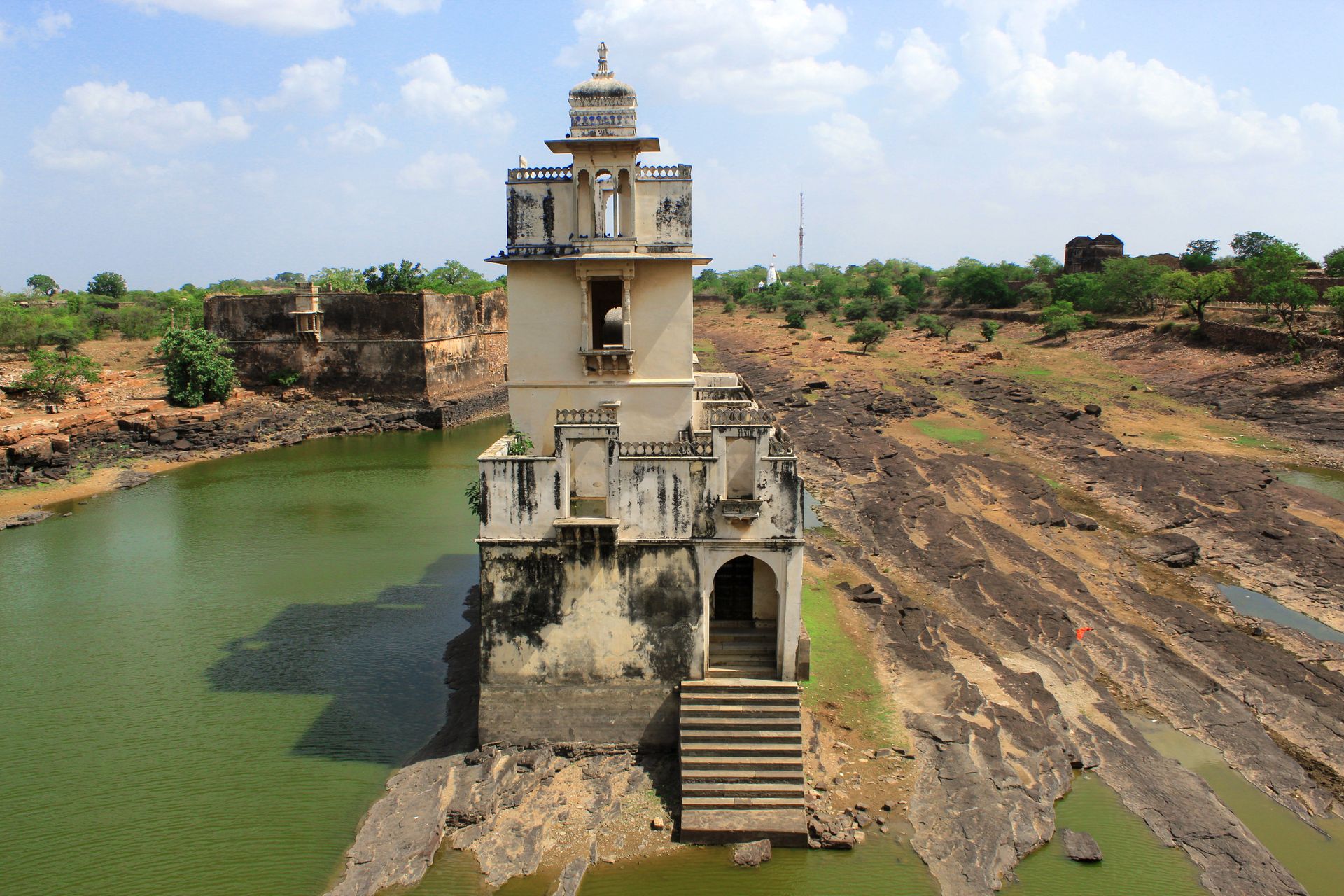
Attraction
The lakeside palace built for Queen Padmini, its white walls standing within a moat of water.
.jpg/1920px-1996_-218-20A_Jodhpur_Hotel_Umaid_Bhawan_Palace_(2233393509).jpg)
Attraction
One of the largest private residences in the world — three hundred and forty-seven rooms in Jodhpur's yellow sandstone. Ground was broken in November 1929 and the building was finished in 1943, and it was a famine-relief scheme as much as a palace: it was commissioned to put a drought-stricken region back into paid work. It is named for Maharaja Umaid Singh and is still the principal residence of the Jodhpur royal family. Part is run as a Taj hotel and part is a museum, which is the only section open to visitors — the rest is a private home, and reads like one.
.jpg/1920px-Adhai_Din-ka-Jhonpra_Screen_wall_(6133975257).jpg)
Attraction
Commissioned by Qutb-ud-Din Aibak in 1192 and finished by 1199, with a screen of arches added by Iltutmish in 1213 — which makes it one of the oldest surviving mosques in India and the oldest standing building in Ajmer. The name means "shed of two and a half days". Hindu masons built most of it under Afghan supervision, and it shows: the pillars are Indian work, reused and recut, no two quite alike. It stopped being used as a mosque in 1947 and is a protected monument now, a short climb above the dargah. Usually quiet, even when the dargah below is not.

Experience
The lake at the centre of Rajasthan's only hill station, up in the Aravallis, and the reason Mount Abu gets called an oasis in the desert — a plateau twenty-two kilometres long carrying rivers, waterfalls and evergreen forest, in a state that has very little of any of them. Pedal boats go out from the shore and the walk around the water is the town's evening ritual. The rock formations on the ridge above have collected names over the years; Toad Rock is the one everybody photographs. The lake is treated as sacred, so it is a place to walk around rather than swim in.
_-_img_01.jpg/1920px-East_facade_Hawa_Mahal_Jaipur_from_ground_level_(July_2022)_-_img_01.jpg)
Attraction
Built in 1799 by Sawai Pratap Singh in red and pink sandstone, on the edge of the City Palace and joined to the zenana, the women's quarters. Its nine hundred and fifty-three lattice windows — jharokhas — let the women of the household watch processions in the street below without being seen, and the honeycomb of openings pulls air through the building, which is what keeps it bearable in a Jaipur summer. The famous view is from outside, facing east: go before nine, while the sun is on the front. Inside it is narrow ramps and small chambers, and much less than the facade promises.