






.JPG/960px-Albert_Hall_(Museum).JPG)




Blue pottery
Jaipur's signature craft: quartz-based, glazed a deep cobalt and painted with flowers, birds and elephants. Fired low, so it is lighter than it looks.
Workshops and showrooms across the city; Jaipur is the home of the craft.

city · Rajasthan
Jaipur repays getting up early more than almost anywhere in Rajasthan, because by ten the coaches have arrived and Amber Fort stops being a fort and becomes a queue.
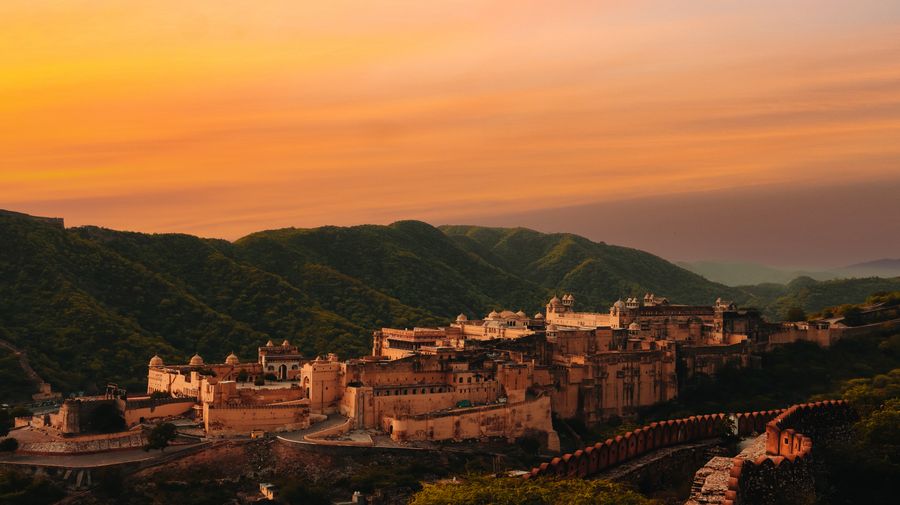
Jaipur repays getting up early more than almost anywhere in Rajasthan, because by ten the coaches have arrived and Amber Fort stops being a fort and becomes a queue. Be at Amber for opening. Walk up rather than taking the elephants — the welfare of those animals is a long-running problem and a jeep does the same job. Inside, the Sheesh Mahal is the room everyone photographs, but the Ganesh Pol above the second courtyard is the better piece of work. Hawa Mahal disappoints people, and it is worth knowing why before you stand in front of it: it is a screen, one room deep, built so the women of the household could watch the street unseen. There is almost nothing behind the facade. The good view is from the rooftop cafés opposite, looking back at it. Jantar Mantar is the one to book a guide for. Without someone to explain them the instruments are handsome shapes; with someone, they are a working observatory and the visit turns into the best hour of your day. For jewellery go to Johari Bazaar, for fabric to Bapu Bazaar, and for everyday chaos and better prices to Chandpole. October to March. April onwards the stone gets too hot to touch by mid-morning.
Founded in 1727 by Maharaja Sawai Jai Singh II, an astronomer-king who planned the city on Vastu Shastra grid principles — one of India's first planned cities. It was painted pink in 1876 to welcome the Prince of Wales, a colour the city has maintained by law ever since.
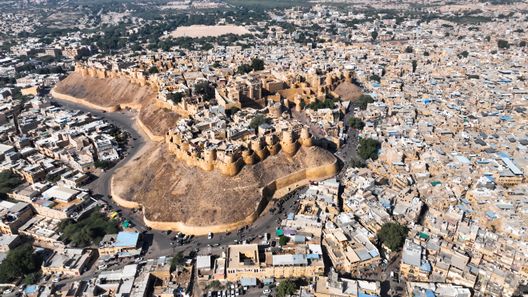
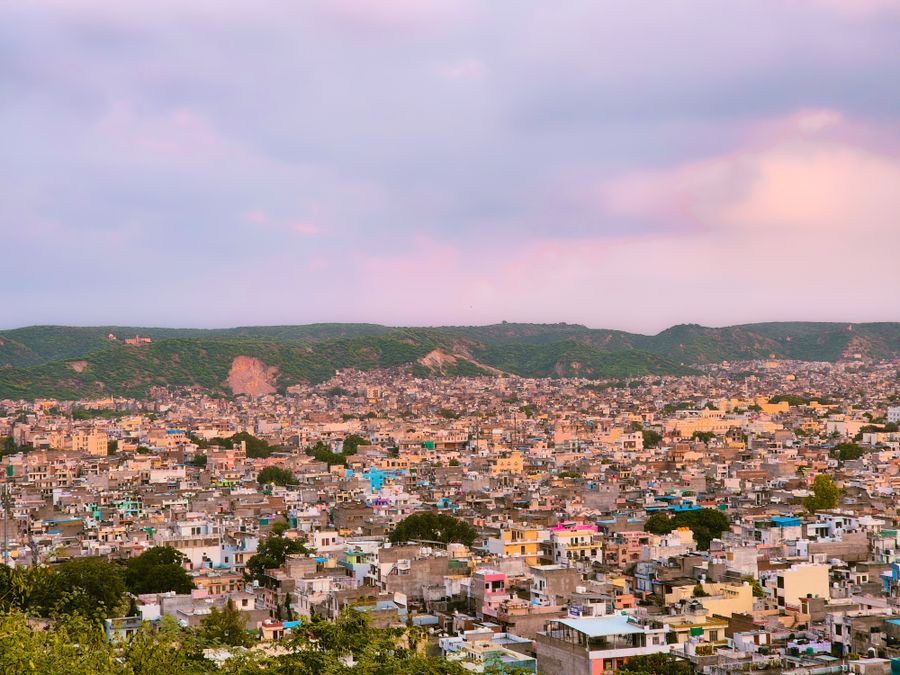
The Pink City — capital of Rajasthan and the starting point of the Golden Triangle, famed for its forts, palaces and bazaars.
70 lakh
city in 2024 · Rajasthan Tourism (estimate)
October to March, when the winter weather is cool enough for the forts.
Jaipur is an easy, rewarding introduction to Rajasthan — hilltop forts and palaces by day, heritage hotels and Rajasthani food by night, and some of India's best shopping for gems, textiles and crafts.
Maharaja Sawai Jai Singh II, astronomer as much as king, founded Jaipur in 1727, and no city in pre-modern India was planned with more science behind it. His Jantar Mantar is an open-air astronomical observatory holding the largest stone sundial in the world. Jaipur is still where the world goes for block-printed textiles, blue pottery and hand-cut gemstone jewellery.
Jaipur is served directly by Jaipur International Airport, 12 km from the city centre, and by Jaipur Junction Railway Station. Multi-lane expressways and national highways run in from Delhi and Agra, with deluxe AC state and private sleeper buses running around the clock.
Take the whole plan, or add any single stop.
Signature dishes and local flavours to look for in Jaipur.
A stop-by-stop walk through what this city actually eats — what to order, in what order, and when.
Day-by-day plans other travellers have published for Jaipur
The crafts worth carrying home, and where to find them
Jaipur's signature craft: quartz-based, glazed a deep cobalt and painted with flowers, birds and elephants. Fired low, so it is lighter than it looks.
Workshops and showrooms across the city; Jaipur is the home of the craft.

Gemstones set in gold with kundan, then the reverse enamelled in meenakari colour, so the back of a piece is worked as carefully as the front.
Johari Bazaar, the historic heart of the gem-and-jewellery trade. Buy only from reputable, certified dealers.

Bangles turned from lac resin, warmed and worked by hand, then set with mirrors and coloured stones.
Maniharon ka Rasta, the lane of lac-workers off Johari Bazaar.

Hand-carved wooden blocks stamped in repeat: Sanganeri prints fine floral work on white, Bagru prints earthier reds and blacks on a dyed ground.
Bapu Bazaar and Nehru Bazaar in the city, or at source in the Sanganer and Bagru villages nearby.
Jaipur is one of India's great shopping cities, and its walled bazaars are attractions in their own right. Johari Bazaar is the historic heart of the gem-and-jewellery trade — kundan, meenakari enamel work and hand-cut coloured stones — while the lanes of Maniharon ka Rasta nearby are known for lac bangles. Bapu Bazaar and Nehru Bazaar are best for block-printed textiles, quilts, mojari leather shoes and perfumes, and Tripolia Bazaar for lac and brassware. Jaipur is also the home of blue pottery and of Sanganeri and Bagru hand-block printing, both worth seeking out at source in the nearby villages. Bargaining is normal in the bazaars but not in fixed-price government emporiums; for gemstones, buy only from reputable, certified dealers to avoid the well-known resale scams.
How to spend your time in Jaipur.

Elephant gate, mirror palace and ramparts
_-_img_01.jpg/960px-East_facade_Hawa_Mahal_Jaipur_from_ground_level_(July_2022)_-_img_01.jpg)
The honeycomb palace facade at sunrise

Giant 18th-century astronomical instruments

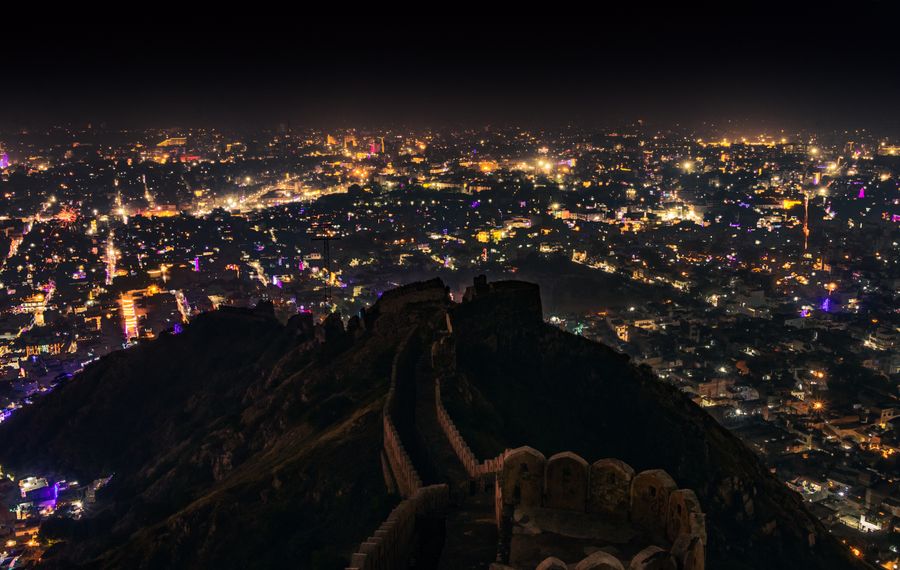
City-wide views with a rooftop cafe

Royal residence with courtyards and textile and armoury museums, still partly a royal home

Symmetric 16th-century stepwell near Amber Fort, a striking and quieter photo stop
The places in Jaipur most people come for.
October to March, when the days are cool and clear enough for fort-hopping. April to June is intensely hot (often above 43°C) and the July–September monsoon is humid, though it turns the surrounding hills green.
Autos and app cabs (Ola/Uber) are the easiest way between the forts and the old city — agree auto fares before you set off. A single Metro line runs through the newer parts of town but not to the main forts, and the walled-city bazaars are best explored on foot.
If you plan to see several monuments, yes — the composite heritage ticket bundles entry to sites such as Amber Fort, Jantar Mantar, Hawa Mahal, Nahargarh and Albert Hall for less than buying them separately, and it stays valid for two days.
Jaipur is famous for gemstones and kundan-meenakari jewellery (Johari Bazaar), hand-block-printed textiles from Sanganer and Bagru, blue pottery, lac bangles and mojari leather shoes. Buy gems only from certified dealers.
The Chand Baori stepwell at Abhaneri and the temple town of Pushkar make popular day trips (roughly 1.5–3 hours each way); Ranthambore National Park, for tigers, is better as an overnight.
Jaipur is broadly safe and very used to visitors. The main nuisances are pushy touts and gemstone resale scams around the bazaars and some unlicensed guides — decline unsolicited special deals and use certified shops and government-approved guides.
2–3 days covers the highlights; 5 days lets you add day trips to Abhaneri, Pushkar and Ranthambore.
The old city is walkable in parts; use autos/cabs between forts.
Hand-picked places, ordered for right now — tap a mood to reshape it.
Travellers exploring here also loved
Things to book and do in Jaipur
Travellers viewing Jaipur also loved these
More places you'll love
More like Jaipur
Or a different kind of trip

_-_img_01.jpg/1920px-East_facade_Hawa_Mahal_Jaipur_from_ground_level_(July_2022)_-_img_01.jpg)




.jpg/1920px-Laxmi_Narayan_Temple_Jaipur_(Birla_Mandir).jpg)


.jpg/1920px-India_Gate_(All_India_War_Memorial).jpg)