
Hidden Gems
Hill Stations
Small, quiet and mostly unbothered by tour buses. Fewer hotels, worse roads, better mornings.
12 places
When to go. October to early December, and March to May. Several are genuinely hard to reach in the monsoon, and the far north-eastern ones need permits arranged before you travel.
Himachal Pradesh
Jibhi
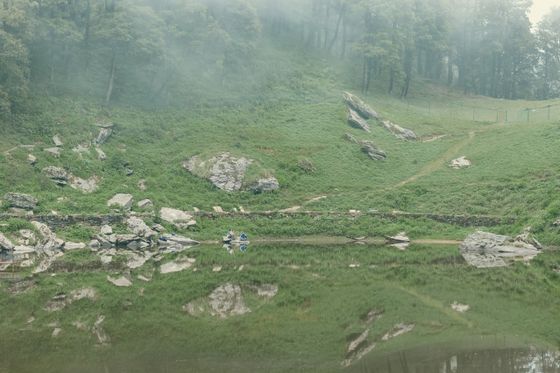
Jibhi is a quiet wooden-cottage village in the Banjar (Tirthan) region of Himachal, increasingly loved by young travellers for its forested calm, waterfalls and aesthetic cafe-stays. Less developed than Manali or Kasol, it has a cosy, Instagram-favourite slow-travel base in the Kullu hills. Set among deodar forests and apple orchards, Jibhi pairs gentle hikes — to Jibhi Falls, the Serolsar Lake and the Jalori Pass — with riverside cottages and a laid-back cafe scene. Its scenic, unhurried character makes it a top pick for workations, couples and friend groups.

Arunachal Pradesh
Mechuka
Mechuka (Menchukha) is a remote, wide-floored valley in the Shi Yomi district of Arunachal Pradesh near the border, ringed by pine-clad mountains at around 1,900 metres. Long isolated and only recently opened to travellers, it is home to Memba and Tibetan Buddhist culture and the centuries-old Samten Yongcha monastery.
.jpg/960px-View_of_Khonoma_(2024).jpg)
Nagaland
Khonoma
Khonoma is a historic Angami Naga village about 20 km from Kohima in Nagaland, celebrated as India's first green village. Famous for community-led conservation, terraced rice fields and a proud history of resistance, it is surrounded by the Khonoma Nature Conservation and Tragopan Sanctuary.

Manipur
Ukhrul
Ukhrul is the highest hill town in Manipur and the home of the Tangkhul Naga people, set among rolling green hills in the state's northeast. It is famous for the rare Shirui Lily, a pinkish-white flower found only on nearby Shirui Peak, along with caves, waterfalls and Tangkhul Naga villages.
Uttarakhand
Kasar Devi (Almora)
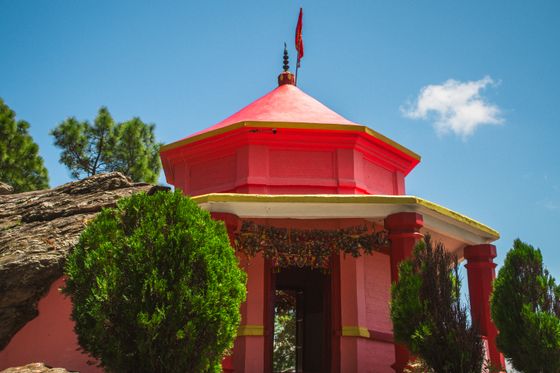
Kasar Devi is a ridge-top village near Almora in the Kumaon Himalayas, long famous as a counterculture and spiritual retreat with sweeping Himalayan views. Once home to artists and seekers on the hippie trail, today it has become a quiet workation and slow-travel base known for its cafes, the famous 'Crank's Ridge', and an unusual geomagnetic phenomenon. The village looks out at Trishul and Nanda Devi, pine forests, and a cluster of cosy cafes and homestays. Its mellow, creative atmosphere makes it a favourite among writers, remote workers and travellers seeking calm over crowds.
Uttarakhand
Chopta (Tungnath)
An offbeat hill station popularly dubbed the 'Mini Switzerland of Uttarakhand', and the base for the trek up to the world's highest Shiva temple. Chopta is a small hamlet of untouched alpine meadow and evergreen forest in Rudraprayag district. At 2,680 metres, it lies within the Kedarnath Wildlife Sanctuary.
Himachal Pradesh
Kalpa (Kinnaur)
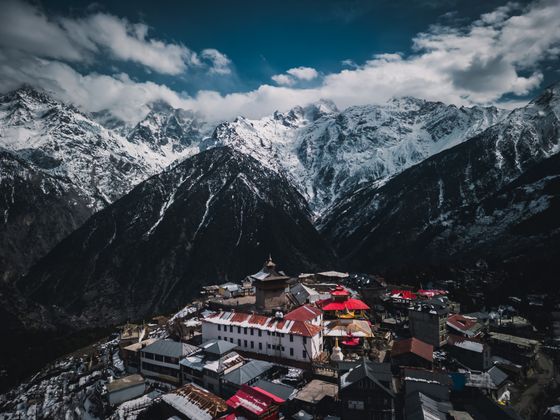
Kalpa is an offbeat mountain village on a high ridge at an elevation of 2,960 metres in the Kinnaur Valley. Positioned directly above the district hub of Reckong Peo, it looks down into the deep, thundering canyon of the Sutlej River. The settlement is known for its unique geographical position, with an uninterrupted view of the sacred Kinner Kailash massif. The architectural landscape of Kalpa features a beautiful indigenous blend of traditional wooden Hindu temples and Tibetan Buddhist monasteries, showcasing the rich syncretic culture of Kinnaur. The village pathways wind through dense pine forests and some of the finest high-altitude organic apple orchards in the country.
West Bengal
Kalimpong
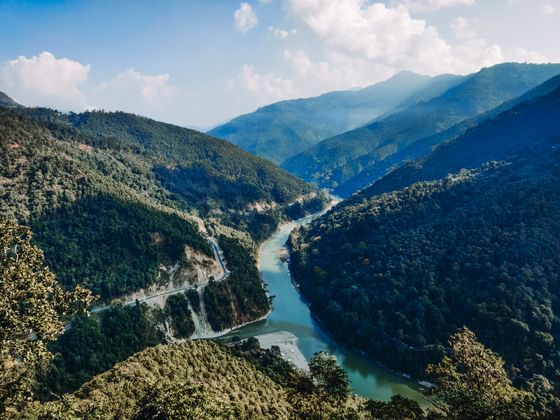
Kalimpong sits at 1,250 metres — some eight hundred metres lower than Darjeeling and a couple of hours further on — and is warmer and quieter for both reasons. The town's real trade is flowers. The nurseries here grow orchids, cacti and gladioli commercially and ship them out, and most will let you walk through the greenhouses if you ask. Zang Dhok Palri Phodang on Durpin hill holds scriptures the Dalai Lama brought out of Tibet in 1959. Thongsa Gompa, down in town, is Bhutanese and older. Kanchenjunga is visible on a clear morning and gone by ten. If the mountain is why you came, be up early or accept you may not see it at all. October and November for the clearest air; March and April for the orchids.
Jammu & Kashmir
Doodhpathri
Doodhpathri is a meadow about forty kilometres out of Srinagar in Budgam district, with almost nothing built on it — no hotels, a handful of stalls. That is the whole appeal, and it also makes this a day trip rather than a stay. The Shaliganga runs through it fast enough over the boulders to churn white, which is where the name comes from: milk meadow. Go on a weekday. At weekends Srinagar families fill it and the single road in becomes the problem. Carry food; what is sold up there is limited. Open roughly April to October, and snowed shut in winter.
Uttarakhand
Kausani
Kausani is a quiet Kumaon hill station famous for its uninterrupted 300-km panorama of the Himalayan peaks — including Trishul, Nanda Devi and Panchachuli. Mahatma Gandhi called it the 'Switzerland of India', and it has since become a peaceful retreat for travellers seeking views, tea gardens and stillness over nightlife. With its terraced tea estates, pine forests and sunrise viewpoints, Kausani has grown popular with couples, families and remote workers wanting a calm, scenic base. It pairs well with nearby Baijnath temples and the Kumaon trekking circuit.

Arunachal Pradesh
Bomdila
Bomdila is a scenic Himalayan hill town in the West Kameng district of Arunachal Pradesh, perched around 2,400 metres with sweeping views of snow-capped peaks. Home to the Monpa people and a large Buddhist monastery, it is a popular stop on the mountain road to Tawang, surrounded by apple orchards and craft centres.
Madhya Pradesh
Pachmarhi
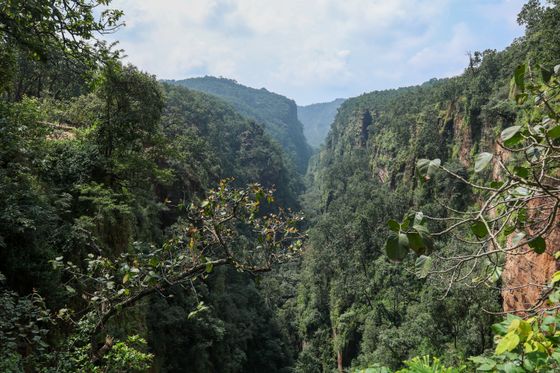
Pachmarhi is Madhya Pradesh's only hill station, a green plateau in the Satpura range dotted with waterfalls, caves, viewpoints and ancient rock-shelter paintings, set within a UNESCO biosphere reserve.


