CityDekho

Browse by place

CityRegionDestinationAttractions

Browse by theme

By MoodAll themesFestivals of IndiaFestival calendarAncient India

Popular themes

BeachesHill StationsSpiritual PlacesPilgrimage & YatrasHeritage & FortsWildlifeAdventureFood TrailsSee all themes
Trip Ideas
Travel ItinerariesTravel GuidesEditorials
When to Go
My TripsSavedProfile
HomeExploreSearchSaved

Travel inspiration in your inbox

New destinations, festival guides and hidden gems — plus the occasional alert. No spam, unsubscribe anytime.

or
CityDekho

Discover India — destinations, hidden gems, festivals and pilgrimages, all in one place.

hello@citydekho.com

Explore

  • Destinations
  • States & UTs
  • Things to do
  • Trip Ideas
  • Pilgrimages
  • Ancient India
  • Festivals

Plan your trip

  • Itineraries
  • Travel guides
  • Road trips
  • Food trails
  • Best time to visit
  • Festival calendar
  • Search CityDekho

Categories

  • Hill Stations
  • Beaches
  • Wildlife
  • Spiritual
  • Adventure
  • Heritage
  • Weekend getaways
  • Hidden gems

Stories & support

  • Editorials
  • Feedback & ideas
  • About
  • Contact
By seasonsummermonsoonautumnwinterspring

© 2026 CityDekho. All rights reserved.

AboutContactFeedbackBest time to visit
CityDekho

Browse by place

CityRegionDestinationAttractions

Browse by theme

By MoodAll themesFestivals of IndiaFestival calendarAncient India

Popular themes

BeachesHill StationsSpiritual PlacesPilgrimage & YatrasHeritage & FortsWildlifeAdventureFood TrailsSee all themes
Trip Ideas
Travel ItinerariesTravel GuidesEditorials
When to Go
My TripsSavedProfile
HomeExploreSearchSaved
Home

When to travel

Best places to visit in November

November is peak season. Cool, clear, and crowded — Rajasthan's deserts, Kerala's backwaters, and Pushkar's camel fair all peak now.

Peak crowds
Amritsar (Golden Temple) photo

Punjab

Amritsar (Golden Temple)

The Golden Temple sits lower than the ground around it, and you walk down steps to reach the water. That is deliberate: nearly every other temple in India makes you climb up to it. It has four doors, one on each side, for the same reason — the building is meant to be entered from any direction, by anyone. Head covered, shoes off, feet through the water channel at the entrance, and nobody will ask you anything else. The langar behind the complex feeds on the order of a hundred thousand people a day, more at weekends, on donated food and volunteer labour. The dish hall takes anyone who turns up to help, and half an hour in it tells you more about the place than any guidebook. The Akal Takht faces the sanctum across the water. It is the seat of temporal authority in Sikhism, and those two buildings looking at each other across a pool is the whole argument of the faith in one view.

Delightfully cool daytimes with crisp clear night atmospheres.

Peak crowds
Pushkar photo

Rajasthan

Pushkar

Pushkar is an ancient, sacred pilgrimage town curled peacefully around the perimeters of the natural, sacred Pushkar Lake. Flanked by the rugged hills of the Aravalli range near Ajmer, it ranks as one of the oldest living cities in India and a paramount spiritual core for Hindu theology. The town's unique identity is tied to hosting the rare 14th-century Jagatpita Brahma Mandir, one of the few temples dedicated to the Hindu Creator God. The landscape features 52 historic stone bathing ghats that step directly down into the clear waters, where pilgrims perform ritual cleansing dips among continuous chanting. The town transitions from a spiritual enclave into a massive cultural phenomenon during late autumn, when its outer desert fields host the world-famous Pushkar Camel Fair, attracting global communities.

Pleasant warm daytimes with cool crisp evening desert breezes.

Peak crowds
Shamlaji

Gujarat

Shamlaji

Shamlaji is a temple town in the Aravalli foothills of north-eastern Gujarat, on the banks of the Meshwo River near the Rajasthan border. It centres on the 11th-century Shamlaji Temple, a Vaishnavite shrine to Vishnu, and draws both tribal and other Hindu pilgrims — especially during its large annual fair.

Crisp winter air, delightfully cool mornings and clear afternoon skies.

Busy
Darjeeling photo

West Bengal

Darjeeling

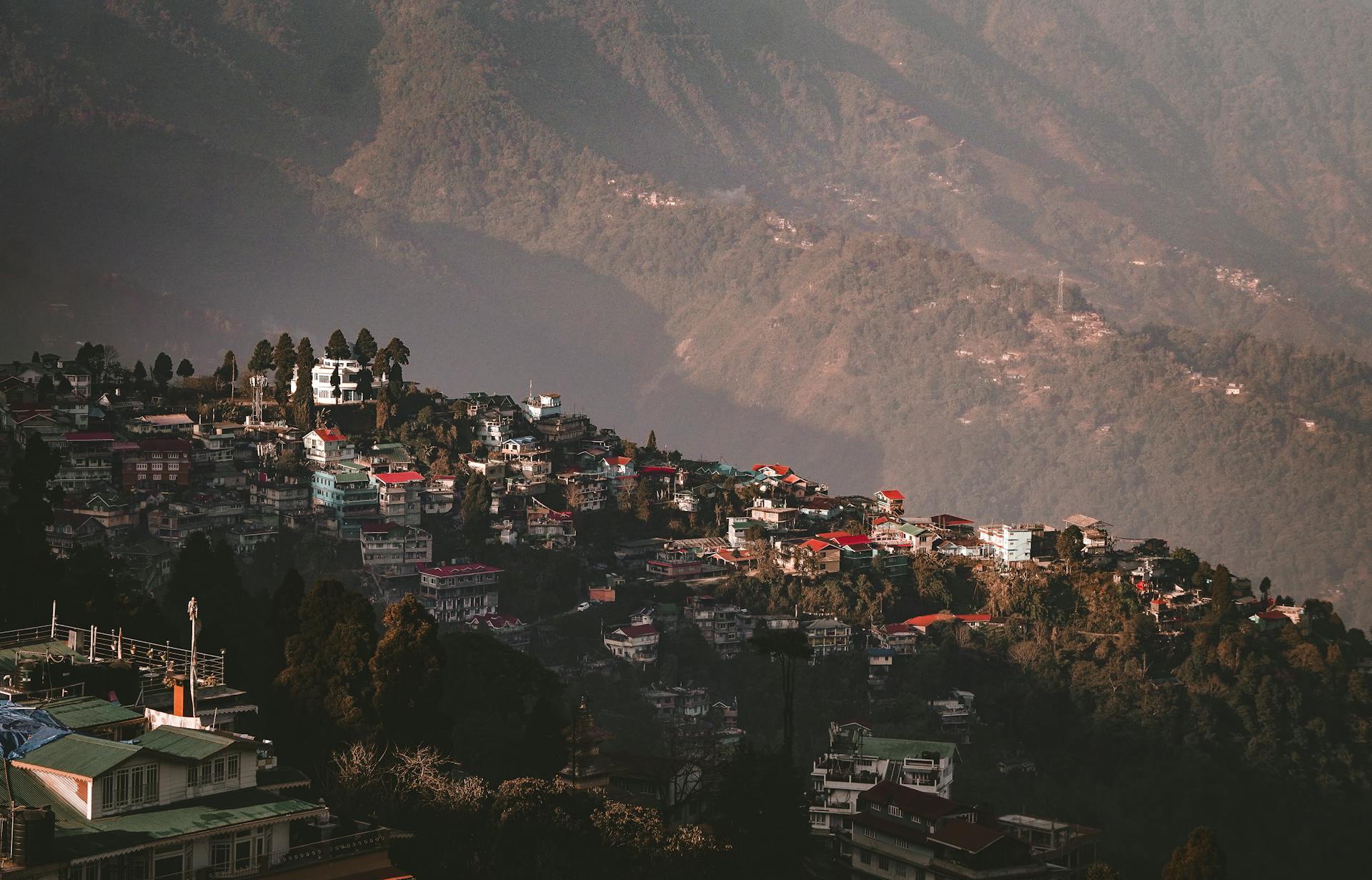
Darjeeling is a highland town at about 2,042 metres on a steep mountain ridge of the Lesser Himalayas in northern West Bengal. Dominated visually by the snow mass of Mount Kanchenjunga, the third-highest peak on earth, the town is known for its carpeted loops of colonial-era tea estates. The commercial heart of Darjeeling centers around the pedestrian square of Chowrasta Mall, packed with vintage bookstores, old tea lounges, and handicraft stalls. The town features distinct architectural layers combining British colonial masonry with rich Tibetan Buddhist monastic heritages, synchronized with the narrow-gauge Darjeeling Himalayan Railway toy train.

Crisp refreshing afternoon hours with absolutely immaculate sky clarity.

Busy
Anandpur Sahib

Punjab

Anandpur Sahib

Anandpur Sahib, translating to the 'Holy City of Bliss', matters as much as anywhere in the Sikh faith outside Amritsar. It sits at the foothills of the scenic Shivalik mountain range along the Sutlej River loop in Punjab, the town is structurally dominated by white-stone fortress-style Gurdwaras. It serves as a center for theological studies and martial heritage curation. The spiritual nucleus of the city is the Takht Sri Keshgarh Sahib, one of the five supreme temporal seats (Takhts) of Sikh authority. The city architecture is backdropped by the Virasat-e-Khalsa museum, an architectural marvel designed by Israeli architect Moshe Safdie that meticulously brings out 500 years of rich Sikh history and regional cultural traditions.

Delightfully cool afternoon hours under open sunny skies.

Busy
Jaipur photo

Rajasthan

Jaipur

Jaipur repays getting up early more than almost anywhere in Rajasthan, because by ten the coaches have arrived and Amber Fort stops being a fort and becomes a queue. Be at Amber for opening. Walk up rather than taking the elephants — the welfare of those animals is a long-running problem and a jeep does the same job. Inside, the Sheesh Mahal is the room everyone photographs, but the Ganesh Pol above the second courtyard is the better piece of work. Hawa Mahal disappoints people, and it is worth knowing why before you stand in front of it: it is a screen, one room deep, built so the women of the household could watch the street unseen. There is almost nothing behind the facade. The good view is from the rooftop cafés opposite, looking back at it. Jantar Mantar is the one to book a guide for. Without someone to explain them the instruments are handsome shapes; with someone, they are a working observatory and the visit turns into the best hour of your day. For fabric go to Johari Bazaar, for everyday chaos and better prices go to Chandpole. October to March. April onwards the stone gets too hot to touch by mid-morning.

Delightfully cool daytimes with bright clear blue horizons.

Busy
Udaipur

Rajasthan

Udaipur

Udaipur, the 'City of Lakes', sits among the green Aravalli Hills, built around a chain of interconnected lakes created over the centuries for water and defence. The largest, Lake Pichola, is the visual centre of the city, its shores lined with white marble palaces, bathing ghats and lakefront hotels. The grandest is the City Palace, which is really eleven palaces built against each other over four centuries by successive maharanas — which is why the inside is a maze of levels and courtyards rather than a single plan. Udaipur has a noticeably slower pace than Rajasthan's other big cities. In bad drought years Pichola has emptied completely, so if the lake is the reason you are coming, check before you book.

Refreshing daytimes with cool coastal-like lake breezes.

Moderate crowds
Jodhpur photo

Rajasthan

Jodhpur

Mehrangarh is the best fort in India, and if you only climb one in Rajasthan it should be this one. It sits on a cliff a hundred and twenty metres above the city with no gap between rock and wall — the masonry simply continues the escarpment. The audio guide is one of the few in the country genuinely worth taking. Look for the handprints beside Loha Pol, left by royal widows on their way to the pyre. About the blue: people arrive expecting an entirely blue city and find a mostly ochre one. The blue is real but it is concentrated in the Brahmpuri quarter below the fort's north-east wall, and the way to see it is from the ramparts looking down, or by walking those specific lanes. Anywhere else in Jodhpur you will wonder what you were promised. Toorji ka Jhalra, the restored stepwell in the old city, is where everyone goes at sunset now and it has the cafés to prove it. Rao Jodha desert rock park, just outside the fort gates, has almost nobody in it and is the better hour. October to early March. By May the afternoon heat here is not a discomfort, it is a hazard.

Delightfully warm sunny afternoons with cool crisp evening air.

Busy
Ranthambore National Park

Rajasthan

Ranthambore National Park

Ranthambore National Park is one of the preeminent and largest wildlife conservation sanctuaries in Northern India, known for its thriving population of the endangered Royal Bengal Tiger. It lies in the Sawai Madhopur district, where the ancient Vindhya and Aravalli mountain ranges converge, the landscape comprises rugged rocky cliffs, dry deciduous forests, and interconnected lakes. The park's unique visual identity is defined by the massive 10th-century Ranthambore Fort, which sits inside the forest lines. Tigers are frequently observed hunting in broad daylight across the historic stone ruins, palace pavilions, and lake fronts, creating an unmatched wild landscape profile. The national park operates under strict environmental regulations, split systematically into ten specific safari zones to manage safari vehicles and preserve the sensitive ecological core slots.

Pleasantly cool daytimes with excellent clear forest visibility lines.

Moderate crowds
Bikaner

Rajasthan

Bikaner

Bikaner gets a fraction of Jaisalmer's and Jodhpur's visitors and is a better city for it. Nothing here is queued. Junagarh, begun in 1589, is unusual among Rajasthan's forts in standing on flat ground rather than a hill, and it was never taken — which is why the painted interiors survived intact. The lacquer ceilings and the gold-leaf Anup Mahal are the reason to come, and the museum has a First World War biplane in it. Inside the old walls the city is a grid of red Dulmera sandstone havelis, the Rampuria cluster being the best of them and most still lived in. Bhujia was invented here. The Karni Mata temple at Deshnoke, thirty kilometres south, is the one with the rats — you go barefoot or you do not go. October to March. April to June sits well over 40°C.

Pleasantly warm afternoon hours with refreshing evening drops.

Low crowds
Bundi

Rajasthan

Bundi

Bundi is what Rajasthan looked like before the tour buses found it, and it is an hour off the Jaipur to Udaipur road that most people never take. The palace above the town is only partly open and partly falling down, and the Chitrashala inside it holds some of the finest surviving Rajput miniature wall painting anywhere — blue-green, crowded with detail, and you will very likely see it alone. Above the palace, Taragarh fort is overgrown and full of monkeys; go up for the view over the lake and the blue houses, and take a stick for the langurs. Raniji ki Baori is the stepwell to see. Bundi has dozens of them, most neglected, and this one is deep, precise and almost always empty. There is very little here in the way of nightlife, shopping or restaurants, and that is the point. Two nights, on foot. October to March. The town is at its best right after the monsoon when the lake is full — by April it draws down and the setting loses a good deal.

Pleasantly warm daytimes with cool refreshing evening winds.

Moderate crowds
Fatehpur Sikri photo

Uttar Pradesh

Fatehpur Sikri

Fatehpur Sikri is a planned Mughal city and fort complex near Agra, built entirely of red sandstone, that served briefly as Emperor Akbar's imperial capital. It is a UNESCO World Heritage Site.

Delightfully cool daytimes with crisp blue sky perimeters.

Busy
Taj Mahal (Agra) photo

Uttar Pradesh

Taj Mahal (Agra)

The Taj Mahal is a renowned white marble mausoleum built on the southern banks of the Yamuna River in Agra. Commissioned in 1632 by the Mughal Emperor Shah Jahan to house the tomb of his favorite wife, Mumtaz Mahal, the monument stands as the pinnacle of Mughal architectural achievement. The entire structure is symmetrical and brings out flawless geometric design. The complex features a grand red sandstone gateway, a formal geometric garden divided by long reflecting pools, and a massive marble plinth topped by a central dome and four identical minarets. The white marble surfaces are intricately decorated with fine inlay work using semi-precious stones, creating a changing color spectrum that shifts from soft pink at dawn to brilliant white under noon skies and shimmering gold under full moonlight.

Delightfully cool daytimes with crisp afternoon lighting.

Busy
North Goa (Baga & Calangute) photo

Goa

North Goa (Baga & Calangute)

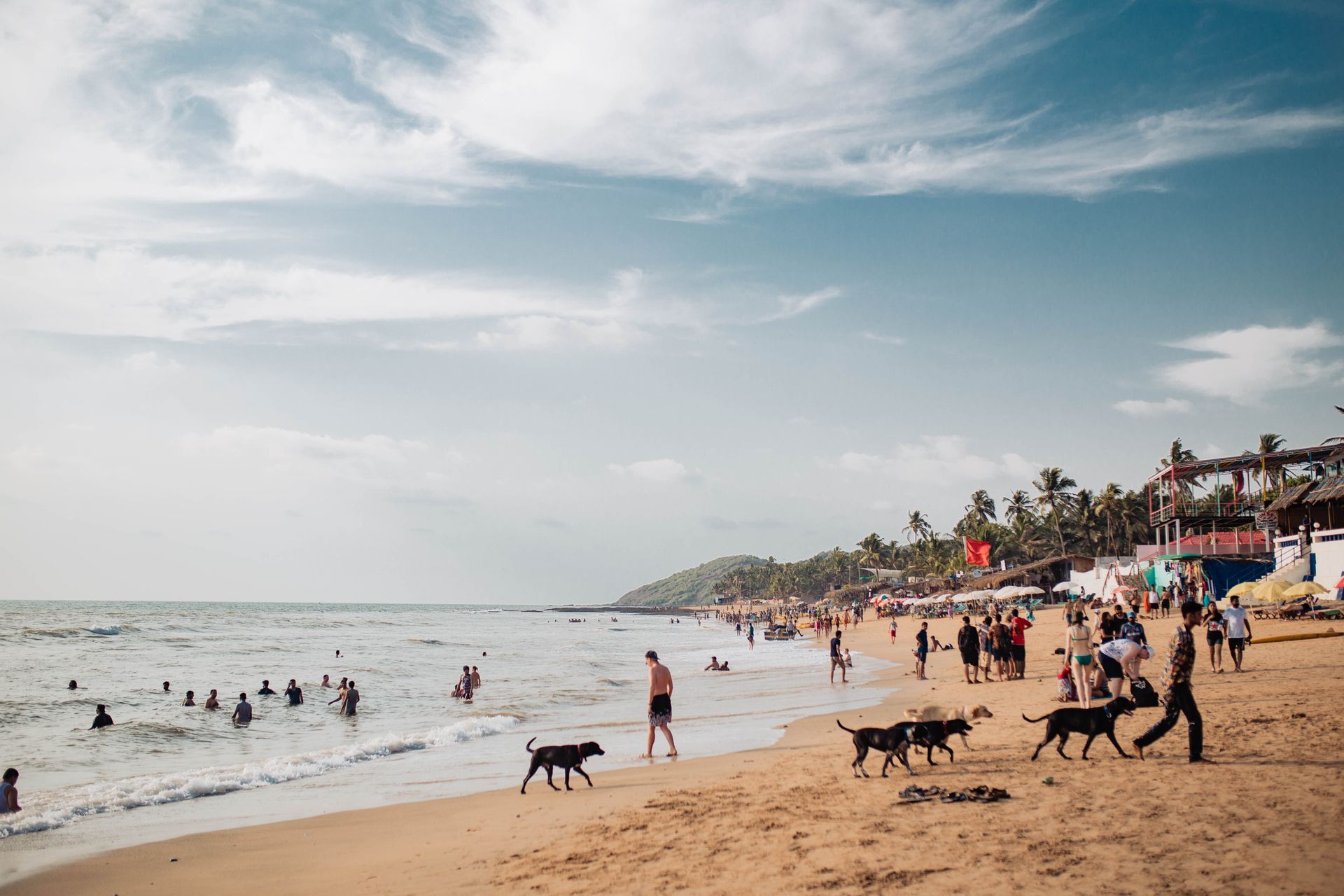
Baga and Calangute form the high-energy, commercial beach core of North Goa, stretching along a continuous golden sand coastline on the Arabian Sea. Characterized by a coastal ecosystem, this region transitions from sun-drenched daytime water sports hubs into an epicenter of nightlife and entertainment. The shoreline is densely lined with dynamic open-air food shacks, water sports operators, and international music bars. Calangute beach functions as a prime retail and family leisure avenue, while Baga creek marks the launching pad for late-night clubbing and beachside parties.

Pleasantly warm days with clear blue seas.

Moderate crowds
Mahabaleshwar photo

Maharashtra

Mahabaleshwar

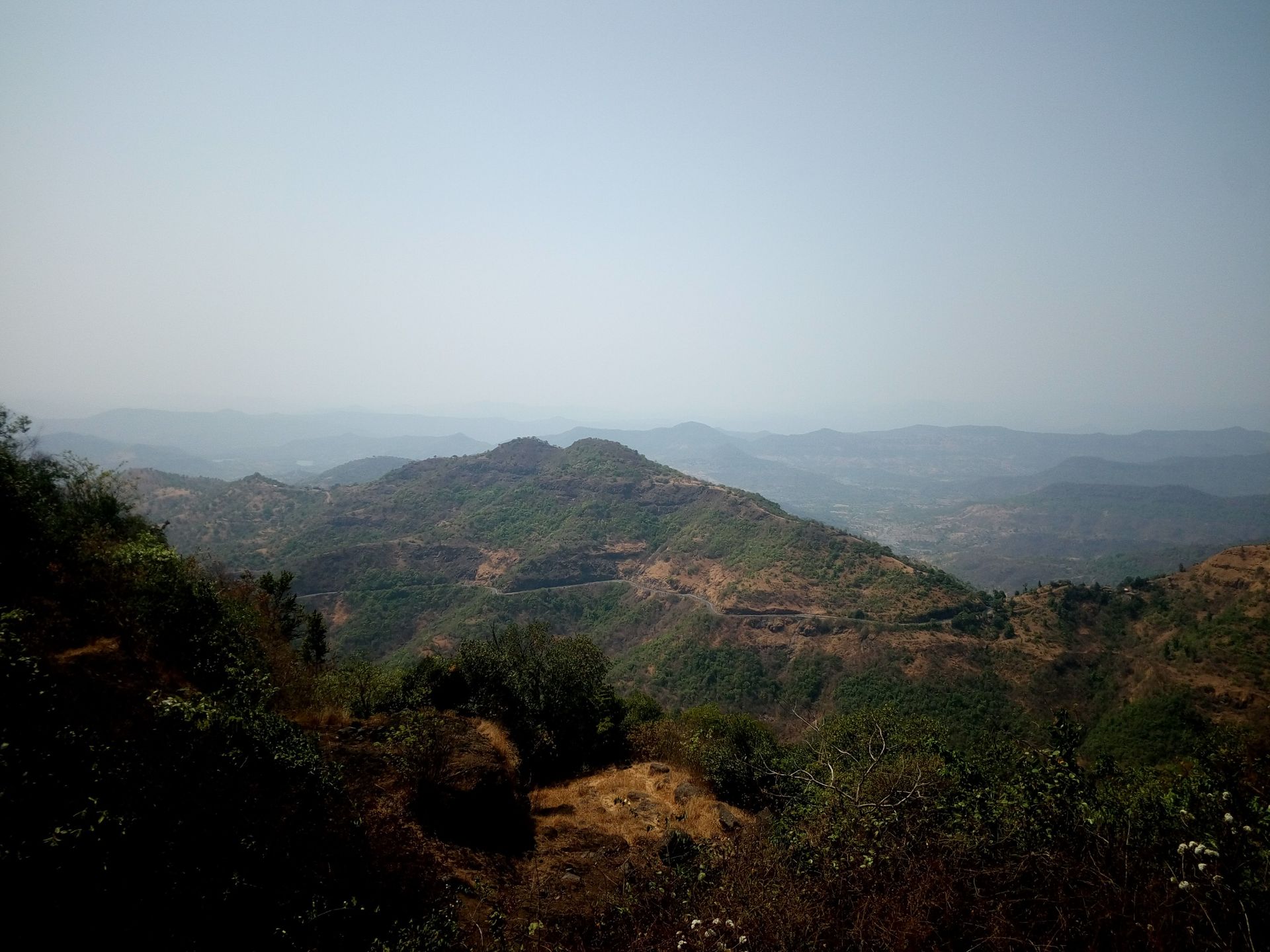
Mahabaleshwar is a high-altitude hill station at an elevation of 1,353 metres on an expansive plateau ridge of the Sahyadri mountain range in Satara district. Enveloped by dense evergreen forests, steep river canyons, and agricultural terraced fields, it stands as the highest and most expansive mountain resort in Maharashtra. The town features an old-world colonial character, distinct multi-tiered valley viewing points like Arthur's Seat, and the scenic artificial Venna Lake. The surrounding fertile soils are internationally famous for high-yield commercial fruit farming, producing nearly 85 percent of the country's strawberries.

Beautifully cool autumn days with maximum horizon visibility.

Busy
Ajanta Caves photo

Maharashtra

Ajanta Caves

The Ajanta Caves are a world-famous group of 30 rock-cut Buddhist cave monuments hidden deep inside a scenic horseshoe-shaped mountain gorge in Aurangabad district. Hand-carved meticulously out of vertical basalt cliff walls between the 2nd century BCE and 5th century CE, the site functioned as a peaceful monsoon sanctuary for monastic scholars. The caves were lost completely to human memory for centuries, completely swallowed by dense wild jungle foliage until their accidental rediscovery in 1819. The unique cave interiors are globally known for hosting the finest surviving masterpieces of ancient classical Indian wall fresco art. The paintings utilize distinct natural mineral pigments to portray complex Jataka tales and celestial figures with incredible emotional depth.

Delightfully cool daytimes with bright clear sky perimeters.

Busy
Matheran

Maharashtra

Matheran

Matheran bans motor vehicles inside the town, which makes it the quietest place within two hours of Mumbai and the only hill station in Asia to enforce that. Cars stop at Dasturi Naka and you walk the last stretch in, or take a hand-pulled rickshaw or a horse. The other way up is the narrow-gauge train from Neral, which takes a couple of hours to cover about twenty kilometres and is worth doing once, when it is running. Everything here is a walk on red laterite paths through forest to a numbered viewpoint — Louisa for Prabal fort, Panorama for the sunrise, Echo for the obvious. Wear shoes you do not mind ruining: the dust is iron-red and gets into everything. Come on a weekday. At weekends the horse traffic on the paths is heavier than the foot traffic. October to May. The monsoon closes the train and turns the paths to slurry.

Pleasantly cool daytimes with crisp clear valley visibility.

Busy
Madurai (Meenakshi Amman Temple)

Tamil Nadu

Madurai (Meenakshi Amman Temple)

The Meenakshi Amman Temple is a historic Dravidian temple complex located in the heart of Madurai, an ancient city on the banks of the Vaigai River. Dedicated to Goddess Meenakshi, a powerful form of Parvati, and her consort Sundareswarar, a form of Shiva, the complex stands as a supreme architectural masterpiece of South Indian civilization. The complex is enclosed by massive high stone walls and dominated by 14 towering gateway towers, or gopurams, completely carpeted with thousands of brightly painted stone sculptures of deities, demons, and celestial beings. Inside, the temple features grand columned assembly halls, including the legendary Hall of a Thousand Pillars, and a sacred golden lotus pond that serves as a ritual center for millions of annual devotees.

Pleasantly cool days with comfortable walking parameters.

Moderate crowds
Hampi photo

Karnataka

Hampi

Hampi is an open-air archeological destination along the banks of the boulder-strewn Tungabhadra River in the Vijayanagara district. Spanning a massive area of over 41 square kilometers, it preserves the ruined remains of the imperial capital of the historical Vijayanagara Empire. The architectural ruins feature a cross-section of palaces, military bastions, symmetric bazaar corridors, and complex stone temples. From the delicate carvings of the Hazara Rama Temple to the stone chariot structure at the Vittala complex, Hampi brings out the high-water mark of medieval South Indian artistic expression. The entire landscape is inscribed as an UNESCO World Heritage Site.

Delightfully cool daytimes with excellent clear blue skies for photography.

Moderate crowds
Thanjavur (Brihadeeswarar Temple) photo

Tamil Nadu

Thanjavur (Brihadeeswarar Temple)

Thanjavur, once Tanjore, sits in the fertile Kaveri delta and is dominated by the Brihadeeswarar Temple — the 'Big Temple'. Commissioned in 1010 CE by the Chola emperor Raja Raja I, it is one of the grandest granite temples ever built and a UNESCO World Heritage Site. Built from interlocking granite blocks, its 66-metre vimana tower is capped by a single stone block said to weigh around 80 tonnes, and the courtyard holds one of India's largest Nandi bull statues.

Delightfully cool daytimes with refreshing delta winds.

Moderate crowds
Belur & Halebidu

Karnataka

Belur & Halebidu

Belur and Halebidu, near Hassan in Karnataka, are the twin capitals of the medieval Hoysala Empire, set at the foot of the Western Ghats. Their temples are carved from fine-grained soapstone (chloritic schist), a soft stone that let Hoysala sculptors work astonishingly intricate detail — friezes and figures that look almost like ivory or sandalwood carving.

Delightfully cool daytimes with crisp clear blue atmospheric conditions.

Busy
Hyderabad (Charminar & Golconda)

Telangana

Hyderabad (Charminar & Golconda)

Hyderabad is two cities that do not entirely acknowledge each other, and the old one is the reason to come. Charminar is the centre of it, and the crowd around it is part of the experience rather than an obstacle. Climb it early. Around it, Laad Bazaar sells lacquer bangles by the metre, and the lanes behind Mecca Masjid are where the city eats. Chowmahalla Palace, a few minutes away, is the Nizams' court and it is quiet and largely empty of visitors. Golconda is the fort to give a proper half day. Go in the morning. The acoustics at the entrance genuinely work — a clap at Fateh Darwaza carries to the top of the hill, and it was a warning system, not a trick. The Qutb Shahi tombs next door are usually deserted and are the better half of the same trip. The biryani argument is not settled and never will be. Ask three Hyderabadis and get three answers; that is the correct outcome. October to February. May here is genuinely punishing, and Golconda is an exposed climb with no shade on it.

Delightfully warm sunny afternoons with cool crisp evening air.

Busy
Munnar photo

Kerala

Munnar

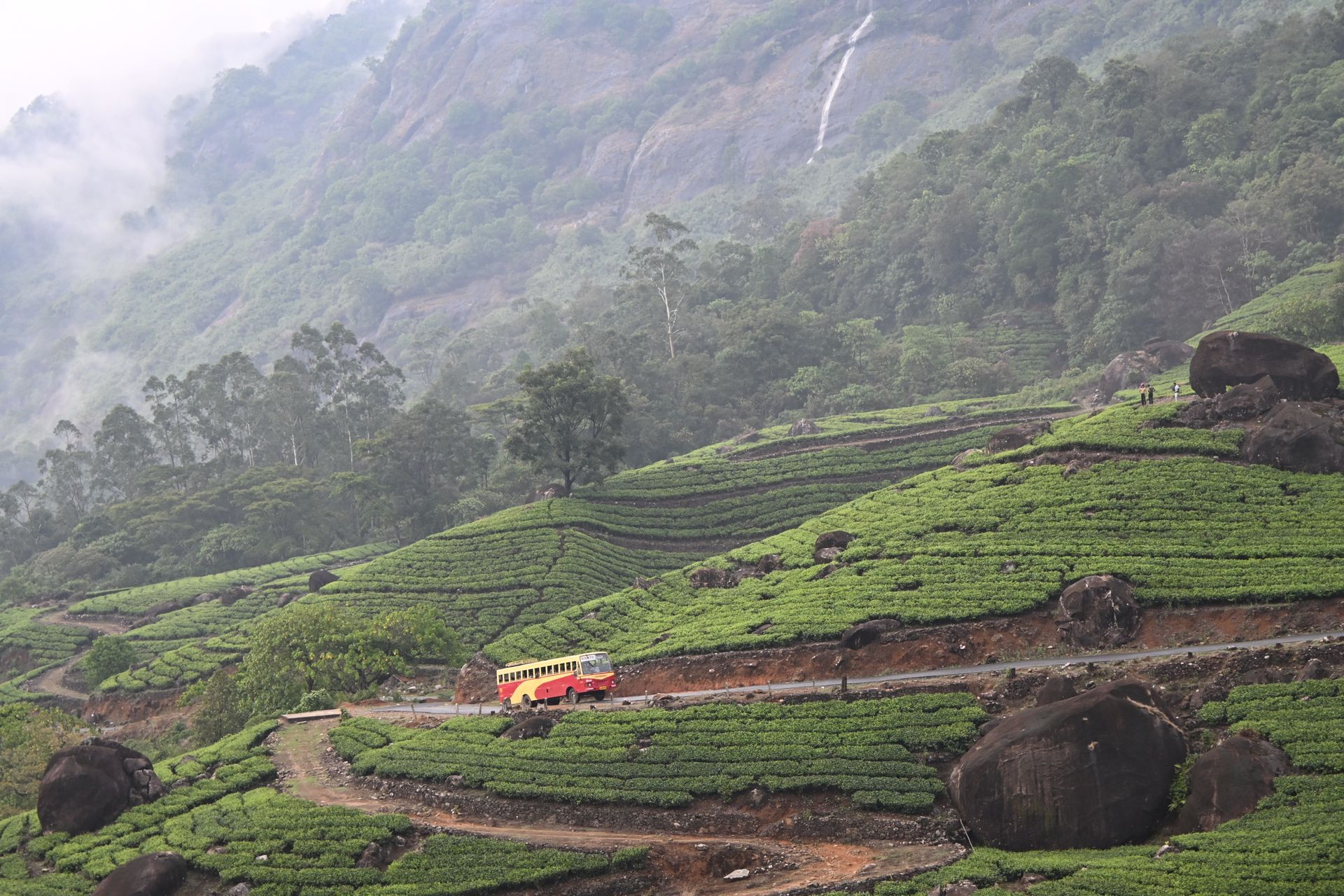
Munnar is a high-altitude hill station at about 1,600 metres in the Western Ghats of Idukki district. Positioned at the scenic confluence of three mountain streams (Mudrapuzha, Nallathanni, and Kundala), the region is visually dominated by an uninterrupted, rolling green carpet of commercial organic tea plantations. The town and its surrounding valleys feature landscape contours lined with dense shola forests, aromatic spice farms, and high-altitude mist-covered grass hills. The commercial core functions as a gateway base for exploring deep wildlife corridors, including the protected cliffs of Eravikulam National Park and the towering peak of Anamudi, the highest summit in South India.

Delightfully cool daytimes with crisp clear blue tea valley horizons.

Busy
Alleppey (Backwaters) photo

Kerala

Alleppey (Backwaters)

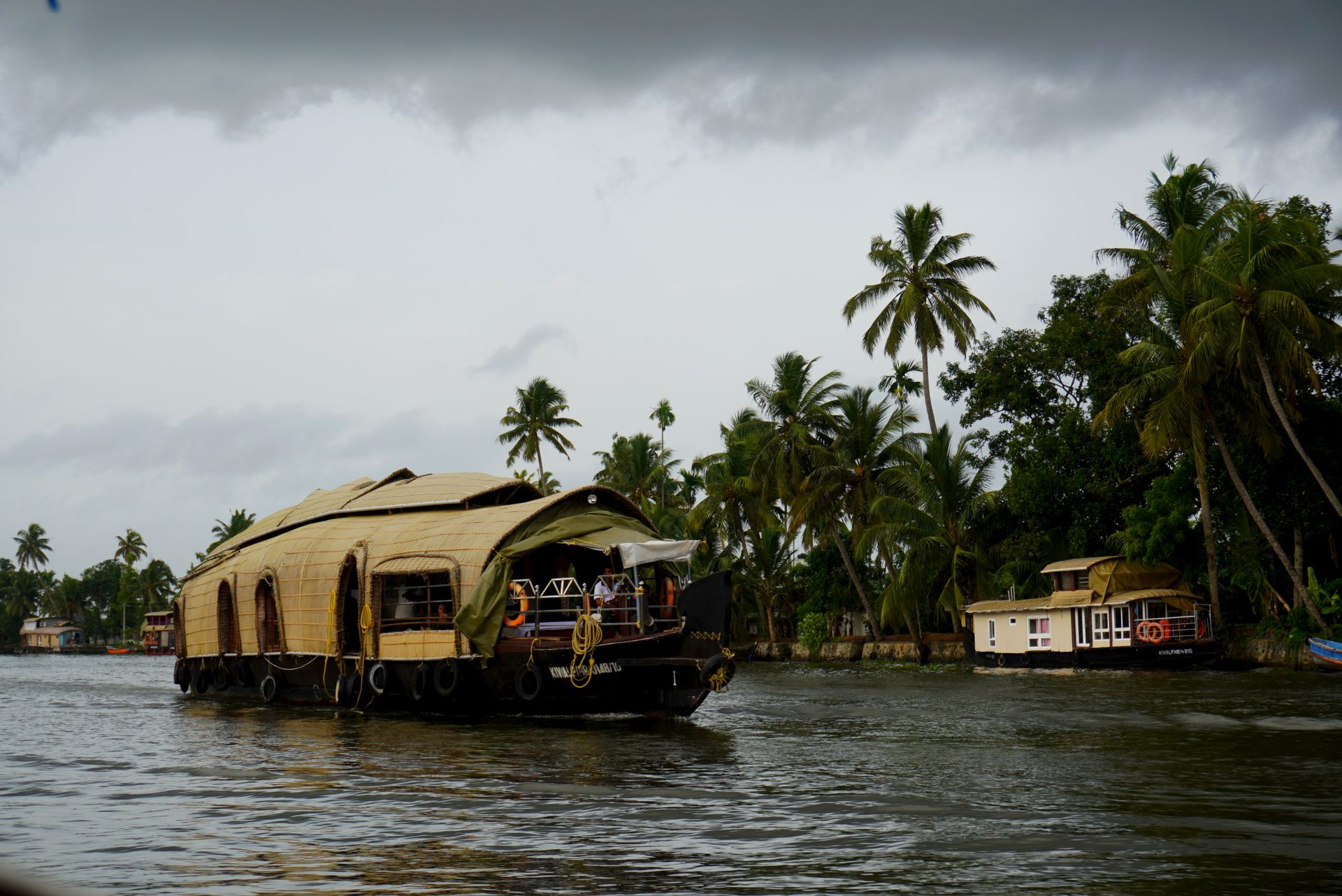
The mistake in Alleppey is the day boat. A houseboat only becomes worth it once the day-trippers have gone home and the water goes quiet. Book an overnight, and if you can, book a smaller boat that can leave the main channel. The big two-storey ones are restricted to the wide canals where they queue up alongside each other; the small ones get into the narrow waterways between the paddy fields, which is where the backwaters stop being a boat trip and start being a place where people live. Better still, spend a morning on a public ferry. The government service from Alleppey to Kottayam costs almost nothing, takes a couple of hours, stops at village jetties, and carries schoolchildren and shopping. You will see more of the actual backwaters from its deck than from most houseboats. The paddy fields here are farmed below sea level, kept dry by dykes and pumps — Kuttanad is one of the few places in the world where that is done. October to March. The monsoon has its own case, and the snake boat races in the wet season are worth planning around, but the water is high and the light is grey.

Pleasantly warm days with clear dry canal cruise parameters.

Festivals in November

From our festival calendar. Most Indian festivals move with the lunar calendar, so we name the month rather than a day.

Bali YatraNovember - December

Bali Yatra

fair

Explore festival →
Bundi UtsavNovember

Bundi Utsav

cultural

Explore festival →
Chhath PujaNovember

Chhath Puja

religious

Over 10 million pilgrims

Explore festival →
Dev Diwali, VaranasiNovember

Dev Diwali, Varanasi

religious

Over 5 million pilgrims and tourists

Explore festival →
Diwali (Deepavali)November

Diwali (Deepavali)

religious

Over 100 million participants

Explore festival →
Ganga MahotsavNovember

Ganga Mahotsav

cultural

Explore festival →
Guru Nanak Jayanti (Gurpurab)November

Guru Nanak Jayanti (Gurpurab)

religious

Over 100,000 pilgrims visit the Golden Temple in Amritsar on Guru Nanak Jayanti to seek blessings and offer prayers.

Explore festival →
Hampi UtsavNovember

Hampi Utsav

cultural

Explore festival →

Other months

januaryfebruarymarchaprilmayjunejulyaugustseptemberoctoberdecember

Travel inspiration in your inbox

New destinations, festival guides and hidden gems — plus the occasional alert. No spam, unsubscribe anytime.

or
CityDekho

Discover India — destinations, hidden gems, festivals and pilgrimages, all in one place.

hello@citydekho.com

Explore

  • Destinations
  • States & UTs
  • Things to do
  • Trip Ideas
  • Pilgrimages
  • Ancient India
  • Festivals

Plan your trip

  • Itineraries
  • Travel guides
  • Road trips
  • Food trails
  • Best time to visit
  • Festival calendar
  • Search CityDekho

Categories

  • Hill Stations
  • Beaches
  • Wildlife
  • Spiritual
  • Adventure
  • Heritage
  • Weekend getaways
  • Hidden gems

Stories & support

  • Editorials
  • Feedback & ideas
  • About
  • Contact
By seasonsummermonsoonautumnwinterspring

© 2026 CityDekho. All rights reserved.

AboutContactFeedbackBest time to visit