

Offbeat Villages
Hidden Gems
Places with one guesthouse and no ATM, which is the whole point.
29 places
Himachal Pradesh
Bir Billing
Bir Billing is India's paragliding capital and one of the best free-flight sites in the world, set against the Dhauladhar range in Himachal Pradesh. The twin spots — the take-off at Billing and the landing meadows at Bir — have turned a quiet Tibetan-settlement village into a buzzing hub for adventure seekers, digital nomads and cafe-hoppers. Beyond paragliding, Bir has quietly become a workation favourite, with fast Wi-Fi cafes, co-working stays, Tibetan monasteries, a tea-garden landscape and a thriving long-stay community. It blends adrenaline, Buddhist calm and remote-work comfort in a way few Indian towns do.

Manipur
Chajing Khunou
Sixty households, 270 people at the last count in 2018, on three-quarters of a square kilometre: that is the whole of Chajing Khunou. It was settled in the 1960s by people who came from Lilong Chajing, an older town 65 km to the north, and the name carries that origin. Kakching district puts it about 75 km south of Imphal. There is no attraction here in the ordinary sense; the reason to stop would be that you know someone, or that you want to see how a village of this size in the valley actually works.

Nagaland
Chungtia
Ask about the head hunting days here and you get the story told with pride rather than embarrassment: Chungtia counts itself among the few Ao villages never defeated, and the warriors still turn up in the folk songs. Walk up to the log drum on the hilltop, which is the one thing to make sure you see. The village sits in the Ongpangkong range at 1,025 metres, sixteen kilometres north-west of Mokokchung, with the Mokokchung-Mariani highway clipping its eastern corner, and it runs on without a break into Sabangya and Aliba. Edward Clark needed Chungtia's permission before he could stay at Molung in 1872.

Meghalaya
Dawki & Mawlynnong
Dawki and Mawlynnong sit in the southern hills of Meghalaya near the Bangladesh border, known for the crystal-clear Umngot River and for Mawlynnong's title as 'Asia's cleanest village'. Between them they make one of the Northeast's most photogenic offbeat circuits, and a busier one every year. The Umngot at Dawki is so transparent that the boats on it appear to float on air; people come to take a boat out and to camp. Mawlynnong, nearby, keeps itself clean by community effort, and has living root bridges and a sky-walk viewpoint over the plains of Bangladesh. It is a genuinely sustainable place to visit.

Uttarakhand
Ghorakhal
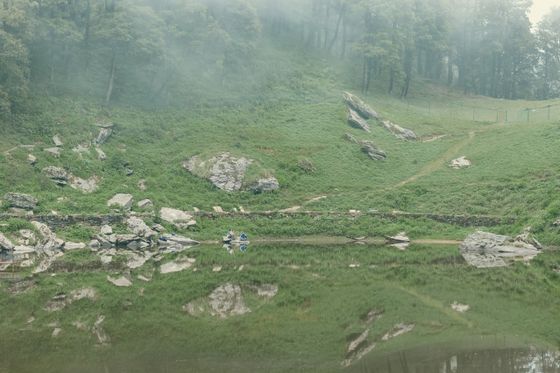
Ghorakhal means the pond where horses were watered, a fair account of what this shoulder of hill above Bhowali was before anyone came for the view. It stands over 2,000 metres up, in Nainital district. The Golu Devta temple sits on the hill above, looking down on Sainik School Ghorakhal, which has run since 1966 on what was the Nawab of Rampur's Ghorakhal Estate. Hindi cinema found the place early: Bimal Roy shot part of Madhumati here in 1958, and Vivah filmed its temple scene at the Golu Devta mandir in 2006. The temple is the visit; the rest is a school and a hillside.

Punjab
Hussainiwala
The crossing into Pakistan here is closed, but both armies still hold a joint beating retreat every day, and that is what draws most people to this village on the bank of the Sutlej, 10 km northwest of Firozpur. The other reason to come is the National Martyrs Memorial: Bhagat Singh, Sukhdev Thapar and Shivaram Rajguru were cremated here on 23 March 1931. Ganda Singh Wala lies directly opposite on the Pakistani side, and the headworks send water off to Sri Ganganagar and Hanumangarh in Rajasthan. Give the memorial your time before the ceremony, not the ten minutes left after it.
Himachal Pradesh
Jibhi
Jibhi is a quiet wooden-cottage village in the Banjar (Tirthan) region of Himachal, increasingly loved by young travellers for its forested calm, waterfalls and aesthetic cafe-stays. Less developed than Manali or Kasol, it has a cosy, Instagram-favourite slow-travel base in the Kullu hills. Set among deodar forests and apple orchards, Jibhi pairs gentle hikes — to Jibhi Falls, the Serolsar Lake and the Jalori Pass — with riverside cottages and a laid-back cafe scene. Its scenic, unhurried character makes it a top pick for workations, couples and friend groups.
.jpg/960px-Jotsoma_village_(2024).jpg)
Nagaland
Jotsoma
You will most likely come here for something other than the village itself. Kohima Science College, Sazolie College, the Doordarshan Kendra and the Regional Centre of Excellence for Music and Performing Arts all sit on the hilltop, along with the public water supply reservoir, which tells you what kind of place this Angami settlement of about 2,458 people has become, a working extension of the capital just west of it. Pulie Badze, named alongside it, tops out at 2,296 metres. Eight kilometres is close enough that this reads as a quiet edge of Kohima rather than a trip of its own.
Himachal Pradesh
Kalpa (Kinnaur)
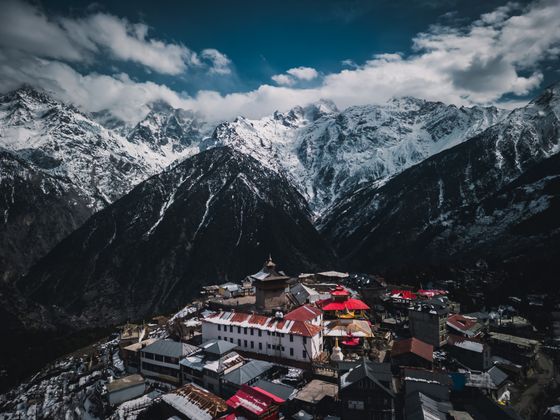
Kalpa is an offbeat mountain village on a high ridge at an elevation of 2,960 metres in the Kinnaur Valley. Positioned directly above the district hub of Reckong Peo, it looks down into the deep, thundering canyon of the Sutlej River. The settlement is known for its unique geographical position, with an uninterrupted view of the sacred Kinner Kailash massif. The architectural landscape of Kalpa features a beautiful indigenous blend of traditional wooden Hindu temples and Tibetan Buddhist monasteries, showcasing the rich syncretic culture of Kinnaur. The village pathways wind through dense pine forests and some of the finest high-altitude organic apple orchards in the country.
Uttarakhand
Kasar Devi (Almora)
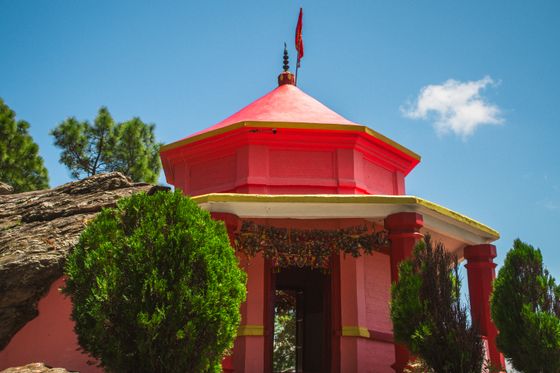
Kasar Devi is a ridge-top village near Almora in the Kumaon Himalayas, long famous as a counterculture and spiritual retreat with sweeping Himalayan views. Once home to artists and seekers on the hippie trail, today it has become a quiet workation and slow-travel base known for its cafes, the famous 'Crank's Ridge', and an unusual geomagnetic phenomenon. The village looks out at Trishul and Nanda Devi, pine forests, and a cluster of cosy cafes and homestays. Its mellow, creative atmosphere makes it a favourite among writers, remote workers and travellers seeking calm over crowds.
Himachal Pradesh
Kasol
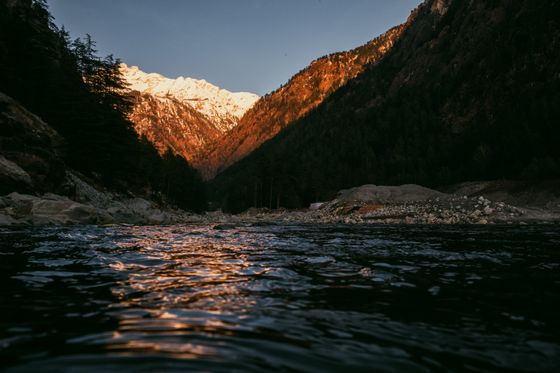
Kasol is a small riverside village in the Parvati Valley of Himachal Pradesh that has become the unofficial backpacking capital of North India. Set along the gushing Parvati River and ringed by pine-clad slopes, it draws a young, international crowd with its laid-back cafe culture, Israeli food, trekking trailheads and famously relaxed mountain vibe. Kasol functions as the base camp for the wider Parvati Valley circuit, with treks fanning out to Kheerganga, Tosh, Malana and Chalal. The main market is packed with cafes serving shakshuka and falafel, music hostels, gear-rental shops and bonfire-lit guesthouses.

Mizoram
Luangpawn
Cliffs and forest on every side, and the village itself on top of Mawmrang hill. That is Luangpawn, in Saitual district under Phullen block, and a road connects it to the settlements around it and to the district centres, so reaching it is not the ordeal the terrain suggests. Nothing has been built here to look at. What there is is the position, a hilltop with forested ground falling away from it. Worth an hour if you are already out in the Phullen country.

Jharkhand
Maluti
The seventy-two old temples are why anyone comes, and the panels on them repay slow looking: scenes from the Ramayana and the Mahabharata, worked into a village in Shikaripara block that the Baj Basanta line built up. Know before you fix a date that Kali Puja here means the sacrifice of more than a hundred goats, with a buffalo and a sheep besides, and that animal welfare groups have objected to it for years. The temples are poorly looked after and exposed to weather, so what stands now is already less than what once did.

Meghalaya
Mawphlang
Maw phlang means grassy stone, and like many Khasi settlements this one is named for its monoliths. It lies 25 kilometres out of Shillong in the East Khasi Hills, and the reason to come is the sacred grove, one of the groves of the Khasi Hills. The Khasi heritage village alongside it, promoted as the hub of Khasi culture, is reported to be in a poor state, the project having lost money to governmental apathy and charges of corruption. Come for the grove and treat the rest as a bonus. Welsh missionaries ran a clinic here from 1878; two of them died at Mawphlang themselves.
Meghalaya
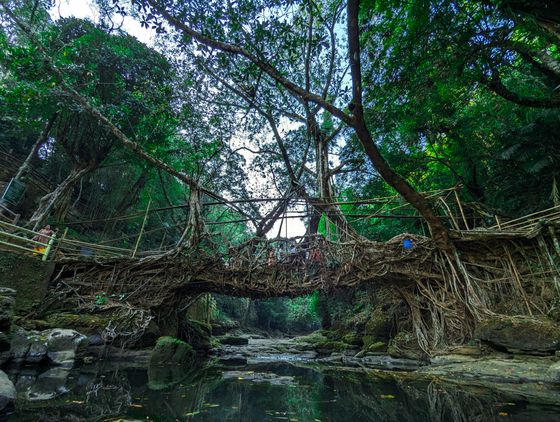
Mawsynram & Nongriat Root Bridges
Mawsynram, the wettest place on earth, and the nearby village of Nongriat anchor southern Meghalaya's wonder-region of living root bridges, deep gorges and waterfalls. The trek to the famous Double Decker Living Root Bridge is a bucket-list Northeast experience.

Mizoram
North Lungpher
Moderately sized is how the record puts it, which in the Thingsulthliah block of Saitual district means roughly two hundred families on a hillside. North Lungpher lays nothing on for visitors and does not pretend to. It belongs on a route through the district rather than at the end of one, somewhere to look at rather than somewhere to do anything.

Manipur
Paldai
One church serves the whole village, and that is deliberate: Paldai has kept to a policy of one village, one religious organization since Christianity arrived in 1920. It stands in the Chakpikarong sub-division of Chandel district, among the oldest settlements on the western side of the Kana river, founded by Pu Helchin Taithul a century before independence and passed to his eldest son. A prayer cabin sits on the hill called Muoltung Kaina to the west, and people walk up to it to pray. Imphal is 90 to 100 km away, which makes this a long detour unless the road itself is the point.

Nagaland
Patsho
Patsho lies west of Mount Khülio-King, in the Patkai range on the Indo-Burma side of Nagaland, and is one of the largest and most important villages in its district. Very little about it is written down anywhere, which is part of the appeal and part of the difficulty. Go with time in hand and, ideally, with someone who lives there.

Mizoram
Phullen
Getting there is most of it. Phullen sits 125 kilometres east of Aizawl in Saitual district, with Darlawn block on its western side and Ngopa to the east, and it is the headquarters of Phullen block. Like the rest of Mizoram it is run by an elected Village Council rather than an officer posted in from outside. No monument is waiting at the end of that road. Go because you want the eastern hills and a working hill town, or do not go at all.

Punjab
Pul Kanjri
A trading town that drew shoppers from both Amritsar and Lahore is now a tiny village 35 km down the old Amritsar-Lahore road, and the compression of that sentence is the visit. Maharaja Ranjit Singh rested here with his troops and had a bridge built across the canal, the story going that it was for Gul Bahar Begum, who would not wade; part of it still stands. Inside are a bathing pool, a temple, a gurudwara and a mosque, which was unremarkable before Partition. Pakistan briefly held the place in 1965 and again in 1971.

Manipur
Senvawn
Christianity in southern Manipur is dated from here. A Welsh missionary, Watkin Roberts, made the first converts among the Hmar and neighbouring tribes at Senvawn in 1910, and the village has carried that claim ever since. It is a Hmar village in Pherzawl district, 498 households at the 2011 census. The draw is entirely historical: what you come to see is a starting point rather than a monument, so read the story before you arrive or the visit will feel like very little.

Mizoram
Serkawn
Serkawn runs straight into Lunglei — under a kilometre separates them, and most people cross the boundary without noticing. British missionaries chose the spot, so southern Mizoram's Christianity and its formal education both begin here; the oldest schools and the oldest hospital in southern Mizoram were built on this ground, and the Baptist Church of Mizoram is still administered from it. The British called it Lemonvale, a literal rendering of the name, for the lemon trees that grew all over it. It stayed the principal centre of learning and music through the twentieth century. Go for the history, not a view, and fold it into a Lunglei day.

Manipur
Tagaramphung
A small village of the Thangals, a sub-tribe of the Naga people, in the northern part of Manipur, 22 km south of the district headquarters at Senapati and 42 km from Imphal, in Kangpokpi tehsil of Senapati district. It went by Yaikongpao before it took its present name. This is a working village rather than a sight, with nothing arranged for visitors, so the reason to come is the people and the road that gets you there. Worth it only if you are already heading up the Senapati road with time in hand.

Punjab
Tharial
Nobody comes here to sightsee. Tharial is a farming village of around 10,000 on the Pathankot-Jammu road, the last one before Punjab ends, and it is known locally as shaheeda da pind, the village of martyrs, for how many of its men have served in the Indian Army. The government has built memorial gates for them: Balkar Singh Lalotra, killed in the Kargil war, and Shamsher Singh and Parmod Dhiman among others. Those gates and the fields around them are the visit. Pathankot station is 8.5 km off, so treat this as a stop on the way north rather than a destination.
Himachal Pradesh
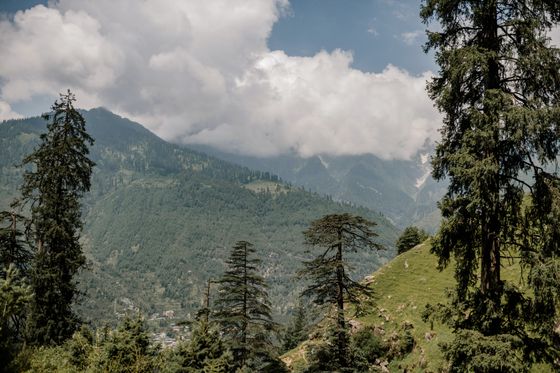
Tirthan Valley
Tirthan Valley is a quiet, offbeat river valley on the edge of the Great Himalayan National Park (a UNESCO World Heritage Site) in Himachal Pradesh. Named after the crystal-clear Tirthan River, it has emerged as a slow-travel and workation favourite for those seeking pine forests, trout streams and riverside homestays far from the tourist crowds. With no big hotels and a strong eco-tourism ethic, the valley centres on activities like trout fishing, river crossing, forest treks and lazy days by the water. It suits people who want to sit by a river for a week rather than tick off viewpoints.
Himachal Pradesh
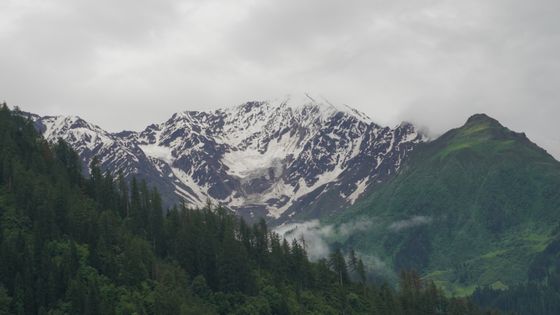
Tosh
Tosh is a tiny, car-free hamlet at the far end of the Parvati Valley, a steep climb above Barshaini. With sweeping views of snow peaks, terraced fields and waterfalls, it has become a cult favourite among young backpackers looking for an even quieter, more scenic alternative to Kasol. The village is a cluster of guesthouses and cafes built into the hillside, many with balconies that look straight onto the glaciated head of the valley. It doubles as a trailhead for the Kutla and Kheerganga hikes, and its slow pace, cheap stays and dramatic sunsets make it a magnet for digital nomads and long-stay travellers.
.jpg/960px-Upshi_(village).jpg)
Leh & Ladakh
Upshi
Upshi is a road junction with a village attached, 47 km southeast of Leh where the Indus valley meets the Leh-Manali highway below Tanglang La. Almost everyone stops; almost nobody stays. There is a customs and excise check post on the Manali side of the river, a helipad, goat farming that matters more to the local economy than any of the traffic, and an ancient trading road running east towards Tibet, a right turn if you are coming up from Manali. Give it twenty minutes and go on to Leh, or south to Gya.

Puducherry
Veerampattinam
The largest coastal village in the territory sits seven kilometres out of Pondicherry, between the city and Cuddalore, with more than ten thousand people living beside the sea. Buses run from the city every ten to fifteen minutes, which makes it one of the easier places here to reach without arranging anything in advance. There is no monument to tick off. Go if you want an hour of ordinary coastal life a short ride from the city, and give it a miss if you are collecting sights.
Sikkim
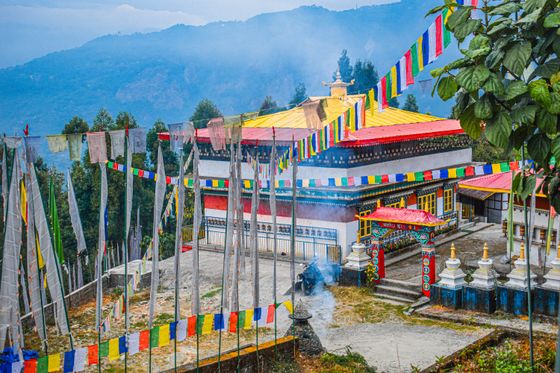
Yuksom
Yuksom is a historical village in West Sikkim, the first capital of the old Sikkimese kingdom and the trailhead for the famed Goecha La and Dzongri treks toward Kanchenjunga. An emerging eco-conscious, slow-travel destination, it draws trekkers and offbeat travellers with its forests, monasteries and calm. Surrounded by the Kanchenjunga National Park (a UNESCO World Heritage Site), Yuksom has old monasteries, sacred lakes, homestays and forest on every side. Its blend of Buddhist heritage, Himalayan trekking and unspoiled nature makes it a favourite for conscious, adventurous young travellers.
