Chandigarh
city · Chandigarh
Chandigarh, India's first planned city designed by Le Corbusier, is famed for its orderly sectors, modernist architecture and green spaces.
⤢ Tap to view full
⤢ Tap to view full
⤢ Tap to view full- State
- Chandigarh
- Type
- City
- Best season
- Winter
- Things to do
- 2+
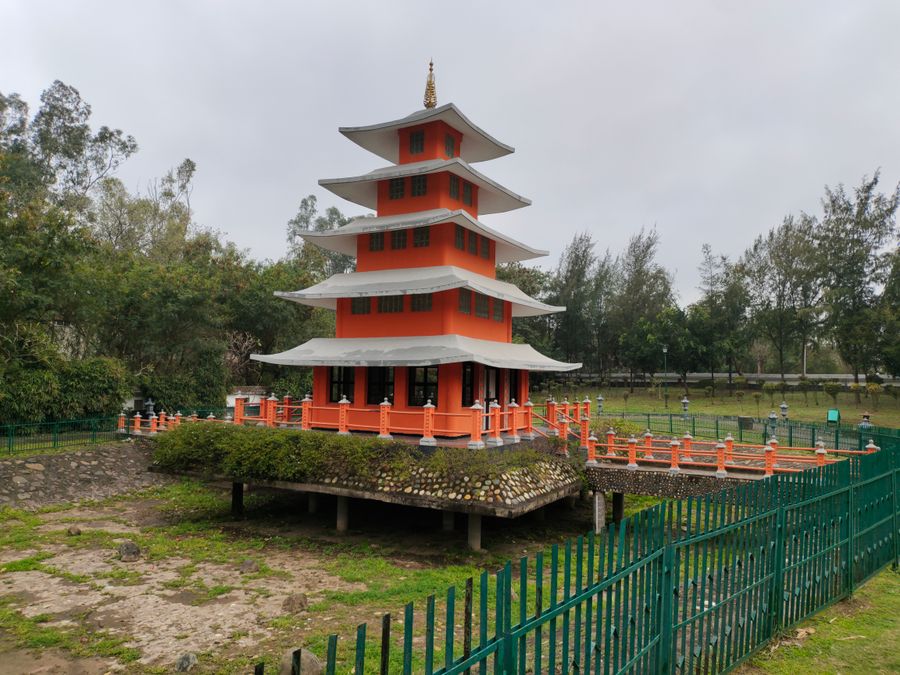
Chandigarh, India's first planned city designed by Le Corbusier, is famed for its orderly sectors, modernist architecture and green spaces. The whimsical Rock Garden, the vast Sukhna Lake and the Capitol Complex (a UNESCO site) make it a uniquely walkable, design-led city.
When to go
Best visited October to March; summers can be hot.
Why visit
India's first planned city and a Le Corbusier showcase — the surreal Rock Garden, Sukhna Lake and a UNESCO modernist complex.
Cultural notes
Built after Partition as a new capital for Punjab and Haryana, carrying Nehru-era optimism and Le Corbusier's modernism. The Capitol Complex is now UNESCO-listed.
How to reach
Chandigarh Airport has domestic and limited international flights; the city is a key rail and expressway hub, ~4-5 hours from Delhi.
3 days in Chandigarh
Take the whole plan, or add any single stop.
Day 1
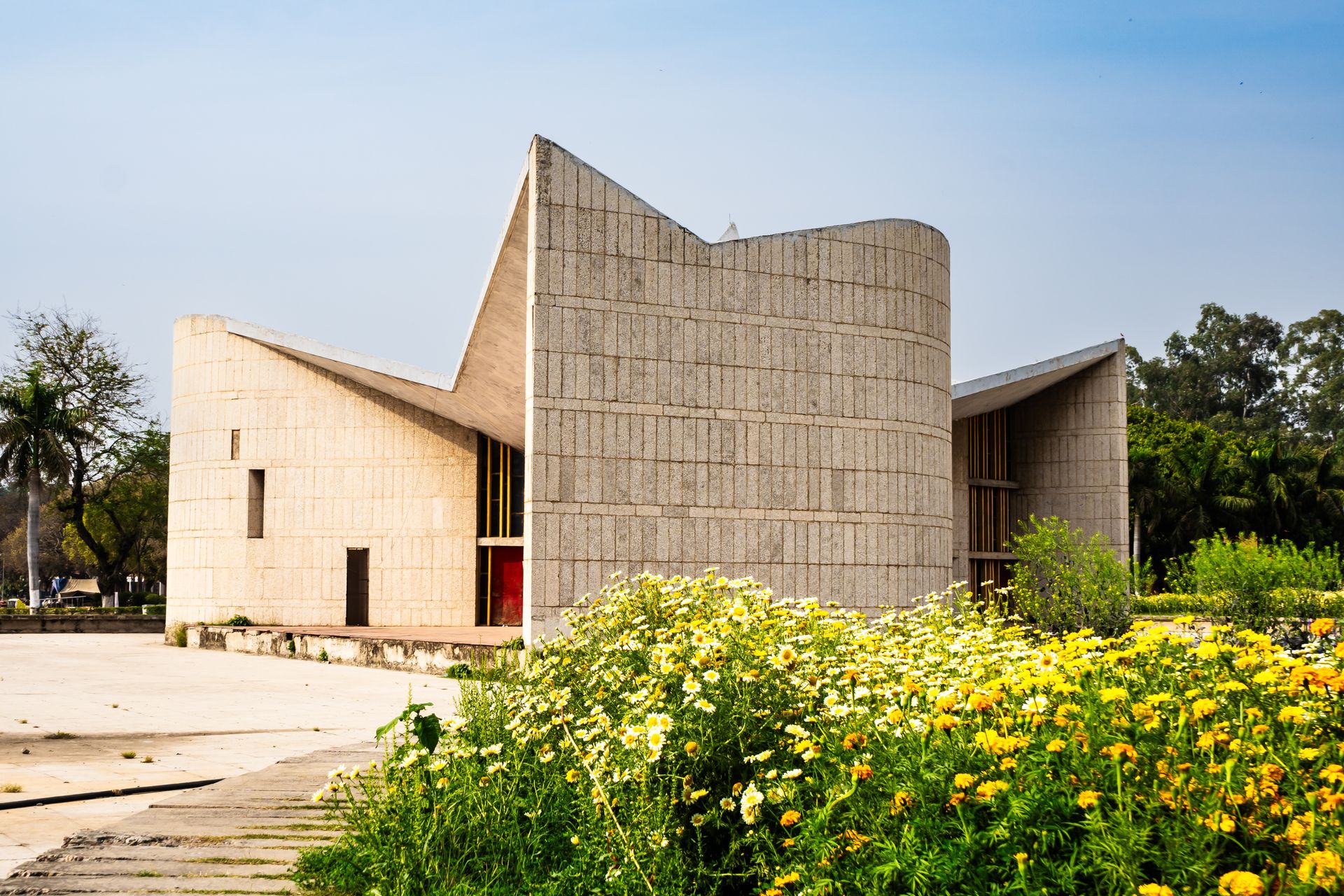
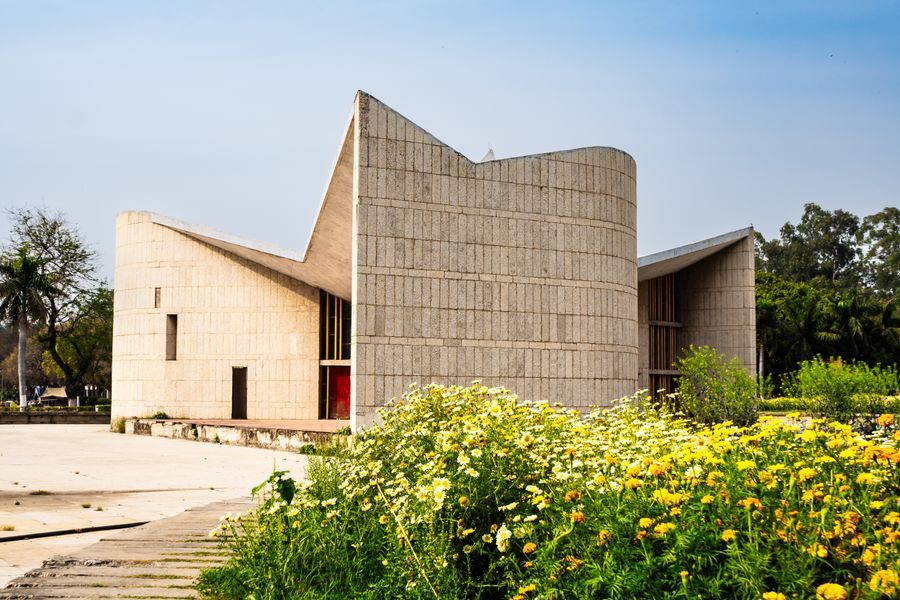
Capitol Complex guided visit
Day 1
Open Hand Monument
Open Hand Monument
Day 1
Government Museum & Art Gallery
Day 2
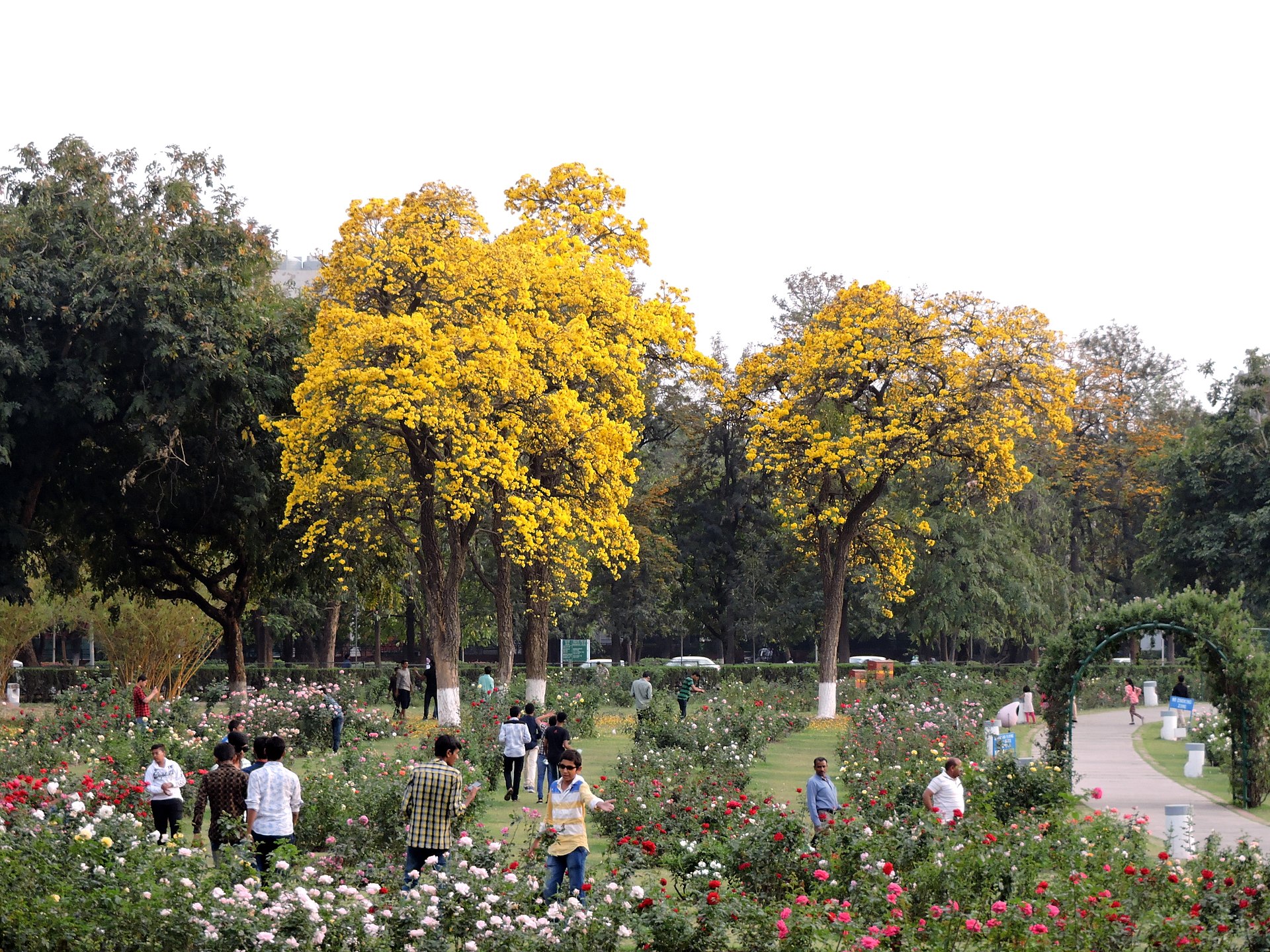
Zakir Hussain Rose Garden
Day 3
Pinjore (Yadavindra) Gardens
Day 3
Morni Hills viewpoints
Day 3
Sector 17 plaza evening
Chandigarh guide & itineraries
Chandigarh is perfect for
Popular attractions
The places in Chandigarh most people come for.
Reviews & ratings
What travellers say about Chandigarh
CityDekho traveller reviews
No CityDekho reviews yet
Be the first traveller to review this place.
Community
Ask questions and share tips about Chandigarh
Sign in to ask a question or share a tip about Chandigarh.
Been to Chandigarh?
Write what you would tell a friend — where you stayed, what you would skip, the thing you wish somebody had mentioned before you went. We read every submission before it goes up.
People also explored
Travellers viewing Chandigarh also loved these
Nagaland
Kohima
Kohima's war cemetery is the most affecting war memorial in India, and most people who come for the Hornbill Festival never walk up to it. In 1944 the Japanese advance into India was stopped here, on a tennis court on the ridge above town. The court's markings are still laid out in stone among the graves. The inscription at the base — the one about telling those at home that we gave our today for their tomorrow — is worth the climb on its own. The Hornbill Festival runs the first ten days of December at Kisama, a purpose-built village of tribal morungs where all the Naga groups perform. It is worth seeing and it is also a festival built for visitors; if you want the everyday version of Naga life you will find more of it in the villages around Khonoma, an hour away, than at Kisama. Nagaland requires an Inner Line Permit for Indian nationals; foreign nationals need to register on arrival. Sort it in advance. October to May is dry. December means Hornbill, full hotels and prices to match — book months ahead or stay in Dimapur and travel up.

Gujarat
Idar Hill (Idargarh)
Idar Hill, resting prominently inside the Sabarkantha district of North Gujarat, is a rugged, mountain destination, known for a topography of massive, monolithic pink granite boulders balanced on top of each other, the hill holds a historic hill fort complex known as Idargarh. Scaling the hill via a flight of over 700 stone steps leads through medieval defense gateways, ancient rock-cut water cisterns, and hidden palaces, with a raw mix of natural architecture and military heritage.

Rajasthan
Jodhpur
Mehrangarh is the best fort in India, and if you only climb one in Rajasthan it should be this one. It sits on a cliff a hundred and twenty metres above the city with no gap between rock and wall — the masonry simply continues the escarpment. The audio guide is one of the few in the country genuinely worth taking. Look for the handprints beside Loha Pol, left by royal widows on their way to the pyre. About the blue: people arrive expecting an entirely blue city and find a mostly ochre one. The blue is real but it is concentrated in the Brahmpuri quarter below the fort's north-east wall, and the way to see it is from the ramparts looking down, or by walking those specific lanes. Anywhere else in Jodhpur you will wonder what you were promised. Toorji ka Jhalra, the restored stepwell in the old city, is where everyone goes at sunset now and it has the cafés to prove it. Rao Jodha desert rock park, just outside the fort gates, has almost nobody in it and is the better hour. October to early March. By May the afternoon heat here is not a discomfort, it is a hazard.

Gujarat
Gandhinagar
Gandhinagar, the meticulously master-planned capital city of Gujarat, stands on the west bank of the Sabarmati River. Designed by visionary architects H.K. Mewada and Prakash M. Apte, it is internationally recognized as one of India's greenest administrative capitals, laid out in an orderly grid of 30 structured sectors. Beyond its primary role as a political and bureaucratic powerhouse, Gandhinagar handles a massive leisure and spiritual tourist footprint due to its high-capacity exhibition facilities, lush urban forest canopy covers, eco-nature parks, and monumental temple installations.
Goa
Goa
Goa, India's smallest state on the western Konkan coast, pairs golden Arabian Sea beaches with a relaxed Indo-Portuguese culture. From the lively sands and nightlife of the north to the quieter palm-fringed south, plus whitewashed churches, spice plantations, fresh seafood and easygoing susegad charm, it remains India's favourite beach getaway.

Gujarat
Navsari
Navsari is an old town near the Purna river delta in south Gujarat, long linked with neighbouring Surat. It is an important centre of Parsi heritage in India, home to some of the community's oldest fire temples. Just offshore is Dandi, where Mahatma Gandhi ended his Salt March in 1930.
Sikkim
Gangtok
Gangtok is where most Sikkim trips begin, and its real value is as a base rather than a destination. The town itself is a steep ridge of concrete with one pleasant pedestrian street, MG Marg, where no vehicles and no spitting are allowed and the whole town walks in the evening. Rumtek monastery, half an hour out, is the seat of the Karma Kagyu lineage and the more worthwhile hour. Enchey, closer in, is quieter still. Tsomgo lake and Nathu La are the standard day trip. Both need permits arranged through a registered operator in Gangtok, both are high — Tsomgo is at around 3,700 metres — and Nathu La is closed to foreign nationals entirely. If you have only been in the hills a day, that altitude gain in a single drive is a lot. For actual Sikkim, keep going. Pelling for the Kanchenjunga view, Yuksom for the walking, north Sikkim for Lachung and the Yumthang valley — all of which need their own permits. March to May and October to early December. The monsoon here brings serious landslides and roads close for days at a time.

Kerala
Alleppey (Backwaters)
The mistake in Alleppey is the day boat. A houseboat only becomes worth it once the day-trippers have gone home and the water goes quiet. Book an overnight, and if you can, book a smaller boat that can leave the main channel. The big two-storey ones are restricted to the wide canals where they queue up alongside each other; the small ones get into the narrow waterways between the paddy fields, which is where the backwaters stop being a boat trip and start being a place where people live. Better still, spend a morning on a public ferry. The government service from Alleppey to Kottayam costs almost nothing, takes a couple of hours, stops at village jetties, and carries schoolchildren and shopping. You will see more of the actual backwaters from its deck than from most houseboats. The paddy fields here are farmed below sea level, kept dry by dykes and pumps — Kuttanad is one of the few places in the world where that is done. October to March. The monsoon has its own case, and the snake boat races in the wet season are worth planning around, but the water is high and the light is grey.
More heritage & forts
More places you'll love

Karnataka
Daria Daulat Bagh (Srirangapatna)
Daria Daulat Bagh is the elegant summer palace of Tipu Sultan, the Tiger of Mysore, set in a garden on the river-island of Srirangapatna near Mysuru. Built largely of teak in 1784 in the Indo-Saracenic style, its walls and ceilings are covered in vivid frescoes, floral motifs and murals, including a famous depiction of Tipu's forces at the Battle of Pollilur.

Assam
Sivasagar
Sivasagar, once the capital of the mighty Ahom kingdom that ruled Assam for six centuries, is a town rich in monuments around its great tank. Its highlights include the Rang Ghar, often called Asia's oldest surviving amphitheatre, the Talatal and Kareng Ghar palaces, and the towering Sivadol temple.

Tripura
Neermahal
Neermahal is a striking water palace rising from the middle of Rudrasagar Lake near Melaghar in Tripura, built by the Manikya king in the 1930s as a royal summer retreat. Blending Hindu and Mughal architectural styles, its white-and-red pavilions are reached by boat and beautifully reflected in the lake.

Tripura
Unakoti
Unakoti, in the forested hills of northern Tripura, is an ancient Shaiva pilgrimage and archaeological site famous for its colossal rock-cut carvings and stone images dating back over a thousand years. Legend says there are one less than a crore of images here, giving the site its name, set amid waterfalls and greenery.

Delhi
Safdarjung's Tomb (Delhi)
Safdarjung's Tomb is a garden-tomb built around 1754 for Safdarjung, the powerful Nawab of Awadh and a prime minister of the Mughal empire. Set in a formal charbagh garden, its red-and-buff sandstone dome and symmetrical layout make it one of the last great monuments of the Mughal era.

Maharashtra
Bibi Ka Maqbara (Aurangabad)
Bibi Ka Maqbara in Aurangabad (Chhatrapati Sambhajinagar) is a grand Mughal mausoleum built in the 1660s to 1670s for Dilras Banu Begum, the wife of Emperor Aurangzeb. Closely modelled on the Taj Mahal, its marble and stucco dome earned it the nickname the Taj of the Deccan.
Karnataka
Gol Gumbaz (Vijayapura)
Gol Gumbaz in Vijayapura (Bijapur) is the mausoleum of Sultan Mohammed Adil Shah, completed in 1656. Crowned by one of the largest masonry domes in the world, it is famous for its Whispering Gallery, where even a soft sound is carried clearly across the vast circular hall and echoes many times over.

Rajasthan
Kumbhalgarh Fort
Kumbhalgarh, a UNESCO-listed Mewar fort in the Aravalli Hills, is famed for its immense perimeter wall, which stretches roughly 36 km and is often called the second-longest continuous wall in the world after the Great Wall of China. Built mainly in the 15th century by Rana Kumbha, it was the birthplace of Maharana Pratap and a refuge of the Mewar rulers.
Maharashtra
Daulatabad Fort
Daulatabad Fort (historically Devagiri) stands atop a steep 200-metre conical hill roughly 15-16 km northwest of Chhatrapati Sambhajinagar (Aurangabad), Maharashtra. It is a massive fortified hill-city built up over about 1,000 years, enclosed by three concentric fortification walls and two moats, best known for Sultan Muhammad bin Tughluq's failed 14th-century attempt to shift the Delhi Sultanate's capital here.

Delhi
Lotus Temple (Delhi)
The Lotus Temple is a Baha'i House of Worship and one of Delhi's most photographed modern landmarks, shaped like a half-open lotus with 27 marble-clad petals set among nine pools and landscaped gardens. Completed in 1986 and open to people of all faiths, it is kept silent, and that is the point of going.
Andaman & Nicobar Islands
Cellular Jail (Port Blair)
The Cellular Jail in Port Blair, known as Kala Pani, is a colonial-era prison built by the British between 1896 and 1906 to hold Indian freedom fighters in solitary confinement. Its original seven wings radiated from a central tower like spokes; today the surviving structure is a national memorial to the independence movement.
.jpg?width=2048)
Delhi
India Gate (Delhi)
India Gate is a 42-metre war memorial arch on the ceremonial Kartavya Path, designed by Sir Edwin Lutyens and completed in 1931. It honours around 74,000 Indian soldiers who died in the First World War and the Third Anglo-Afghan War, their names inscribed on its sandstone walls.