

Heritage Cities & Towns
Heritage
Whole places rather than single monuments — Jaipur's walled city, Ahmedabad, Orchha, Mandu.
326 places

Punjab
Aam Khas Bagh
This was never a destination. It was a highway-inn on the Mughal military road between Delhi and Lahore, where the royal couple broke the journey going up and coming back. Akbar had the first version built, to a plan by the architect Hafiz Rakhna; Shah Jahan rebuilt it, and Jahangir added to it later. The name carries the layout — Aam for public use, Khas kept for royalty. What is left is remains rather than rooms, so set your expectations there and come for the idea of the place: an emperor's motorway services. Half an hour, on the way to somewhere else.
Uttar Pradesh
Agra
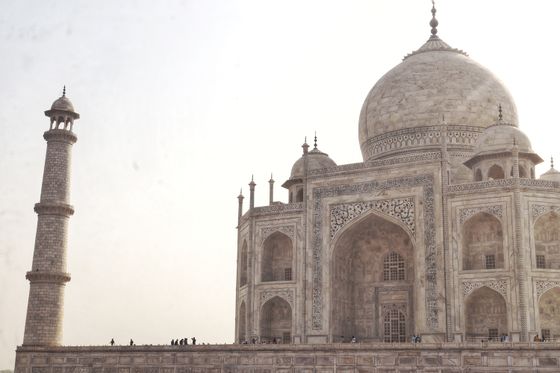
Almost everyone rushes Agra as a day trip from Delhi, and almost everyone regrets it — the Taj deserves a dawn and the city has a second monument nearly as good. Go to the Taj at sunrise, and know that it closes on Fridays. The marble changes colour through the first hour in a way no photograph has ever conveyed; by nine the light has flattened and the crowd has arrived. If you only have one slot, take that one. Agra Fort is the thing people skip and should not. Shah Jahan spent his last years imprisoned in it, looking downriver at the tomb he built for his wife, and you can stand where he stood. It is a working piece of Mughal military architecture rather than a monument to grief, and it is quieter. For the view most people never see, cross the river to Mehtab Bagh in the late afternoon and look at the Taj from the back, across the Yamuna, with nobody in front of you. The city outside the monuments is hard work — persistent touts, heavy traffic, little to hold you. Sleep here for the sunrise, then move on.

Uttar Pradesh
Agra Fort
Agra Fort is a massive red-sandstone fortress-palace complex on the banks of the Yamuna River, enclosed by 2.5 km of walls, and served as the principal residence of Mughal emperors before the capital moved to Delhi. It is a UNESCO World Heritage Site.
Gujarat
Ahmedabad
Ahmedabad's old city is a UNESCO World Heritage Site and the way to see it is a walk that starts at seven in the morning. The heritage walk from Swaminarayan temple to Jama Masjid takes a couple of hours and goes through the pols — dense residential quarters, each historically one community, with shared courtyards, carved wooden facades and bird feeders on tall poles. Doing this without a guide means missing all of it, because the pols look like ordinary lanes from outside. The Sidi Saiyyed mosque's stone jaali — the tree-of-life screen — is the image the city is known for, and it takes five minutes to see. The Adalaj stepwell, half an hour out, takes longer and gives more. Gandhi's Sabarmati Ashram is plain and unglamorous by design. Sit in it for a while rather than walking through. Gujarat is a dry state; alcohol is not served. The city eats vegetarian extremely well as a result — the Gujarati thali here is one of India's great meals. November to February. April and May routinely pass forty-two degrees.

Telangana
Aishwarya Ganapathi
There is one thing to see here and it is worth the detour: a monolithic Ganesha, 7.62 metres tall and 9.144 metres counting the pedestal, at Avancha in Thimmajipeta, Nagarkurnool. The carving is Western Chalukya. Stand well back before you judge the scale, because from close up you lose the top of it, and come early or late rather than under a vertical midday sun. Fifteen minutes is honestly enough, so plan it into a longer road day instead of building one around it.

Maharashtra
Ajanta Caves
The Ajanta Caves are 30 rock-cut Buddhist monuments set into a horseshoe-shaped gorge in Aurangabad district. They were cut by hand out of vertical basalt cliffs between the 2nd century BCE and the 5th century CE, and monks used them as a retreat through the monsoon. Then they were forgotten — swallowed by jungle for centuries until someone stumbled on them again in 1819. What is inside is the finest ancient Indian wall painting to have survived anywhere. The pigments are natural minerals, and the Jataka tales and celestial figures they were used to paint carry an emotional weight that little else from the period does.

Jammu & Kashmir
Akhnoor Fort
Akhnoor Fort is a two-storeyed fortification on the eastern bank of the Chenab river in Jammu district, featuring corner watchtowers and river-side access, protected by the Archaeological Survey of India since 1982.

Uttar Pradesh
Allahabad Fort
Allahabad Fort (Akbar Fort) is a large Mughal fort on the banks of the Yamuna near its confluence with the Ganges in Prayagraj, built to enclose the sacred Akshayavat tree. Much of it remains under military use and closed to general public access.

Rajasthan
Amber Fort (Amer Fort)
Begun in 1592 on the hill above Maota lake, in pale sandstone and marble, and the Sheesh Mahal is what the queue is for. The fort stands over the town of Amer, eleven kilometres from Jaipur, and Maota is not scenery — it was the palace's water supply. Ramparts, a sequence of gates and cobbled ramps carry you up through the courtyards, with the mirror hall off the third. Walk up rather than taking an elephant: the animals here have drawn repeated welfare complaints, and the climb takes about ten minutes. First hour or last hour is when the sandstone turns orange and the courtyards empty.

Odisha
Anantashayana Vishnu
Fifteen metres of Vishnu lying on his side, cut into open rock on the left bank of the Brahmani at Saranga in Dhenkanal district, and the largest horizontal rock-cut image in India. It was carved in the early 9th century and is still out in the weather with nothing built over it. The name says he sleeps on the serpent Ananta; the figure has four arms, and worship is still offered to it. ASI looks after the site. This is a detour rather than a day out, but a relief this size does not photograph the way it stands.

Goa
Arch of the Viceroys
Viceroy Francisco da Gama raised this gate near the Mandovi in 1599 to commemorate Vasco da Gama's arrival in India in 1498, and Portuguese viceroys entered their capital through it. Twelve metres of black laterite, with a statue of Vasco da Gama above the keystone. What survives is only the gate: the palace of the fortress stood directly above it and was demolished in the late 1820s, leaving nothing, and the arch itself collapsed in 1948 and was rebuilt in 1954. The ASI holds it now. Five minutes of your time, on the walk to the Old Goa churches.

Puducherry
Arikamedu
Four kilometres from Pondicherry is where India's trade with Rome stops being an abstraction. The digs here, by Mortimer Wheeler in 1945 and Jean-Marie Casal after him, turned up amphorae, Arretine ware, Roman lamps, glassware, gems and beads, and identified the place as Podouke, the port that both the Periplus of the Erythraean Sea and Ptolemy list as an emporium. Wheeler read it as a Yavana trading post of about two centuries; later work by Vimala Begley stretched the settlement from the 2nd century BCE to the 8th century CE. It reads as an archaeological site rather than a monument, so the pull is what came out of the ground.

Odisha
Aruna Stambha
Twenty feet from the Lion Gate at Puri stands a single piece of chlorite stone, 34 feet of it, sixteen-sided, with Aruna, the sun's charioteer, at the top with his hands joined in prayer. It is easy to walk straight past on the way in. Stop at the base instead, carved with military scenes and figures, and look up at the capital and its run of lotus petals. Two square slabs, each smaller than the last, lift the idol clear. Pilgrims worship the pillar itself, not only what stands behind it.

Haryana
Asigarh Fort
Hansi's fort sits on the eastern bank of Amti lake and covers thirty acres, and in its working life it is said to have controlled eighty other forts in the country around it, with a name as one of the hardest places in ancient India to take. The ASI has held it as a centrally protected monument since 1937. It rewards a walk right round rather than a look in from the gate. Reckon on 135 km out of Delhi along NH9 — this is a day's outing, not a stop on the way to something else.
.JPG/960px-Asirgarh_fort_-Asirgarh-Burhanpur-(Madhya_Pradesh%2C_India).JPG)
Madhya Pradesh
Asirgarh Fort
Asirgarh Fort is a roughly 60-acre, three-part fortress (Asirgarh, Kamargarh and Malaygarh) in the Satpura Range about 20-27 km north of Burhanpur, Madhya Pradesh, commanding a historically important pass between northern India and the Deccan.

Karnataka
Badami Fort
Badami Fort sits atop a red sandstone hill about 2 km from Badami town in Bagalkot district, Karnataka. Badami (ancient Vatapi) was the capital of the Chalukya dynasty, and the fort overlooks the town's famous rock-cut cave temples, an artificial lake, and the Bhutanatha temple complex.

Punjab
Bahadurgarh Fort
Just outside Patiala, and with two histories inside one set of walls. The first belongs to Saifabad, built as the residence of Nawab Saif ud-Din Mahmud, better known as Saif Khan. The second begins in 1837, when Maharaja Karam Singh of the princely state of Patiala renovated the same site into the Sikh fort that carries the name today. That layering is the reason to come, more than the masonry is. Give it an hour inside a Patiala day rather than making a trip of it, and keep the older name in mind while you walk; a thorough renovation tends to bury whatever came first.

Jammu & Kashmir
Bahu Fort
Bahu Fort stands on a rock overlooking the Tawi river opposite Jammu's old town — by tradition the oldest surviving structure in the city, first raised by Raja Bahulochan and rebuilt by the Dogra rulers. Inside the thick sandstone walls is the Bawe Wali Mata temple, Jammu's most venerated Kali shrine, thronged on Tuesdays and Sundays; below, the terraced Bagh-e-Bahu gardens step down towards the river.

Rajasthan
Bala Quila (Alwar Fort)
Bala Quila crowns a hilltop over 1,000 feet above Alwar, a sprawling fortification some 5km long and 1.5km wide with fifteen large and fifty-one small towers, and — by one official count — 446 loopholes built for long-barrelled muskets. Six historic gateways, including Suraj Pol and Chand Pol, lead through walls that changed hands between Mughal, Maratha and Jat rulers before Alwar's own royal family took final control.

Karnataka
Bangalore Fort
Bangalore Fort, located near Krishna Rajendra Market in Chamrajpet, Bengaluru, began as a mud fort and was later rebuilt in stone; today only the Delhi Gate and two bastions survive. It marks the founding site of the city under Kempe Gowda I and later became a key stronghold of Hyder Ali and Tipu Sultan.

Bihar
Barabar Caves
These are the oldest surviving rock-cut caves in India, 24 km north of Gaya in Jehanabad district, cut under the Mauryas for ascetics of the Ajivika sect. Seven chambers across two hills, four at Barabar and three at Nagarjuni about 1.6 km further on, so plan for the walk between them. The one to see is Lomas Rishi, whose carved doorway is the earliest surviving chaitya arch in India, a stone copy of a building made of wood. Ashoka appears in the inscriptions as King Piyadasi. Inside, the chambers are bare; all the carving is on that entrance.

Odisha
Barabati Fort
Barabati is the moated riverside fort of the Eastern Ganga kings, raised around the 13th century beside the Mahanadi at Cuttack, the millennium-old capital of Odisha. Its carved laterite gateway and wide moat survive, and excavation has uncovered palace foundations within. The fort gave its name to the modern Barabati Stadium next door, and the Kadam Rasul shrine and silver-filigree lanes of old Cuttack are minutes away.

Leh & Ladakh
Basgo Fort
Basgo Fort and Palace, about 5 km west of Nimoo and 40 km east of Leh, was a political and cultural centre of early Ladakh, frequently mentioned in the Ladakhi Chronicles, with a monastery complex built for the Namgyal rulers in 1680.

Jammu & Kashmir
Basohli Fort
Basohli Fort refers to the now largely ruined palace fortifications of Basohli town in Kathua district, founded alongside the town itself and historically linked to the distinctive Basohli school of miniature painting.

Andhra Pradesh
Bavikonda
A bone fragment kept in an urn, recovered on this hill and taken to be a relic of the Buddha himself, is why the site matters more than its modest ruins suggest. Bavikonda means hill of wells, and the wells cut to collect rainwater are still the most legible thing on the ground, alongside the outlines of a large monastic complex going back to the 3rd century BCE. Excavators also brought up relic caskets, pottery, tiles and coins. It sits about 16 km from Visakhapatnam at roughly 130 metres, and it pairs naturally with Thotlakonda and Pavurallakonda in a single morning.

Kerala
Bekal Fort
Bekal Fort in Kasaragod district, Kerala, is the largest fort in Kerala, spreading over 40 acres, with three-quarters of its exterior in contact with the sea, giving the impression it emerges directly from the water.

Karnataka
Belagavi Fort
Belagavi Fort (Belgaum Fort) is a historic fort in Belagavi, northern Karnataka, notable for housing both mosques and temples side by side within its walls, including the Safa Masjid. It is currently used as the regional headquarters of the Indian Army.
Karnataka
Belur & Halebidu
Belur and Halebidu, near Hassan in Karnataka, are the twin capitals of the medieval Hoysala Empire, set at the foot of the Western Ghats. Their temples are carved from fine-grained soapstone (chloritic schist), a soft stone that let Hoysala sculptors work astonishingly intricate detail — friezes and figures that look almost like ivory or sandalwood carving.
Karnataka
Bengaluru (Bangalore)
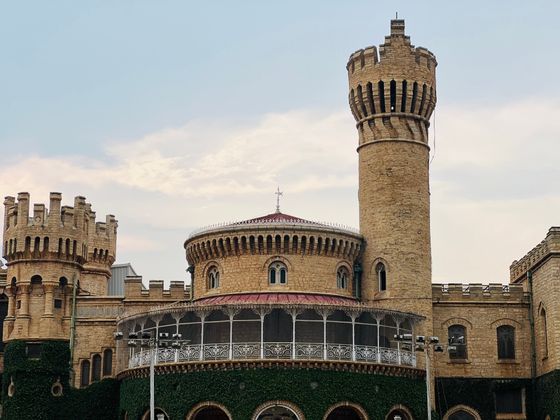
Bengaluru is not a sightseeing city and trying to make it one is the mistake. Come for a weekend of eating, drinking, walking in the parks, and buying books. Lalbagh and Cubbon Park are the reason the place was liveable, and early morning in either is the best hour of the day. The Lalbagh rock is one of the oldest exposed surfaces on the subcontinent and almost nobody goes up it. VV Puram's food street after dark, the Russell Market in Shivajinagar in the morning, filter coffee standing up at a darshini — those are the actual experiences here. The city has the best independent bookshops in India and a working craft beer scene, both of which are genuine, not manufactured for visitors. What it does not have is a monument you must see. Tipu Sultan's summer palace and Bangalore Palace are both twenty-minute visits at most. The traffic is as bad as you have heard. Plan two things a day, in the same part of town, and use the Metro where it goes. The weather is the point — pleasant almost year-round, which is why everyone moved here.

Gujarat
Bhadra Fort
Bhadra Fort is the citadel at Ahmedabad's founding core, cited by UNESCO's own inscription of the Historic City of Ahmadabad as part of the sultanate-era architecture that gave the walled city its shape. It now sits at the heart of a UNESCO World Heritage city rather than as an isolated ruin.
_-_img_16.jpg/960px-Bhangarh_Fort_-_Royal_Palace_Bhangarh_(July_2022)_-_img_16.jpg)
Rajasthan
Bhangarh Fort
Bhangarh is less a fort than a whole town that emptied, and the Archaeological Survey of India protects it as exactly that: an "ancient site" of fort walls, bazaars, havelis, temples, royal palaces and a maqbara, among hillocks on the right bank of the Sanwan river in Alwar district. A Kachwaha ruler of Amber built it in the 1570s for his younger son, Madho Singh, and nobody has lived inside since the famine of 1783. Inside the walls, a long road runs between roofless ruins, which a local guide told The Hindu's Rana Safvi were the jauhri bazaar and the dancers' haveli. A gateway follows, and beyond it, before the climb to the palace, is the Someshwara temple with its stepwell. Gopinath, raised on a 14 ft plinth, is another temple to find. The palace sits at the far end, on the lower slope of the hill. It is said to have had seven storeys, the Satamahala; four remain, and the steps to the top are littered with broken columns. Then there is the reputation. Her 2017 column ran under the headline "the most haunted fort in India", though the local guards, she wrote, denied ever seeing anything paranormal. Rajasthan Tourism ties the rule that nobody may enter before sunrise or after sunset to the fort being thought haunted. That rule is the one part of the legend that will shape your day.

Gujarat
Bharuch Fort
Bharuch's fort overlooks the Narmada river at one of the oldest continuously inhabited port sites in India — known to the ancient Greco-Roman world as Barygaza. Little of the original fortification survives intact, but its walls trace nearly a millennium of building by Solanki, Sultanate and Mughal rulers defending one of the subcontinent's great historic trading harbours.

Gujarat
Bhavnagar
Bhavnagar is a historic coastal city, founded in 1723 by Maharaja Bhavsinhji Gohil on the western rim of the Gulf of Khambhat. It spent centuries as a maritime trading capital exporting the region's goods, and now takes in business travellers as readily as those who come for its history. Grand colonial buildings and public squares fill the centre, the hilltop temples look out over working industrial shipping lock gates rather than over anything prettier, and the city is the main way in to the world-famous blackbuck savanna at Velavadar.

Haryana
Bhima Devi Temple Site Museum
The sculptures here get this site called the Khajuraho of North India, which sets an expectation the ruins cannot meet. What survives are fragments, carved under the Gurjara-Pratiharas between the 8th and 11th centuries, broken up in the Mughal period under Aurangzeb and dug out again only in 1974. Taken on their own terms they are worth an hour. The 17th-century Pinjore gardens sit right next door, and an old baoli nearby still has Hindu pillars in it. Come for the pairing — the gardens carry the visit.

Jammu & Kashmir
Bhimgarh Fort
Bhimgarh Fort is a hilltop fortress in Reasi town, originally built in clay in the 8th century AD by Raja Bhimdev Rasyal and later rebuilt in stone, with major renovation under the Dogra Maharajas in the 19th century.

Madhya Pradesh
Bhojshala
A pillared hall at Dhar, begun under the 11th-century Paramara king Raja Bhoja as a centre of Sanskrit learning, and large enough that historians put the complex alongside Nalanda and Taxila. The courtyard holds a yajna fire pit at its centre, ringed by pillars carved with deities and Sanskrit inscriptions. A British survey excavated an idol of Vagdevi here in 1875; an ASI survey in 2024 turned up pillars and sculptures pointing to earlier temple architecture, and in 2026 the Madhya Pradesh High Court declared the complex a Hindu temple to Saraswati. The carving is the reason to come. The site is contested, and visibly so.

Telangana
Bhongir Fort
Bhongir (Bhuvanagiri) Fort sits on a single colossal granite rock said to date to the 12th-century Western Chalukya ruler Tribhuvanamalla, from whom the town takes its name. Walls and gateways spiral up the monolith's bare face to a summit with cisterns, magazines and a cannon still gazing over the Telangana plains. It is now also a popular rock-climbing site.
Gujarat
Bhuj
Bhuj is the historic capital of the Kutch district. Highly resilient following major earthquake eras, it is a maze of royal palaces, historic stepwells, and ancient markets, serving as the ultimate jumping-off point into the vast salt flats of the Great Rann of Kutch.

Gujarat
Bhujia Fort
Bhujia Fort caps the hill that gives Bhuj its name, a defensive outwork raised to guard the Kutch capital below. Partially in ruins today, its walls saw six recorded battles between Kutch's Rajput rulers and Sindh or Mughal forces through the 18th century, before passing to British and later Indian Army control.

Uttar Pradesh
Bhuragarh Fort (Banda)
Bhuragarh Fort is a stone fortress on the banks of the Ken river in Banda district, Uttar Pradesh, associated with the Bundela dynasty and with the district's role in the 1857 uprising. No monument named simply "Banda Fort" is documented in available sources; Bhuragarh is the fort most associated with Banda town.

Maharashtra
Bibi Ka Maqbara (Aurangabad)
Bibi Ka Maqbara in Aurangabad (Chhatrapati Sambhajinagar) is a grand Mughal mausoleum built in the 1660s to 1670s for Dilras Banu Begum, the wife of Emperor Aurangzeb. Closely modelled on the Taj Mahal, its marble and stucco dome earned it the nickname the Taj of the Deccan.

Karnataka
Bidar Fort
Bidar Fort stands on a plateau in Bidar, northeastern Karnataka, near the borders of Maharashtra and Telangana. Built from red laterite stone as an irregular rhombus with double lines of defensive fortifications, 37 bastions, and a triple-channeled moat, it served as the capital of the Bahmani Sultanate.
Rajasthan
Bikaner
Bikaner gets a fraction of Jaisalmer's and Jodhpur's visitors and is a better city for it. Nothing here is queued. Junagarh, begun in 1589, is unusual among Rajasthan's forts in standing on flat ground rather than a hill, and it was never taken — which is why the painted interiors survived intact. The lacquer ceilings and the gold-leaf Anup Mahal are the reason to come, and the museum has a First World War biplane in it. Inside the old walls the city is a grid of red Dulmera sandstone havelis, the Rampuria cluster being the best of them and most still lived in. Bhujia was invented here. The Karni Mata temple at Deshnoke, thirty kilometres south, is the one with the rats — you go barefoot or you do not go. October to March. April to June sits well over 40°C.

West Bengal
Bishnupur
Bishnupur, in West Bengal's Bankura district, is known for its exquisite terracotta temples built by the Malla kings in the 17th and 18th centuries. Temples such as the Rasmancha, Jor Bangla and Shyam Rai are covered in intricate terracotta panels depicting scenes from the epics, and the town is equally famous for Baluchari silk sarees and its own classical music gharana.

Assam
Bogibeel Bridge
Trains below, cars above. Bogibeel carries a double broad-gauge railway on its lower deck and a three-lane highway on the upper, running 4.94 km across the Brahmaputra between Dibrugarh on the south bank and Dhemaji on the north, which makes it the longest rail-cum-road bridge in India. Before it existed, the alternative for Upper Assam was the Kolia Bhomora Setu at Tezpur, 270 km west; that gap is what it closed for the five million people on either side. It is a working bridge, not a monument, so see it and keep driving.

Bihar
Bulandi Bagh
Everything worth knowing here came out of the ground rather than standing on it. This patch of Patna north of the railway station belongs to the wider Pataliputra site, and it gave up the monumental Pataliputra capital in 1895 to L.A. Waddell, then punch-marked coins, seals, beads and terracottas including the head of a smiling boy. The find that matters most is the hardest to picture: 137 metres of wooden palisade, dug out in 1926-27, thought to be Mauryan and possibly the wall Megasthenes described. Speculation puts a royal palace on this ground. Unless archaeology is your reason for being in Patna, this is one to read about.
Rajasthan
Bundi
Bundi is what Rajasthan looked like before the tour buses found it, and it is an hour off the Jaipur to Udaipur road that most people never take. The palace above the town is only partly open and partly falling down, and the Chitrashala inside it holds some of the finest surviving Rajput miniature wall painting anywhere — blue-green, crowded with detail, and you will very likely see it alone. Above the palace, Taragarh fort is overgrown and full of monkeys; go up for the view over the lake and the blue houses, and take a stick for the langurs. Raniji ki Baori is the stepwell to see. Bundi has dozens of them, most neglected, and this one is deep, precise and almost always empty. There is very little here in the way of nightlife, shopping or restaurants, and that is the point. Two nights, on foot. October to March. The town is at its best right after the monsoon when the lake is full — by April it draws down and the setting loses a good deal.

Chandigarh
Burail Fort
Burail's fort, in Sector 45, has a short and violent record: built in the Mughal period, held by a Mughal faujdar until 1712, then taken by the Khalsa army that Banda Singh sent, who killed the faujdar. Little else about it is documented. This is a stop for people who follow Sikh military history rather than a general sight, and it makes most sense folded into something else you are already doing on this side of the city.

Bihar
Buxar Fort
Buxar Fort is a largely ruined historic fortification on the banks of the River Ganga in Buxar, Bihar, near the Uttar Pradesh border. The fort's own surviving remains are modest; Buxar's national significance rests primarily on the decisive 1764 Battle of Buxar fought nearby.

Goa
Cabo de Rama Fort
Cabo de Rama takes its name from the legend that Lord Rama sheltered on this cape during his exile. The headland fort — held by the Soonda rajas until the Portuguese took it in 1763 — is mostly a romantic ruin now: laterite ramparts, a few rusting cannon and the little white church of St. Anthony still in use inside the walls. The real spectacle is the cliff-top view down the wild Canacona coastline and the hidden beaches below.

Haryana
Cantonment Church Tower
St James' Church was founded in Karnal in 1806 and is no longer a church. Its tower, added to the building and 35 metres tall, still stands close to National Highway 1 and is treated now as a shrine in its own right. INTACH lists it as a historical monument, and the Archaeological Survey of India looks after it jointly with the All India Christian Council, which is an unusual arrangement for a building this size. Ten minutes is enough for it. Stop because you are already driving past, not because Karnal is worth a day for this alone.

Andaman & Nicobar Islands
Cellular Jail (Port Blair)
The Cellular Jail in Port Blair, known as Kala Pani, is a colonial-era prison built by the British between 1896 and 1906 to hold Indian freedom fighters in solitary confinement. Its original seven wings radiated from a central tower like spokes; today the surviving structure is a national memorial to the independence movement.
.jpg/960px-Jain_Temple%2C_Pavagadh_(cropped).jpg)
Gujarat
Champaner-Pavagadh
The Champaner-Pavagadh Archaeological Park in Gujarat is a UNESCO World Heritage Site blending a hill of ancient Hindu and Jain temples on Pavagadh with the ruins of the medieval city of Champaner below. Its mosques, step-wells, fortifications and the hilltop Kalika Mata temple make it a rare, continuous record of pre-Mughal Hindu and Sultanate architecture.

Madhya Pradesh
Chanderi Fort
Chanderi Fort looks down on a medieval town famous for its gossamer handloom sarees. Fought over by Malwa sultans, Rajputs and Mughals, it is remembered for Babur's 1528 assault and the jauhar of the Rajput garrison at the Jauhar Smarak. The Kirti Durg's walls, the Khooni Darwaza gate and the Kati Ghati — a gateway sliced clean through the hill's rock in a single night, says the legend — watch over lakes, tombs and bazaars below.
Chandigarh
Chandigarh
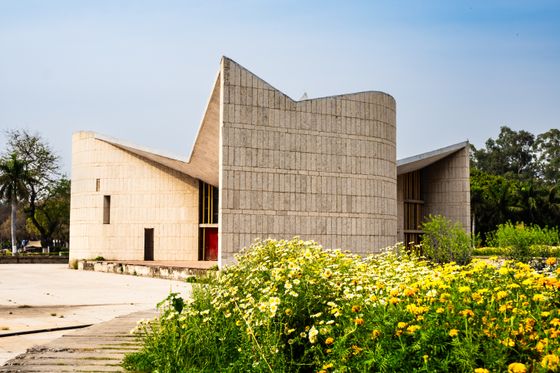
Chandigarh, India's first planned city designed by Le Corbusier, is famed for its orderly sectors, modernist architecture and green spaces. The whimsical Rock Garden, the vast Sukhna Lake and the Capitol Complex (a UNESCO site) make it a uniquely walkable, design-led city.

Chandigarh
Chandigarh Capitol Complex
Le Corbusier laid out this hundred-hectare government compound as three buildings, the Palace of Assembly, the Secretariat and the High Court, with four monuments and a lake set between them. It is a UNESCO World Heritage Site, inscribed alongside sixteen other works of his for what it did to modernist architecture. The piece worth walking to is the Tower of Shadows, an experiment built so that no ray of sun enters from any angle; its north face is left open because the sun never comes from there. Concrete at this scale is unforgiving in flat midday light.
_3.jpg/960px-Chandragiri_Fort%2C_Tirupati%2C_Andhra_Pradesh%2C_India_(2016)_3.jpg)
Andhra Pradesh
Chandragiri Fort
Chandragiri was the last capital of the Vijayanagara empire — the Aravidu kings ruled from here after the fall of Hampi, and it was in the Raja Mahal that the grant for Fort St. George, the founding of Madras, was signed in 1639. The three-storeyed Raja Mahal and Rani Mahal stand below a boulder-strewn fortified hill, and the palace museum holds Vijayanagara bronzes. Tirupati is just 15 km away.

Goa
Chapora Fort
Chapora Fort stands on a headland in Bardez, North Goa, overlooking the Chapora River near Vagator, roughly 10 km from Mapusa. A largely ruined laterite fortification, it is best known today as a filming location for the Bollywood film "Dil Chahta Hai."

Tamil Nadu
Chettinad (Karaikudi)
Chettinad, centred on Karaikudi in Tamil Nadu, is a region famous for the grand mansions of the Nattukottai Chettiar merchant community and for one of India's most celebrated cuisines. The palatial 19th and early 20th-century homes, built with Burmese teak, imported marble and Athangudi tiles, reflect the community's global trade, while Chettinad food is prized for its bold, aromatic spices.

Odisha
Chhatia Bata
Everything about this place rests on a prophecy. The Maalika, written by the saint Hadidas, holds that at the end of Kaliyug the sea will rise, that Jagannath, Balabhadra and Subhadra will leave Puri, and that Chhatia is the one piece of land left dry for them to come to. Hadidas rests here, which is why people come. The temple is devoted to Jagannath and tied to Kalki, the avatar still to arrive. It sits in a village between Cuttack and Jajpur, so go if the belief interests you or you are driving that road anyway.

Leh & Ladakh
Chiktan Fort
Chiktan Fort, in Kargil district, was the capital of the Cig-tan principality, built in the 16th century by Balti craftsmen and once famed across Lhasa as an architectural masterpiece.
%2C_Karnataka%2C_India.jpg/960px-Chitradurga_fort_Image_(7)%2C_Karnataka%2C_India.jpg)
Karnataka
Chitradurga Fort
Chitradurga Fort, also called "Kallina Kote" (Stone Fortress) or "Yelusuttina Kote" (Seven Circles Fort), sits on rocky, hilly terrain in Chitradurga, central Karnataka, known for its seven concentric defensive walls, massive uncemented granite construction, and its association with the Nayakas of Chitradurga.

Rajasthan
Chittorgarh Fort
Chittorgarh is the largest fort complex in the Indian subcontinent, spread across a fish-shaped plateau of nearly 700 acres that rises 180 metres straight out of the plains. Seven massive stone gates guarded the way up, and the plateau ends in sheer cliffs on every side. Inside, Rajput history stands about in the open: grand ruined palaces, clusters of intricately carved temples, and reservoirs still fed by underground springs. The Vijay Stambh, the Tower of Victory, is the tallest thing on the skyline — a carved tower of several storeys, visible for miles. The whole complex is inscribed as a UNESCO World Heritage Site.

Telangana
Chowmahalla Palace
The Asaf Jahis ran a state from here, and the building still belongs to the family even though it now works as a museum. Nizam Ali Khan Asaf Jah II began the present palace in 1769 on ground that already carried an older Qutb Shahi and Asaf Jahi residence, and ordered four palaces built, which is where the name comes from: chār mahal, four palaces. It sits close to Charminar, so it pairs naturally with an old-city walk rather than needing a day of its own. Expect a court's collection, not a ruin.

Uttar Pradesh
Chunar Fort
Chunar Fort stands on a rocky outcrop of the Vindhya Range overlooking a bend in the Ganges, roughly 280 feet above the river, and has passed through the hands of Hindu, Afghan, Mughal, and British rulers.

Goa
Churches and convents of Goa
What UNESCO listed in 1986 is not one building but the whole set of religious monuments in Old Goa, capital of Portuguese India and the centre from which Catholic missions worked across Asia from the 16th century. Part of the case was about art: Manueline, Mannerist and Baroque forms carried out of here into missions across the continent. The single object most people come for sits in the Basilica of Bom Jesus, the tomb of Francis Xavier. They are all in the one town, so do the group in a single visit rather than splitting it across two.

West Bengal
Coronation Bridge
No piers stand in the Teesta here — the depth and the current of the river ruled them out — so the whole reinforced-concrete span hangs from one fixed arch with its ends anchored in rock on either bank. That is what to look at. It was completed in 1941, four years after John Anderson, then Governor of Bengal, laid the stone, and named for the coronation of George VI and Queen Elizabeth. Locals call it Baghpool, tiger bridge, for the two tiger statues at one entrance. National Highway 17 crosses here and links the Darjeeling and Kalimpong districts, so this is a working road, not a viewpoint.

Gujarat
Dabhoi Fort
Dabhoi's fortifications are best known for their four carved gates — Hira Bhagol, Nandodi Bhagol, Vadodari Bhagol and Mahudi Bhagol — each a multi-storied stone "triumphal arch" covered in high-relief carvings of Hindu deities, dancers and elephants in the Maru-Gurjara (Solanki) style. The Archaeological Survey of India has restored the gates, still the finest surviving example of this architectural style anywhere in Gujarat.

Karnataka
Daria Daulat Bagh (Srirangapatna)
Daria Daulat Bagh is the elegant summer palace of Tipu Sultan, the Tiger of Mysore, set in a garden on the river-island of Srirangapatna near Mysuru. Built largely of teak in 1784 in the Indo-Saracenic style, its walls and ceilings are covered in vivid frescoes, floral motifs and murals, including a famous depiction of Tipu's forces at the Battle of Pollilur.

Maharashtra
Daulatabad Fort
Daulatabad Fort (historically Devagiri) stands atop a steep 200-metre conical hill roughly 15-16 km northwest of Chhatrapati Sambhajinagar (Aurangabad), Maharashtra. It is a massive fortified hill-city built up over about 1,000 years, enclosed by three concentric fortification walls and two moats, best known for Sultan Muhammad bin Tughluq's failed 14th-century attempt to shift the Delhi Sultanate's capital here.
Delhi
Delhi
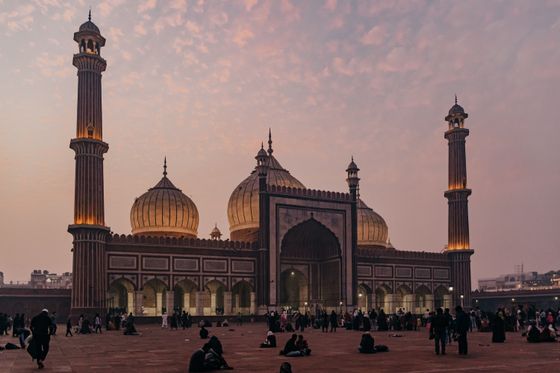
Delhi is not one city, it is seven of them stacked on the same ground, and the reason first visits go wrong is trying to see it as one place. Old Delhi and Lutyens' Delhi are ten minutes apart on the Metro and belong to different centuries. Give each a separate morning rather than stitching them together — the whiplash is what exhausts people. Start in Shahjahanabad early, before the Chandni Chowk lanes fill and the rickshaws stop being able to move at all. Jama Masjid's southern minaret is worth the climb for the one view that makes the layout of the old city legible from above. The Metro is genuinely excellent and will save you hours; use it and ignore anyone who tells you Delhi traffic is unavoidable. On Thursday evenings there is qawwali at Nizamuddin Dargah, which is the single most affecting hour in the city and costs nothing. Be honest with yourself about when you come. From late October into January the air is often severely polluted, and no amount of planning fixes a week you spend indoors with a headache. February and March are the reward months.
.jpg/960px-Deopahar_Ruins_Numaligarh_Golaghat_Assam_01_(cropped).jpg)
Assam
Deopahar
The stone temple on top of this hill was either never finished or was broken apart, most likely in the Assam earthquake of 1897, and the ruins do not settle the argument. What came out of the ground at Deopahar, the temple and its sculptures, is the reason Numaligarh counts among the archaeologically rich places of the state, and the carving repays a slow look: Brahmanical and local styles are visibly working on each other rather than one copying the other. It is a protected archaeological park with a site-museum under the Directorate of Archaeology, so there is somewhere to make sense of what you have seen.

Telangana
Devunigutta Temple
Probably 6th century, probably Vakataka, and left alone on a forested plateau some 60 km east of Warangal until the ASI recorded it, abandoned, in 2012. Photographs on social media did the rest in 2017. What stands is a square sanctuary open to the inside of its own tower, a low wall around the entrance court, and relief sculpture crowded inside and out, worn enough that you want early or late light rather than noon. The ASI was ready to restore it in late 2019 and was waiting on local permission; the vegetation volunteers cleared had largely grown back by 2020. It is fragile, and it is in informal worship.

Telangana
Dewan Devdi
Almost nothing is left. The Salar Jungs, five of whom served as prime ministers of Hyderabad state, lived here close to Charminar, and Nehru inaugurated the first Salar Jung Museum in these rooms in 1951, before the collection moved out and the family demolished the building piece by piece. What stands today is the gateway, with a market and travel offices behind it. Go only if you are already at Charminar and want to see what a devdi's entrance looked like; there is no visit here, just a doorway and a story.
Jammu & Kashmir
Dhanidhar Fort
Dhanidhar Fort overlooks the Rajouri valley, built using materials salvaged from buildings destroyed in earlier conflicts, offering a vantage point over the whole Valley of Rajouri.

Assam
Dhola–Sadiya Bridge
You cross this one rather than visit it. Bhupen Hazarika Setu runs 9.15 km over the Lohit, a major tributary of the Brahmaputra, joining the villages of Dhola and Sadiya in Tinsukia district and giving northern Assam its first permanent road link to eastern Arunachal Pradesh. It is the second longest bridge in India over water, and it was built with the army in mind: the deck is rated for 60-tonne main battle tanks, and the China border is close. Stop for the sheer length of it if you are driving up into Arunachal anyway, but do not make a detour of it.

Gujarat
Dholavira
Dholavira, on the arid Khadir island in Gujarat's Rann of Kutch, is one of the largest and best-preserved cities of the ancient Indus Valley Civilisation, inhabited roughly 4,500 years ago. A UNESCO World Heritage Site, it reveals sophisticated town planning, a citadel with middle and lower towns, and an advanced system of water reservoirs and drains.

Tamil Nadu
Dindigul Fort
Dindigul Fort is a hilltop fortress rising about 900 feet above Dindigul town in Tamil Nadu, with a fortification circumference of about 2.75 km enclosing 48 rooms, arsenal depots, stables, and cannon emplacements. It is closely associated with Hyder Ali and Tipu Sultan of Mysore.

Daman & Diu
Diu Fort
Diu Fort's stone ramparts run along the island's edge, its bastions — St. George, St. Domingos, St. Philip — still carrying cannon and iron shot from a Portuguese garrison that held this coast for over four centuries. A working lighthouse rises from within the walls, and the old church and chapel inside stand roofless, the fort's one visibly unrestored corner.
.jpg/960px-Diu%2CGujarat%2CIndia_(37).jpg)
Daman & Diu
Diu Fortress
The fort at the eastern tip of Diu island exists because of a bad bargain. Bahadur Shah, the Sultan of Gujarat, wanted Portuguese help when Humayun moved to annex this territory, and the defence alliance that followed left the Portuguese holding Diu from 1537 until Indian forces took it in December 1961. Building began in 1535 and the walls were still being strengthened as late as 1546. It stands right against the town, so it is a walk rather than an outing, and it is counted among the Seven Wonders of Portuguese Origin in the World.

Delhi
Diwan-i-Am (Red Fort)
Ordinary petitioners got their hearing in this hall. The emperor sat in the marble canopy set into the eastern wall, his prime minister took petitions from the inlaid dais below it, and a gold-plated railing kept everyone at the proper distance. The hall runs 100 by 60 feet, twenty-seven bays of columns carrying arches under sandstone beams, with nine engraved arches across the front. Go right up to the wall behind the canopy: the pietra dura panels there are the finest work in the building, and most visitors photograph the façade instead and leave.

Delhi
Diwan-i-Khas (Red Fort)
Shah Jahan received courtiers and state guests in this hall of marble piers, 90 by 67 feet, and what stands now is the frame of that room rather than the room itself. The rebellion of 1857 emptied it — throne, carpets, everything — and the silver and gold ceiling had already been stripped by the empire's own money troubles; the one overhead went up in 1911. Look low rather than up. The floral inlay on the lower piers is the original work, and restorers have brought the gilding back on one front pillar so you can compare the two.

Maharashtra
Elephanta Caves
The Elephanta Caves sit on an island in Mumbai Harbour, about an hour's ferry ride from the Gateway of India, and hold a network of rock-cut cave temples dedicated to Shiva dating from roughly the 5th to 8th centuries CE. The main cave's centrepiece is the towering Sadashiva (Trimurti) sculpture, a three-faced representation of Shiva regarded as one of the masterpieces of Indian rock-cut art. A UNESCO World Heritage Site since 1987, the caves are among Mumbai's most-visited heritage attractions.

Maharashtra
Ellora Caves
The Ellora Caves are a group of 34 rock-cut shrines carved into the basalt cliffs of the Charanandri Hills near Aurangabad. Stretching over two kilometres, they bring together Hindu, Buddhist and Jain temples cut between the 6th and 10th centuries CE — a rare place where all three faiths sit side by side. The centrepiece is Cave 16, the Kailasa Temple: the largest monolithic rock-cut structure in the world, carved top-down from a single cliff. Hundreds of thousands of tonnes of basalt were removed to reveal a multi-storey temple with carved pillars, life-size elephants and detailed galleries.
_3.jpg/960px-District_Collectorate_of_West_Godavari_(May_2019)_3.jpg)
Andhra Pradesh
Eluru
A district headquarters on the Tammileru, and a working town rather than a sightseeing one — worth an hour if you are already crossing this part of southeastern Andhra Pradesh, not a detour on its own. The layers are the interest. Settlement here goes back to the second century CE; it was a town of consequence under the Qutub Shahis in the sixteenth century, passed to the Mughals in the seventeenth and to the Nawab of Hyderabad in the eighteenth, and the British made it capital of the Northern Circars early in the nineteenth. Its older names were Helapuri and Ellore.

Telangana
Falaknuma Palace
This one is a hotel now, which is the first thing to know: the Taj group took it over after the 2010 renovation, so access comes with a booking rather than a ticket. Nawab Sir Viqar-ul-Umra of the Paigah family completed it in 1893 on a hillock five kilometres from Charminar, and it was then the tallest building in Hyderabad. Falak-numa means mirror of the sky. The Nizam owned it later. Thirty-two acres of it, and unless you are eating or staying there, you will be looking at it from outside the gate.

Uttar Pradesh
Fatehpur Sikri
Fatehpur Sikri is a planned Mughal city and fort complex near Agra, built entirely of red sandstone, that served briefly as Emperor Akbar's imperial capital. It is a UNESCO World Heritage Site.

Haryana
Firoz Shah palace complex
Firoz Shah Tughlaq founded this fort city in 1354 CE and took credit for taming a wasteland; the archaeology says otherwise — he built on a mound occupied since the Sindhu-Saraswati Valley Civilisation and the Vedic period, beside a trade road already cut and repaired centuries before him. Inside the rampart are the palace complex and the Lat-ki-Masjid, which has an Ashokan pillar standing in it; Gujari Mahal and the Charbagh garden sit outside the wall. The ASI maintains the site. Go for the pillar and the layers underfoot, not for grandeur.
_%E2%80%93_the_Fort%2C%22_from_the_Illustrated_London_News%2C_1851.jpg/960px-%22Ferozepore_(Firozpur)_%E2%80%93_the_Fort%2C%22_from_the_Illustrated_London_News%2C_1851.jpg)
Punjab
Firozpur Fort
Firozpur's hexagonal fort spent most of its useful life as an ammunition dump, and that is the interesting part. The British took it over in 1835 and had it garrisoned by 1839; by 1858 it was producing munitions, with something like 10,000 bullocks, as many horses and 150 camels on the ground at any one time. Hitler named it in Mein Kampf and marked it as a target. Who built it is genuinely unsettled, Feroze Shah Tughlaq's reign or the Sikh period depending on the source. The Army's Golden Arrow Division has recently reopened it, so check it is open before making the trip.

Goa
Fort Aguada
Fort Aguada, completed by the Portuguese in 1612, guards the mouth of the Mandovi from the Sinquerim headland — the strongest of Goa's coastal forts and the one that never fell. Its name comes from the freshwater springs ('agua') that replenished passing ships, stored in one of Asia's largest freshwater cisterns. On the upper fort stands a stout 19th-century lighthouse; below, the ramparts drop to Sinquerim beach and the sea.

Goa
Fort Santo Estevão
Built in 1550 as a watchtower on the highest point of Santo Estevão island, this was the easternmost defence of the Velhas Conquistas, set there to keep an eye on the Mandovi. The Maratha incursions of 1666-68 got it enlarged into a small fort, which did not save it: in 1683 the auxiliaries posted to hold the island fled, and the Marathas took the place and massacred the garrison. After the Novas Conquistas were annexed it had no job left, and a viceroy's decree abandoned it in 1811. Restoration work was done in 2012. Go for the vantage point rather than for a great deal of masonry.

Daman & Diu
Fort São Jerónimo
Walls on the right bank of the Damanganga, at the point where the river reaches the Gulf of Khambat, in the quarter the Portuguese called Damao Pequeno. The pull here is inside rather than out: the co-cathedral of the Sanctuary of Our Lady of the Seas stands within the fortress enclosure, so you pass through a Portuguese military gate and end up in a church. That combination is the reason to come, and it is a short enough stop that it belongs in an afternoon of walking Daman rather than a trip of its own.

Tamil Nadu
Fort St George
Fort St George, in Chennai, Tamil Nadu, was built in 1644 as the first British garrison settlement in India, marking the start of British colonial presence in the subcontinent. The complex today houses the Tamil Nadu Legislative Assembly, government offices, and a museum of colonial-era artefacts.

Goa
Fort Tiracol
Fort Tiracol sits on a hilltop at the mouth of the Tiracol (Terekhol) River in North Goa, roughly 40 km from Panaji, reached via a ferry crossing from Querim. Originally a Maratha-era fortification, it now operates as a heritage hotel and includes the active Church of St. Anthony within its walls.

West Bengal
Fort William
Fort William is a large star-shaped fort on the eastern bank of the Hooghly River in the Hastings area of Kolkata, spanning roughly 70 hectares with a dry moat and six gates. Built by the British East India Company, it served as the seat of British administrative power in Bengal and today functions as the headquarters of the Indian Army's Eastern Command.

Rajasthan
Gagron Fort
Gagron is Rajasthan's great jala-durg — a water fort — standing where the Ahu meets the Kali Sindh, with rivers guarding three of its sides in place of a moat. Seat of the Khichi Chauhans and besieged repeatedly by the sultans of Malwa and later held by the Mughals and Kotah, it is one of the six forts inscribed together as the UNESCO World Heritage 'Hill Forts of Rajasthan'. Unlike its famous siblings, you will often have its ramparts to yourself.

Gujarat
Gandhinagar
Gandhinagar is Gujarat's planned capital, laid out on the west bank of the Sabarmati by the architects H.K. Mewada and Prakash M. Apte in an orderly grid of 30 sectors. It is recognised internationally as one of India's greenest administrative capitals. Government is the city's main business, but plenty of visitors come for other reasons: the large exhibition halls, the tree cover and nature parks, and the very big temples.
Sikkim
Gangtok
Gangtok is where most Sikkim trips begin, and its real value is as a base rather than a destination. The town itself is a steep ridge of concrete with one pleasant pedestrian street, MG Marg, where no vehicles and no spitting are allowed and the whole town walks in the evening. Rumtek monastery, half an hour out, is the seat of the Karma Kagyu lineage and the more worthwhile hour. Enchey, closer in, is quieter still. Tsomgo lake and Nathu La are the standard day trip. Both need permits arranged through a registered operator in Gangtok, both are high — Tsomgo is at around 3,700 metres — and Nathu La is closed to foreign nationals entirely. If you have only been in the hills a day, that altitude gain in a single drive is a lot. For actual Sikkim, keep going. Pelling for the Kanchenjunga view, Yuksom for the walking, north Sikkim for Lachung and the Yumthang valley — all of which need their own permits. March to May and October to early December. The monsoon here brings serious landslides and roads close for days at a time.

Assam
Garchuk Lachit Garh
What is left is earthwork, not architecture: two earthen ramparts with lakes and ditches between them, running about three kilometres from the Fatasil hills across the highway at Garchuk Charali and on to the southern hills. It was thrown up around 1669 in Lachit Borphukan's time to deter Mughal cavalry, and encroachment has eaten into it since, so you are reading a defensive line rather than admiring a fort. Worth an hour if the Ahom wars interest you; otherwise it will look like a bank of mud beside a road. The old road along it, Asurar Ali, is today's Pamohi Road.

Maharashtra
Gateway of India
The Gateway of India is Mumbai's most recognisable landmark, a triumphal basalt arch built overlooking the Arabian Sea at Apollo Bunder. Completed in 1924 to commemorate the 1911 visit of King George V and Queen Mary, it blends Hindu and Islamic architectural styles and later became the ceremonial exit point for British troops after independence in 1948. Free to visit and open around the clock, it remains one of India's most-visited and most-photographed public monuments, and the departure point for ferries to Elephanta Island.

West Bengal
Gauḍa (city)
What stands at Gauda now is the residue of a capital city. Most of the surviving structures date from the Bengal Sultanate, which ruled from here for 112 years between 1453 and 1565 and built a citadel, a royal palace, mosques, canals and bridges, facing them in glazed tile — the tilework is the thing worth walking towards. By one estimate this was the fifth most populous city in the world in 1500. Humayun took it and renamed it Jannatabad, heavenly city. Go understanding that you are reading ruins, not visiting a town.

Tamil Nadu
Gingee Fort
Gingee Fort stands in Villupuram district, Tamil Nadu, about 160 km from Chennai, built across three hills with roughly 13 km of fortification walls up to 20 m thick and a moat 80 feet wide. It is popularly called the "Great Wall of South India" and was dubbed "Troy of the East" by the British.

Goa
Goa Chitra Museum
Over 4,000 objects from Goa's farming past, implements and vessels and tools, gathered by the artist, curator and restorer Victor Hugo Gomes and open to the public in the coastal village of Benaulim since 2009. Gomes is blunt about the terms: self-funded, not registered as an NGO, and meant to be something other than a room where you read labels and move on. The collection is an argument about what agrarian Goa actually used. It is small and rural and easy to drive past between beaches. If you have any interest in how the place worked before tourism, make time for it.

Goa
Goa State Museum
Adil Shah's Palace in Panaji, the Old Secretariat, currently holds the state's own collection: around 8,000 artefacts across ancient history and archaeology, art and craft, and geology, taking in stone sculpture, carved wood, bronzes, paintings, manuscripts and rare coins. The museum has already moved twice, from St Inez to the EDC Complex at Patto and now here, and the Patto building is to be demolished to make way for a purpose-built one. Set up in 1977. Treat it as an hour indoors on a day you were in Panaji anyway rather than a reason to come.

Punjab
Gobindgarh Fort
Soldiers held this fort right up until it opened to the public in February 2017, which is why it survived and also why it feels managed: it is being developed as a museum and theme park telling Punjab's history. The square plan runs a kilometre round, built entirely of brick and lime, and once carried 25 cannons on its ramparts. Amritsar still calls it Bhangian da Killa after the Bhangi Misl who held it until 1805, before Maharaja Ranjit Singh renamed it for Guru Gobind Singh. The British occupied it from the mid-1800s to 1947. Expect a curated afternoon, not ruins.

Karnataka
Gol Gumbaz (Vijayapura)
Gol Gumbaz in Vijayapura (Bijapur) is the mausoleum of Sultan Mohammed Adil Shah, completed in 1656. Crowned by one of the largest masonry domes in the world, it is famous for its Whispering Gallery, where even a soft sound is carried clearly across the vast circular hall and echoes many times over.

Telangana
Golconda Fort
Golconda Fort stands on a granite hill on the western outskirts of Hyderabad, Telangana, encircled by a roughly 10-km outer wall with 87 semicircular bastions. Once the capital of the Qutb Shahi dynasty, it is world-famous for the nearby Kollur diamond mines and its acoustic engineering.

Arunachal Pradesh
Gomsi
Fifteen kilometres southwest of Pasighat, at Rani Village, about 11.5 acres of ground hold a fortified settlement: a central habitation complex ringed by an outer zone of twenty small earthen mounds, with a man-made pond, a pukhuri, built as part of it. A brick foundation with stairs here looks very like the one at Bhismaknagar, and a second brick plinth like Rukmininagar's, which is how the site got attached to the Chutia kingdom. Dating runs between the 13th and 15th centuries depending on whom you read. Archaeologists think it worked as an administrative or military camp watching trade rather than as a capital.

Gujarat
Gondal
Gondal is a royal town in the Rajkot district of Saurashtra that has kept most of what it had. It was a first-class princely state under the Jadeja Rajputs, a notably progressive dynasty, and what they left is why people come: 19th-century town planning well ahead of its time, handsome school buildings, palaces along the river, and a private collection of vintage cars that still run.

Chandigarh
Government Museum and Art Gallery, Chandigarh
Partition split a museum in two. Most of what stands here came from the Central Museum in Lahore, and when the collections were divided on 10 April 1948 Pakistan kept sixty per cent while India's forty per cent ended up in Chandigarh, opened as this museum on 6 May 1968 by M. S. Randhawa. The Gandharan sculpture is the reason to come, one of the largest holdings of it in the world, along with Pahari and Rajasthani miniatures, which reward standing close and giving them time.

Uttar Pradesh
Gulab Bari
The name means garden of roses, and there are roses here in quantity, planted along the water channels and fountains of a charbagh. At its centre is the maqbara of Shuja-ud-Daula, third Nawab of Oudh, who had it built for himself while he was still alive; the central chamber holds the cenotaph over his grave and his mother's. The tomb is square and double-storeyed, with an arched verandah on each side. Sharing the lime-plastered Lakhauri brick enclosure, through triple-arched gateways, are an Imambara, a Shahi Hammam, a baradari and a well; most people photograph the tomb and miss them.
Madhya Pradesh
Gwalior
Gwalior's fort sits on a sandstone plateau above the city and is one of the least visited great forts in India, which is most of its appeal. The approach past the Siddhachal Jain caves is what to slow down for: colossal Jain figures cut directly into the cliff face on the way up, the largest of them close to twenty metres. Then Man Singh Palace at the top, with turquoise tilework of ducks and elephants on the outer wall, and interiors you can walk through without a crowd. The Sas Bahu temples on the eastern edge are eleventh century and finely carved. Teli ka Mandir, unusually tall and shaped like nothing else on the site, is worth walking to. Gwalior is also a music city — the Gwalior gharana is one of the oldest surviving Hindustani classical traditions, and Tansen is buried here. The Tansen festival in December is when you would hear it properly. October to March. The fort is a long exposed climb with very little shade, so this matters more than usual.

Madhya Pradesh
Gwalior Fort
Gwalior Fort is a hill fort in Gwalior, Madhya Pradesh, built on a plateau rising about 342 feet, enclosing roughly 3 square kilometres. It houses the 15th-century Man Singh Palace (Man Mandir), decorated with turquoise, green and yellow glazed tile work.

Karnataka
Hampi
Hampi is an archaeological site in the open air, spread along the boulder-strewn Tungabhadra in Vijayanagara district. It covers over 41 square kilometres, and all of it is the ruined imperial capital of the Vijayanagara Empire. There are palaces, military bastions, long straight bazaar streets and stone temples of great complexity. The carvings of the Hazara Rama Temple and the stone chariot at the Vittala complex are as fine as medieval South Indian sculpture gets. The whole landscape is a UNESCO World Heritage Site.

Jammu & Kashmir
Hari Parbat Fort
Hari Parbat rises at the heart of Srinagar, ringed by a wall Akbar began in 1590 and crowned by the fort the Afghan governor Atta Mohammad Khan completed in the early 19th century. The hill is sacred to every faith of the Valley: the Sharika Devi temple of the goddess Chakreshwari, the shrine of Makhdoom Sahib on the slope, and a historic gurdwara at its foot. From the ramparts the whole of Srinagar — Dal Lake, old city and Zabarwan hills — spreads below.

Maharashtra
Harishchandragad
Harishchandragad is an ancient hill fort where the boundaries of Thane, Pune and Ahmednagar (Ahilyanagar) districts converge, renowned for the Kedareshwar cave temple, the dramatic Konkan Kada cliff, and Puranic-era origins predating most Maratha-era forts.
.jpg/960px-Heliodorus_pillar_(cropped).jpg)
Madhya Pradesh
Heliodorus pillar
A Greek ambassador put up this column around 113 BCE: Heliodorus, sent by the Indo-Greek king Antialcidas of Taxila to the ruler Bhagabhadra, who had a Brahmi dedication cut into it to Vasudeva, the God of Gods. That inscription is among the earliest archaeological evidence anywhere of Krishna devotion, which is a heavy claim for one weathered shaft standing near the meeting of two rivers at Besnagar. Cunningham found it in 1877, and later excavations showed it belonged to a Vasudeva temple site. It is 11 kilometres from Sanchi and 4 from Udayagiri, so fold it into that day rather than making a trip of it.
Leh & Ladakh
Hemis Monastery
Hemis belongs to the Drukpa (Dragon) lineage of the Kagyu sect, and it is set back in a mountain canyon on the western bank of the Indus, roughly 45 kilometres south of Leh. It is the largest and wealthiest monastery in Ladakh, and the most influential. The buildings are traditional Tibetan monastic architecture on a large scale: whitewashed stone walls, timber windows painted in fine detail, and wide flagstone courtyards. Below is a museum holding centuries of gold-plated statues, sacred thangkas and old weapons.

Rajasthan
Hill Fort Kesroli
Hill Fort Kesroli is one of the oldest fort-hotels in India, a seven-turreted 14th-century structure built by Yaduvanshi kings on dark Hornstone Breccia rock near Alwar. Successive rulers — Nikumbh Rajputs, Chauhans, Kachchwahas and finally the Khanzada Yadavas — held it before it fell into disuse, restored from 1995 and opened as a heritage hotel in 1998.

West Bengal
Howrah Bridge
Walk across it towards the Howrah rail terminal and you are on the busiest cantilever bridge in the world: something over 150,000 people on foot a day, plus about 100,000 vehicles. The crowd is the experience, and anyone hoping to study the steelwork in peace should give that up now. It was commissioned in 1943 to replace a pontoon bridge on the same crossing, and renamed Rabindra Setu in 1965 after Tagore, though almost nobody calls it that. Third-longest cantilever bridge in the world when it was built, sixth today.

Delhi
Humayun's Tomb
Humayun's Tomb in Delhi was the first grand Mughal garden-tomb in India, built in the 1560s for Emperor Humayun by his widow Empress Bega Begum. Set within a formal Persian charbagh garden divided by water channels, the red sandstone and white marble structure directly inspired the Taj Mahal nearly a century later. Declared a UNESCO World Heritage Site in 1993, the complex also holds the tombs of several other Mughal-era figures and remains one of Delhi's most-visited historic monuments.

Punjab
Hussainiwala National Martyrs Memorial
Hussainiwala village sits out past Firozpur city, and the memorial there is held for Bhagat Singh, Sukhdev Thapar and Shivaram Rajguru. It is also a working border point. A flag-lowering ceremony runs here every day, conducted jointly by the Indian and Pakistani armed forces, the same ritual as the one at Wagah-Attari. Build the afternoon around the ceremony rather than fitting it in around something else: confirm the day's timing before you leave Firozpur, then arrive with enough margin to walk the memorial first. Wagah is the version people have heard of. This is the one with the names.
Telangana
Hyderabad (Charminar & Golconda)
Hyderabad is two cities that do not entirely acknowledge each other, and the old one is the reason to come. Charminar is the centre of it, and the crowd around it is part of the experience rather than an obstacle. Climb it early. Around it, Laad Bazaar sells lacquer bangles by the metre, and the lanes behind Mecca Masjid are where the city eats. Chowmahalla Palace, a few minutes away, is the Nizams' court and it is quiet and largely empty of visitors. Golconda is the fort to give a proper half day. Go in the morning. The acoustics at the entrance genuinely work — a clap at Fateh Darwaza carries to the top of the hill, and it was a warning system, not a trick. The Qutb Shahi tombs next door are usually deserted and are the better half of the same trip. The biryani argument is not settled and never will be. Ask three Hyderabadis and get three answers; that is the correct outcome. October to February. May here is genuinely punishing, and Golconda is an exposed climb with no shade on it.

Gujarat
Idar Hill (Idargarh)
Idar Hill rises out of the Sabarkantha district of North Gujarat, a rough mass of pink granite boulders balanced one on top of another. On it stands the old hill fort of Idargarh. The climb is a flight of over 700 stone steps, and it takes you up past medieval defensive gateways, rock-cut water cisterns and palaces tucked out of sight — the rock and the fortification working on each other the whole way.
Manipur
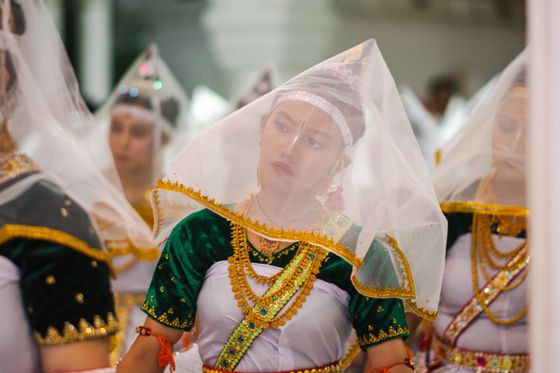
Imphal
Imphal, the capital of Manipur, is a culturally rich valley city famed for the all-women Ima Keithel market, the WWII Imphal battle sites, classical Manipuri dance, and as the gateway to the floating Loktak Lake.

Manipur
Imphal Peace Museum
Maibam Lotpa Ching, the Red Hills, carries a museum to the Battle of Imphal and the other fighting that crossed Manipur between March and July 1944. What makes it unusual is who pays for it: Japan's Nippon Foundation, working with the state government and the 2nd World War Imphal Campaign Foundation. The piece people stand longest in front of is a sheet of Japanese calligraphy, the character for peace, brushed by Shinzo Abe when he was prime minister. It took India's Best Design Award in 2019, which for a museum this far off the usual circuit is reason enough to go.
.jpg/960px-India_Gate_(All_India_War_Memorial).jpg)
Delhi
India Gate (Delhi)
India Gate is a 42-metre war memorial arch on the ceremonial Kartavya Path, designed by Sir Edwin Lutyens and completed in 1931. It honours around 74,000 Indian soldiers who died in the First World War and the Third Anglo-Afghan War, their names inscribed on its sandstone walls.

West Bengal
Indian Museum
Thirty-five galleries in six sections is more than a single visit absorbs, so choose before you go in. The art and archaeology holdings are the ones of international standing; geology, zoology and economic botany are for people who came for those. The Asiatic Society of Bengal founded it in 1814 under a Danish botanist, Nathaniel Wallich, which makes it the oldest museum in Asia and the largest by size of collection. Mummies, armour, fossil skeletons and Mughal paintings are all in the building, which is a good reason to start early rather than try to see everything at once.

Arunachal Pradesh
Ita Fort
Itanagar is named after this fort: ita is brick in Assamese, so the capital is simply the town of the brick fort. And there is a great deal of brick, 16,200 cubic metres of it, dated to the 14th or 15th century and generally credited to the Chutia kings, whose chronicles have Gauri Narayan building a line of forts along the foot of the hills once his kingdom was secure. Come for the scale of the brickwork and the walk, not for interpretation on the spot. The finds dug out of here are shown at the Jawaharlal Nehru Museum in the same city, so pair the two.

West Bengal
Jagjivanpur
A copper plate turned up here by chance in March 1987 and produced a Pala emperor, Mahendrapala, whom no other source had recorded. Digging followed from 1992 at the Tulabhita mound, and what came out of the ground was part of a brick vihara — Nandadirghika-Udranga Mahavihara, ninth century — with stupas, a verandah and cells with corbelled niches, plus terracotta plaques, seals and beads. What is exposed is brick, a partial ground plan rather than a standing building, 41 km east of English Bazar: a trip for people who enjoy reading a plan in the dirt, not one for a quick photograph.

Delhi
Jahanpanah
The fourth city of Delhi is less a site than a set of leftovers. Muhammad bin Tughlaq walled it in 1326-27 against Mongol raids, enclosing everything between Qila Rai Pithora and Siri, then moved his capital to Daulatabad and came back again. Neither city nor fort survived. What is left surfaces in pieces: wall stretches along the road from Siri to the Qutub Minar, patches behind IIT, and Satpula, where the wall is thick enough to hold storerooms built into it. Go for Satpula and Khirki Masjid. Do not go expecting a fort, because South Delhi has grown over the rest.

Rajasthan
Jaigarh Fort
Jaigarh Fort sits on Cheelka Teela — the "Hill of Eagles" — 400 metres above Amber Fort, its crimson walls visible from almost anywhere inside the Amber complex it was built to defend. Inside stands the Jaivana Cannon, still recognised as the largest cannon ever mounted on wheels, cast in the fort's own Mughal-era foundry.
Rajasthan
Jaipur
Jaipur repays getting up early more than almost anywhere in Rajasthan, because by ten the coaches have arrived and Amber Fort stops being a fort and becomes a queue. Be at Amber for opening. Walk up rather than taking the elephants — the welfare of those animals is a long-running problem and a jeep does the same job. Inside, the Sheesh Mahal is the room everyone photographs, but the Ganesh Pol above the second courtyard is the better piece of work. Hawa Mahal disappoints people, and it is worth knowing why before you stand in front of it: it is a screen, one room deep, built so the women of the household could watch the street unseen. There is almost nothing behind the facade. The good view is from the rooftop cafés opposite, looking back at it. Jantar Mantar is the one to book a guide for. Without someone to explain them the instruments are handsome shapes; with someone, they are a working observatory and the visit turns into the best hour of your day. For jewellery go to Johari Bazaar, for fabric to Bapu Bazaar, and for everyday chaos and better prices to Chandpole. October to March. April onwards the stone gets too hot to touch by mid-morning.
Rajasthan
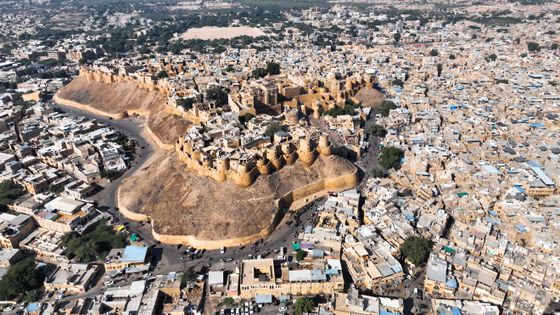
Jaisalmer
Jaisalmer is built from the same yellow sandstone it stands on, which is why at six in the evening the whole fort looks lit from inside — and why at midday it looks like nothing much at all. Time your first look for the last hour of light. The fort is one of very few in the world still lived in: several thousand people, with shops, homes, temples and plumbing inside the walls. That is what makes it extraordinary and also what is slowly destroying it, because the drainage was never built for modern water use and the bastions are being undermined. Conservationists ask visitors to sleep outside the walls rather than in the fort hotels. It is worth honouring. Patwon ki Haveli is the finest carved stone in the city. The Jain temples inside the fort are quieter and, to my eye, better. For the desert, the choice matters. Sam dunes at sunset is a full circus of camels, jeeps and loudspeakers. Khuri is further out, plainer, and gives you the silence people actually come to the Thar for. November to February. Nights in the desert get genuinely cold — bring more than you think.

Rajasthan
Jaisalmer Fort
Built in 1156 by Rawal Jaisal at a crossroads of trade routes that fed into the old silk roads, and the second-oldest fort in Rajasthan. It is one of the very few living forts left anywhere: around a quarter of the old city still lives inside the walls, alongside shops, guesthouses and the Jain temples in the middle. The yellow sandstone reads tawny at midday and honey at sunset, which is where the golden fort name comes from.

Rajasthan
Jalore Fort
Jalore Fort rises on a rocky hill above Jalore town in southwestern Rajasthan, known historically by the names Kanchangiri and Swarngiri ("golden hill"). A stone inscription dated 1238 CE, cited by Jalore's own municipal history, records the fort's significance under Parmar rule, placing it among the region's older documented hill forts.

Jharkhand
Jama Masjid, Chitarpur
Built in 1670 under the Mughals and in the Mughal style, this is one of the oldest mosques in Jharkhand, standing in Chitarpur town in Ramgarh district. It has not been handed over to visitors. Prayer is held here every day, and that remains the building's first job, so come outside prayer times, dress as you would for any working mosque, and ask before you photograph. A building of 1670 still in daily use is a rarer thing than a ruin of the same date, and that is the reason to make the detour.
Gujarat
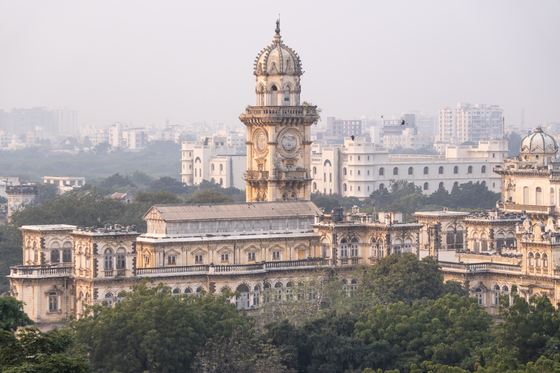
Jamnagar
Jamnagar, once the princely capital of Nawanagar under the Jadeja rulers, sits on the southern Gulf of Kutch. Known as the 'Jewel of Kathiawar' and, for its many temples, as 'Chhoti Kashi', it pairs royal-era architecture — lake palaces, colonial squares and a solar observatory — with a large modern industrial belt. Nearby lie coral reefs and coastal wetlands rich in birdlife.
.jpg/960px-Jantar_Mantar%2C_New_Delhi_(Misra_Yantra).jpg)
Delhi
Jantar Mantar, New Delhi
Thirteen instruments, no lenses. Sawai Jai Singh built these to read the sky with the naked eye and to correct the calendar and the astronomical tables, and the work is now dated to 1724 — the plaque on site says 1710 and is simply wrong, having been put up in 1910. Find the Samrat, Ram, Jai Prakash and Misra Yantras and work out what each one measures before you read anything about them. That is the whole pleasure of the place, and it takes half an hour rather than a morning. They had already decayed badly by 1857.

Odisha
Jaugada
Come for the rock, not the fort. Jaugada was a Mauryan provincial capital of newly conquered Kalinga, and its earthworks are genuinely hard to read on the ground — Beglar described towers at each of the four corners and on both flanks of all eight entrances in the 19th century, but with no photographs or drawings the remains barely resolve. What holds up is the central rock in the compound, carrying Ashoka's Major Rock Edicts 1-10 and 14 in Prakrit plus two Separate Edicts, cut around 250 BCE. It sits 35 km north-west of Brahmapur, near the Kaleswar and Rameswar Shiva temple.

Arunachal Pradesh
Jawaharlal Nehru Museum, Itanagar
An hour in here before you head out to the districts is worth more than an hour anywhere else in the capital. The state museum, set up in the 1980s, is built around tribal material culture: headdresses, weapons, jewellery, musical instruments, handicraft and the ordinary objects of daily use, alongside archaeological finds. It is the one place that will make sense of what you see later in the villages, and it has become an important stop in Itanagar for exactly that reason. Go before the road trip, not after.

Uttar Pradesh
Jhansi Fort
Jhansi Fort is a hilltop fortress in the Bundelkhand region, historically the seat of the Jhansi state and most famous as the stronghold defended by Rani Lakshmibai during the 1857 uprising.
Rajasthan
Jodhpur
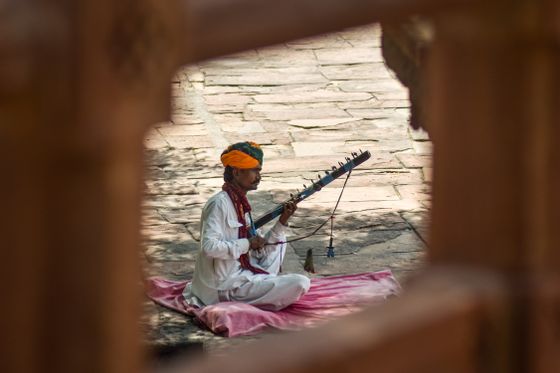
Mehrangarh is the best fort in India, and if you only climb one in Rajasthan it should be this one. It sits on a cliff a hundred and twenty metres above the city with no gap between rock and wall — the masonry simply continues the escarpment. The audio guide is one of the few in the country genuinely worth taking. Look for the handprints beside Loha Pol, left by royal widows on their way to the pyre. About the blue: people arrive expecting an entirely blue city and find a mostly ochre one. The blue is real but it is concentrated in the Brahmpuri quarter below the fort's north-east wall, and the way to see it is from the ramparts looking down, or by walking those specific lanes. Anywhere else in Jodhpur you will wonder what you were promised. Toorji ka Jhalra, the restored stepwell in the old city, is where everyone goes at sunset now and it has the cafés to prove it. Rao Jodha desert rock park, just outside the fort gates, has almost nobody in it and is the better hour. October to early March. By May the afternoon heat here is not a discomfort, it is a hazard.

Chhattisgarh
Jogimara and Sitabenga Caves
Two caves in the north side of the Ramgarh hills, partly natural and partly cut, dated somewhere between the 3rd and 1st centuries BCE. What makes them matter is written on the rock: Brahmi inscriptions in Magadhi that are not religious at all, and painted frescoes among the oldest surviving in Asia. Scholars still argue over Sitabenga, the oldest performance theatre on the subcontinent or a rest house on a trade route, and over the Jogimara inscription, read either as lovers' graffiti or as a dancer and a painter recording their joint work. Regional tradition puts Rama, Sita and Lakshmana here at the start of the exile.
Gujarat
Junagadh
Resting right at the base of the sacred, volcanic Girnar hills, Junagadh is an ancient city whose name means 'Old Fort'. It features a diverse mix of ancient Buddhist rock edicts, medieval fort structures, and flamboyant 19th-century royal mausoleums, capturing a unique historical footprint within Saurashtra.

Rajasthan
Junagarh Fort
Begun in 1589 and never taken, which is why the painted and gold-leaf interiors survive as well as they do. The walls and moat went up between 1589 and 1594 under Karan Chand, prime minister to Rai Singh of Bikaner. It was called Chintamani until the early twentieth century. Unusually for Rajasthan it stands on flat ground rather than a hill, so the city grew around it instead of below it.

Sikkim
Kabi Lungchok
What is actually here is a set of stone pillars and life-size statues of two men: Khye Bumsa for the Bhutias, Thekong Tek for the Lepchas. They mark the spot where the two peoples ceremonially signed a Treaty of Blood Brotherhood, and the name means stone erected by our blood. It matters as the founding story of who lives in Sikkim rather than as something to look at, so read it up before you arrive or the site will feel slight. Seventeen kilometres north of Gangtok on the Northern Highway, which makes it a stop on the way somewhere and not a morning of its own.

Uttar Pradesh
Kalinjar Fort
Kalinjar is one of the legendary strongholds of central India, crowning a flat spur of the Vindhyas above the Bundelkhand plain. Sacred to Shiva as Neelkanth — the rock-cut Neelkanth temple sits in a cleft of the cliff — it resisted Mahmud of Ghazni, saw Sher Shah Suri fatally wounded during his 1545 siege, and passed through Chandela, Mughal and British hands. Gates, tanks, palaces and centuries of sculpture lie scattered across its windswept plateau.
_in_Imphal%2C_Kangleipak_-_Classical_Meitei_architecture_01.jpg/960px-Southern_doorway_of_Sanggai_Yumpham%2C_the_innermost_Meitei_Imperial_Citadel_of_the_Kangla_Fort_(Kangla_Palace)_in_Imphal%2C_Kangleipak_-_Classical_Meitei_architecture_01.jpg)
Manipur
Kangla Fort
Kangla Fort is a historic fortified palace complex on the banks of the Imphal River in Imphal, Manipur. It served as the seat of power of Manipur's rulers until 1891 and survives largely in ruins on the western bank of the river, densely forested and nicknamed "the Lungs of Imphal."

Himachal Pradesh
Kangra Fort
Kangra Fort stands on a hillock at the confluence of the Manjhi and Banganga rivers in the Dhauladhar foothills, about 20 km from Dharamshala, Himachal Pradesh. Spread over 463 acres, it is described as the largest fort in the Indian Himalayas and one of the oldest, built by the Katoch dynasty of Rajputs.

Gujarat
Kanthkot Fort
Kanthkot's hilltop fortifications, largely dismantled by the British in 1816, now frame a cluster of temples spanning several religious traditions — a domed shrine to the ascetic Kanthadnath, a Jain temple with inscriptions dated 1283 CE, and a temple to the sun god Surya, all within the old fort walls in Kutch.
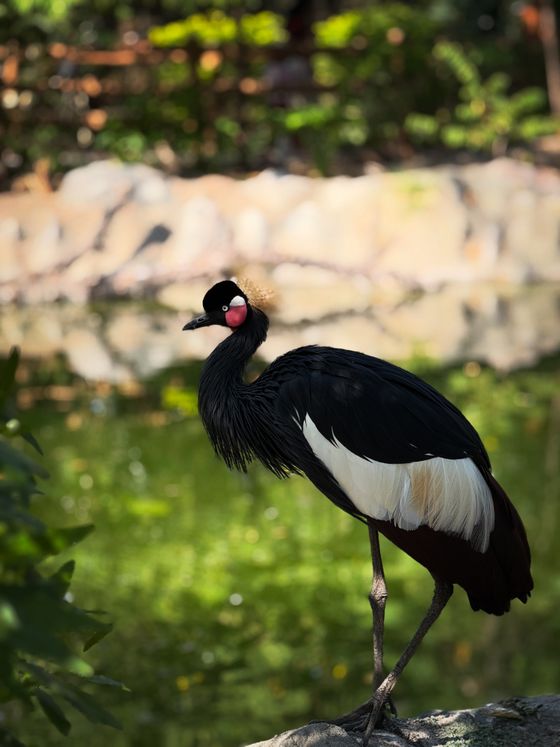
Gujarat
Kevadia (Ekta Nagar)
Kevadia, now officially Ekta Nagar, is home to the Statue of Unity — at 182 metres, the tallest statue in the world — on the banks of the Narmada River. Once a quiet settlement, it has been developed into a large tourism hub with theme gardens, a safari park, viewpoints and adventure activities.

Himachal Pradesh
Key Monastery
Key Monastery is a thousand-year-old Tibetan Buddhist monastery belonging to the Gelugpa (Yellow Hat) lineage. At 4,166 metres, it sits on a prominent volcanic cone hill overlooking the wide Spiti River valley floor. Located roughly 14 kilometres from Kaza, it stands as the largest monastery, primary spiritual archive, and leading training school for resident Lamas in Spiti Valley. The unique architectural layout of the monastery has evolved over centuries of restructuring, resulting in a tightly stacked, fortress-like profile known as the Pasada style. The close grouping of white-washed mud-brick rooms, multi-tiered chapels, and narrow defensive corridors gives the complex the appearance of a monolithic castle emerging naturally from the mountain slope.

Madhya Pradesh
Khajuraho
Khajuraho is famed for its UNESCO World Heritage group of medieval Hindu and Jain temples, known for their intricate and sensuous stone carvings. Built by the Chandela dynasty between 950 and 1050 CE, they are masterpieces of Indian temple art.

Rajasthan
Khejarla Fort
Khejarla Fort rises directly out of granite boulders near Jodhpur, its red sandstone walls carved with latticework friezes and jharokha balconies in a style typical of Marwar Rathore thikana forts. Roughly 400 years old by the fort's own account, it now operates as a heritage hotel, its rugged exterior giving way to ornamented courtyards inside.

Rajasthan
Khimsar Fort
Khimsar Fort sits on the edge of the Thar Desert between Jodhpur and Bikaner, its heavy bastions and double-layered walls built as a purely military garrison for two centuries before a mid-18th-century Zenana Deorhi (ladies' quarters) turned it into a residence. Today it operates as a heritage hotel bordering the desert dunes, one of the region's few forts you can wake up inside.

Haryana
Khwaja Khizr Tomb
Ibrahim Lodi built this tomb at Jatwara in Sonipat between 1522 and 1524 for Khwaja Khizr, whose father Darya Khan Sharwani was an influential noble in his own court. It was the last thing the Lodi dynasty put up. The material is the interesting part — red sandstone over Lakhauri brick and kankar block — and a Persian inscription inside is what tells us who is buried here. It is small and it is five hundred years old. Half an hour, if Sonipat is on your way.
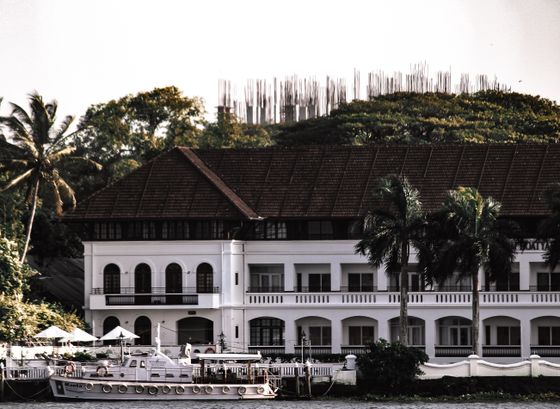
Kerala
Kochi (Fort Kochi)
Fort Kochi is walkable, layered and unusually easy for a first trip to India — it is one of the few Indian towns where you can simply wander without a plan. The Chinese fishing nets on the waterfront are the postcard, and they are also mostly a photo stop now rather than a working fishery. Go anyway, at dusk, but do not expect a spectacle. Behind them, St Francis Church holds the spot where Vasco da Gama was buried before his remains went home, and the Paradesi Synagogue in Jew Town has a floor of hand-painted Chinese tiles, no two the same. Kathakali is the thing worth booking. The good venues start an hour early so you can watch the performers put the make-up on — that hour explains the art form far better than the performance does, and without it the show is opaque. Cross to Mattancherry for the spice godowns, where the smell of ginger and pepper in the streets is not a tourist experience, it is a working trade. October to March is dry and pleasant. April and May are humid and heavy. The monsoon is dramatic and the town keeps functioning through it.
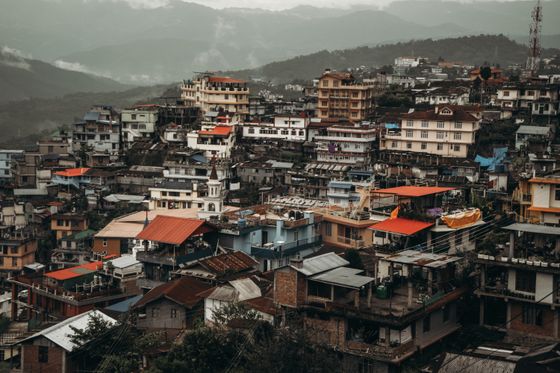
Nagaland
Kohima
Kohima's war cemetery is the most affecting war memorial in India, and most people who come for the Hornbill Festival never walk up to it. In 1944 the Japanese advance into India was stopped here, on a tennis court on the ridge above town. The court's markings are still laid out in stone among the graves. The inscription at the base — the one about telling those at home that we gave our today for their tomorrow — is worth the climb on its own. The Hornbill Festival runs the first ten days of December at Kisama, a purpose-built village of tribal morungs where all the Naga groups perform. It is worth seeing and it is also a festival built for visitors; if you want the everyday version of Naga life you will find more of it in the villages around Khonoma, an hour away, than at Kisama. Nagaland requires an Inner Line Permit for Indian nationals; foreign nationals need to register on arrival. Sort it in advance. October to May is dry. December means Hornbill, full hotels and prices to match — book months ahead or stay in Dimapur and travel up.
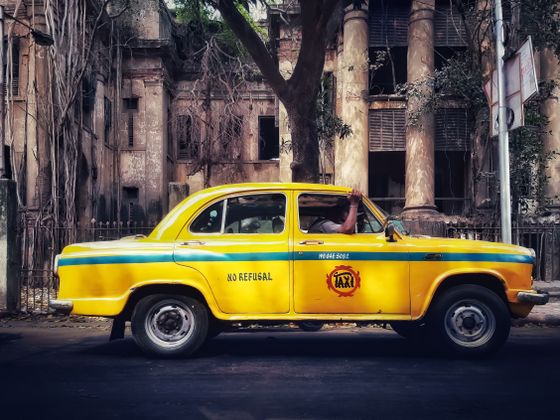
West Bengal
Kolkata
Kolkata is the one Indian metropolis that still feels like it belongs to the people who live in it rather than to the traffic. Do the north first and on foot. Kumartuli is the potters' quarter where the Durga idols are built from straw and river clay through the year — go in the months before the puja and you will find workshops full of half-finished goddesses. College Street sells second-hand books by the mile, and the Indian Coffee House above it has been arguing about politics since before independence. The trams still run, barely, and the ferry across the Hooghly to Howrah at dusk costs a few rupees and gives you the bridge from below. Durga Puja, in September or October, is the reason to plan a trip around this city. For five days the streets fill with commissioned temporary architecture — some of it genuinely ambitious — and nobody sleeps. It is also completely full; book months out. October to February. Summer here is humid and heavy, and the monsoon floods streets to the knee.
Odisha
Konark Sun Temple
The Konark Sun Temple is a 13th-century temple near the Bay of Bengal coast in Odisha's Puri district, built in dark khondalite stone as a giant chariot for the sun god Surya — complete with 24 carved stone wheels and seven straining horses. The main tower collapsed long ago, but the surviving audience hall (Jagamohan) still stands amid lawns, its walls covered in fine relief carvings of celestial figures, processions and everyday life.

Andhra Pradesh
Kondapalli Fort
Kondapalli Fort sits in the Kondapalli hill range west of Vijayawada, in NTR district, Andhra Pradesh, featuring three successive gateways, fortified walls with towers, and the hilltop Tanisha Mahal palace.

Punjab
Kotla Nihang Khan Fort
Three kilometres out of Rupnagar, in the village that carries his name, sits the fort of Nihang Khan, an Afghan zamindar who held 80 villages in the seventeenth century and, unusually for the period, was a friend to Guru Gobind Singh. The Guru sheltered here three times. The last was on 6 December 1705, after crossing the Sarsa river with Anandpur behind him and 100 men left under Bhai Bachittar Singh to hold off the pursuit; Bachittar Singh reached this house gravely wounded. The history is the whole reason to come, and Sikh visitors will get far more from it than casual sightseers.

Chhattisgarh
Kotumsar Cave
Check the season before you set out. The cave floods through the monsoon, typically mid-June to mid-October or early November, and the authorities close it while the water is high, so turn up in that window and you will see the gate and nothing else. Outside it you get a limestone tunnel of about 200 metres inside Kanger Valley National Park, with lateral and downward passages leading off the main line and pools that sit there permanently. It is the longest cave on the subcontinent, close to the bank of the Kanger river near Jagdalpur, in the forest tract old texts call Dandakaranya.

Rajasthan
Kumbhalgarh Fort
Kumbhalgarh, a UNESCO-listed Mewar fort in the Aravalli Hills, is famed for its immense perimeter wall, which stretches roughly 36 km and is often called the second-longest continuous wall in the world after the Great Wall of China. Built mainly in the 15th century by Rana Kumbha, it was the birthplace of Maharana Pratap and a refuge of the Mewar rulers.

Delhi
Lahori Gate, Red Fort, Delhi
This is the way in, and the argument about it is centuries old: Aurangzeb pushed a barbican out in front of the gate, and his father, writing from house arrest, complained that he had put a veil on a bride. Walk through and you are in the Chhatta Chowk, the covered street with arcaded apartments along both sides. Look up before you pass under — three storeys of panelled red sandstone, semi-octagonal towers, open pavilions on top, and a screen of seven small marble domes between them. Every Independence Day since 1947, the prime minister has spoken from these ramparts.

Gujarat
Lakhpat Fort
Lakhpat's fort walls run for kilometres along the edge of the Great Rann of Kutch, enclosing what was once a thriving 18th-century trading port and is now largely empty — a rampart town looking out over salt flats where the sea has long since retreated. Within the walls, a 16th-century gurudwara commemorates two visits by Guru Nanak, its relics still on display, making Lakhpat as much a Sikh pilgrimage stop as a ruined fort.
Leh & Ladakh
Leh
Leh sits at 3,500 metres and the single most important thing about it is that you cannot skip the first two days. Fly in and you arrive from sea level in ninety minutes. Spend the first forty-eight hours doing almost nothing — walk slowly, drink far more water than feels reasonable, no alcohol, no trekking. People who ignore this lose a week to altitude sickness or end up on a flight out. Coming overland from Manali or Srinagar acclimatises you properly, and if you have the days it is the better arrival. Once you are adjusted: Thiksey monastery at dawn for the morning prayers, which visitors are welcome at and which almost nobody attends. Hemis is grander but further. The Indus valley villages between Leh and Nimmu are where you see how people actually live at this altitude. Pangong and Nubra both need inner-line permits, arranged in Leh in a morning, and both are long hard drives. Pangong as a day trip is a mistake — twelve hours in a car for an hour at a lake. The road season is roughly June to September. Outside it the passes close and Leh is reachable only by air.

Leh & Ladakh
Leh Palace
Leh Palace is a nine-storey former royal palace overlooking Leh, modelled on the Potala Palace in Lhasa, with upper floors that housed the royal family and lower floors used as stables and storerooms.

Maharashtra
Lohagad Fort
Lohagad ("Iron Fort") is a hill fort in the Sahyadri range near Lonavala, about 52 km northwest of Pune, rising to 1,033 m above sea level and connected to the neighbouring Visapur fort, overlooking the Pavana reservoir. It is a popular trekking destination known for its scenic monsoon views.
.jpg/960px-Lohagarh_Fort_Bharatpur_by_Dr._Raju_Kasambe_DSCN7788_(1).jpg)
Rajasthan
Lohagarh Fort
Lohagarh — the "Iron Fort" — stands in Bharatpur behind a wide moat and earthen ramparts that proved harder to breach than any masonry wall. Its two main gateways, the eight-metalled Ashtadhatu Gate and the four-pillared Chowburja Gate, lead into a complex still holding the Jawahar Burj and Fateh Burj towers, each raised to commemorate a victory over an invading army.

Manipur
Loktak Folklore Museum
Thanga Island, out in Loktak, keeps a museum about the lake it sits in: artefacts tied to the water, along with the folk customs and beliefs, folk medicine and folk literature collected around it. It is small and particular rather than comprehensive. Do it before you go out onto the lake rather than after, because the fishing life makes a good deal more sense with the stories attached to it, and it will not cost you much of a morning either way.
Bihar
Lomas Rishi Cave
Whoever cut this doorway in the 3rd century BC was reproducing in stone a hut built of wood and thatch. The result is the earliest chandrashala, or chaitya arch, to survive in India, and scholars trace the great chaitya halls of the western Deccan back to this one facade. Who the cave was made for is less settled than it sounds: the other Barabar caves carry dedications to the Ajivikas and this one carries none, so it may have been Ashoka's gift to the Buddhists instead. Behind the entrance is a large rectangular hall, entered from the side. The doorway is the visit.

Delhi
Lotus Temple (Delhi)
The Lotus Temple is a Baha'i House of Worship and one of Delhi's most photographed modern landmarks, shaped like a half-open lotus with 27 marble-clad petals set among nine pools and landscaped gardens. Completed in 1986 and open to people of all faiths, it is kept silent, and that is the point of going.
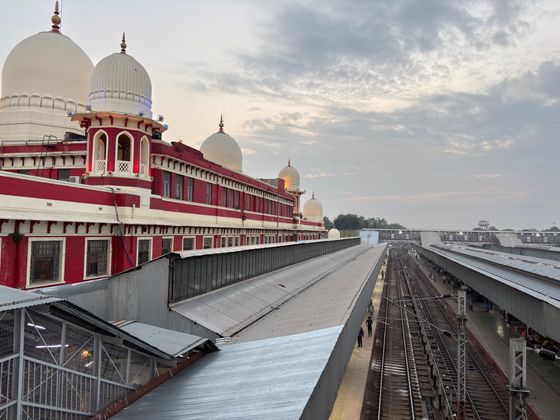
Uttar Pradesh
Lucknow
Lucknow is a food city that happens to have beautiful ruins, and treating it the other way round is how visitors leave underwhelmed. Eat first. The galouti kebab was supposedly made for a Nawab who had lost his teeth, and the good places in Chowk have been doing one thing for four or five generations. Sheermal, nihari with kulcha in the early morning, and the Awadhi biryani which is milder and more perfumed than Hyderabad's — that is the argument between the two cities and you should form your own view. The Bara Imambara's bhulbhulaiya is a genuine labyrinth in the walls of the building and you do need the official guide, not because of the ticket but because people get properly lost. The Residency, shelled during the 1857 siege and left exactly as it was, is the most atmospheric place in the city and usually empty. Chikan embroidery is from here. Buy it in Chowk, not at the airport. October to March. May and June are brutally hot.

Madhya Pradesh
Madan Mahal Fort
Madan Mahal is a hilltop fort structure a few kilometres from Jabalpur city centre, Madhya Pradesh, at roughly 500 m elevation, associated with the Gond dynasty and with Gond queen Rani Durgavati, who died fighting Mughal forces.

Karnataka
Madhugiri Fort
Madhugiri is a fort wrapped around one of Asia's largest single rock hills — a bare granite monolith rising nearly 4,000 feet, its slopes stitched with walls, bastions and gateways. Built up by local Gowda chiefs and later held by Hyder Ali, the climb to the summit follows steps and railings cut straight into the steep rock face. The reward is a windswept top with views across the boulder country of Tumakuru.

Chhattisgarh
Madwa Mahal Temple
A kilometre from Bhoramdeo, and most people drive straight past. This is a Shiva temple raised by the Phani Nagavanshi Gond king Ramchandra Dev, now a state protected monument. It sits close enough to Bhoramdeo that skipping it takes more deliberate effort than stopping does, and the only real obstacle is that nobody tells you it is there.

Tamil Nadu
Mahabalipuram
Mahabalipuram, historically known as Mamallapuram, sits on the Bay of Bengal roughly 55 km south of Chennai and is known for its rock monuments carved in the open air. The ancient Pallava dynasty developed it as a maritime trading port. Its UNESCO-listed monuments fall into three kinds. The Shore Temple, built of cut stone blocks, stands right on the line where the waves break. Massive relief panels are carved across the granite cliff faces. And the Pancha Rathas are five monoliths, each cut into the shape of a processional chariot.

Chhattisgarh
Malhar, Chhattisgarh
A capital in the 1st millennium, known to inscriptions as Mallar, Mallari and Sarabhapur; what is left today is village-sized. You get mounds, the ruins of an old fort, two Shiva temples that have been restored, and a museum holding what was recovered from a larger group of Hindu, Jain and Buddhist temples. That last part matters, because much of the site now lives indoors rather than standing where it was built. It is about 30 km southeast of Bilaspur down a feeder road off NH 49, and it rewards patience more than a quick look.

Madhya Pradesh
Mandu (Mandav)
Mandu (Mandavgad) is a fortified hilltop town in Dhar District, Madhya Pradesh, perched at about 633 metres on the Vindhya Range, enclosed by a battlemented wall circuit of nearly 37 km with 12 major gateways. It is known as the former capital of the Malwa Sultanate.

Gujarat
Mandvi Fort Walls
Mandvi's old fort walls and bastions still trace parts of the port town Rao Khengarji I founded on the Rukmavati river — a harbour that once launched a fleet of roughly 400 trading vessels to East Africa, the Malabar coast and the Persian Gulf. Traditional Kachchhi dhow shipyards still work the riverbank today, the same craft that built Mandvi's original fleet.

Chandigarh
Manimajra Fort
Gharib Dass Dhillon built this fort as the capital of a state he had just carved out of eighty-four villages, and it has stood in Mani Majra for more than 360 years. Its recent fame is borrowed: the Oscar-winning Zero Dark Thirty was shot here, and the fort has been busier since. That is a film-set reason to come rather than a historical one, and the history is the better half of it. Little else is on record, so expect a short look at old walls rather than an afternoon out.

Manipur
Manipur State Museum
Natural history, ethnology and archaeology fill the galleries of the state museum in Imphal, and it is the sort of collection that gives you a frame for everything else you will look at afterwards. The ethnology rooms are the reason to come: the peoples of the state gathered in one building, which is otherwise hard to get at on a short visit. Do it early in a trip rather than at the end, because it works far better as preparation than as a summing-up.

Manipur
Manung Kangjeibung
Inside Kangla Fort, southwest of the citadel, is an open field easy to walk across without registering: one of the two oldest polo grounds in the world, the other being the Mapal Kangjeibung across Imphal. Only royalty and nobility were allowed to play Sagol Kangjei on it. It is a field and it looks like one, so the whole of the interest lies in knowing what is under your feet. Read about it before you go into the fort rather than after you have left.

Telangana
Medak Fort
The Kakatiyas built this around the 12th century, under Rudra Deva, as a command post rather than a palace, and put it on a hillock north of the town where they could see what was coming. The Telugu name was Methuku durgam, cooked rice. Its three main gates are the Prathama Dwaram, the Simha Dwaram and the Gaja Dwaram, and walking them in order is most of the visit. The Musunuri kings held it after the Kakatiyas, and the Qutb Shahis after them. It is about 100 km from Hyderabad and reached by road, so go early rather than at midday.

Rajasthan
Mehrangarh Fort
Founded around 1459 by Rao Jodha of the Rathore clan, though most of what stands is seventeenth-century work by his successors — a hundred and twenty metres above the city, spread across twelve hundred acres. Seven gates lead in: Jai Pol was built by Man Singh to mark victories over Jaipur and Bikaner in 1806, Fattehpol commemorates Ajit Singh's victory over the Mughals. Inside are palace courtyards, the Chamunda Mataji temple and a museum of the Jodhpur royal collection.

Gujarat
Mehsana
Mehsana is a busy city in northern Gujarat, known for the Dudhsagar dairy — one of India's largest cooperative dairies — and for its oil and gas fields. For travellers it is most useful as a base for the Solanki-era Sun Temple at Modhera and the Bahucharaji Shakti Peeth temple nearby.

Mizoram
Mizoram State Museum
Four floors of collection in Aizawl, arranged as five galleries — textiles, ethnology, history, anthropology and natural history — plus an archaeology terrace. It is an ethnographic museum first, so the textile gallery is the one that earns the visit; the rest is broad rather than deep. Small enough to do properly in an hour or so, and the right first stop if you have just arrived in Mizoram and want the shape of the place before you go looking at it.

Andhra Pradesh
Mogalrajapuram Caves
Five groups of rock-cut caves, scattered across different parts of Vijayawada rather than gathered at one site, which is the main practical difficulty in seeing them. They are Shiva caves, cut around the 7th century under the Eastern Chalukyas or the Vishnukundins, and they are small and plain buildings. The interest lies in the carving, which is more sophisticated than that of the earlier Akkanna Madanna caves: a Nataraja, a Ganesh, an Ardhanarisvara. If you are only making one stop, make it Cave II, the most developed of the five. A short visit by any measure.

Assam
Moidam
Burial, not cremation, was the Ahom rite, and after the kings adopted Hinduism they went on burying the ashes under mounds. Each one is a vaulted chamber beneath a domed roof, covered by a hemispherical earthen mound with a small open pavilion, the chow chali, at its peak and an octagonal wall around the base. The royal moidams at Charaideo hold a UNESCO World Heritage listing. They read as grassy mounds in a field until you know what is under them, so read first or take someone who can explain. Excavation is a live grievance for the Ahom community; these are ancestral graves, not ruins.

Jammu & Kashmir
Mubarak Mandi Palace
Mubarak Mandi is a 25-building royal palace complex across 12 acres overlooking the Tawi River in Jammu, blending Gothic, Rajput, Mughal, and European architectural styles, and today housing the Dogra Art Museum.
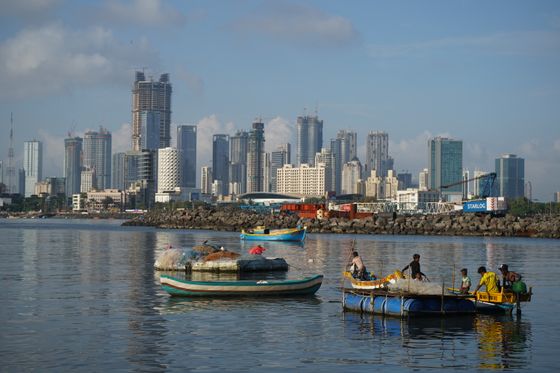
Maharashtra
Mumbai
Mumbai runs on its trains, and the fastest way to stop being a tourist here is to work out which line you need and get on it. The stretch people photograph without knowing what it is runs from Chhatrapati Shivaji Terminus down to Oval Maidan: Victorian Gothic on one side, Art Deco on the other, facing each other across the park. It is a UNESCO World Heritage Site and it is best walked at seven in the morning when the light is low and the traffic has not started. Skip the crush at the Gateway of India unless you are taking the ferry to Elephanta, which is worth a half day for the rock-cut Shiva in cave one. Instead go to Banganga tank in Walkeshwar — a stepped water tank in the middle of the richest neighbourhood in India, almost always empty of visitors. Monsoon, June to September, is when the city is most itself and most difficult. The rain is genuinely heavy, the trains flood, and locals will tell you both that it is beautiful and that they dread it. Both are true. November to February is the easy window.

Bihar
Munger Fort
Munger's fort sits on a rocky hillock above the south bank of the Ganges and carries almost everything the town has been: the tomb of Pir Shah Nufa, who died in 1497, Shah Suja's palace, the tomb of Mulla Muhammad Said, an 18th-century British cemetery, the old Chandisthana temple and the Kashtaharini Ghat down at the water. Ownership passed through Khaljis, Tughlaqs, Lodis, the Nawabs of Bengal and the Mughals before Mir Qasim handed it to the British. Nobody can date the walls with confidence. Treat it as a walk through a layered town, not one monument.

Maharashtra
Murud-Janjira Fort
Murud-Janjira is an oval-shaped island fort in the Arabian Sea off Raigad district, about 165 km south of Mumbai, famed as the sea stronghold of the Siddis that was never conquered despite repeated Maratha, Mughal, Portuguese and British attempts.

Haryana
Museo Camera
Gurugram's museum of photography opened in August 2019 and is the largest non-profit, publicly funded centre for the photographic arts in South Asia — a joint venture between the municipal corporation and the India Photo Archive Foundation, put together by the photographer and historian Aditya Arya. It covers both the art and the history of the medium. Indoors, unhurried and unlike anything else in the city: a good hour when you want one.

Delhi
Muthamman Burj (Red Fort)
A semi-octagonal tower on the fort's eastern wall, joined to the Khwabgah of the Khas Mahal, this is where the emperor showed himself to his subjects each morning in the ceremony called Jharokha Darshan. Akbar II added the projecting balcony in 1808-09 and had the fact cut into an inscription over its arches. George V and Queen Mary used the same balcony at the Delhi Durbar of 1911. The Yamuna once ran close under the wall, and a small gate at the tower's foot let the emperor reach the royal barges; the river has since moved away, which takes something out of the view.
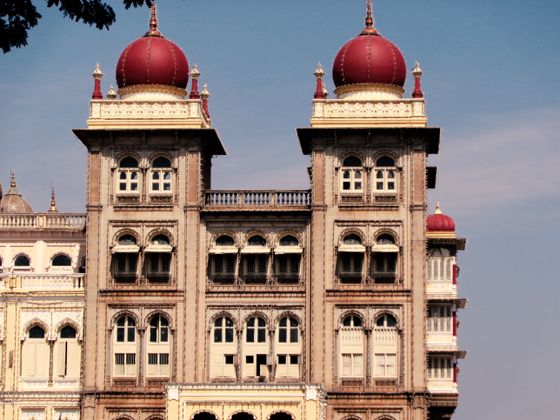
Karnataka
Mysuru (Mysore Palace)
Mysuru is a small, orderly, easy city, and it has the one palace in India that is worth seeing lit up. Mysore Palace switches its exterior lights on for a short window on Sunday evenings and through Dasara — around a hundred thousand bulbs on the outline of the building. Check the current timings locally, because they change, and be there before it happens rather than after. Inside, the Durbar Hall and the marriage pavilion are the rooms to slow down in. Photography is not allowed in the interior and shoes come off at the entrance. Chamundi Hill above the city is the standard sunset trip. The steps up — around a thousand of them — are a better way to arrive than the road, and the Nandi bull two-thirds of the way up is the reason to walk rather than drive. Devaraja Market is the working market: flowers by the kilo, sandalwood, bananas in a dozen varieties. Go in the morning while it is being restocked. Dasara in September or October is the city at full volume, with a caparisoned elephant procession. It is also when every room is booked. October to February otherwise.

Nagaland
Nagaland State Museum
Bayavü Hill in Kohima holds a collection gathered from all over Nagaland: ancient sculptures, traditional dress and inscriptions, kept by the state Department of Art and Culture. It opened to the public on 25 November 1970 and is one of only two museums the directorate runs. If you are trying to tell the Naga groups apart, and most first-time visitors are, an hour here before you head out to the villages saves a lot of guessing later.

Rajasthan
Nagaur Fort (Ahhichatragarh)
Ahhichatragarh — the "Fort of the Hooded Cobra" — spans 36 acres in Nagaur, its palaces still carrying original period furniture, objects and wall paintings after one of India's most sustained fort restorations. The complex hosts the annual World Sacred Spirit Festival, and its Mughal-influenced gardens and water channels are considered among the most complete surviving examples of Rajput-Mughal garden design.

Rajasthan
Nahargarh Fort
Nahargarh Fort stands on the Aravalli ridge above Jaipur, one of three forts — with Amber and Jaigarh — built to ring and defend the city. Unlike Amber's palace grandeur, Nahargarh was built as a retreat: its Madhavendra Bhawan wing holds a symmetrical row of near-identical apartments, reputedly built by Sawai Ram Singh II for his queens, each accessible without passing through another's rooms.
.jpg/960px-Monastery_5_-_Nalanda_Mahavihara_(1).jpg)
Bihar
Nalanda
Nalanda was the greatest university of the ancient world, a vast Buddhist monastic centre of learning that flourished for 700 years and drew scholars from across Asia. Its red-brick ruins are a UNESCO World Heritage Site and a symbol of India's scholarly heritage.

Maharashtra
Naldurg Fort
Naldurg is the Deccan's great water-engineered fort: a basalt stronghold of 114 bastions where the Bori river was dammed to fill the moat and, in flood, to spill over the Pani Mahal — a machine-room palace built inside the dam wall itself, with rooms behind the waterfall. Held by the Bahmanis, Adil Shahis and Mughals, its Upli Buruj and ravine-edge walls are astonishingly intact and astonishingly empty.

Tamil Nadu
Namakkal Fort
Namakkal Fort sits on a single massive rock rising sheer from the middle of its namesake town. Fortified by the Madurai Nayaks in the 17th century and later contested by Hyder Ali and the British, the summit's ring of walls encloses a small Vijayanagara-style shrine and long views over the plains. At the rock's base are two treasures of Pallava art: the cave temples of Narasimha and Ranganatha, and the famous shrine of Anjaneyar, whose 18-foot image stands under the open sky.

Sikkim
Namgyal Institute of Tibetology
A Tibet museum in Gangtok, named after Sir Tashi Namgyal, the eleventh Chogyal of Sikkim. It is a working institution as much as a display. Its researchers are documenting the social history of Sikkim's roughly sixty monasteries onto computer, and digitising the state's old and rare photographs so they can be shared. A Nyingma college, the Sheda, is attached to it; Khempo Dhazar ran that for six years. Come here before you visit the monasteries rather than after. An hour inside changes what you notice once you are standing in one.
_Fort_-_Leh_(10000973904).jpg/960px-Prayer_flags_at_the_Tsemo_(Victory)_Fort_-_Leh_(10000973904).jpg)
Leh & Ladakh
Namgyal Tsemo Fort
Namgyal Tsemo Fort (Tsemo Castle) stands at the highest point in Leh, within walking distance of Leh Palace, and is maintained today by the Archaeological Survey of India.

Chhattisgarh
Narayanpal Temple
A queen built this. Mumunda Devi of the Chindaka Naga dynasty raised it around 1111 AD in Narayanpal village, near where the Indravati meets the Narangi: Nagara in plan, Chalukya in the detail of the carving, dedicated to Vishnu. The inscriptions are cut in Devanagari, and one of them records a land grant made by Gunda Mahadevi, the queen-mother of the same dynasty. The far better-known Chitrakote Falls is 4 km west, in Bastar district. Pair the two, and start with the temple, early, before the day turns hot.

Gujarat
Navsari
Navsari is an old town near the Purna river delta in south Gujarat, long linked with neighbouring Surat. It is an important centre of Parsi heritage in India, home to some of the community's oldest fire temples. Just offshore is Dandi, where Mahatma Gandhi ended his Salt March in 1930.

Rajasthan
Neemrana Fort Palace
Neemrana Fort Palace steps down a hillside in the Aravallis in twelve tiers, a 15th-century Chauhan-dynasty fort that stood in ruin for decades after 1947 before being restored into one of India's earliest and best-known heritage hotels. Its terraced courtyards, hanging gardens and infinity pool built into the old ramparts have made it one of the most photographed heritage properties on the Delhi-Jaipur highway.

Tripura
Neermahal
Neermahal is a striking water palace rising from the middle of Rudrasagar Lake near Melaghar in Tripura, built by the Manikya king in the 1930s as a royal summer retreat. Blending Hindu and Mughal architectural styles, its white-and-red pavilions are reached by boat and beautifully reflected in the lake.

Telangana
Nizamabad Fort
The fort is the approach; the temple on top is what people actually come for. Rashtrakuta kings raised the walls in the 10th century, southwest of the city and two kilometres from Gandhi Chowk, and the Jagannath temple inside, locally the Qilla Ramalayam, draws worshippers as much as sightseers. Its halls run to about 3,900 square feet and stay cool through a ventilation arrangement built into the structure, which you will be grateful for in the middle of the day. A 53-foot pillar stands here that was once lit daily, and the villages around took their cue from it.

Odisha
Odisha Crafts Museum
Kalabhoomi is where Odisha's crafts are laid out properly rather than sold to you, with nine of its ten galleries open to the public across two blocks, handicrafts on one side and handloom on the other. The handicraft rooms cover terracotta, stone and wood carving, traditional painting and natural-material work; the handloom side runs from pre-weaving technique through tribal crafts to the cloth of Jagannath worship. A live section holds workshop zones and an open-air theatre. The building itself is laterite, the same stone as the state's oldest monuments. It opened in March 2018.
.jpg/960px-Basilica_of_Bom_Jesus_8_(Old_Goa).jpg)
Goa
Old Goa (Basilica of Bom Jesus)
Old Goa, or Velha Goa, stands on the bank of the Mandovi a short drive from Panaji — the former capital of the Portuguese Eastern Empire, and still a dense cluster of colonial churches several centuries old. The Basilica of Bom Jesus is at the centre of it. The Basilica is baroque, and unusual for it: the facade is dark laterite, left un-plastered rather than finished. Inside are gilded altars and a marble and bronze mausoleum. Straight across the square is the Se Cathedral, one of the largest churches in Asia, built in the Portuguese-Manueline manner.

Delhi
Old Yamuna Bridge
Delhi calls it Lohe-ka-Pul, the iron bridge, and it has been carrying traffic since 1867. Trains run on the upper deck between Old Delhi and Shahdara stations; road traffic goes underneath on the lower one. It was the last link in the railway between Kolkata and Delhi, which is the only reason a structure this heavy exists at this spot: twelve spans of steel truss, a little over 800 metres end to end. This is not a monument with a ticket and a lawn. It is a working crossing, and it looks best from the bank, sighting along the trusses, rather than from inside the traffic.

Chandigarh
Open Hand Monument
The city's emblem is a hand, and this is it, standing twenty-six metres high in the Capitol Complex. The metal vane structure on top is fourteen metres tall, weighs fifty short tons and was designed by Le Corbusier to rotate in the wind. He meant it as the hand that gives and the hand that takes, peace and prosperity, the unity of mankind, and it is the largest of the many Open Hands he made. Photographs undersell the scale, so stand under it. Since it sits inside the Capitol Complex, fold it into that visit rather than making a trip.

Madhya Pradesh
Orchha
Orchha Fort complex sits on the banks of the Betwa River in Niwari District, Madhya Pradesh, founded by the Bundela Rajput ruler Rudra Pratap Singh; it comprises palaces including the Raj Mandir and Jahangir Mahal along with the Chaturbhuj Temple, part of a historic ensemble recognised toward UNESCO World Heritage status in 2020.

Telangana
Paigah Tombs
The man who paid for this necropolis, Nawab Sir Khursheed Jah Bahadur, made sure his own family got the best of it. Every arch here belongs to the Paigah nobility, statesmen, generals and philanthropists who stayed loyal to the Nizams, but only his family's arch is larger than the rest, and only their tomb holds the double maqbara called Mahajar. Look for the stucco on the tomb of Lateefunnisa Begum Saheba, his grandmother; nothing else in the complex matches it. The laid mosaic tilework is the reason to come, and it rewards slow walking.

Kerala
Palakkad Fort
Palakkad Fort, also known as Tipu's Fort, is a granite fortress in the heart of Palakkad town, Kerala, blending Dravidian and Islamic military architecture. It functioned as a strategic gateway between Kerala and Tamil Nadu and is closely tied to Tipu Sultan, "Tiger of Mysore."

Jharkhand
Palamu Forts
Deep inside the sal forests of what is now Palamau Tiger Reserve stand the twin forts of the Chero kings — the old fort of Medini Ray on the banks of the Auranga river and the newer, unfinished fort on the hill above, with its ornate Nagpuri gateway. Abandoned to the jungle after Mughal and British campaigns, their moss-grown walls are now patrolled by langurs and the occasional elephant — ruins in the truest, wildest sense.

Uttar Pradesh
Panch Mahal, Fatehpur Sikri
Akbar's five-level pavilion at Fatehpur Sikri is all columns and no walls: 176 of them, each carved differently, thinning from 84 on the ground floor to four holding up a chhattri at the top. Jaali screens once filled the gaps, so the women of the neighbouring zenana could take the breeze and watch the Sikri fortifications and the town below without being seen. The screens are gone, so the view now comes unfiltered. The pool in front, the Anoop Talab, once held water and was the setting for music.

Maharashtra
Panhala Fort
Panhala Fort sits in the Sahyadri range about 18-20 km northwest of Kolhapur, Maharashtra, at roughly 845 m above sea level, with a 14 km perimeter and around 110 lookout posts, earning it the nickname "Fort of Snakes" for its zigzag layout. It is one of the largest forts in the Deccan.

Punjab
Partition Museum
The building was once a British headquarters and a jail, which gives the Partition Museum in Amritsar's town hall a weight the exhibits never have to manufacture. It opened in August 2017 to gather the stories, papers and objects of the riots that followed the division of British India, and it reaches wider than that: the Jallianwala Bagh massacre, the Komagata Maru, the Congress and the Muslim League, and what women lived through afterwards. Go before the Golden Temple rather than after. It is not an easy hour, and you will want somewhere quiet to sit at the end of it.

Gujarat
Patan
Patan is an ancient fortified town that stood as the capital of Gujarat's medieval Solanki kings. It is known for hosting one of the world's finest examples of subterranean architecture.

Bihar
Patna
Patna, the ancient city of Pataliputra, was the capital of the mighty Maurya and Gupta empires and is one of the world's oldest continuously inhabited cities. Today it is a key gateway to Bihar's Buddhist circuit and a major Sikh pilgrimage site as the birthplace of Guru Gobind Singh.

Andhra Pradesh
Pavurallakonda
What survives up here is mostly floor plan: foundations of viharas, circular chaityas, votive stupas and hall outlines, two Brahmi label inscriptions, and about sixteen cisterns cut into the rock to catch rainwater. People occupied this hill from the 3rd century BCE to the 2nd century CE, and it counts as one of the largest Buddhist monasteries in the north coastal stretch of Andhra. Locals call it Narasimhaswamy Konda. Excavation and restoration are still going on, so expect a working dig rather than a finished monument. It is 25 km north of Visakhapatnam, close to Bavikonda and Thotlakonda.
Puducherry
Pondicherry (Puducherry)
Pondicherry's French quarter is about six streets deep, and knowing that in advance saves the disappointment of expecting a French town. What is there is genuinely good: ochre walls, bougainvillea, shuttered colonial houses, and a seafront promenade that closes to traffic in the evening and fills with the whole town walking. The Tamil quarter across the canal is larger, older and rarely visited, and the two architectural traditions meeting along that line is the actual interest of the place. The beach in Pondicherry town is rock, not sand. People arrive expecting to swim and cannot. For sand you go north to Auroville's beaches or south towards Chunnambar. Auroville, twenty minutes out, is a serious experiment in communal living rather than an attraction. Visitors can see the Matrimandir from a viewing point; going inside needs booking days ahead and is not casual. October to March. April and May are hot and humid, and the north-east monsoon in October and November brings real rain.

Jammu & Kashmir
Poonch Fort
Poonch Fort is a roughly 7,500 sq metre fortified palace complex in Poonch town, combining Mughal, Sikh, Dogra, and European architectural influences, with red brick masonry, circular bastions, and arched openings.
Gujarat
Porbandar
Porbandar is a coastal town on the Saurashtra shore of the Arabian Sea, remembered in tradition as the birthplace of Sudama, Krishna's childhood friend, and in modern history as the birthplace of Mahatma Gandhi. Its old quarter has distinctive limestone architecture, and the coastal wetlands nearby draw large numbers of migratory birds.

Maharashtra
Pratapgad Fort
Pratapgad is a mountain fort in Satara district, Maharashtra, standing 1,080 m above sea level and divided into a lower and upper fort with two main entrances and several watchtowers. It is famous as the site of the decisive 1659 Battle of Pratapgad between Shivaji Maharaj and Bijapur general Afzal Khan.
Uttar Pradesh
Prayagraj (Allahabad)
Prayagraj, formerly Allahabad, sits at the Triveni Sangam — the sacred confluence of the Ganga, Yamuna and the mythical Saraswati. It hosts the world's largest gathering, the Kumbh/Magh Mela, and blends pilgrimage with colonial and freedom-struggle heritage.

West Bengal
Prinsep Ghat
Kolkata comes down to this stretch of the Hooghly in the evenings, mostly at weekends, to take a boat out, walk the bank and eat at the stalls — which is the argument for coming on a weekday if you want the porch to yourself. The Palladian porch went up in 1843 for James Prinsep, scholar and antiquary, and carries Greek and Gothic inlays; it has been restored twice and looks it. The lit, landscaped riverfront runs two kilometres from here down to Babughat. There is a railway station of the same name on the Circular line.
Maharashtra
Pune
Pune, the cultural heart of Maharashtra, blends Maratha history with a youthful student-and-tech energy. Home to Shaniwar Wada, the Aga Khan Palace, Osho's ashram and gateway to nearby Sahyadri forts and hill stations, it is an easy city to live in.

Delhi
Purana Qila
Purana Qila — the Old Fort — is the citadel begun by Humayun as Dinpanah and completed by Sher Shah Suri, standing on a mound long identified in tradition with Indraprastha of the Mahabharata. Within its mighty gates survive the Qila-i-Kuhna mosque, a jewel of pre-Mughal architecture, and the octagonal Sher Mandal library where Humayun fell to his death in 1556. Excavations here have revealed layers reaching back to the Painted Grey Ware cultures.

Maharashtra
Purandar Fort
Purandar Fort stands in the Western Ghats of Pune district at an elevation of about 1,374 metres, historically significant as the birthplace of Chhatrapati Sambhaji Maharaj and the site of the 1665 Treaty of Purandar.

Tripura
Pushbanta Palace
This was a working government building rather than a sight until recently. Birendra Kishore Manikya built it in 1917, and it served as Tripura's Raj Bhavan until 2018, when that moved elsewhere. It is now being developed as a national-level cultural museum, which means what you can actually get inside depends on how far the conversion has gone — ask locally before you make the trip rather than turning up and hoping. You will also hear it called Kunjaban Palace.

Punjab
Qila Mubarak, Bathinda
Qila Mubarak at Bathinda is counted among the oldest surviving forts in India, its enormous weathered brick bastions rising from foundations associated with the Kushan age. Razia Sultan, Delhi's first and only woman sultan, is said to have been imprisoned here after her defeat in 1240. Within the walls stands a gurdwara marking the visit of Guru Gobind Singh, and the fort's 30-plus metre bastions still dominate the city's skyline.

Punjab
Qila Mubarak, Patiala
Manage your expectations before you go: most of this fortress is shut, the Shish Mahal included, and what is open, the Darbar Hall now a museum, the Sarad Khana, the Jalau Khana and a line of cannon barrels, is a fraction of what the Maharajas of Patiala lived in. The World Monuments Fund put it among the hundred most endangered sites in the world in 2004, and the poor condition still shows. Go if you like buildings on the edge of being lost. Do not go expecting a restored palace.

Delhi
Qutb Minar
Qutb Minar is the centrepiece of a UNESCO World Heritage complex in south Delhi, and at 73 metres it remains the tallest brick minaret in the world. Begun by Qutb-ud-din Aibak in 1193 to mark the start of Muslim rule in Delhi and completed by his successors, the fluted red sandstone and marble tower is ringed with intricate calligraphy and geometric carving. The surrounding complex holds the Quwwat-ul-Islam mosque, the rust-resistant Iron Pillar of Delhi, and the unfinished Alai Minar, making it one of the most-visited ASI-protected sites in the country.

Telangana
Qutb Shahi tombs
Every dome here was once overlaid with blue and green tile; a few pieces are all that survive, and knowing that changes how the bare stone reads. The Qutb Shahi kings built their tombs and mosques together in the Ibrahim Bagh garden precinct, close to Golconda Fort, the smaller galleries rising a single storey and the larger ones two. The sarcophagus you stand over is a marker, not the grave: the burial vault sits in a crypt below. This is a garden as much as a monument, and it rewards an early start.

Telangana
Rachakonda Fort
Come knowing the dates and the hill reads differently. Anapotanayaka of the Recherla Nayakas shifted his capital from Anumagallu to Rachakonda at around 1360 AD and built a strong fort to hold it, then split the kingdom so that his brother Madanayaka could rule from Devarakonda, which stayed the junior of the two seats. Rachakonda fell to the Bahamanis in 1430. Devarakonda lasted until 1475, when the Recherla kingdom was finished and the family joined the Vijayanagara court at Hampi. Seventy years of rule from this hill in Yadadri Bhongir district, and then nothing.

Maharashtra
Raigad Fort
Raigad is a hill fort in Mahad, Raigad district, Maharashtra, in the Sahyadri (Western Ghats) mountain range, rising 820 metres above its base and 1,356 m above sea level. It is famous as the capital of Chhatrapati Shivaji Maharaj's Maratha kingdom and the site of his formal coronation, and today contains palace ruins, queen's quarters, and watchtowers.

Madhya Pradesh
Raisen Fort
Raisen Fort is a hilltop fort in Raisen town, Madhya Pradesh, built on a sandstone hill more than 1,500 feet high and spread over roughly ten square kilometres with nine gateways, combining Hindu and Islamic-era structures including the dargah of Hazrat Peer Fatehullah Shah Baba.

Maharashtra
Rajgad Fort
Rajgad Fort stands on a hill known as Murumbadevi Dongar in Pune district, Maharashtra, about 50-60 km southwest of Pune city, rising to 1,376 metres above sea level with a base perimeter of roughly 40 km. It served as Chhatrapati Shivaji Maharaj's capital for nearly 26 years before the capital moved to Raigad.

Haryana
Rakhigarhi
Come knowing what this is. A village in Hansi district sits on one of the five largest settlements of the Indus Valley Civilisation, occupied through the pre-Harappan, early Harappan and mature phases, the last of which ended around 1900 BC. Five closely-integrated mounds make up the urban core; a sixth stands apart and older, a seventh was the burial ground. Two more found in 2014 pushed the ASI to claim this as the largest Harappan site known, spread across 300 to 350 hectares. Above ground it reads as earth and farmland, and the significance is all in what has been dug out of it, so read up before you go.

Punjab
Ram Bagh, Amritsar
Maharaja Ranjit Singh spent his summers in the palace at the centre of this Amritsar garden, which was completed in 1831 and named for Guru Ram Das, the fourth guru and the founder of the city. The complex is protected twice over, by the state and nationally, and has still been let down: a long-running legal dispute has held up conservation and restoration, and the condition shows it. Come for the garden and for the idea of a Maharaja summering here, not for a restored palace.

Jammu & Kashmir
Ramnagar Fort
Ramnagar Fort in Udhampur district is a square-plan fort with polygonal corner bastions rising three storeys, decorated with battlements and surrounded by a moat, accessed via a narrow southeastern bridge.

Jharkhand
Ranchi Science Centre
The state's first science centre opened in 2010 at Chiraundi in Morhabadi, with three permanent thematic galleries in a two-storey building on thirteen acres. It was developed by the National Council of Science Museums, the body behind science centres in other Indian cities, so expect that familiar format rather than anything particular to Jharkhand. Best treated as an hour or two with children, or somewhere to sit out heavy rain. Tagore Hill is right next door, which is the argument for making the trip at all.

Himachal Pradesh
Rang Mahal (Chamba Fort Palace)
Rang Mahal ("Painted Palace") stands in the Surara Mohalla of Chamba town, Himachal Pradesh, a fortress-like, multi-storey royal residence blending Mughal and later British architectural influences, built of stone and Nanak Shahi red brick.

Meghalaya
Rangthylliang 1 root bridge
Over fifty metres long and thirty metres above the ground: this is reckoned the longest living root bridge there is, and it is the height, not the length, that people underestimate. The trek begins at Rangthylliang village, which the bridge is named after, and ends at Mawkyrnot. Rangthylliang has several other root bridges besides this one, so the day is worth doing as a walk rather than as a means of reaching a single photograph. If heights trouble you, know that number before you set out.

Rajasthan
Ranthambore Fort
A tenth-century Chauhan fort standing inside the tiger reserve, founded under Sapaldaksha and added to by the kings who followed him. It sits high enough to give the clearest view there is over the park below. Entry is free and separate from the safari, because the Ganesh temple inside is a working shrine receiving pilgrims.

Delhi
Rashtrapati Bhavan
Seventeen years of building, from 1912 to 1929, produced 340 rooms and two and a half kilometres of corridor at the top of Raisina Hill. Lutyens and Baker designed it for a viceroy; a president has lived in it since India became a republic, and the estate around it runs to 320 acres. The view most people get is the long one, from the east end of Rajpath, and it is the right one — the building was placed on the hill to be read at that distance, and the dome carries better from far away than the detail does up close.

Delhi
Red Fort
The Red Fort (Lal Qila) is a massive red-sandstone Mughal fortress-palace in Old Delhi, built as the residence of the Mughal emperors and the seat of the Mughal capital after it shifted from Agra. It is one of India's most recognised monuments, famous as the site from which the Prime Minister addresses the nation every Independence Day.

Odisha
Regional Museum of Natural History, Bhubaneswar
The baleen whale skeleton is the reason to walk in, said to be the largest held by any museum in India. Beyond it this is a school-trip museum, opened in 2004 near Acharya Vihar Square, with galleries on the plants, animals and geology of eastern and north-eastern India and the Andaman and Nicobar Islands, all built around a conservation message. Animal exhibits can be felt by visually impaired students, which is rarer than it should be. Worth an hour with children; skip it if you came to Bhubaneswar for the temples.

Goa
Reis Magos Fort
Reis Magos Fort occupies a headland on the northern bank of the Mandovi River in Bardez, Goa, almost directly facing the capital city Panaji across the water. Built of laterite with cylindrical Portuguese-style turrets, it is one of Goa's oldest forts, restored into a cultural centre.

Haryana
Rewari Railway Heritage Museum
The shed dates to 1893 and is the only steam locomotive shed left standing in India, which would be reason enough — but the thing to see is the Fairy Queen, built in 1855 and still able to run, the oldest working steam locomotive anywhere. Several of India's last surviving steam engines sit here with it. It is 400 m north of the entrance to Rewari railway station, so you can arrive by train and walk, and it pairs obviously with the National Rail Museum in Delhi, 79 km away. Go for the machines; that is what is here.

Gujarat
Roha Fort
Roha Fort stands 500 feet up and 800 feet above sea level on Kutch's Nakhatrana plateau, built as the administrative seat for a jagir of some 52 villages. Sixteen acres of walls and towers survive largely intact, one of the better-preserved smaller Jadeja forts in the district.

Bihar
Rohtasgarh Fort
Rohtasgarh, on a spur of the Kaimur plateau above the Son valley, is one of India's mightiest and least-visited forts — its walls run for miles around a summit reached by ancient stepped paths. Named for Rohitashva of the Harishchandra legend, it was seized by Sher Shah Suri in 1539 and later became the seat of Raja Man Singh, Akbar's governor of Bihar and Bengal, whose domed palace complex still crowns the plateau.
.jpg/960px-Kachari_Ruins_(a_piece_of_history_waiting_to_be_explored).jpg)
Nagaland
Ruins of Kachari Rajbari
A field of squat, mushroom-domed pillars is what survives of the Kachari kingdom that ruled Dimapur before the Ahoms invaded in the 16th century. Nobody knows what the pillars were for. Local belief says a game resembling chess was played across the domes, which is as good an explanation as anyone has produced. The site is not well kept: some pillars stand whole, others have crumbled and been left that way. Come for the oddness of the shapes rather than a restored monument, and half an hour is enough.

Delhi
Safdarjung's Tomb (Delhi)
Safdarjung's Tomb is a garden-tomb built around 1754 for Safdarjung, the powerful Nawab of Awadh and a prime minister of the Mughal empire. Set in a formal charbagh garden, its red-and-buff sandstone dome and symmetrical layout make it one of the last great monuments of the Mughal era.

Telangana
Saidani Ma Tomb
The grave itself is sealed underground at the base of the dome and not open to the public, so what is on offer is the shell above it: elaborate stucco, fretwork jali screens, Mughal and Qutb Shahi habits sitting in one building. Nawab Abdul Haq Diler Jung, among the richest nobles of his day and later director of the Nizam's State Railways, put it up in 1883 for his mother. It stands near Tank Bund on the banks of Hussain Sagar, which makes it an easy stop rather than a destination. Diler Jung is buried here too.

Delhi
Salimgarh Fort
What was an island in the Yamuna in 1546 is dry ground now, and the fort Salim Shah Suri raised on it sits inside the Red Fort Complex. He built it while his father's Sur dynasty held Delhi and the Mughals were out. Humayun, the emperor they had displaced, is said to have camped here three days before taking Delhi back; Shah Jahan and other Mughals are believed to have used it while Shahjahanabad went up. Aurangzeb turned it into a prison and the British kept it as one after 1857. See it as part of the Red Fort, not as a stop of its own.

Madhya Pradesh
Sanchi
Sanchi is home to the oldest stone structures in India — a group of Buddhist stupas, monasteries and pillars commissioned by Emperor Ashoka. The Great Stupa, with its intricately carved gateways (toranas), is a UNESCO World Heritage Site and a masterpiece of early Buddhist art.

Jharkhand
Sanskriti Museum & Art Gallery
Everything here came out of one man's fieldwork. Bulu Imam found Hazaribagh district's first rock art at Isco, brought more than a dozen meso-chalcolithic sites to light, and in 1991 opened this museum in his own building, a 1919 Tea Garden District Labour Association hall standing on three acres of trees. The cases run from Palaeolithic tools through Iron Age pottery to Buddhist pieces, with an ethnological gallery on the Birhors, Santhals and Oraons. The art is the better reason to come: about 200 Khovar marriage and Sohrai harvest paintings of Hazaribagh, gathered in one gallery. Ask about the research archive if they hold you.

Bihar
Saptaparni Cave
There is almost nothing to look at when you get up there, and it hardly matters. This cave set into a hillside two kilometres southwest of Rajgir is where a few hundred monks are believed to have held the first Buddhist council after the Buddha died. He never wrote his teachings down, so what came out of this room is the reason a canon exists at all: Ananda was appointed to recite the sermons from memory, Upali the rules for monks. The walk up is the visit, and the place earns it.

Punjab
Sarai Amanat Khan
The man who did the calligraphy on the Taj Mahal built this inn for travellers on the Agra-Lahore road, and the tomb standing nearby is thought to be his own. A mosque and a well sit within the walls. It is a sixteenth-century caravanserai and a monument of national importance, which is not the same thing as a visitor attraction: expect a large quiet enclosure and a gateway that earns the stop if you are on this road anyway.

Manipur
Sekta Archaeological Living Museum
Sekta village holds one of six burial mounds identified in the area, and the place is a protected archaeological site as much as a museum. The Archaeological Survey of India dug here in 1991 alongside the state archaeology department and the history department at Manipur University, and what the site is known for is its secondary burial finds. This is a specialist stop rather than a general one. Go because the early history of the valley interests you, and give it rather less time than you would give a city museum.

West Bengal
Shaheed Minar, Kolkata
Do not plan on getting to the top. The stated intention is to light the tower in the evenings and let visitors climb it, but the last people known to have gone up were a former governor and his family, so treat the climb as luck rather than the reason to come. From the ground you are looking at a column raised in 1828 for Major-general David Ochterlony of the East India Company, for holding Delhi against the Marathas and for the Gurkha War, then rededicated in 1969 to the martyrs of the freedom movement and renamed accordingly.
.jpg/960px-Shaniwar_wada_(pune).jpg)
Maharashtra
Shaniwar Wada
Shaniwar Wada is the fortified palace complex in Pune that served as the seat of the Peshwas, the prime ministers who effectively ruled the Maratha Empire through the 18th century. Built in 1732 by Peshwa Bajirao I, the original palace was largely destroyed by a fire in 1828, leaving behind its massive stone and brick outer walls and ornate gates, most famously the Dilli Darwaza. Today the ruins are one of Pune's most-visited heritage sites and a striking reminder of Maratha power.

Madhya Pradesh
Shaurya Smarak
Bhopal's war memorial covers about 12 acres on Arera Hills, near M.P. Nagar and the Secretariat, and it reads more like a park than a monument. The 62-foot Shaurya Stambh stands for the three services, granite for the Army, grey for the Navy, white for the Air Force, with the names of martyred soldiers inscribed on glass boards around it. A red sculpture becomes a Namaskar from the main axis and a drop of blood from another. Give your time to the underground museum and its galleries on the wars with Pakistan and China. Opened in October 2016.

Leh & Ladakh
Shey Palace
Shey Palace and Monastery, 15 km south of Leh in the Indus Valley, served as the summer capital of Ladakh and houses a 12-metre, three-storey gilded statue of Shakyamuni Buddha, the second-largest such statue in Ladakh.

Andhra Pradesh
Shilparamam Jathara
This is a made place rather than an old one, a crafts village the state government laid out in 2009 across 28 acres at Madhurawada, a few kilometres out of Visakhapatnam. Knowing that helps, because nobody here is pretending it is a historic bazaar. What it does well is gather woodwork, jewellery, textiles and regional craft, most of it from rural India, into one walkable park with sculpture set through it, and craft festivals run across the year. Give it a slow couple of hours; skip it if your time in the city is tight.

Maharashtra
Shivneri Fort
Shivneri Fort stands on a rugged hill near Junnar in Pune district, Maharashtra, with a triangular shape, seven defended gates, and mud walls spanning about a mile. It is celebrated as the birthplace of Chhatrapati Shivaji Maharaj.

Meghalaya
Siju Cave
Its English name is Bat Cave, and tens of thousands of them live inside, which will be either the reason you go or the reason you do not. Siju Dobakkol is a limestone cave in the Garo Hills, near Napak Lake and the Simsang River game reserve, and it is one of the most thoroughly researched caves in the subcontinent, which is unusual company for somewhere this far off the standard itinerary. The stalactite and stalagmite formations are what most visitors come for. Bring a torch you actually trust.

Uttar Pradesh
Sinauli
Two seasons of digging, in 2005-06 and again in 2018, turned this patch of the Ganga-Yamuna Doab into an argument. The Archaeological Survey of India found wooden coffin burials, copper swords and helmets, and carts with solid disk wheels sheathed in copper, dated to roughly 2000-1500 BCE. The excavation director called the carts chariots and saw Vedic ritual in the burials; other scholars point out that solid wheels belong to carts, and Asko Parpola reads them as ox-drawn. This is a dig, not a monument. Come for the argument, not for something to photograph.

Maharashtra
Sindhudurg Fort
Sindhudurg Fort is a sea fort built on Khurte island off Malvan in Sindhudurg district, roughly 450 km south of Mumbai, spanning about 48 acres with a nearly two-mile-long rampart and walls up to 30 feet high.
.jpg/960px-Sinhagad_Fort_(49146).jpg)
Maharashtra
Sinhagad Fort
Sinhagad ("Lion's Fort") is an ancient hill fortress about 28 km southwest of Pune, perched on the Bhuleswar range of the Sahyadri Mountains at 1,317 m above sea level. It is renowned as the site of the 1670 Battle of Sinhagad, in which Maratha commander Tanaji Malusare recaptured the fort from the Mughals at the cost of his own life.

Chhattisgarh
Sirpur Group of Monuments
Excavation here has turned up twelve Buddhist viharas, one Jain vihara, twenty-two Shiva temples and five to Vishnu, plus Shakti and Tantric shrines, an underground granary market and a sixth-century bath house, which gives you some idea of what Sirpur was before it became a village beside the Mahanadi. It was the capital of the Sharbhapuriya and Somavamshi kings of Dakshina Kosala, Hindu, Buddhist and Jain at once, and busy enough between the 5th and 12th centuries that Hieun Tsang came through in the 7th. It is 78 km east of Raipur: a day, not an hour, and worth the whole of it.

Odisha
Sisupalgarh
Ruined fortifications in Khurda district, first inhabited around the 7th to 6th centuries BCE. It is one of the largest and best preserved early historic fortifications in India, and it was the capital of ancient Kalinga, identified with Kharavela's Kalinganagara and Ashoka's Tosali. This is a site that rewards reading before you arrive: the history carries most of the weight, and without it you are looking at ruins in a field. Go knowing what Kalinga was and the scale of the place lands.

Bihar
Sitamarhi Cave
One chamber hewn into a single hemispherical block of granite, 20 km southwest of Rajgir and 10 km southwest of Hisua. It is Mauryan, and it has the structure and the mirror polish of the Barabar caves along with the same trapezoidal doorway, but not one of their inscriptions. It is also markedly smaller, 4.91 by 3.43 metres with the ceiling 2.01 m overhead, so two people fill it and there is nothing to read on the walls. Worth the detour if you are already doing Barabar, or Son Bhandar at Rajgir, with which it is often grouped. Not worth a trip of its own.

Assam
Sivasagar
Sivasagar, once the capital of the mighty Ahom kingdom that ruled Assam for six centuries, is a town rich in monuments around its great tank. Its highlights include the Rang Ghar, often called Asia's oldest surviving amphitheatre, the Talatal and Kareng Ghar palaces, and the towering Sivadol temple.

Bihar
Son Bhandar Caves
Two Jain caves cut into the base of the Vaibhar Hills at Rajgir, easy to reach and quickly seen. The main one is a rectangle with a trapezoidal doorway and a vaulted ceiling, borrowed straight from Barabar, but the rock is softer and the polish and finish are visibly poorer. That is honest information: if you have already been to Barabar this will read as a lesser copy. A dedicatory inscription in the larger cave is in 4th-century Gupta script, which is how the usual date is arrived at, though some scholars push the caves back to Mauryan times.

Gujarat
Songadh Fort
Songadh Fort stands on a hill overlooking Songadh town in Tapi district, near the Tapi River and Ukai Dam, at an elevation of about 112 metres. Its name comes from the Gujarati words "son" (gold) and "gadh" (fort).
.jpg/960px-Surya_Pahar_(1).jpg)
Assam
Sri Surya Pahar
Hundreds of Shiva lingas lie scattered across roughly a kilometre of hillside here, some the size of a fist and some far larger, along with votive stupas and Hindu, Buddhist and Jain figures cut into the rock. The legend is that Vyasa carved 99,999 of them to build a second Kashi; nobody has counted what actually survives, and centuries of neglect and pilferage have taken plenty. It sits about 13 km southeast of Goalpara, the nearest city, and 132 km northwest of Guwahati, far enough that few people come, which is much of the appeal. Give yourself time to wander rather than tick it off.
Jammu & Kashmir
Srinagar (Dal Lake)
Srinagar is a lake city, and the difference between a good stay and a mediocre one is which part of the lake you sleep on. Take a houseboat, but ask where it is moored. The boats near the Boulevard are convenient and noisy with traffic; the ones further out towards Nagin lake are quieter and give you the mornings the place is famous for. Shikara rides are priced by the hour and by negotiation — agree the route and the price before you get in, or you will be taken to a floating handicraft shop instead. The Mughal gardens — Shalimar, Nishat, Chashme Shahi — are terraced up the eastern hillside and are best in the first hour after opening. The vegetable market on the water at dawn is the real thing, and it means being up before five. Papier-mâché and Kashmiri walnut wood are genuine crafts here and worth buying properly rather than roadside. Check current advisories before you book, and do that close to your travel date rather than months out. April and May for the blossom, and June to August is the season most Indians come. Winter is cold, beautiful and quiet.

Karnataka
Srirangapatna Fort
Srirangapatna, an island in the Kaveri, was the capital of Hyder Ali and Tipu Sultan — and the place where Tipu, the Tiger of Mysore, fell defending the breach in 1799 in the last great battle against the East India Company. The fort's river-facing ramparts, the Delhi and Bangalore gates, the spot where Tipu's body was found, his Gumbaz mausoleum and the Daria Daulat summer palace with its murals make the island one continuous battlefield museum.

Haryana
Srughna
Xuanzang came through in the 7th century and found the place already in ruins, only foundations left of a capital that had held a large Buddhist vihara and a stupa from Ashoka's time. That is roughly what you get today: the Sugh mound at Amadalpur Dayalgarh in Yamunanagar district, west of the Yamuna, which reads as a mound and little else unless you have read up first. The reason to make the trip stands 3 km northwest — the Chaneti stupa, probably Mauryan. Go for that and treat the mound as context.

Manipur
Statue of Meidingu Nara Singh
Meidingu Nara Singh, the Meitei monarch who ruled Kangleipak between 1844 and 1850, stands here in bronze at the Kangla Sanathong, the western entrance gate to the fort. You will pass him going in, which is the right way to meet it. This is a gatepost landmark rather than a stop in its own right, and nobody should plan an outing around it. Give it the minute it deserves and carry on into Kangla, where the rest of his kingdom is.

Gujarat
Statue of Unity
The Statue of Unity, at 182 metres the tallest statue in the world, honours Sardar Vallabhbai Patel and stands beside the Narmada dam. The surrounding Kevadia (Ekta Nagar) area has grown into a major family-tourism hub with gardens, a jungle safari and a viewing gallery in the statue's chest.

Leh & Ladakh
Stok Palace
Stok Palace, about 2 km from Stok Monastery south of Leh, was built in 1820 as the summer home of Ladakhi royalty from the Namgyal dynasty and remains a residence of the royal family today.

Manipur
Stonehenge of Manipur
The name sets you up for a comparison the site does not need. What stands at Willong Khullen, in the northern mountains of Senapati district, is a prehistoric megalithic monument of huge standing stones, and the likeness to England's Stonehenge is how outsiders got a handle on it. The Maram people's own account is that their forefathers raised them. Go for the stones themselves and for the hill country they stand in; the borrowed name will be the least interesting thing about the day.

Bihar
Sujata Stupa
Twenty minutes on foot from Bodh Gaya, across the Phalgu, stands the mound where the milkmaid Sujata is said to have given the Buddha milk and rice under a banyan tree, ending his seven years of fasting. The stupa goes back to the 2nd century BCE and was reinforced and enlarged repeatedly after that. Its Ashokan pillar was quarried for building material in the 1800s and eventually landed in Bodh Gaya in 1956, so do not go looking for it here. Go for the walk and the quiet as much as for the brickwork.

Chandigarh
Sukhna Interpretation Centre
A short stop at the lake's edge, and honest about being one. The Sukhna gallery is an art museum proposed in May 2019 by Deepika Gandhi, director of the Le Corbusier Centre, and opened that December on the fifty-second anniversary of Pierre Jeanneret's death. The date tells you the audience: people who already care about the architects who made this city. Worth a look if you are walking at Sukhna anyway, and not worth a journey if you are not.

Delhi
Sultan Ghari
Iltutmish buried his eldest son here in 1233, and the result reads more like a small fort than a tomb: a walled enclosure with bastions at the corners, built in Delhi sandstone with marble adornment. The grave sits underground, in the ghari, or cave, that gives the place its name, reached by steep winding stone stairs and roofed with an unusual octagonal slab. The ground held a Gurjara-Pratihara-era Hindu temple before any of this. It stands out by Nangal Dewat, well away from the crowds, and that emptiness is the reason to make the trip.
.jpg/960px-Surat_Fort_(15345082318).jpg)
Gujarat
Surat Castle (Surat Fort)
Surat Castle's four-metre-thick walls and 12-metre corner bastions were built specifically to withstand Portuguese naval cannon, after repeated raids on the city in the early 16th century. Restored by Surat Municipal Corporation between 2015 and 2022 at a cost of roughly ₹55 crore and reopened in 2022, it now shows visitors the original iron-strapped, lead-jointed masonry alongside a reinstated moat and drawbridge.

Maharashtra
Suvarnadurg Fort
Suvarnadurg is an 8-acre island sea fort near Harnai in Ratnagiri district's Konkan region, about 1.6 km offshore, reachable only by boat and known as a key Maratha naval base and shipbuilding centre.

Uttar Pradesh
Taj Mahal (Agra)
The Taj Mahal stands in white marble on the southern bank of the Yamuna River at Agra. The Mughal Emperor Shah Jahan commissioned it in 1632 to house the tomb of his favourite wife, Mumtaz Mahal, and nothing else the Mughals built comes as close to perfection. The whole structure is symmetrical, and the geometry is exact. You come in through a grand red sandstone gateway, then across a formal geometric garden divided by long reflecting pools. The mausoleum sits on a massive marble plinth, a central dome above it and four identical minarets at the corners. The white marble is intricately inlaid with semi-precious stones, and it changes colour through the day — soft pink at dawn, brilliant white under noon skies, shimmering gold under a full moon.

Rajasthan
Taragarh Fort (Bundi)
Taragarh rises on a steep hill directly above Bundi's old city, its massive battlements and bastions built in a style Incredible India's own listing describes as blending Rajput military architecture with later Mughal influences. Below it, Bundi's stepwells and the fort's own rainwater tanks reflect a defensive site that also had to survive the region's long dry seasons.

Tamil Nadu
Thanjavur (Brihadeeswarar Temple)
Thanjavur, once Tanjore, sits in the fertile Kaveri delta and is dominated by the Brihadeeswarar Temple — the 'Big Temple'. Commissioned in 1010 CE by the Chola emperor Raja Raja I, it is one of the grandest granite temples ever built and a UNESCO World Heritage Site. Built from interlocking granite blocks, its 66-metre vimana tower is capped by a single stone block said to weigh around 80 tonnes, and the courtyard holds one of India's largest Nandi bull statues.

Tamil Nadu
Thirumayam Fort
Thirumayam's ring fort was built in 1687 by Vijaya Raghunatha Sethupathi of Ramanathapuram and later held by the Tondaiman rulers of Pudukkottai. Its concentric walls wrap a rocky hill in the heart of Chettinad, restored handsomely by the ASI, with a rock-cut Shiva shrine partway up. At the base stand the great twin temples of Sathyamurthi Perumal — with one of the largest reclining Vishnu images in Tamil Nadu carved into the rock — and Sathyagiriswarar.

Andhra Pradesh
Thotlakonda
The name means hill of cisterns, and the cisterns are what to look for: rock-cut tanks hewn straight into the bedrock to hold rainwater for the monks who lived up here. The complex stands about 128 metres above the sea near Bheemunipatnam, roughly 15 km out of Visakhapatnam, and the ocean stays in view the whole way round. Monks chose the spot for its climate and for the sheltered curve of coast below, where ships could anchor safely and seaborne pilgrims came ashore. The stupa took monsoon damage in 2019 and was restored by 2021. Climb it early; there is no shade on top.
.jpg/960px-Tibet_Museum_(Dharamsala).jpg)
Himachal Pradesh
Tibet Museum (Dharamshala)
The permanent exhibition is titled I am Tibetan, this is my story, and it runs across ten sections. This is the Central Tibetan Administration's own museum, in the CTA complex at McLeod Ganj, and it makes no attempt at neutrality: it was set up in 1998 to document Tibetan history and culture and to press the case on the occupation, the human rights record and the environmental damage. The collection runs past 30,000 photographs, alongside everyday objects, video and installations. Go before you wander the rest of McLeod Ganj rather than after; it changes what you notice.

Leh & Ladakh
Tingmosgang Fort
Tingmosgang was the capital built by King Drag-pa-Bum in the 15th century, and through his grandson Bhagan gave rise to the Namgyal dynasty, which ruled Ladakh until the 1841 Dogra annexation.

Uttar Pradesh
Tomb of I'timād-ud-Daulah
Nur Jahan built this in Agra for her father, Mirza Ghiyas Beg, a Persian amir in exile who was given the title I'timad-ud-Daulah, pillar of the state. It went up between 1622 and 1628, at the point where Mughal building turns from red sandstone with marble decoration into white marble and pietra dura inlay: the language the Taj Mahal would later speak in full. People call it the Baby Taj, which undersells it. Small enough to see properly in an hour, with gardens and outbuildings around it, and far quieter than the tomb it prefigured.

Bihar
Tomb of Sher Shah Suri
The tomb was finished on 16 August 1545, about three months after the man who commissioned it for himself had died. Sher Shah Suri founded the Sur Empire, and his mausoleum was the largest in India when it was completed: a three-storey sandstone octagon under a broad dome, chhatris at every edge, standing on a square plinth in the middle of an artificial lake and reached by a causeway. The walk out is the experience. The western wall is the only side with no entrance, being the qibla, and its prayer niche holds the best carving and tilework here.

Maharashtra
Torna Fort
Torna Fort (also called Prachandagad) sits near Velhe village in Pune district at 1,403 metres above sea level, the highest hill fort in the district. It is famed as the first fort captured by a young Shivaji Maharaj.

Sikkim
Tsuklakhang Palace
Sikkim's kings were crowned in this chapel and married in it, and it is still the main centre of prayer in Gangtok rather than a preserved royal relic. An assembly hall sits at the centre, with altars carrying Buddha, bodhisattvas and tantric deities, and a large store of Buddhist scriptures. Two dates give the place its character: Pang Lhabsol in mid-September, held in honour of Khangchendzonga, and Kagyad in early December. Time your visit to one of them if you can. On any other day it is a quiet hall and a short stop, not an afternoon.

Delhi
Tughlaqabad Fort
Tughlaqabad is the colossal abandoned third city of Delhi, built by Ghiyasuddin Tughlaq in the 1320s and deserted within years — blamed by legend on the curse of the Sufi saint Nizamuddin Auliya: 'may it be inhabited only by herdsmen'. Its cyclopean sloping walls, sky-high bastions and ruined citadel stretch for kilometres of scrub, with the sultan's red-and-white tomb standing across the old causeway.
Rajasthan
Udaipur
Udaipur, the 'City of Lakes', sits among the green Aravalli Hills, built around a chain of interconnected lakes created over the centuries for water and defence. The largest, Lake Pichola, is the visual centre of the city, its shores lined with white marble palaces, bathing ghats and lakefront hotels. The grandest is the City Palace, which is really eleven palaces built against each other over four centuries by successive maharanas — which is why the inside is a maze of levels and courtyards rather than a single plan. Udaipur has a noticeably slower pace than Rajasthan's other big cities. In bad drought years Pichola has emptied completely, so if the lake is the reason you are coming, check before you book.

Odisha
Udayagiri & Khandagiri Caves
Udayagiri and Khandagiri are twin hills on the outskirts of Bhubaneswar honeycombed with rock-cut caves carved as dwellings for Jain monks, dating back to the 2nd century BCE. Udayagiri's Rani Gumpha (Queen's Cave) is the most elaborate, while the hills together carry the historically important Hathigumpha inscription of the Kalinga king Kharavela. As one of India's oldest surviving examples of Jain rock-cut architecture, the site draws well over a million visitors a year and is among Odisha's most-visited heritage attractions.

Madhya Pradesh
Udayagiri Caves
Twenty caves are cut into a hillside near Vidisha, and one relief alone justifies the stop: Vishnu as Varaha the man-boar, lifting the earth from the water with Bhudevi clinging to his tusk. The carving spans the early 3rd century to the 5th century CE and includes some of the oldest surviving Hindu iconography in India. Nineteen caves are Hindu, with inscriptions from 401 CE; the one Jain cave carries an inscription from 425. This is the only site that can be tied by its own inscriptions to a Gupta monarch. Rock shelters, petroglyphs, water systems and fortifications are scattered around the hill.

Tripura
Ujjayanta Palace (Agartala)
Ujjayanta Palace in Agartala is the former royal residence of the princely rulers of Tripura and today the state museum. Built in the early 20th century in a grand Indo-Saracenic style, it stands amid Mughal-style gardens and pools, and its collections cover the culture, history and communities of the northeast.

Meghalaya
Umshiang Double-Decker Root Bridge
Two spans of rubber-tree root, one grown above the other, and a long walk down to reach them. Getting there means a trek of 45 kilometres, or 6,500 steps, from Cherrapunji. Roots like these take around 25 years before a bridge carries weight, then hold 50 people at a time and keep working for 500 years. Tourism has told on this one and its health has degraded, which is part of why a replica was built at Nongriat to show the Khasi and Jaintia craft. There is a waterfall nearby. Start early and tread lightly.

Tripura
Unakoti
Unakoti, in the forested hills of northern Tripura, is an ancient Shaiva pilgrimage and archaeological site famous for its colossal rock-cut carvings and stone images dating back over a thousand years. Legend says there are one less than a crore of images here, giving the site its name, set amid waterfalls and greenery.

Gujarat
Uparkot Fort
An ancient hilltop citadel believed to have been founded originally around 319 BCE, featuring deep stepwells, rock-cut Buddhist caves, and massive old battle cannons — one of the oldest continuously referenced fort sites in Gujarat.
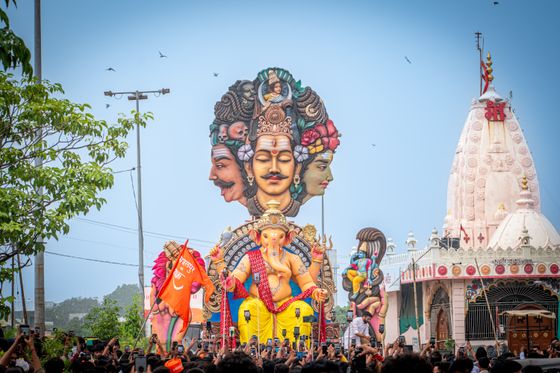
Gujarat
Vadodara
Vadodara, historically Baroda, is the cultural capital of Gujarat, and the Gaekwad dynasty made it the grand city it is. The palaces are opulent, the art academies are serious, the public gardens are vast, and the old royal city and the modern industrial one sit side by side.
.jpg/960px-N-BR-69_Raja_Vishal_Garh_(5).jpg)
Bihar
Vaishali (ancient city)
Few sites carry this much weight in two religions at once. The Buddha gave his last sermon at Vaishali before his mahaparinirvana, and the Relic Stupa here is said to hold his ashes; Mahavira was born at Kundagrama, a suburb of the same city. Before either, it was the capital of the Vajjika League, about as close to a republic as the 6th century BCE came. The site is scattered across a group of villages north of Patna rather than gathered in one place, so it rewards patience. The lion-topped Ashokan pillar is among the best preserved anywhere.
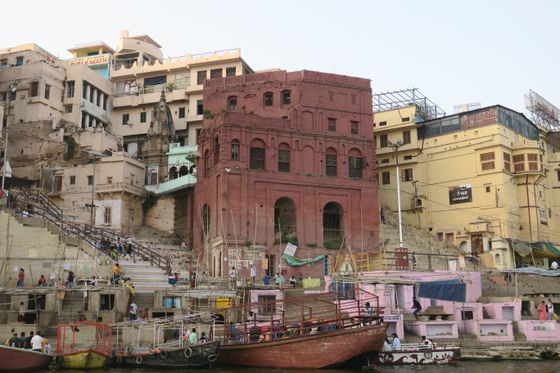
Uttar Pradesh
Varanasi
Varanasi is the oldest continuously lived-in city on earth and it will either be the best three days of your trip or the worst, with very little in between. Take a boat at dawn, not at sunset. At first light the ghats are working — people bathing, washing, praying, exercising — and the boat is quiet. The evening Ganga Aarti at Dashashwamedh is a genuine spectacle but you will watch it shoulder to shoulder with several hundred phones. At Manikarnika, bodies burn around the clock and have done for centuries. You can stand and watch; it is not hidden and nobody will stop you. Do not photograph it, and do not pay the men who offer to take you closer for a donation to the wood. Both requests are as old as the ghat. The galis behind the river are the actual city. They are too narrow for cars, you will get lost, and getting lost is the point — but keep the river to one side in your head so you can always walk back to it. Sarnath, where the Buddha gave his first sermon, is forty minutes away and a complete change of pace. Go on the day Varanasi has worn you out.

Maharashtra
Vasai Fort
Vasai (Bassein) Fort was the Portuguese capital of the north for two centuries — a walled city of cathedrals, convents and palaces guarding the creek north of Mumbai. Chimaji Appa's Maratha campaign finally took it in 1739 after one of the bloodiest sieges of the age. Today its arches, church facades and watchtowers stand tangled in banyan and palm, a vast romantic ruin that film crews and history walkers share with fishing families.
.jpg/960px-Vellore_Fort_and_Jalakandeswarar_temple_(10).jpg)
Tamil Nadu
Vellore Fort
Vellore Fort is a granite fortress in the centre of Vellore town, Tamil Nadu, spanning about 133 acres and surrounded by a wide moat that once held crocodiles. It is best known as the site of the 1806 Vellore Mutiny, an early rebellion by Indian sepoys against the British East India Company.

Andhra Pradesh
Vijayawada
Vijayawada works for a living. It is the second largest city in Andhra Pradesh and its main commercial hub, sitting on the Krishna River with the Eastern Ghats and the Indrakeeladri Hills on either side, and most of what moves through it is trade rather than tourism. This is the state's mango town above all, with the Nunna market shifting Banganapalle and Totapuri out to other states and to export buyers. The Kanaka Durga Temple pulls millions of devotees a year, so go early or accept the company. The Prakasam Barrage crosses the Krishna here and carries you over into Guntur district.
.jpg/960px-First_rampart_of_Vijaydurg_fort_(5363570665).jpg)
Maharashtra
Vijaydurg Fort
Vijaydurg Fort occupies a peninsula in Devgad taluka, Sindhudurg district, surrounded by the Arabian Sea on three sides, spanning roughly 17 acres and known as the "Eastern Gibraltar" for its role as the principal Maratha naval stronghold.

Punjab
Virasat-e-Khalsa
Anandpur Sahib's museum stands a short way from Takht Kesgarh Sahib and takes on 500 years of Sikh history and the 300th anniversary of the founding of the Khalsa, drawing on the writings of Guru Gobind Singh. It is the most visited Sikh museum, so pilgrims and tourists arrive in the same queues. Pair it with the takht; on its own it is a long way to come.

Maharashtra
Vishalgad Fort
Vishalgad (also called Khelna) is a hill fort in Bhudargad taluka of Kolhapur district, Maharashtra, historically important as the refuge Shivaji Maharaj reached after the Battle of Pavan Khind.

Delhi
Wall of Truth
This wall carries the names of Sikhs killed in the 1984 riots that followed Indira Gandhi's assassination. It stands inside the Gurdwara Rakab Ganj Sahib complex, close to Parliament, took three and a half years to build, and was inaugurated on 15 January 2017. Among the names are Sikh soldiers, and three people from Hindu and Muslim families killed for shielding Sikhs during the violence; the wall also records Sikhs killed later abroad, including at the Oak Creek gurdwara in Wisconsin. Read it slowly. The gurdwara around it is working, not a monument, and the visit is better for that.

Telangana
Warangal
Warangal, the former capital of the Kakatiya dynasty, is a treasure of medieval South Indian art. The Thousand Pillar Temple, the carved Warangal Fort gateways and the UNESCO-listed Ramappa Temple showcase some of the finest Kakatiya craftsmanship in stone.

Leh & Ladakh
Zorawar Fort
Zorawar Fort in Leh was built in 1836 by General Zorawar Singh under Maharaja Gulab Singh of Jammu & Kashmir, and now functions as a restored heritage site with a military museum.


